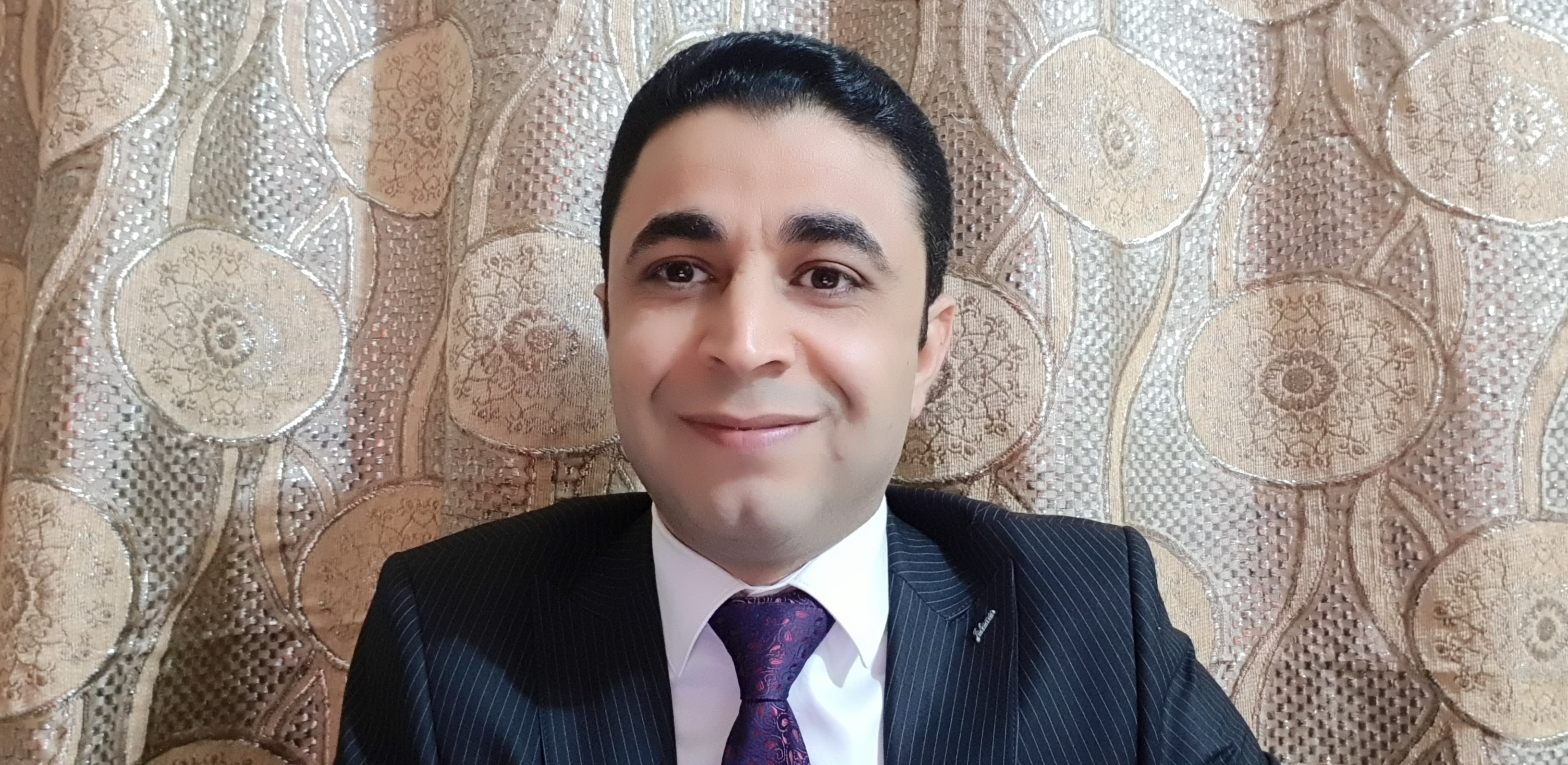
Husam Kareem Mohsin Al-Jothery

@qu.edu.iq

Mechanical Engineering Department/ Collage of Engineering
Mechanical Engineering Department/ University of Al-Qadisiyah

Husam Kareem Mohsin Al-Jothery

EDUCATION

PhD in Mechanical Engineering

RESEARCH INTERESTS

Solid and Structural Mechanics, Origami Structures, Electromagnetic Wave Applications, Robotic Design, Advanced materials Analys, Ultra-High Temperatur Materials, Modren Technologies for Ceramics and Magnetism.

FUTURE PROJECTS

Experimental Evaluation of Self-Recovery of Thin-Shell Origami Structure for Automotive Application


Applications Invited
21

Scopus Publications

Scopus Publications

  • Advancements in Proppant Coating Technologies for Enhanced Hydraulic Fracturing Efficiency: A Comprehensive Review on Nanocomposites and Surface Modifications
    Zahraa Ali Hajool, Ali Samer Muhsan, Husam Kareem Mohsin Al-Jothery, Mohammad Shakir Nasif, Ala Abdullah Mutaafi, et al.
    Results in Engineering, 2025
  • Analyzing the Mechanical Properties of Integrated Tread Liner Scraps for Enhanced Efficiency and Sustainability
    Ahmed Zarzoor, Nabeel Almuramady, Maher Khudhair, Thar Albarody, Husam Al-Jothery
    International Journal of Computational Methods and Experimental Measurements, 2025
  • Recent Progress in Proppant Technology for Improving the Fracture Conductivity in Hydraulic Fracturing
    Journal of Advanced Research Design, 2025
  • Influence of combined carbon-epoxy on the fatigue life of elastomer materials
    Nabeel Almuramady Nabeel Almuramady, Ali Fahem, Husam Al-Jothery, Essam Esmail, and
    Al Qadisiyah Journal for Engineering Sciences, 2025
    The Rubber-carbon black composite material-based product is the main matrix used in domestic and industrial applications in the last decades. This study proposes replacing the reinforcing carbon with matrix-neutral rubber with epoxy resins to reduce the carbon footprint and lower the environmental impact while enhancing the product's mechanical properties. Five additive percentages of carbon--epoxy, starting from 100-50% Carbon-black and 0-50% Epoxy, were studied using a hybrid experimental-numerical approach. Experimentally, the extension fatigue, flexural fatigue, and elongation modulus testing were completed using the universal testing machines with a low loading rate (quasi-static process). Numerical, the finite element analysis by the commercial software ABAQUS-SAE within the built-in hyperelastic constitutive model was utilized to visualize the full-field stresses. The experimental nominal stress-strain data was used as input for the numerical model, and Ogden's formula was applied to simulate the mechanical response of the specimens. The stress field and stress concentration of different experimental tests are given. The effect of increasing the additive epoxy on the rubber-carbon mechanical response and the fatigue life under repeated loads were identified and discussed. Furthermore, the results show that a small amount of epoxy can be used as a reinforcing material for a rubber compound and it improves the mechanical properties. This along with more results are shown in the result section
  • Study on Mechanical Behavior of Double Corrugation Surface Structure of Thermoset Composite
    Husam Al-Jothery, Thar Albarody
    Journal of Engineering and Sustainable Development, 2025
    Transforming the thin-wall structure from 2D to 3D to enhance the flexibility and strength of materials is an interesting research area regarding fabricating techniques and engineering properties. This study investigated the double corrugation surface structure for fiberglass-reinforced epoxy thermoset composite to improve the mechanical properties of designed composite materials. Three groups of corrugated samples (2, 4, and 6 layers) were fabricated for testing. The resulting corrugated thermoset composites were tested through tensile and compressive tests. The results illustrated that the tensile strength of a flat sample was 14.28% and 27.74% higher than the one of the double corrugated surface samples on the x-axis and y-axis directions, respectively. Then, the design showed a tremendous increase in the elongation of more than 13 times compared to the flat sample at a relatively slight expense of strength. Besides, the result also showed that the material's compressive strength improved drastically when the number of layers increased from two to six. It was presented that the increase in the number of double corrugated surface structure layers leads to a rise in energy absorption. Therefore, the highest energy absorption was 241.62 J of 6 layers-double corrugated surface sample.
  • Effect of Nano Silica Fillers on Dynamic Mechanical Performance and Accelerated Ageing Behavior of Carbon/Epoxy Composites
    Anas Asim, Layth F. Shakir, Husam Kareem Mohsin Al-Jothery, Muhammad Mubashir, Khubab Shaker
    Eurasia Proceedings of Science Technology Engineering and Mathematics, 2025
    The impact of nano-silica (NS) fillers on the mechanical and aging characteristics of carbon fiber epoxy composites (CFECs) is examined in this work. Composite samples with 0–6 weight percent NS were exposed to UV light and moisture to hasten aging. According to Dynamic Mechanical Analysis (DMA), the glass transition temperature (Tg) improved by 6.6%, reaching a peak of 48.57 °C, while the storage modulus (E′) increased by up to 27.5%, from 184 GPa in NS0-U to 234.5 GPa in NS4-U. At 2–4% filler loading, interlaminar shear strength (ILSS) decreased by 45% as a result of nanosilica addition. The NS4-U sample's Charpy impact strength was 60 kJ/m2, yet there was a noticeable overall drop in impact resistance as the filler content increased. Upon ageing, all properties showed degradation; however, NS4-A composites retained higher mechanical properties than the aged unfilled baseline, confirming the filler’s role in enhancing environmental resistance. These results highlight that optimal NS loading (4 wt%) can significantly reinforce CFECs while offering improved ageing durability.
  • Bibliometric Analysis on Smart Self-Healing Nanocoating for 316L Stainless Steel Biomedical Implants
    Ala Mutaafi, Husam Kareem Mohsin Al-Jothery, Mohammed Sameer Alsabah, Nurul Azhani Yunus, Zahraa Ali Hajool, et al.
    Eurasia Proceedings of Science Technology Engineering and Mathematics, 2025
    This study presents a bibliometric analysis of research on smart self-healing nanocoatings for 316L stainless steel biomedical implants between 2015 and 2025. The aim is to explore publication trends, identify leading contributors, and uncover gaps in knowledge within this emerging field. A total of 237 documents were collected from the Scopus database using a well-defined search strategy. Performance analysis and science mapping techniques were applied using VOSviewer, Bibliometrix, and supporting tools. The results show a consistent increase in publication volume, with a notable rise after 2020, suggesting growing interest in self-healing materials for biomedical applications. The most common document types are research articles (44.3%) and reviews (38%), with most publications falling under materials science, engineering, and chemistry. India and China lead in publication count, while countries like Canada and Australia demonstrate high average citation impact. Keywords like “corrosion,” “biocompatibility,” and “hydroxyapatite” dominate the field, while “self-healing” appears infrequently, indicating an underexplored area. Experimental focus remains largely on in vitro studies, with limited in vivo or simulation-based research. Most coatings are tested in lab settings, and only a few studies move toward biological or computational validations. This paper highlights the need for broader interdisciplinary efforts and deeper translation of lab findings into real biomedical applications.
  • Optimal Design of Hybrid Renewable Energy System on Grid Based on Energy Consumption: A Case Study
    Ahmed Al-Rubaye, Husam Kareem Mohsin Al-Jothery, Kadhim K. Al-Chlaihawi
    Mathematical Modelling of Engineering Problems, 2024
  • Experimental Investigation of Magnetic Properties of β-SiC Nanoparticle at Room Temperature
    Najib Mohammed Sultan, Thar M. Badri Albarody, Masri Baharom, Husam Kareem Mohsin Al-Jothery, Haetham G. Mohammed
    Journal of Advanced Research in Applied Sciences and Engineering Technology, 2024
    In this paper, magnetic properties of β-SiC nanoparticles have been studied. Results showed intrinsic at room temperature. The applied magnetic field observes a magnetization value of 50.972E-3 emu/g with remnant magnetization is 3E-3 emu/g. The measured value of coercivity found to be 89.068 G at squareness ratio is 0.043524. The room temperature ferromagnetic in β-SiC possibly originated from dangling effect vacancy of silicon and carbon with the nearest neighbour carbon atom have strong s-p hybridization. The result of this paper might indicate a promising pathway of developing a novel spintronics based β-SiC nanoparticle.
  • Sintering β-SiC nanopowder using novel microwave-current assisted sintering technique: preliminary study
    H K M Al-Jothery, T M B Albarody, N M Sultan, H G Mohammed, P S M Megat-Yusoff, et al.
    Advances in Natural Sciences Nanoscience and Nanotechnology, 2023
    Silicon carbide is a crucial structure material because of its wide applications in different fields, such as electronics. The impurities have negative impact on the homogenous sinterability of nano SiC during the sintering process, especially the silicon dioxide. So, the consolidation of SiC nanopowders was conducted by the microwave-current assisted sintering process. Field emission scanning electron microscope (FESEM), energy dispersive x-ray spectroscopy (EDS) and x-ray diffraction (XRD) were utilised to examine the nanopowders and sintered samples of SiC. The results showed that the smallest average grain sizes of sintered specimens of treated and untreated-SiC nanopowders were 331 and 428 nm, respectively. The relative densities of sintered specimens of treated and untreated-SiC nanopowders were around 97.1% and 93.8%, respectively. In conclusion, the nanostructure of sintered SiC was the benchmark of the microwave-current assisted sintering technique.
  • Evaluation of the Generated Magnetic Field from Coaxial Circular Flat Spiral Coil Integrated with Spark Plasma Sintering Technique for Sintering M-Type Based BaFe12O19
    Haetham G. Mohammed, Marwan Ahmed Abdullah Alasali, Thar Mohammed Badri Aboody, Husam Kareem Mohsin AlJothery
    2023 3rd International Conference on Emerging Smart Technologies and Applications Esmarta 2023, 2023
  • Thermal Expansion of 3C-SiC Obtained from In-Situ X-ray Diffraction at High Temperature and First-Principal Calculations
    N. M. Sultan, Thar M. Badri Albarody, Husam Kareem Mohsin Al-Jothery, Monis Abdulmanan Abdullah, Haetham G. Mohammed, et al.
    Materials, 2022
  • A study of crystalline – texture and anisotropic properties of hexagonal BaFe12O19 sintered by in-situ magnetic-anisotropy spark plasma sintering (MASPS)
    Haetham G. Mohammed, Thar Mohammed Badri Albarody, Husam Kareem Mohsin Al-Jothery, Mazli Mustapha, N.M Sultan
    Journal of Magnetism and Magnetic Materials, 2022
  • Experimental Investigations on Microwave-Current Assisted Sintering Process and Oxidation of Graphite Die at High Temperature
    H. K. M. Al-Jothery, Thar M. Albarody, P. S. M. Megat-Yusof, N. Al-Shaibani, H. G. Mohammed
    International Journal of Automotive and Mechanical Engineering, 2021
  • Investigate the effect of process parameters of magnetic inductively assisted spark plasma sintering (SPS) of iron oxide (Fe3O4) on microstructure behaviour - Part i
    Haetham G. Mohammed, Thar Mohammed Badri Albarody, Mazli Mustapha, N.M. Sultan, H.K.M. Al-Jothery
    Materials Today Proceedings, 2021
  • A review of ultra-high temperature materials for thermal protection system
    H K M Al-Jothery, T M B Albarody, P S M Yusoff, M A Abdullah, A R Hussein
    Iop Conference Series Materials Science and Engineering, 2020
  • Damage detection in glass/epoxy composite structure using 8–12 GHz X-band
    Alaa Raad Hussein, Thar M. Badri Albarody, Reza Alebrahim, M. Fayaz Bin Abd Hannan, Husam K. M. Al-Jothery, et al.
    Journal of Mechanical Science and Technology, 2020
  • Crashworthiness design for trapezoid origami crash structure
    H. K. M. Al-Jothery, T. M. B. Albarody, P. S. B. M. Yusoff, M. A. Abdullah, A. R. Hussein, et al.
    International Journal of Automotive and Mechanical Engineering, 2020
  • Ultrafast-contactless plasma arc sintering
    Thar M. Badri Albarody, Husam Kareem Mohsin Al-Jothery, Alaa Raad Hussein, Loh Zi Teng, Ali Samer Muhsan, et al.
    Aip Conference Proceedings, 2018
  • Permittivity and Permeability Characterization of SiC and Ferro Metals for Structural Health Monitoring Utilization
    Alaa Raad Hussein, Thar M. Badri Albarody, Puteri Sri Melor Bt M. Yousf, Monis Abdulmanan Abdullah, Husam Kareem Mohsin Al-Jothery
    Matec Web of Conferences, 2018
  • Design of adjustable compliant mechanism for service robot
    Husam Kareem Mohsin Al-Jothery, Khairul Salleh Mohamed Sahari
    2015 International Symposium on Agents Multi Agent Systems and Robotics Isamsr 2015, 2016