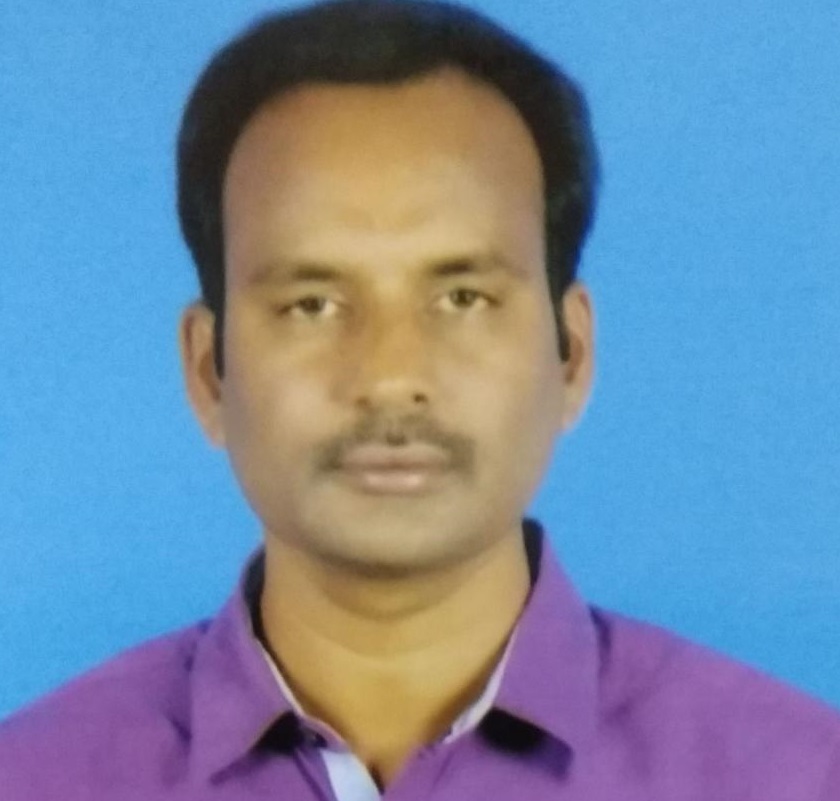
Dr. D JAYARAJ

@annamalaiuniversity.ac.in

Assistant Professor / Computer Sci3ence and Engineering / FEAT
Annamalai University

EDUCATION

M.C.A., MPhil(CS), PhD(CA)

RESEARCH INTERESTS

Deep Learning, Neural Network, Data Mining
13

Scopus Publications

Scopus Publications

  • REVOLUTIONIZING COTTON FARMING: CO-CNN INTEGRATION FOR DISEASE IDENTIFICATION AND YIELD PREDICTION
    Journal of Theoretical and Applied Information Technology, 2024
  • TENACIOUS FISH SWARM OPTIMIZATION BASED HIDDEN MARKOV MODEL (TFSO-HMM) FOR AUGMENTED ACCURATE COTTON LEAF DISEASE IDENTIFICATION AND YIELD PREDICTION
    Journal of Theoretical and Applied Information Technology, 2023
  • COLLABORATIVE ANT COLONY OPTIMIZATION-ASSISTED SUPPORT VECTOR MACHINE FOR ACCURATE COTTON LEAF DISEASE CLASSIFICATION AND YIELD PREDICTION
    Journal of Theoretical and Applied Information Technology, 2023
  • Rapturous Chimp Optimization-based Feed-Forward Neural Networks for Autism Spectrum Disorder Classification
    Suresh kumar B, Jayaraj D
    International Journal of Engineering Trends and Technology, 2023
  • Minimizing Energy Consumption in Vehicular Sensor Networks Using Relentless Particle Swarm Optimization Routing
    A. Senthilkumar, J. Ramkumar, M. Lingaraj, D. Jayaraj, B. Sureshkumar
    International Journal of Computer Networks and Applications, 2023
    Increasing traffic issues, particularly in highly populated nations, have prompted recent interest in Vehicular Sensor Networks (VSNETs) from academics in several fields.Accident rates continue to rise, highlighting the need for a highly functional Smart Transport System (STS).Improvements to the STS should not be spread thin across the board but should concentrate on improving traffic flow, maintaining system reliability, and decreasing vehicle carbon dioxide and methane emissions.Current routing protocols for VSNETs consider various scenarios and approaches to provide safe and effective vehicle-to-infrastructure communication.The reliability of vehicle connections during data transmission has not been well explored.This paper proposes a Relentless Particle Swarm Optimization based Routing Protocol (RPSORP) for VSNET to use vehicle kinematics and mobility to identify vehicle location, send routing information packets to road-side devices, and choose the most reliable path for travel.RPSORP optimizes local and global search to minimize energy consumption in VSNET.The RPSORP is evaluated in the GNS3 simulator using Throughput, Packet Delivery, Delay, and Energy Consumption metrics.RPSORP has superior performance than state-of-theart routing protocols.
  • RESILIENT ARTIFICIAL FISH SWARM OPTIMIZATION-BASED ENHANCED CONVOLUTIONAL NEURAL NETWORK FOR AUTISM SPECTRUM DISORDER CLASSIFICATION
    Journal of Theoretical and Applied Information Technology, 2023
  • ZEALOUS PARTICLE SWARM OPTIMIZATION BASED RELIABLE MULTI-LAYER PERCEPTRON NEURAL NETWORKS FOR AUTISM SPECTRUM DISORDER CLASSIFICATION
    Journal of Theoretical and Applied Information Technology, 2023
  • AFSORP: Adaptive Fish Swarm Optimization-Based Routing Protocol for Mobility Enabled Wireless Sensor Network
    D. Jayaraj, J. Ramkumar, M. Lingaraj, B. Sureshkumar
    International Journal of Computer Networks and Applications, 2023
    Advances in information and communication technology and electronics have led to a surge in interest in mobility-enabled wireless sensor networks (MEWSN).These minuscule sensor nodes collect data, process it, and then transmit it via a radio frequency channel to a central station or sink.Most of the time, MEWSNs are placed in hazardous or difficult-to-access locations.To increase the lifespan of a network, available resources must be utilized as efficiently as possible.The whole network connection collapses if even one node loses power, rendering the deployment's goals moot.Therefore, much MEWSN research has focused on energy efficiency, with energy-efficient routing protocols being a key component.This paper proposes an Adaptive Fish Swarm Optimization-based Routing Protocol (AFSORP) for identifying the best route in MEWSN.AFSORP functions based on the natural characteristics of fish.The two most important steps in AFSORP are chasing and blocking, which respectively seek the optimal route and choose the appropriate route to send data from the source node to the destination node.Standard network performance measurements are used to assess AFSORP with the help of the GNS3 simulator.The results show that AFSORP performs better than the existing routing methods.
  • Performance Analysis of Different Preprocessing Techniques for Cyclone Prediction
    B. Suresh Kumar, D. Jayaraj
    Proceedings International Conference on Applied Artificial Intelligence and Computing Icaaic 2022, 2022
    Cyclone is a prevailing spinning storm which has strong winds and rain. It encompasses several related features like eyes, rainfall intensity, pathway, wind speed, storm surges, etc. Cyclone prediction is a major issue when the cloud intensity images exhibit feature patterns at several stages of growth. The recently developed artificial intelligence (AI) techniques can be utilized for effective classification of images for cyclone prediction. Several challenging issues exist in the cyclone prediction process such as high prediction error, poor image quality, noise, high complexity, etc. Image pre-processing techniques can be applied for improving the image quality and eliminating the noise that exists in it. In this aspect, this study focuses on comprehensive performance analysis of different image filtering techniques for cyclone prediction. To accomplish this, two types of noises such as salt & pepper and Gaussian noise are added to the input images. Besides, three filtering approaches namely Weiner filter (WF), Gabor filter (GF), and Gaussian filtering (GUF) are used. The filtering approaches help to eradicate the noise and thereby improve the image quality. A detailed simulation analysis is performed on various cyclone images and the results are assessed interms of different measures. The comparative results ensured that the WF technique has the ability to achieve better performance over the other GF and GUF techniques.
  • Deep Neural Network Based Classifier Model for Lung Cancer Diagnosis and Prediction System in Healthcare Informatics
    D. Jayaraj, S. Sathiamoorthy
    Lecture Notes on Data Engineering and Communications Technologies, 2020
    Lung cancer is a most important deadly disease which results to mortality of people because of the cells growth in unmanageable way. This problem leads to increased significance among physicians as well as academicians to develop efficient diagnosis models. Therefore, a novel method for automated identification of lung nodule becomes essential and it forms the motivation of this study. This paper presents a new deep learning classification model for lung cancer diagnosis. The presented model involves four main steps namely preprocessing, feature extraction, segmentation and classification. A particle swarm optimization (PSO) algorithm is sued for segmentation and deep neural network (DNN) is applied for classification. The presented PSO-DNN model is tested against a set of sample lung images and the results verified the goodness of the projected model on all the applied images.
  • Random Forest based Classification Model for Lung Cancer Prediction on Computer Tomography Images
    D. Jayaraj, S. Sathiamoorthy
    Proceedings of the 2nd International Conference on Smart Systems and Inventive Technology Icssit 2019, 2019
  • Computer aided diagnosis system using watershed segmentation with xception based classification model for lung CT images
    D. Jayaraj, S. Sathiamoorthy
    International Journal of Innovative Technology and Exploring Engineering, 2019
  • Deep learning based depthwise separable model for effective diagnosis and classification of lung Ct images
    D. Jayaraj, S. Sathiamoorthy
    International Journal of Engineering and Advanced Technology, 2019