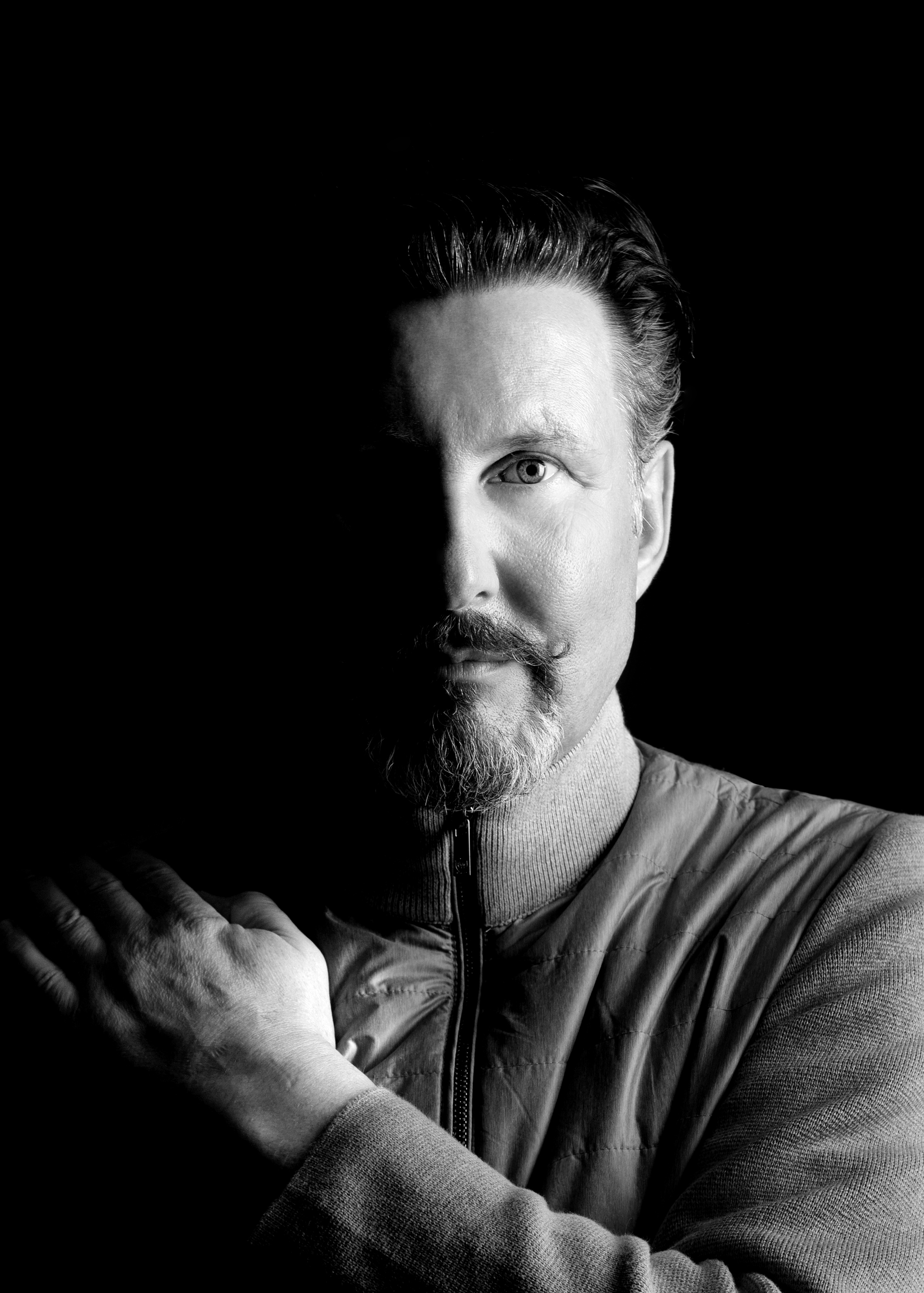
Dr. med. Dr. med. dent. Manfred Nilius MSc.

@aesthetik-dortmund.de

Oral- and maxillofacial Surgery, aesthetic facial plastic surgery
www.niliusklinik.de

Dr. med. Dr. med. dent. Manfred Nilius MSc.

RESEARCH, TEACHING, or OTHER INTERESTS

Surgery, Multidisciplinary, Oral Surgery, Dentistry
9

Scopus Publications

Scopus Publications

  • Computer-Guided Intraosseous Anesthesia as a Primary Anesthetic Technique in Oral Surgery and Dental Implantology—A Pilot Study
    Minou Hélène Nilius, Manfred Nilius
    Dentistry Journal, 2025
    This pilot study evaluated the feasibility and preliminary outcomes of computer-guided intraosseous anesthesia for oral surgery and dental implantology. Background/Objectives: The inferior alveolar nerve block (IANB) is widely used for dental anesthesia; however, issues such as anatomical variation and inflammation can hinder effective pain control. Alternatives have been studied primarily in irreversible pulpitis, with limited data available for other procedures. Methods: In a retrospective analysis, data from 85 patients who underwent implantation, root resection, or osteotomy using QuickSleeper® intraosseous anesthesia (IO), infiltration (INF), or IANB were assessed. Results: IO, IANB, and INF produced similar pain levels during administration, procedure, and recovery; blood pressure and heart rate were comparable. IO and INF led to less lip numbness after 15 min and required less anesthetic. IO had a significantly shorter latency than IANB, allowing earlier surgery. Conclusions: Computer-guided IO is a viable alternative to IANB for implantation, root resection, and osteotomy, offering equal pain control, shorter latency, earlier surgery, and reduced injection volume. Within the limitations of this pilot study, the findings should be considered preliminary and require confirmation in larger prospective studies. Given the exploratory pilot design, no formal sample size calculation was performed; the sample size was defined by feasibility considerations.
  • Advanced backward planning with custom-milled individual allogeneic block augmentation for maxillary full-arch osteoplasty and dental implantation:a 3-year follow-up
    Manfred Nilius, Charlotte Mueller, Minou Helene Nilius, Dominik Haim, Bernhard Weiland, et al.
    Cell and Tissue Banking, 2022
    In the case of maxillary involution, augmentation is necessary for implant-supported prosthetics. The use of bone grafts is standard; customized allogeneic bone blocks may be a predictable alternative before dental implantation. For maxillary full-arch reconstruction, this case shows a horse-shoe augmentation by four allogeneic blocks, followed by guided dental implantation and fixed prosthetics after 6 months of healing. Using allogeneic blocks is an option for full-arch maxillary augmentation and comparable with autologous bone grafts. There is no donor site comorbidity. Bone height is stable for a minimum of 3 years after loading with resorption less than 10% in vertical, buccolingual, and mesiodistal directions. Short-implants allow for the long-term stability of prosthetic fixtures. Prefabricated customized allogeneic blocks for augmentation may increase the fitting accuracy of the graft, decrease morbidity, and lower operation time in maxillary full-arch reconstruction. The percentage of resorption after 3 years is comparable to the commonly used iliac crest.
  • Optimised Implant Selection Using Digital Volume Tomography (DVT) Osteodensitometry
    Manfred Nilius, Jörg Winterhoff
    Case Reports in Dentistry, 2022
    Purpose. The density of the jaw bone has an inhomogeneous distribution and, even within partial volumes, varies more or less strongly from the size of typical implants. Consequently, the primary stability of implants using conventional techniques can only ever be determined postimplantation. The aim of the present case report is to present digital volume tomography (DVT) osteodensitometry as a procedure for assessing the primary stability preimplantation and to evaluate its benefits. Methods. An orthopantomogram (OPT) and vertical sections, including bone density measurement, were obtained from a DVT in the course of preimplantological diagnosis. Conventional implant planning and densitometric simulation were performed on this basis. Results. Densitometric simulation enabled assessment of the bone density at the interface to the implant body preimplantation. This procedure provides not only an overall value (averaged density) but also allocation of bone areas with different densities to the adjacent areas on the implant surface. This then allows the implant with the best possible macroscopic geometry and optimum position to be selected, with the aim of maximising primary stability. In the present case, the maximum torques during insertion confirmed the densitometric values recorded in advance. Conclusion. DVT osteodensitometry enables selection of an implant optimised to bone density distribution. At the same time, the point at which loading occurs can already be defined at the planning stage, thanks to the predictable primary stability. A standard integration of DVT osteodensitometry in the algorithms of implant planning software thus seems desirable.
  • Customized Allogeneic Bone Augmentation Improves Esthetic Outcome in Anteromaxillary Dental Implantation
    Manfred Nilius, Minou Hélène Nilius, Charlotte Mueller, Bernhard Weiland, Dominik Haim, et al.
    Case Reports in Dentistry, 2022
    Purpose. In cases of severe atrophic maxilla or maxillary involution, augmentation is necessary for implant-supported prosthetics. Using bone grafts is a standard procedure, and using customized allogeneic bone blocks may be a predictable alternative before dental implantation. Clinical Findings. This case study shows the digital workflow, including a preimplantological augmentation by a customized allogeneic block, followed by soft tissue optimization and template-based dental implantation, after six months of healing. It is part of a three-year follow-up study on the resorption rate of allogeneic bone blocks. Outcomes. Allogeneic bone augmentation is an alternative treatment option to autologous bone grafts. It allows predictable advanced backward planning (ABP) even in the maxillary esthetic zone. Diameter-reduced implants show long-term stability of a minimum of three years after loading and excellent results of prosthetic fixtures. Conclusion. Prefabricated customized allogeneic blocks for augmentation may increase the fitting accuracy of the graft, decrease morbidity, and reduce the operation time in esthetic maxillary rehabilitation.
  • How precise are oral splints for frameless stereotaxy in guided ear, nose, throat, and maxillofacial surgery: a cadaver study
    Manfred Nilius, Minou Hélène Nilius
    European Radiology Experimental, 2021
    Background Computer-assisted surgery optimises accuracy and serves to improve precise surgical procedures. We validated oral splints with fiducial markers by testing them against rigid bone markers. Methods We screwed twenty bone anchors as fiducial markers into different regions of a dried skull and measured the distances. After computed tomography (CT) scanning, the accuracy was evaluated by determining the markers’ position using frameless stereotaxy on a dry cadaver and indicated on the CT scan. We compared the accuracy of chairside fabricated oral splints to standard registration with bone markers immediately after fabrication and after a ten-time use. Accuracy was calculated as deviation (mean ± standard deviation). For statistical analysis, t test, Kruskal-Wallis, Tukey's, and various linear regression models, such as the Pearson's product–moment correlation coefficient, were used. Results Oral splints showed an accuracy of 0.90 mm ± 0.27 for viscerocranium, 1.10 mm ± 0.39 for skull base, and 1.45 mm ± 0.59 for neurocranium. We found an accuracy of less than 2 mm for both splints for a distance of up to 152 mm. The accuracy persisted even after ten times removing and reattaching the splints. Conclusions Oral splints offer a non-invasive indicator to improve the accuracy of image-guided surgery. The precision is dependent on the distance to the target. Up to 150-mm distance, a precision of fewer than 2 mm is possible. Dental splints provide sufficient accuracy than bone markers and may opt for higher precision combined with other non-invasive registration methods.
  • Multiple periapical dysplasias analyzed by cone-beam-computer tomography and 99Tcm-Scintigraphy.
    Manfred Nilius, Minou Nilius, Charlotte Müller, Henry Leonhardt, Dominik Haim, et al.
    Radiology Case Reports, 2021
  • Intraosseous venous malformation in an adolescent: Interdisciplinary concept for facial reconstruction after hemimandibulectomy, fibula free flap, and HDPE-chin reconstruction - 10 years follow up
    Manfred Nilius, Frank Hölzle, Minou Hélène Nilius, Guenter Lauer
    Oral and Maxillofacial Surgery Cases, 2021
  • Multifunctional Templates for Minimized Osteotomy, Implantation, and Palatal Distraction with a Mini-Screw-Assisted Expander in Schizodontism and Maxillary Deficit
    Manfred Nilius, Katrin Hess, Dominik Haim, Bernhard Weiland, Guenter Lauer
    Case Reports in Dentistry, 2020
    Purpose. Schizodontism is complete separation of a dental germ. It results in a twin tooth and supernumerary teeth. The treatment of transverse constriction in combination with supernumerary dental germs and impacted central incisors can pose a challenge, especially in young patients, when the number of permanent teeth is not adequate to ensure secure anchorage. The use of navigation templates based on three-dimensional X-ray images allows for precise insertion of temporary mini-implants for the acquisition of palatal distractors. In addition, templates allow for minimally invasive biopsies and osteotomies. Methods. The treatment of schizodontism, dentitio tarda, and transverse constriction is to be assessed as an interdisciplinary method by using mini-screw-assisted devices. Minimized osteotomy of impacted supernumerary teeth or dental implantation can be carried out in a one-step-procedure based on digital preplanning and prefabrication of orthodontic devices. Results. Multifunctional templates allow for early planning, preoperative fabrication, and intraoral fixation of orthodontic appliances. In the case of an adolescent patient, a sustainable, interdisciplinary treatment concept could be demonstrated that shows age-appropriate gnathological development and stable growth conditions over a follow-up period of 10 years. Conclusion. One can likely assume that multifunctional templates allow for minimally invasive one-step surgeries as an interdisciplinary tool between orofacial surgery and modern orthodontics.
  • Multidisciplinary oral rehabilitation of an adolescent suffering from juvenile Gorlin-Goltz syndrome - A case report
    Manfred Nilius, Jürgen Kohlhase, Johann Lorenzen, Günter Lauer, Matthias C. Schulz
    Head and Face Medicine, 2019