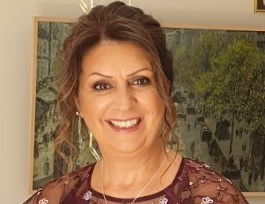
Maria is a Professor of Accounting with a specialisation in Forensic Accounting, at the Cyprus University of Technology and has served as Chair of the Department of Hotel and Tourism Management as well as Associate Dean of the School of Management and Economics at the same University. For a number of years, she was a university academic in Australia. Maria has been a visiting Scholar at Girona University, Spain March 2012; Visiting Professor at Victoria University, Melbourne, Australia December 2016; and was elected Visiting Scholar, Cambridge University 09/2017-12/2017. She is the founder and first Chair of Transparency International-Cyprus ( 2010-2017) as well as the founder and first president of the Economic Crime and Forensic Accounting Committee of the Institute of Certified Public Accountants of Cyprus (2010-2014). She is a Fellow member of the Institute of Chartered Accountants of Australia and a Certified Fraud Examiner (CFE)
EDUCATION
PhD (Edith Cowan University), M. Bus (RMIT), B.Ec. La Trobe University, ACFE, FCA
RESEARCH INTERESTS
Ethics, gender, governance, fraud prevention, corruption and anti-corruption, modern slavery, ESG
43
Scopus Publications
1990
Scholar Citations
21
Scholar h-index
31
Scholar i10-index
Scopus Publications
Gender Leadership Imbalance in Academia: An Etiological Approach Maria Krambia Kapardis, Petroula Mavrikiou, Loizos Symeou Social Sciences, 2025 Whilst there has been an increasing trend of women holding academic positions in European Higher Tertiary Institutions (HTIs), leadership positions are held predominantly by men. The study draws on radical feminism theory with which its methodology is aligned by investigating the perceptions of both genders. To that end, the study categorizes the impediments holding women back from breaking the glass ceiling into endogenous and exogenous factors. By doing so, the authors are in a better position to recommend the implementation of policies and procedures to address this inequality and navigate towards achieving sustainable gender equality. The research was conducted using an online survey questionnaire administered among all academic and administrative staff of universities in the Republic of Cyprus, the country with the highest glass ceiling in the EU. The authors found that the binary genders differ in their perceptions of what keeps women from breaking the glass ceiling and that this is attributable to exogenous factors, namely, (a) the walls created by male leaders, reinforcing a feeling of marginalization and mansplaining; and (b) family obligations enhancing women’s experiencing a lack of time and burnout. Furthermore, the exogenous factors and the extremely gendered higher echelons of HTIs underpin the endogenous factor of self-sabotage, making women feel they would rather avoid the toxic leadership environment with its lack of professional credit, a view supported by radical feminism theory. The authors suggest practical policy implications to rectify the gender imbalance in leadership in HTIs and suggest directions for future research.
The Evolution of Gender Quota Research on Corporate Boards: A Thematic Literature Review Dimitra Kavalieraki-Foka, Sofia Asonitou, Eleni Tourna, Maria Krambia-Kapardis, Chara Kottara Wseas Transactions on Business and Economics, 2025 The initial law mandating a gender balance on corporate committees was passed in Norway at the dawn of the 21st century, and since then, the subject of gender quotas has attracted increasing attention from researchers. There should be a temporal mapping of research to identify changing scientific priorities and emerging directions. The goal of this literature study is to do more than just count and organise research or make statistical conclusions; it aims to show how the scientific discussion on this topic has developed over time and to present the literature as an active and ongoing conversation. Combining a concept-centric approach for spotting trends and themes, using as a basis the content of the analysed research, with the SALSA framework as a methodological tool for conducting this literature review, delivered results. From early structural and compliance-based studies to more recent, sophisticated investigations of how gender quotas interact with power dynamics, organisational culture, and sustainable corporate transformation, the review notes a clear change in the literature. Reflecting a larger and more critical awareness of gender diversity in government, the emphasis has changed over time from legal enforcement and representation toward emerging themes including ESG performance, ethical leadership, innovation, intersectionality, and symbolic inclusion. The results repeatedly highlight that in this changing terrain, the favourable contribution of gender-diverse boards is improving non-financial reporting, generating better financial results, and advancing more inclusive, transparent, and responsible corporate practices. This work highlights understudied areas, traces the development of important themes and changes in scientific priorities over time, and provides direction for the next studies.
Navigating Toward a Gender-Balanced Culture in Leadership Roles in Higher Tertiary Institutions (HTIs) Maria Krambia Kapardis, George Spanoudis Administrative Sciences, 2024 The European Commission (EC) and the United Nations advocate the importance of gender equality in their agendas and goals. More specifically, the EC has highlighted the importance of increasing women’s representation in leadership positions, yet in a minority of universities around the globe, there is a gender imbalance. By excluding women from key academic leadership roles, a culture that superficially accepts women into roles that do not challenge the hierarchy is normalized, and a rubber stamp to hegemonic masculinity is established as typical conduct. This study utilizes data from a national survey distributed across all full-time academic and administrative staff in Cyprus’s 13 universities to examine the presence of gender disparities in leadership. The survey was designed based on a comprehensive review of the literature and pilot tested by experts in the field. It was then distributed by university rectors, reaching a total of 337 respondents. The data were analyzed to confirm that the characteristics of an extremely gendered environment, as established by researchers, are found in higher tertiary institutions (HTIs). Secondly, the authors found that the disparities between the leadership skills and traits held most prominently by women in HTIs, as opposed to their male counterparts, enhance the arguments put forward toward gender balance in leadership. Thirdly, the barriers holding women back from voicing their wishes to seek leadership roles in HTIs were identified. Finally, recommendations are made on how to overcome the androgenic environment, to move the needle and have more women seek leadership positions in a culture which preserves hegemonic masculinity. Changing this culture will navigate towards a more balanced working environment for staff and students, and can thus address ethical issues in a more inclusive and gender-balanced environment.
Fraud Maria Krambia-Kapardis, Andreas Kapardis Elgar Encyclopedia of Crime and Criminal Justice Volume 1 4, 2024
Socio-Economic Factors Affecting ESG Reporting Call for Globally Agreed Standards Maria Krambia-Kapardis, Christos S. Savva, Ioanna Stylianou Sustainability Switzerland, 2023 The ESG ecosystem has evolved over the years, and macro decisions have had an impact on the implementation and reporting of the ESG Index. This paper aims to first investigate if all the components of the ESG index are equally reported and secondly to identify the impact of socio-economic and political variables on the composite ESG index. To achieve this aim, the authors have utilized macroeconomic variables over the period 1984–2020 for 139 countries from the Refinitiv database and have constructed composite indices based on principal component analysis for the ESG components using a panel fixed effects model with structural breaks. The findings have significant policy implications, emphasizing the importance of globally accepted standards. Finally, by addressing the ESG at a macro level, it provides the context within which to consider the adoption of the ESG ecosystem diachronically, thus providing the backdrop for considering the implementation of the ESG at the micro level.
Fraud and corruption in football: lessons from a survey of match-fixing in Cyprus Maria Krambia Kapardis, Michael Levi Journal of Financial Crime, 2023 Purpose The purpose of this paper is to identify if fraud theory models suggested over the years are applicable to match-fixing and if so, whether the Krambia-Kapardis’ (2016) holistic fraud and corruption prevention model can be used to reduce significantly match-fixing in football. Design/methodology/approach An online survey was developed by the authors and was administered to football stakeholders in Cyprus, namely, players, referees, coaches and team management. Findings The research questions, who are the initiators of match-fixing, why is match-fixing taking place and what is the best way to prevent or reduce match-fixing, have been answered, and these findings have enabled the authors to make policy recommendations. Research limitations/implications The survey considered match-fixing in only one sport (football) while the number of respondent categories and the 335 usable questionnaires returned did not allow advanced statistical analysis of the data obtained. Practical implications The findings point to the need both for ethics and moral values to be installed in all the stakeholders through training and continuing education. It is also suggested that teams/clubs and related associations acting as regulators ought to implement governance principles and ethical programs, including whistleblowing lines and appoint integrity officers to minimize the match-fixing phenomenon. Furthermore, society, as well as government, sport regulators and sponsors, ought to encourage and demand fair play and integrity in sport through improved measures of governance and accountability and the implementation of ethical audits and public disclosure of audited financial statements of teams. Finally, sports integrity ought to be embedded in school curriculum from a very young age. Originality/value To the best of the authors’ knowledge, this is an original contribution to knowledge that has impact on the future of sporting fairness and social legitimacy.
Editorial Maria Krambia Kapardis Journal of Financial Crime, 2022
Lessons learned during Covid-19 concerning cheating in e-examinations by university students Maria Krambia Kapardis, George Spanoudis Journal of Financial Crime, 2022 Purpose The researchers aim to investigate how students can be deterred from cheating, whether legal or ethical policies and procedures are effective and whether there are gender differences. Design/methodology/approach Using data on students undertaking midterm and final e-examinations, as well as a control group of students who were caught cheating in an online mid-semester examination, the authors attempt to answer the research questions. Findings No differences were found in cheating in terms of students’ gender or whether they were repeating a course or not. However, the study revealed that if there are more internal controls imposed and if before the examination students are made to reinforce their academic integrity, e-examination cheating is reduced. Originality/value No other published study was carried out with students who were involved in cheating.
Auditors and fraud detection: An elusive role? Research Handbook on International Financial Crime, 2015
Creative Accounting and Fraud in Greece George Kontos, Maria Krambia‐Kapardis, Nikolaos T. Milonas Creative Accounting Fraud and International Accounting Scandals, 2015
Framing the Discourse on Gender and Corruption M Krambia-Kapardis, S Williams, L Kihl 2025
The presence of women on boards has a moderating effect on masking bribery and corruption MK Kapardis, I Stylianou, CS Savva Routledge Handbook of Gender and Corruption, 125-142 , 2025 2025
Domains and challenges LA Kihl, S Williams, MK Kapardis Routledge Handbook of Gender and Corruption , 2025 2025
Routledge Handbook of Gender and Corruption S Williams, MK Kapardis, LA Kihl Taylor & Francis , 2025 2025 Citations: 1
The Evolution of Gender Quota Research on Corporate Boards: A Thematic Literature Review D Kavalieraki-Foka, S Asonitou, E Tourna, M Krambia-Kapardis, C Kottara Wseas Transactions on Business and Economics 22 , 2025 2025
Gender Leadership Imbalance in Academia: An Etiological Approach M Krambia Kapardis, P Mavrikiou, L Symeou Social Sciences 14 (8), 477 , 2025 2025
Endogenous and Exogenous Barriers the Reasons for Tokenism of Women Academics in the Upper Echelon of the Ivory Tower MK Kapardis, P Mavrikiou, L Symeou 5th ISA Forum of Sociology (6-11 July 2025) , 2025 2025
Understanding gender and corruption: Domains and challenges LA Kihl, S Williams, MK Kapardis Routledge Handbook of Gender and Corruption, 434-441 , 2025 2025
Framing the discourse on gender and corruption S Williams, MK Kapardis, LA Kihl Routledge Handbook of Gender and Corruption, 3-14 , 2025 2025
Gender Leadership Imbalance in Academia: An Etiological Approach L Symeou, MK Kapardis, P Mavrikiou Social Sciences 14 (8) , 2025 2025
Modern Slavery: The Hot Potato for Organizations in the Absence of Global Coordinated Action M Krambia Kapardis, C Clark The Palgrave Handbook on Modern Slavery, 273-298 , 2024 2024
The Palgrave Handbook on Modern Slavery MK Kapardis, C Clark, M Dion Springer Nature , 2024 2024 Citations: 2
Plato’s allegory of the cave and the masking of unethical behavior through ESG disclosure M Krambia-Kapardis Annual Australasian Business Ethics Network (ABEN) Hybrid Conference , 2024 2024 Citations: 2
Navigating toward a gender-balanced culture in leadership roles in higher tertiary institutions (HTIs) M Krambia Kapardis, G Spanoudis Administrative Sciences 14 (11), 277 , 2024 2024 Citations: 3
Can Banks keep out of trouble? M Krambia-Kapardis 41st Symposium on Economic Crime , 2024 2024
Modern slavery coming out of the shadow and its link to money laundering M Krambia Kapardis Journal of Money Laundering Control 27 (3), 429-431 , 2024 2024 Citations: 5
Navigating fair play in sport by embracing integrity and ethics M Krambia-Kapardis Australian Business Ethics Network Conference , 2023 2023
Socio-economic factors affecting ESG reporting call for globally agreed standards M Krambia-Kapardis, CS Savva, I Stylianou Sustainability 15 (20), 14927 , 2023 2023 Citations: 15
Ethical leadership as a prerequisite for sustainable development, sustainable finance, and ESG reporting M Krambia-Kapardis, I Stylianou, CS Savva Sustainable finance and financial crime, 107-126 , 2023 2023 Citations: 30
Finance, and ESG Reporting M Krambia-Kapardis, I Stylianou, CS Savva Sustainable Finance and Financial Crime, 107 , 2023 2023
MOST CITED SCHOLAR PUBLICATIONS
Corporate social responsibility: the way forward? Maybe not! A preliminary study in Cyprus I Papasolomou‐Doukakis, M Krambia‐Kapardis, M Katsioloudes European business review 17 (3), 263-279 , 2005 2005 Citations: 413
Y-ers, X-ers and Boomers: Investigating the multigenerational (mis) perceptions in the hospitality workplace A Zopiatis, M Krambia-Kapardis, A Varnavas Tourism and Hospitality Research 12 (2), 101-121 , 2012 2012 Citations: 228
A fraud detection model: A must for auditors M Krambia‐Kapardis Journal of Financial Regulation and Compliance 10 (3), 266-278 , 2002 2002 Citations: 130
The implementation of corporate governance principles in an emerging economy: A critique of the situation in Cyprus M Krambia‐Kapardis, J Psaros Corporate Governance: An International Review 14 (2), 126-139 , 2006 2006 Citations: 107
Neural networks: the panacea in fraud detection? M Krambia‐Kapardis, C Christodoulou, M Agathocleous Managerial Auditing Journal 25 (7), 659-678 , 2010 2010 Citations: 95
Audit quality attributes of European Union supreme audit institutions C Clark, M De Martinis, M Krambia‐Kapardis European Business Review 19 (1), 40-71 , 2007 2007 Citations: 89
Uncharted territory: Investigating individual business ethics in Cyprus M Krambia‐Kapardis, A Zopiatis Business Ethics: A European Review 17 (2), 138-148 , 2008 2008 Citations: 65
Corporate fraud and corruption: a holistic approach to preventing financial crises M Krambia-Kapardis Palgrave Macmillan , 2016 2016 Citations: 62
Fraud victimization in Greece: room for improvement in prevention and detection M Krambia Kapardis, K Papastergiou Journal of Financial Crime 23 (2), 481-500 , 2016 2016 Citations: 60
Ethical behaviour of tertiary education students in Cyprus AA Zopiatis, M Krambia-Kapardis Journal of Business Ethics 81 (3), 647-663 , 2008 2008 Citations: 55
Enhancing the auditor's fraud detection ability: An interdisciplinary approach MK Kapardis Edith Cowan University , 1999 1999 Citations: 54
Hospitality industry in Cyprus: the significance of intangibles M Krambia‐Kapardis, A Thomas International Journal of Contemporary Hospitality Management 18 (1), 6-24 , 2006 2006 Citations: 49
Enhancing fraud prevention and detection by profiling fraud offenders A Kapardis, M Krambia-Kapardis Crim. Behav. & Mental Health 14, 189 , 2004 2004 Citations: 49
Investigating incidents of fraud in small economies: the case for Cyprus M Krambia‐Kapardis, A Zopiatis Journal of Financial Crime 17 (2), 195-209 , 2010 2010 Citations: 34
An exploratory empirical study of whistleblowing and whistleblowers M Krambia-Kapardis Journal of financial crime 27 (3), 755-770 , 2020 2020 Citations: 31
Satisfaction gap in public sector financial reporting M Krambia-Kapardis, C Clark, A Zopiatis Journal of Accounting in Emerging Economies 6 (3), 232-253 , 2016 2016 Citations: 31
Ethical leadership as a prerequisite for sustainable development, sustainable finance, and ESG reporting M Krambia-Kapardis, I Stylianou, CS Savva Sustainable finance and financial crime, 107-126 , 2023 2023 Citations: 30
Fraud victimisation of companies: the Cyprus experience M Krambia‐Kapardis Journal of Financial Crime 10 (2), 184-191 , 2003 2003 Citations: 26
Lessons learned during Covid-19 concerning cheating in e-examinations by university students M Krambia Kapardis, G Spanoudis Journal of Financial Crime 29 (2), 506-518 , 2022 2022 Citations: 23
Financial crisis, fraud, and corruption M Krambia-Kapardis Corporate fraud and corruption: A holistic approach to preventing financial … , 2016 2016 Citations: 22