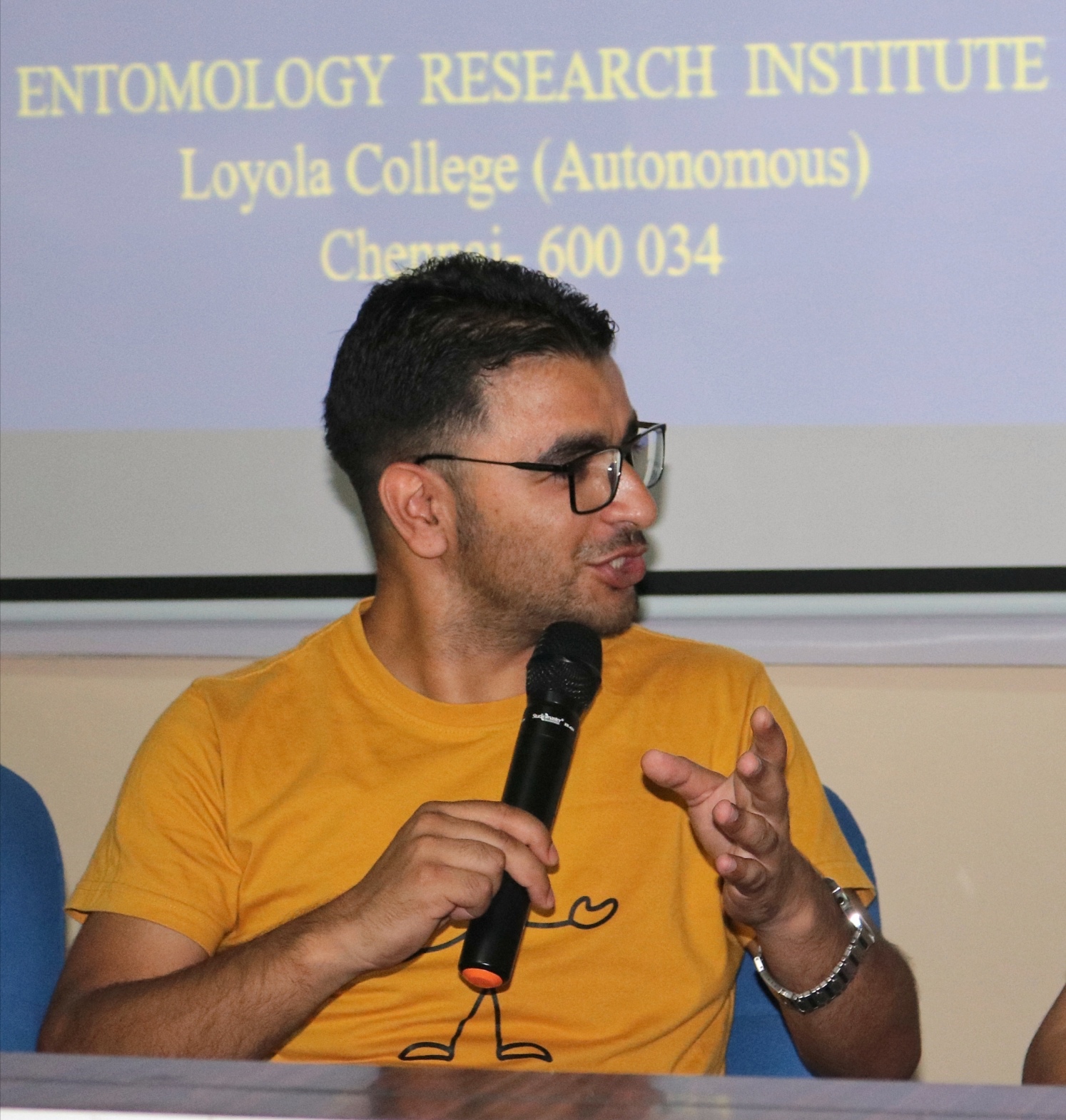
Senior Researcher, Division of Entomology, Faculty of Agriculture, Sher-e-Kashmir University of Agricultural Sciences and Technology of Jammu, J&K, India
Dr. Muzafar Riyaz, a distinguished researcher in the fields of Entomology. Throughout his research journey, he focused on understanding the molecular phylogenetics and biodiversity of insects with special emphasis on moths. His doctoral thesis explored the co-evolutionary relationship among Noctuoidea moths that served as a benchmark study from India. Driven by an unwavering commitment to research excellence, Dr. Riyaz published several scientific papers in reputable scientific journals, book chapters with distinguished publishers and submitted over 38 complete mitogenomes to GENBANK (NCBI). He has made significant contributions to the understanding of insect phylogenetics, diversity, and the taxonomy. Born on June 13, 1994, in the beautiful region of Kashmir, his passion for the natural world and its evolution was ignited at an early age.
EDUCATION
B.Sc. (University of Kashmir, Srinagar, India)
M.Sc. Zoology/Entomology (HNB Garhwal Central University, Uttarakhand, India)
Ph.D. (Entomology Research Institute, Loyola College, University of Madras, Chennai, India)
RESEARCH, TEACHING, or OTHER INTERESTS
Multidisciplinary, Ecology, Evolution, Behavior and Systematics, Insect Science, Molecular Biology
A user-informed perspective of the toxicological data gap in India’s cannabis landscape Muzafar Riyaz Frontiers in Toxicology, 2026 Clinical research on cannabinoids relies on purified compounds and controlled dosing, creating a data gap that ignores the realities of illicit markets. This perspective, informed by thirteen years of firsthand experience within India’s prohibited cannabis ecosystem, argues that unregulated products like Ganja and Charas pose significant, overlooked toxicological risks. These risks arise not primarily from cannabinoids themselves, but from unpredictable potency, pesticide contamination, and adulteration in the absence of quality control. Personal consumption patterns reveal that inconsistent products make precise dosing impossible and that standard clinical assessments fail to capture users’ sought-after effects, such as cognitive enhancement. To address this public health challenge, this paper calls for: 1) the chemical analysis of illicit products, 2) qualitative research on real-world use, 3) the development of user-centered outcome measures, and 4) ultimately, a transition from prohibition to regulation as the most effective intervention for consumer safety and informed choice.
Microplastic Pollution in Wular Lake, Kashmir-India (Ramsar Site): First Report and Associated Risk Assessments Arfat Nazir, Muzafar Riyaz, Mohammad Abass Zargar, Shaik Mohammad Hussain, Tafazul Qayoom Soil and Sediment Contamination, 2026 Microplastics are a major environmental pollutant, threatening ecosystems and human health. This study investigates microplastic contamination and its associated ecological risks in the sediments of Wular Lake, Kashmir—a Ramsar-designated site. Sediment samples collected from 32 locations were analyzed for microplastic abundance, composition, and pollution hazard. Microplastics were present at all sites, with concentrations ranging from 300 to 1,280 particles per kilogram of dry sediment (p/kg dw) and a mean of 835.6 p/kg dw. Hotspots exceeding 1,000 p/kg dw included sites WL19, WL5, WL2, WL10, and WL20, with the northeastern region being the most contaminated. White (26.9%) and blue (25.5%) particles were predominant, and fibers constituted 74.7% of all morphotypes. Raman spectroscopy identified nylon/polyamide as the primary polymer type (74.7%), followed by polypropylene (18.1%) and polyethylene (6.2%). Pollution Hazard Index (PHI) values ranged from 515 to 15,926, indicating significant contamination and high ecological risk at the majority of sites. These findings reveal widespread microplastic pollution in Wular Lake sediments, characterized by distinct hotspots and elevated environmental risk. The results underscore the urgent need for improved waste management, stronger regulatory measures, and continuous monitoring to protect the ecological integrity of this critical Himalayan wetland.
Ecological bottlenecks and future pathways for Zygogramma bicolorata as a biocontrol agent of Parthenium hysterophorus in North India Rakesh Kumar Gupta, Muzafar Riyaz, Monika Attri, Mudasir Gani, Sushilkumar, Kamlesh Bali Frontiers in Plant Science, 2026 The aggressive invasion of Parthenium hysterophorus across India has driven the deployment of the host-specific beetle Zygogramma bicolorata as a classical biocontrol agent, achieving episodic but geographically inconsistent suppression. The core limitation is a phenological mismatch, where the beetle’s obligate diapause creates a temporal refuge for early-season weed growth, allowing these cohorts to contribute significantly to the persistent soil seed bank. This review synthesizes evidence to propose a revitalized, precision-management framework. Central to this strategy are augmentative releases to correct seasonal asynchrony, selective breeding of low-diapause beetle strains, and the deliberate integration of Z. bicolorata with the guild of resident native herbivores. Expected outcomes include a 40–60% reduction in early-season weed biomass, a 50–70% decline in soil seed bank replenishment within 3–5 years, and restoration of native plant diversity to near pre-invasion levels. Practically, this framework enables managers to transition from episodic suppression to predictable, landscape-level control, reducing herbicide dependency by an estimated 30–50% and lowering annual weed management costs. This integrated, data-driven approach aims to transform a partially successful program into a reliable and sustainable cornerstone for landscape-level control of P. hysterophorus in India.
Tuberolachnus salignus (Gmelin, 1790) (Hemiptera, Aphididae) on Apple (Malus domestica Borkh) in Kashmir, India Muzafar Riyaz, Sabreena Ashraf, Rakesh Kumar Gupta Entomon, 2025 This study reports the first occurrence of the invasive pest Tuberolachnus salignus (Gmelin, 1790), commonly known as the giant willow aphid, on apple (Malus domestica Borkh.) in Kashmir, India. Previously known to infest willows (Salix spp.) and poplars (Populus spp.), this record expands its host range to include a commercially important fruit crop. Live observations of winged adult aphids and apterae on the stems of apple trees are accompanied by detailed taxonomic descriptions, morphological features, and photographic documentation to facilitate identification. The pest’s biology, distribution, and ecological adaptability are also discussed, shedding light on its potential and possible impact on apple orchards in temperate regions. Given the invasive nature of this species and its ability to exploit new hosts, the findings emphasize the need for extensive field surveys throughout the Kashmir Valley and other parts of the Northwestern Himalayas. Such surveys will help determine the pest’s prevalence, host-selection behaviour, and seasonal biology in this new environment. Understanding these factors is critical to developing targeted and sustainable pest management strategies to mitigate the potential economic damage to apple cultivation.
Mitochondrial genomics and phylogeny of noctuoid moths: Implications for Macroheterocera Sivasankaran Kuppusamy, Muzafar Riyaz, Rauf Ahmad Shah, Ignacimuthu Savarimuthu, Karuppasamy Paraman Plos One, 2025 The majority of the Lepidoptera species belongs to the Macroheterocera clade. The macroheteroceran superfamilies’ phylogenetic relationships are still unstable. The construction of a robust phylogenetic tree and comprehensive analysis can be facilitated by an increased availability of mitochondrial genome data. In this study, the mitochondrial genomes of five species such as Episparis tortuosalis, Pandesma quenavadi, Erebus macrops, Polydesma boarmoides and Xanthodes albago from two families in the superfamily Noctuoidea were sequenced, assembled, and annotated. The mitochondrial genomes have characteristic circular double-stranded structures observed in other lepidopteran moths, including 13 protein-coding genes, 22 transfer RNAs, two ribosomal RNAs, and the control region. All PCGs typically start with ATN codons, but nad4 and nad4l in E. tortuosalis are not starting with standard initiation codons. Phylogenetic analysis was performed using Bayesian Inference (BI) and Maximum Likelihood (ML) through PhyloSuite v1.2.3 based on amino acid sequences of 13 mitochondrial PCGs. The tree indicates close ancestry of E. tortuosalis with Noctuidae insects rather than with Erebidae. Major superfamilies in Macroheterocera and their phylogenetic relationships were as follows: ((Geometroidea)+ ((Lasiocampoidea+ Bombycoidea)+ (Drepanoidea)+ (Noctuoidea))))); this showed a novel relationship compared to previous analyses. This analysis significantly enhanced the Noctuoidea mitogenome database and reinforced the high-level phylogenetic relationships of macroheterocera clade.
Pollen and spores as proxies for palaeoenvironment reconstruction: A review of sediment-based research MOHAMMAD ABASS ZARGAR, MUZAFAR RIYAZ, SHAIK MOHAMMAD HUSSAIN, ARFAT NAZIR, SAIMA HAMID, ISHFAQ AHMAD GOJREE, KHURSHEED AHMAD PARRAY Journal of the Palaeontological Society of India, 2025 Studying pollen and spores preserved in sedimentary archives has emerged as a pivotal method for reconstructing past environments and understanding the long-term dynamics of Earth’s ecosystems. This study explores the utility of pollen and spores as proxies for palaeoenvironmental conditions, highlighting the methodological advancements in their extraction and analysis that have enhanced our ability to interpret historical climate and vegetation patterns. We can infer a wide range of ecological and climatic parameters through detailed sediment analysis, from shifts in vegetation communities and biodiversity to changes in hydrological cycles and fire regimes. These innovations provide a more comprehensive understanding of past biodiversity and ecosystem responses to climatic and anthropogenic changes. This study also discusses the implications of these findings for modern environmental management, including applications in climate change adaptation, biodiversity conservation, ecosystem restoration and sustainable land use planning. By integrating palaeoenvironmental insights into contemporary management practices, we can better predict and mitigate the impacts of current and future environmental changes, ensuring more resilient and sustainable ecosystems.
Aquatic macroinvertebrate diversity and water quality assessment in Vembannur Wetland, Tamil Nadu, India Thomas Michael Antony Packiam, Prakasam Thiagarajan, Muzafar Riyaz Aquatic Research, 2025 Wetlands are vital components of the ecosystem, offering both ecological and economic benefits. This study was conducted in the Vambannur wetland, located in Rajakkamangalam block, Kanyakumari, Tamil Nadu, to assess the diversity of aquatic macroinvertebrates and water quality across three sites in September 2024. A total of 237 individuals, 15 genera, 11 families and 8 orders were identified, with Gastropods being the most dominant order. Key biodiversity indices, including Shannon, Simpson, Menhinick, Margalef and Berger-Parker, were calculated, revealing diversity in sites 2 and 3 compared to site 1. The results highlight the significance of macroinvertebrate diversity in determining wetland quality. Principal Component Analysis (PCA) is used to explore the relationship between physicochemical parameters and macroinvertebrate communities, providing insights into wetland health.
Spatial distribution, sources, ecological risk assessment of heavy metals in surface sediments of Wular lake, Kashmir, India-a Ramsar site Arfat Nazir, Muzafar Riyaz, Mohammad Abass Zargar, Mohamed Afzal Frontiers in Environmental Science, 2025 IntroductionWular Lake, one of the largest freshwater lakes in South Asia and a Ramsar-designated site, sustains biodiversity, fisheries, and livelihoods in the Kashmir Valley. However, increasing anthropogenic activities have raised concerns about heavy metal (HM) contamination in its sediments due to their persistence and ecological risks.MethodsA total of 32 surface sediment samples were collected from Wular Lake to determine the levels, distribution, and potential sources of HMs including Co, Cu, Fe, Mn, Ni, Pb, Zn, and Cr. Grain size composition, concentration analysis, and pollution indices such as contamination factor (CF), geoaccumulation index (Igeo), enrichment factor (EF), pollution load index (PLI), and potential ecological risk index (PERI) were applied. Multivariate statistics, including correlation, factor, and cluster analyses, were used to identify pollution sources.ResultsSediments predominantly comprised silt (5.8%–88.8%). Average HM concentrations were Co (34.26 mg/kg), Cu (53.2 mg/kg), Mn (1,478 mg/kg), Ni (78.85 mg/kg), Zn (113 mg/kg), and Cr (96.08 mg/kg), all exceeding natural background levels, suggesting anthropogenic enrichment. Risk assessment indicated moderate contamination (PLI = 1.17; PERI = 19.20), with site-specific hotspots of elevated pollution. Strong correlations were observed among Co, Ni, Fe and among Cu, Pb, Zn. Factor analysis attributed 77.1% of the variance to industrial, urban, and agricultural activities, while cluster analysis segregated sites according to pollution intensity.DiscussionThe findings indicate that Wular Lake sediments are moderately contaminated by heavy metals, primarily due to industrial discharge, agricultural practices, and urban runoff. Although the overall ecological risk was low to moderate, localized hotspots warrant urgent monitoring and management. Strengthening pollution mitigation measures is essential to safeguard the ecological health of this Ramsar site.
Systematic challenges and opportunities in insect monitoring: A Global South perspective Melissa Sánchez Herrera, Dimitri Forero, Adolfo Ricardo Calor, Gustavo Q. Romero, Muzafar Riyaz, Marcos Callisto, Fabio de Oliveira Roque, Araseli Elme-Tumpay, M. Kawsar Khan, Ana Paula Justino de Faria, Mateus Marques Pires, Carlos Augusto Silva de Azevêdo, Leandro Juen, Usman Zakka, Akeweta Emmanuel Samaila, Suwaiba Hussaini, Kehinde Kemabonta, Rhainer Guillermo-Ferreira, Blanca Ríos-Touma, Gyanpriya Maharaj Philosophical Transactions of the Royal Society B Biological Sciences, 2024
Mitochondrial Dysfunction and Its Role in Neurological Disorders Gulzar Ahmed Rather, Vishal Mathur, Muzafar Riyaz, Raman Yadav, Anima Nanda, Arif Jamal Siddiqui, Mashoque Ahmad Rather, Andleeb Khan, Sadaf Jahan Mechanism and Genetic Susceptibility of Neurological Disorders, 2024
Toxicity and risk assessment of nanomaterials Gulzar Ahmed Rather, Mir Zahoor Gul, Muzafar Riyaz, Arghya Chakravorty, Mohd Hashim Khan, Anima Nanda, Mohd Yasin Bhat Handbook of Research on Nano Strategies for Combatting Antimicrobial Resistance and Cancer, 2021
Ecological bottlenecks and future pathways for Zygogramma bicolorata as a biocontrol agent of Parthenium hysterophorus in North India RK Gupta, M Riyaz, M Attri, M Gani, Sushilkumar, K Bali Frontiers in Plant Science 17, 1805750 , 2026 2026
Sustainable integrated non-disruptive management of mango mealybug ( Drosicha mangiferae) using physical barriers and holistic modules RK Gupta, M Riyaz, B Arora, R Kour, K Bali Discover Agriculture 4 (1), 116 , 2026 2026
Insights into fall armyworm ( Spodopetra frugiperda ) insecticide resistance development and underlying mechanisms: implications for sustainable pest management A Abbas, F Ullah, A Hasnain, M Riyaz, K Shoukat, G Murtaza, HA Ghramh, ... Journal of Plant Diseases and Protection 133 (2), 48 , 2026 2026
Microplastic Pollution in Wular Lake, Kashmir-India (Ramsar Site): First Report and Associated Risk Assessments A Nazir, M Riyaz, MA Zargar, SM Hussain, T Qayoom Soil and Sediment Contamination: An International Journal, 1-24 , 2026 2026
Isolation and characterization of caffeic acid from Cobra Lily (Arisaema propinquum) and evaluation of its biological activities S Hamid, A Nazir, M Riyaz, MA Zargar, A Nazir International Journal of Secondary Metabolite, 539-553 , 2026 2026
A user-informed perspective of the toxicological data gap in India’s cannabis landscape M Riyaz Frontiers in Toxicology 7, 1734313 , 2026 2026
Tuberolachnus salignus (Gmelin, 1790)(Hemiptera, Aphididae) on Apple (Malus domestica Borkh) in Kashmir, India M Riyaz, S Ashraf, RK Gupta ENTOMON 50 (4), 477-480 , 2025 2025
Butterfly fauna of Dachigam National Park (DNP), Srinagar-Kashmir, India: Updated checklist and seasonal dynamics AH Paul, M Riyaz Journal of Fauna Biodiversity 2 (3), 71-82 , 2025 2025
Mitochondrial genomics and phylogeny of noctuoid moths: Implications for Macroheterocera S Kuppusamy, M Riyaz, RA Shah, I Savarimuthu, K Paraman Plos one 20 (10), e0333540 , 2025 2025 Citations: 1
Spatial distribution, sources, ecological risk assessment of heavy metals in surface sediments of Wular lake, Kashmir, India-a Ramsar site A Nazir, M Riyaz, MA Zargar, M Afzal Frontiers in Environmental Science 13, 1630494 , 2025 2025 Citations: 4
Aquatic macroinvertebrate diversity and water quality assessment in Vembannur Wetland, Tamil Nadu, India TMA Packiam, P Thiagarajan, M Riyaz Aquatic Research 8 (3), 148-155 , 2025 2025
Pollen and spores as proxies for palaeoenvironment reconstruction: A review of sediment-based research MA Zargar, M Riyaz, SM Hussain, A Nazir, S Hamid, IA Gojree, KA Parray Journal of the Palaeontological Society of India , 2025 2025 Citations: 3
Microplastic and heavy metal contamination in sediments of the high-altitude Nundkol Lake of northwestern Himalayas-Kashmir A Nazir, SM Hussain, M Riyaz, MA Zargar, Z Kere Environmental Pollution and Management 1, 167-178 , 2024 2024 Citations: 13
Environmental risk assessment, spatial distribution, and abundance of heavy metals in surface sediments of Dal Lake-Kashmir, India A Nazir, SM Hussain, M Riyaz, Z Kere, MA Zargar, KD LK Environmental Advances 17, 100562 , 2024 2024 Citations: 24
Systematic challenges and opportunities in insect monitoring: a Global South perspective M Sánchez Herrera, D Forero, AR Calor, GQ Romero, M Riyaz, M Callisto, ... Philosophical Transactions of the Royal Society B: Biological Sciences 379 … , 2024 2024 Citations: 39
Characterization and Molecular Phylogenetic Analysis of Subfamily Erebinae (Lepidoptera: Noctuoidea: Erebidae) Using Five Complete Mitochondrial Genomes RA Shah, M Riyaz, S Ignacimuthu, K Sivasankaran Biochemical Genetics 62 (3), 2224-2252 , 2024 2024
Mitochondrial dysfunction and its role in neurological disorders GA Rather, V Mathur, M Riyaz, R Yadav, A Nanda, AJ Siddiqui, ... Mechanism and genetic susceptibility of neurological disorders, 299-315 , 2024 2024 Citations: 3
Microplastic pollution in Urban-Dal Lake, India: uncovering sources and polymer analysis for effective assessment A Nazir, SM Hussain, M Riyaz, MA Zargar Water, Air, & Soil Pollution 235 (2), 89 , 2024 2024 Citations: 24
Enhancing Field-Based Biodiversity and Conservation Studies Among Youth: A Transformative Approach M Riyaz Natural Resource Management Issues in Human-Influenced Landscapes, 24-42 , 2024 2024
Plusiinae of Kashmir: Taxonomy, distribution and new faunistic records (Lepidoptera: Noctuoidea) M Riyaz, S Ignacimuthu SHILAP Revista de lepidopterología 52 (206), 375-383 , 2024 2024
MOST CITED SCHOLAR PUBLICATIONS
Botanical Pesticides for an Eco-Friendly and Sustainable Agriculture: New Challenges and Prospects M Riyaz, P Mathew, SM Zuber, GA Rather Sustainable Agriculture, 69-96 , 2021 2021 Citations: 77
Pesticide Residues: Impacts on Fauna and the Environment M Riyaz, RA Shah, K Sivasankaran Biodegradation technology of organic and inorganic pollutants, 39 , 2022 2022 Citations: 69
Systematic challenges and opportunities in insect monitoring: a Global South perspective M Sánchez Herrera, D Forero, AR Calor, GQ Romero, M Riyaz, M Callisto, ... Philosophical Transactions of the Royal Society B: Biological Sciences 379 … , 2024 2024 Citations: 39
Environmental risk assessment, spatial distribution, and abundance of heavy metals in surface sediments of Dal Lake-Kashmir, India A Nazir, SM Hussain, M Riyaz, Z Kere, MA Zargar, KD LK Environmental Advances 17, 100562 , 2024 2024 Citations: 24
Microplastic pollution in Urban-Dal Lake, India: uncovering sources and polymer analysis for effective assessment A Nazir, SM Hussain, M Riyaz, MA Zargar Water, Air, & Soil Pollution 235 (2), 89 , 2024 2024 Citations: 24
Entomophily of Apple ecosystem in Kashmir valley, India: A review M Riyaz, P Mathew, G Paulraj, S Ignacimuthu International Journal of Scientific Research in Biological Sciences 5 (5 … , 2018 2018 Citations: 22
Comparative mitochondrial genome analysis of Eudocima salaminia (Cramer, 1777) (Lepidoptera: Noctuoidea), novel gene rearrangement and phylogenetic … M Riyaz, RA Shah, I Savarimuthu, S Kuppusamy Molecular biology reports 48 (5), 4449-4463 , 2021 2021 Citations: 16
Microplastic and heavy metal contamination in sediments of the high-altitude Nundkol Lake of northwestern Himalayas-Kashmir A Nazir, SM Hussain, M Riyaz, MA Zargar, Z Kere Environmental Pollution and Management 1, 167-178 , 2024 2024 Citations: 13
Edible Insects: Islamic Perspectives on Entomophagy and Future Foods: Islamic Perspectives on Edible Insects M Riyaz SHAHIH: Journal of Islamicate Multidisciplinary 8 (2), 63-80 , 2024 2024 Citations: 13
First record of the Afghan Poplar Hawkmoth Laothoe witti Eitschberger et al., 1998 (Sphingidae: Smerinthinae) from India: a notable range extension for the genus M Riyaz, P Mathew, T Shiekh, S Ignacimuthu, K Sivasankaran Journal of Threatened Taxa 13 (7), 18943-18946 , 2021 2021 Citations: 13
Toxicity and risk assessment of nanomaterials GA Rather, MZ Gul, M Riyaz, A Chakravorty, MH Khan, A Nanda, MY Bhat Handbook of Research on Nano-Strategies for Combatting Antimicrobial … , 2021 2021 Citations: 12
Impact on Farmers’ Health Due to the Pesticide Exposure in the Agrarian Zones of Kashmir Valley: A Review M Riyaz, WA Iqbal, K Sivasankaran, S Ignacimuthu Acta Scientific Agriculture 4 (2), 01-07 , 2020 2020 Citations: 12
Characterization of four mitochondrial genomes from superfamilies Noctuoidea and Hyblaeoidea with their phylogenetic implications RA Shah, M Riyaz, S Ignacimuthu, K Sivasankaran Scientific Reports 12 (1), 18926 , 2022 2022 Citations: 11
Insect Conservation and Management: A Need of the Hour M Riyaz, RA Shah, SM Packiam Global Decline of Insects , 2022 2022 Citations: 10
Revolutionizing Integrated Pest Management Using Nanobiotechnology: A Novel Approach to Curb Overuse of Synthetic Insecticides M Riyaz, S Hassan, GA Rather Insecticides, 1-19 , 2022 2022 Citations: 10
Environmental Pesticide Degradation: Mechanisms and Sustainability M Riyaz, P Mathew, RA Shah, K Sivasankaran, SM Zuber Bioremediation and Phytoremediation Technologies in Sustainable Soil … , 2022 2022 Citations: 10
A preliminary survey of dragonflies and damselflies (Insecta: Odonata) in and around Hirpora Wildlife Sanctuary Shopian, Kashmir M Riyaz, K Sivasankaran Egyptian Academic Journal of Biological Sciences. A, Entomology 14 (1), 133-139 , 2021 2021 Citations: 10
First record of Myrmeleon trivialis (Gerstaecker, 1885)(Neuroptera: Myrmeleontidae) from the J&K UT (Kashmir Valley, India) M Riyaz, MA Reshi Egyptian Academic Journal of Biological Sciences. A, Entomology 14 (3), 59-64 , 2021 2021 Citations: 8
Ethnobotany of the Himalayas—Kashmir, India M Riyaz, S Ignacimuthu, RA Shah, K Sivasankaran, P Pandikumar Ethnobiology of Mountain Communities in Asia, 27-45 , 2021 2021 Citations: 8
The Role of Green Synthesised Zinc Oxide Nanoparticles in Agriculture GA Rather, S Hamid, M Riyaz, M Hassan, MA Sofi, I Manzoor, A Nanda Sustainable Agriculture, 119-142 , 2021 2021 Citations: 7