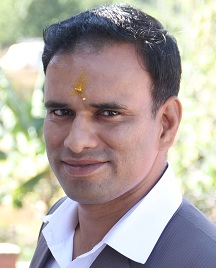
Bhupender Singh Rawat

@coeruniversity.ac.in

Professor Computer Science and Applications
COER University Roorkee

RESEARCH, TEACHING, or OTHER INTERESTS

Computer Science, Artificial Intelligence, Computer Science Applications, Computer Vision and Pattern Recognition
23

Scopus Publications

130

Scholar Citations

6

Scholar h-index

5

Scholar i10-index

Scopus Publications

  • HyCoSwin-PD: An explainable hybrid ConvNeXtV2-Swin transformer framework for Parkinson’s disease detection from neuroimaging
    Vishal Awasthi, Hemant Kumar, Mamta Tiwari, Bhupender Singh Rawat, Brajesh Kumar Sharma, Shubhendra Singh, Rashi Agarwal
    Methodsx, 2026
    Accurate detection of Parkinson's disease (PD) from structural MRI remains a significant challenge due to the diffuse and heterogeneous nature of PD-related neuroanatomical alterations. This study introduces HyCoSwin-PD, an advanced hybrid deep learning framework that integrates ConvNeXt-V2 and Swin Transformer to jointly model fine-grained local morphology and hierarchical global context. ConvNeXt-V2 provides strong convolutional inductive biases for capturing subtle structural variations, whereas Swin Transformer contributes multi-scale contextual reasoning through window-based self-attention. A dedicated fusion mechanism unifies these complementary representations into a coherent latent space optimized for PD classification. Evaluated on the PPMI dataset, HyCoSwin-PD achieves 95.8% accuracy, 95.1% sensitivity, and 96.4% specificity, demonstrating superior diagnostic reliability. Ablation analyses further confirm the synergistic value of hybridizing convolutional and transformer-based encoders. Despite these promising outcomes, the reliance on a unimodal MRI dataset and a limited cohort underscores the need for multi-modal and multi-center validation. Overall, HyCoSwin-PD provides a robust, methodologically novel, and clinically relevant framework for MRI-based PD detection.•HyCoSwin-PD introduces a hybrid architecture that integrates ConvNeXt-V2 for local morphological encoding with Swin Transformer for hierarchical global context modeling.•The framework incorporates a feature fusion module that unifies heterogeneous representations to enhance discriminative capacity in MRI-based PD detection.
  • VGG16 and ResNet50 for Potato Leaf Disease Prediction
    Animesh Srivastava, Sumant Kumar Mohapatra, Parveen Kumar, Bhupender Singh Rawat, Rakesh Pandey, Vikash Sawan
    Proceedings of the 4th International Conference on Intelligent Data Communication Technologies and Internet of Things Idciot 2026, 2026
    Precision potato leaf disease detection is a key element in ensuring food security and minimal loss of food production. Traditional detection using manual processing has the limitation of high cost and labor intensity in particular during the infection stage. In this paper, we have done a comparison analysis transfer learning based performance of two popular deep CNN architectures- VGG16 and ResNet50 to classify potato leaf diseases. The data set was normalized and enhanced and then categorized into healthy, early blight, and late blight. Custom dense layers are added and further trained both models on the augmented dataset to evaluate their performance. Two different architectures are tested in the experiments. Results show that both models can achieve exciting performance results, in particular ResNet50 has the best performance; the average accuracy of ResNet50 is 96%, which is 2% higher than VGG16. With ResNet50, residual learning architecture can alleviate the problem of vanishing gradient and learn features more effectively, thus it can achieve better generalization results and faster convergence speed. The results indicate that transfer learning with deep residual architectures allows for a, robust and scalable model to detect potato diseases. This work is a stepping stone for intelligent, IoTfriendly and agriculture systems for disease detection and yield improvement of crops.
  • Deep Model Exposure and Classification of Diabetic Retinopathy Using Fundus Imaging
    Ankur Kaushik, Bhupender Singh Rawat
    2025 3rd International Conference on Communication Security and Artificial Intelligence Iccsai 2025, 2025
    Diabetic retinopathy is the most common complication of diabetes mellitus and a major cause of preventable blindness worldwide. Despite significant advances, effective treatment options remain limited, especially for proliferative diabetic retinopathy and diabetic macular edema. This paper presents a new Prognosis of Microaneurysm and Non-Proliferative Diabetic Retinopathy (PMNPDR) detection framework based on deep convolutional neural networks (CNNs) for semantic segmentation of retinal fundus images. Using integration of sophisticated technologies such as convolutional 3D layers, pooling, and activation with ReLU gives the potential feature extraction ability which reduces overfitting. By using PMNPDR architecture the accuracy comes around 99.6 % followed by 98.11 % and 99.32 % with sensitivity and specificity respectively, indicating a drastic improved performance against most of the commonly used architectures for example, AlexNet, VGGNet and GoogleNet, etc. Accurate classification of DR stages by the system has proved that deep learning models can transform early diagnosis and thus lead to timely interventions with better patient outcomes. This study underlines the importance of harnessing AI-driven solutions for superior diagnostic accuracy and efficiency in combating DR.
  • Enhancing DBSCAN via KD-Tree and Ball-Tree Structures in a Performance-Driven Way
    Bhupender Singh Rawat, Anushree Singh, Himanshu Sharma, Renu Bahuguna, Pooja Verma
    2025 7th International Conference on Information Systems and Computer Networks Iscon 2025, 2025
    The widely used clustering method known as Density-Based Spatial Clustering of Applications with Noise (DBSCAN) combines densely packed data points and recognises sparse areas as outliers. DBSCAN's adaptability stems from its ability to identify clusters of varying shapes without needing a pre-defined number of clusters. This makes it applicable across diverse fields. However, challenges like high-dimensional data processing, parameter sensitivity, and scalability with massive datasets can limit its effectiveness. This research focuses on enhancing the efficiency of DBSCAN by optimizing nearest neighbor search techniques, specifically Ball-tree, KD-tree, and Approximate Nearest Neighbors (ANN). These optimizations aim to reduce computational complexity, improve clustering performance, and increase DBSCAN's applicability to large-scale, highdimensional datasets. We also analyze the impact of these improvements in domains such as geospatial analysis, anomaly detection, and bioinformatics. Ultimately, this study provides insights into overcoming DBSCAN's limitations and maximizing its practical utility.
  • Unveiling the Impact of Social Media on Employment: A Comprehensive Analysis
    Bhupender Singh Rawat, Saurabh Kumar, Nidhi, Kaustubh Vaijapurkar, Nitesh Kumar Saxena, Siddharth Pandey
    2025 7th International Conference on Information Systems and Computer Networks Iscon 2025, 2025
    The impact of social media on recruitment in India has been a topic of discussion for several years. Social media have revolutionised the way recruiters and job seekers communicate and interact with each other. The objective of this research paper is to examine the impact of social media on recruitment. The research was conducted using a quantitative methodology, and data was collected through an online survey of employers from various industries. The study found that social media has a positive impact on recruitment, as it provides employers with greater access to potential candidates, and enables them to communicate with job seekers more efficiently. This paper concludes with recommendations on how organizations can leverage social media for effective recruitment. Social media has made it possible for people to communicate and share information with others nearly instantly, whereas in the past, sending notes by hand took time and required perseverance. This eases the mode of communication and can be very influential in people's lives. Looking at today's world, it's easy to understand why using applications is no longer a problem. With the internet, one may do a lot more and spend less time looking for what they're looking for. The objective of this research is to analyze the influence of social networks on hiring practices. In this, we will apply statistics and conduct an online survey among 150 employers from different sectors of the Indian economy.
  • YOLO based Potato Leaf Disease Detection Method
    Animesh Srivastava, Bhupender Singh Rawat, Km Ujjawal, Anuj Kumar, Sant Kumar Maurya, Vikash Sawan
    Proceedings of 5th International Conference on Soft Computing for Security Applications Icscsa 2025, 2025
    This paper presents to accurately identify potato leaf diseases, this paper focus on a deep learning method utilizing YOLOv11. Its main objective is to differentiate between healthy leaves, late blight, and early blight. A dataset of 240 images of potato leaves 80 Images for each category was used in the study. In order to increase dataset diversity, pre-processing techniques included resizing images to 640x640 pixels and using data augmentation techniques like flipping, rotation, and brightness adjustment. With an overall accuracy of 94.1%, the YOLOv11 architecture performed better in detection than YOLOv7 and YOLOv8. Notably, YOLOv11 remained resilient under various imaging conditions and demonstrated exceptional performance in identifying subtle disease symptoms. In actual agricultural settings, this paper demonstrates the great potential of YOLOv11 for disease intervention, crop loss reduction, and the promotion of sustainable potato farming practices. The results highlight YOLOv11’s promise for real-time, in-field disease monitoring in precision agriculture, allowing for timely intervention and sustainable crop management.
  • GJO-XGBoost: Optimized XGBoost with Golden Jackal Algorithm for 30-Days Mortality in Sepsis Patients
    International Journal of Intelligent Engineering and Systems, 2025
    Sepsis is a critical condition that remains a global health concern due to its high mortality rate and unpredictable progression.Accurate prediction of 30-day mortality in sepsis patients is pivotal for timely clinical intervention and effective resource allocation.This study introduces an innovative framework that integrates the Golden Jackal Optimization (GJO) algorithm with the XGBoost model to enhance the prediction accuracy of sepsis mortality, utilizing the MIMIC-III dataset.The GJO algorithm was applied to optimize the hyperparameters of the XGBoost model, effectively exploring complex search spaces in high-dimensional data.The model's performance was validated through 5-fold cross-validation and compared against traditional models and advanced ML models such as LightGBM and CatBoost.The GJO-XGBoost model achieved an AUC-ROC of 0.993 and an accuracy of 98.95%, outperforming the baseline XGBoost model (94.71%) and other machine learning models like LightGBM and CatBoost.With precision and sensitivity rates of 99.12% and 98.87%, respectively, the model demonstrated high reliability and generalizability.External validation using the eICU Collaborative Research Database demonstrated the model's robustness and generalizability, achieving an accuracy of 98.51%.Feature importance analysis using SHAP values provided insights into key predictors, ensuring clinical relevance and interpretability.The GJO-XGBoost framework shows promise as a clinical decision-support tool for enabling timely interventions in high-risk sepsis cases.
  • Health Monitoring Transforming Using IoT: A Review
    Nidhi, Bhupender Singh Rawat, Animesh Srivastava, Navin Garg
    Proceedings International Conference on Computing Power and Communication Technologies Ic2pct 2024, 2024
    The power of the Internet to manage healthcare is transforming the healthcare industry. With the advent of Internet of Things technology, healthcare providers can now collect real-time data from patients and send them live health assessments. This creative approach can improve patient outcomes, reduce healthcare costs, and strengthen preventive services. IoT-compliant healthcare systems include wearable technology, sensors and connected healthcare systems. These devices collect various physiological data such as body temperature, heart rate, blood pressure and activity level. The information is then securely transmitted to nurses or specialists so they can monitor the patient’s condition remotely. Personal and regular maintenance is one of the most important benefits of online health monitoring. The information is then securely transmitted to nurses or specialists so they can monitor the patient’s condition remotely. Personal and regular maintenance is one of the most important benefits of online health monitoring. Health care providers can anticipate changes in patients and health indicators and respond quickly. This treatment can be especially useful for patients who need post-operative care, have chronic diseases or are elderly. Additionally, it encourages patient empowerment and engagement in healthcare services through IoT-based health management. Patients can track their progress, actively participate in their treatment plans, and receive personalized feedback. This participation improves patient adherence and creates a sense of control. Furthermore, combining IoT data with artificial intelligence and machine learning algorithms enables advanced analytics and predictive modeling. Healthcare professionals will also benefit from these features.
  • DDoS Attacks Detection in IoT Networks using Naive Bayes and Random Forest
    Animesh Srivastava, Shweta Tiwari, Bhupender Singh Rawat, Shiv Ashish Dhondiyal
    Proceedings of the 3rd International Conference on Applied Artificial Intelligence and Computing Icaaic 2024, 2024
    The proliferation of Internet of Things (IoT) devices has resulted in numerous benefits, including streamlined tasks and improved connectivity but has also raised concerns regarding security vulnerabilities. Distributed Denial of Service (DDoS) attacks targeting IoT systems pose a significant threat, potentially disrupting operational activities. This study conducts a comparative analysis of existing methodologies to detect DDoS attacks in IoT environments, focusing on the efficacy of machine learning algorithms. Specifically, this study evaluates the performance of Random Forest and Naive Bayes classifiers in detecting DDoS attacks using an IoT dataset. The evaluation involves training and testing these classifiers and assessing their accuracy as a key performance metric. Empirical findings demonstrate enhanced precision in identifying DDoS attacks in IoT environment, indicating the effectiveness of the proposed approach. By leveraging machine learning algorithms, particularly Random Forest and Naive Bayes, traditional techniques for detecting and mitigating DDoS attacks in IoT environments are accelerated, thus enhancing the security of IoT systems.
  • Potato Leaf Disease Detection Method Based on the YOLO Model
    Animesh Srivastava, Bhupender Singh Rawat, Prashant Bajpai, Shiv Ashish Dhondiyal
    IEEE International Conference on Data Engineering and Communication Systems Icdecs 2024, 2024
    Global potato production is at risk because of potato leaf diseases, which cause huge economic losses. To ensure crop productivity and disease management, their efficient and accurate localization is of utmost importance. The YOLOv7 deep learning model is presented in this paper as a means of disease detection and classification in potato leaves. The suggested approach uses YOLOv7’s superior detection accuracy to successfully identify and categorize potato leaf diseases. To train the model, we used a wide variety of images showing both healthy and diseased potato leaves. Verified by the test results, the suggested methodology successfully identified and classified diseases affecting potato foliage with a 98.1% accuracy rate. Through early disease detection and prompt control measure implementation, this method holds great promise for enhancing the yield and quality of potato crops in precision agriculture systems. The proposed framework shows great promise for practical implementation, as the experimental results confirm that it offers enhanced accuracy in detecting and predicting potato crop diseases.
  • Cotton leaf disease prediction using VGG16 and RESNET50
    Animesh Srivastava, Bhupender Singh Rawat, Gautam Kumar, Vivek Bhatnagar, Navin Garg
    2024 Parul International Conference on Engineering and Technology Picet 2024, 2024
  • A Comprehensive Analysis of Applications in Internet of Things Networks in 5G and 6G
    Bhupender Singh Rawat, Animesh Srivastava, Vivek Shrivastava, Gulbir Singh, Navin Garg
    2024 2nd International Conference on Computer Communication and Control Ic4 2024, 2024
  • Comparative Analysis of Blowfish and Twofish Cryptographic Protocol
    Bhupender Singh Rawat, Anushree Singh, Hemendra Shankar Sharma, Megha Saxena, Pooja Verma
    5th International Conference on Sustainable Communication Networks and Application Icscna 2024 Proceedings, 2024
  • Blockchain and Machine Learning for Data-Driven Insights in Consumer Behavior Analytics
    Bhupender Singh Rawat, Nitin Thapliyal, Sunil Kumar Pal, Nikhil Mishra, Rohan Verma
    Proceedings 2024 13th IEEE International Conference on Communication Systems and Network Technologies Csnt 2024, 2024
  • Potato Leaf Disease Detection Method is Based on the Support Vector Machines
    Animesh Srivastava, Bhupender Singh Rawat, Vikash Sawan, Vishal, Shiv Ashish Dhondiyal
    Proceedings 2024 2nd International Conference on Advanced Computing and Communication Technologies Icacctech 2024, 2024
  • A Review on Protecting SCADA Systems from DDOS Attacks
    Animesh Srivastava, Bhupender Singh Rawat, Sant Kumar Maurya
    2023 4th International Conference on Electronics and Sustainable Communication Systems Icesc 2023 Proceedings, 2023
  • Safe Methods for Authenticating Internet-of-Things Devices
    Bhupender Singh Rawat, Krishna Kumar, Deepak Kumar, Ms. Neetu
    2023 International Conference on Computational Intelligence Communication Technology and Networking Cictn 2023, 2023
  • A Review of the Authentication Scheme Using HECC and ECC
    Animesh Srivastava, Bhupender Singh Rawat, Gulbir Singh, Vivek Bhatnagar, Shiv Ashish Dhondiyal
    2023 IEEE International Conference on Blockchain and Distributed Systems Security Icbds 2023, 2023
  • Recognition of Attacks on IoT Devices and Their Prevention Using Deep Learning Methods
    Bhupender Singh Rawat, Animesh Srivastava, Gulbir Singh, Vivek Bhatnagar, Shiv Ashish Dhondiyal
    2023 IEEE International Conference on Blockchain and Distributed Systems Security Icbds 2023, 2023
  • Hybrid Clustering Techniques for Optimizing Online Datasets Using Data Mining Techniques
    Bhupender Singh Rawat, Animesh Srivastava, Gulbir Singh, Gautam Kumar, Shiv Ashish Dhondiyal
    2023 IEEE International Conference on Blockchain and Distributed Systems Security Icbds 2023, 2023
  • Enhancing Traffic Engineering Policy in SDN Addressing TCAM limitations using Bloom Filters
    Akash Ghosh, Lalbihari Barik, Suchismita Rout, Bhupender Singh Rawat, Prakash Chandra Jena, Sudhansu Shekhar Patra
    2023 4th IEEE Global Conference for Advancement in Technology Gcat 2023, 2023
  • A Review of Optimization Algorithms for Training Neural Networks
    Animesh Srivastava, Bhupender Singh Rawat, Gulbir Singh, Vivek Bhatnagar, Parveen Kumar Saini, Shiv Ashish Dhondiyal
    2023 International Conference on Sustainable Emerging Innovations in Engineering and Technology Icseiet 2023, 2023
  • The Empirical Analysis of Artificial Intelligence Approaches for Enhancing the Cyber Security for Better Quality
    Bhupender Singh Rawat, Durgaprasad Gangodkar, Veera Talukdar, Komal Saxena, Chamandeep Kaur, Suryabhan Pratap Singh
    Proceedings of 5th International Conference on Contemporary Computing and Informatics Ic3i 2022, 2022

RECENT SCHOLAR PUBLICATIONS

  • HyCoSwin-PD: An explainable hybrid ConvNeXtV2-Swin transformer framework for Parkinson’s disease detection from neuroimaging
    V Awasthi, H Kumar, M Tiwari, BS Rawat, BK Sharma, S Singh, R Agarwal
    MethodsX, 103868 , 2026
    2026
  • VGG16 and ResNet50 for Potato Leaf Disease Prediction
    A Srivastava, SK Mohapatra, P Kumar, BS Rawat, R Pandey, V Sawan
    2026 4th International Conference on Intelligent Data Communication … , 2026
    2026
  • Unveiling the Impact of Social Media on Employment: A Comprehensive Analysis
    BS Rawat, S Kumar, K Vaijapurkar, NK Saxena, S Pandey
    2025 7th International Conference on Information Systems and Computer … , 2025
    2025
  • Enhancing DBSCAN via KD-Tree and Ball-Tree Structures in a Performance-Driven Way
    BS Rawat, A Singh, H Sharma, R Bahuguna, P Verma
    2025 7th International Conference on Information Systems and Computer … , 2025
    2025
  • YOLO based Potato Leaf Disease Detection Method
    A Srivastava, BS Rawat, K Ujjawal, A Kumar, SK Maurya, V Sawan
    2025 5th International Conference on Soft Computing for Security … , 2025
    2025
    Citations: 1
  • Deep Model Exposure and Classification of Diabetic Retinopathy Using Fundus Imaging
    A Kaushik, BS Rawat
    2025 3rd International Conference on Communication, Security, and Artificial … , 2025
    2025
    Citations: 1
  • GJO-XGBoost: Optimized XGBoost with Golden Jackal Algorithm for 30-Days Mortality in Sepsis Patients.
    M Tiwari, V Awasthi, D Sahu, A Dwivedi, BS Rawat, S Kumar, R Agarwal, ...
    International Journal of Intelligent Engineering & Systems 18 (2) , 2025
    2025
    Citations: 1
  • An Explainable Machine Learning Framework for Multi-Class Lung Disease Diagnosis from Chest X-Ray Images
    BSR Sohan Lal
    JOURNAL OF APPLIED BIOANALYSIS 11 (6), 414-423 , 2025
    2025
  • A Multimodal Framework For Lung Disease Diagnosis Using Multi Datasets
    BSR Sohan Lal
    JOURNAL OF APPLIED BIOANALYSIS 11 (9s), 325-339 , 2025
    2025
  • Comparative Analysis of Blowfish and Twofish Cryptographic Protocol
    BS Rawat, A Singh, HS Sharma, M Saxena, P Verma
    2024 International Conference on Sustainable Communication Networks and … , 2024
    2024
    Citations: 1
  • Potato Leaf Disease Detection Method is Based on the Support Vector Machines
    A Srivastava, BS Rawat, V Sawan, SA Dhondiyal
    2024 Second International Conference on Advanced Computing & Communication … , 2024
    2024
    Citations: 1
  • DDoS Attacks Detection in IoT Networks using Naive Bayes and Random Forest
    A Srivastava, S Tiwari, BS Rawat, SA Dhondiyal
    2024 3rd International Conference on Applied Artificial Intelligence and … , 2024
    2024
    Citations: 2
  • Cotton leaf disease prediction using VGG16 and RESNET50
    A Srivastava, BS Rawat, G Kumar, V Bhatnagar, N Garg
    2024 Parul International Conference on Engineering and Technology (PICET), 1-6 , 2024
    2024
    Citations: 4
  • Blockchain and Machine Learning for Data-Driven Insights in Consumer Behavior Analytics
    BS Rawat, N Thapliyal, SK Pal, N Mishra, R Verma
    2024 IEEE 13th International Conference on Communication Systems and Network … , 2024
    2024
    Citations: 3
  • Potato leaf disease detection method based on the YOLO model
    A Srivastava, BS Rawat, P Bajpai, SA Dhondiyal
    2024 4th International Conference on Data Engineering and Communication … , 2024
    2024
    Citations: 20
  • Health monitoring transforming using IoT: a review
    BS Rawat, A Srivastava, N Garg
    2024 IEEE International Conference on Computing, Power and Communication … , 2024
    2024
    Citations: 9
  • A comprehensive analysis of applications in Internet of Things networks in 5G and 6G
    BS Rawat, A Srivastava, V Shrivastava, G Singh, N Garg
    2024 2nd International Conference on Computer, Communication and Control … , 2024
    2024
    Citations: 13
  • Game-Theoretic Modeling of Adversarial Strategies in GPU Side-Channel Attacks
    SSP Nelson Lungu, Lalbihari Barik , Jatinder kumar R. Saini, Bhupender Singh ...
    Nanotechnology Perceptions 20 (No. 5) , 2024
    2024
  • Enhancing Traffic Engineering Policy in SDN Addressing TCAM limitations using Bloom Filters
    A Ghosh, L Barik, S Rout, BS Rawat, PC Jena, SS Patra
    2023 4th IEEE Global Conference for Advancement in Technology (GCAT), 1-6 , 2023
    2023
    Citations: 2
  • Recognition of Attacks on IoT Devices and Their Prevention Using Deep Learning Methods
    BS Rawat, A Srivastava, G Singh, V Bhatnagar, SA Dhondiyal
    2023 IEEE International Conference on Blockchain and Distributed Systems … , 2023
    2023
    Citations: 4

MOST CITED SCHOLAR PUBLICATIONS

  • A review of optimization algorithms for training neural networks
    A Srivastava, BS Rawat, G Singh, V Bhatnagar, PK Saini, SA Dhondiyal
    2023 International conference on sustainable emerging innovations in … , 2023
    2023
    Citations: 26
  • Potato leaf disease detection method based on the YOLO model
    A Srivastava, BS Rawat, P Bajpai, SA Dhondiyal
    2024 4th International Conference on Data Engineering and Communication … , 2024
    2024
    Citations: 20
  • A Review on Protecting SCADA Systems from DDOS Attacks
    A Srivastava, BS Rawat, SK Maurya
    2023 4th International Conference on Electronics and Sustainable … , 2023
    2023
    Citations: 16
  • The empirical analysis of artificial intelligence approaches for enhancing the cyber security for better quality
    BS Rawat, D Gangodkar, V Talukdar, K Saxena, C Kaur, SP Singh
    2022 5th International Conference on Contemporary Computing and Informatics … , 2022
    2022
    Citations: 15
  • A comprehensive analysis of applications in Internet of Things networks in 5G and 6G
    BS Rawat, A Srivastava, V Shrivastava, G Singh, N Garg
    2024 2nd International Conference on Computer, Communication and Control … , 2024
    2024
    Citations: 13
  • Health monitoring transforming using IoT: a review
    BS Rawat, A Srivastava, N Garg
    2024 IEEE International Conference on Computing, Power and Communication … , 2024
    2024
    Citations: 9
  • Cotton leaf disease prediction using VGG16 and RESNET50
    A Srivastava, BS Rawat, G Kumar, V Bhatnagar, N Garg
    2024 Parul International Conference on Engineering and Technology (PICET), 1-6 , 2024
    2024
    Citations: 4
  • Recognition of Attacks on IoT Devices and Their Prevention Using Deep Learning Methods
    BS Rawat, A Srivastava, G Singh, V Bhatnagar, SA Dhondiyal
    2023 IEEE International Conference on Blockchain and Distributed Systems … , 2023
    2023
    Citations: 4
  • Blockchain and Machine Learning for Data-Driven Insights in Consumer Behavior Analytics
    BS Rawat, N Thapliyal, SK Pal, N Mishra, R Verma
    2024 IEEE 13th International Conference on Communication Systems and Network … , 2024
    2024
    Citations: 3
  • A review of the authentication scheme using hecc and ecc
    A Srivastava, BS Rawat, G Singh, V Bhatnagar, SA Dhondiyal
    2023 IEEE International Conference on Blockchain and Distributed Systems … , 2023
    2023
    Citations: 3
  • DDoS Attacks Detection in IoT Networks using Naive Bayes and Random Forest
    A Srivastava, S Tiwari, BS Rawat, SA Dhondiyal
    2024 3rd International Conference on Applied Artificial Intelligence and … , 2024
    2024
    Citations: 2
  • Enhancing Traffic Engineering Policy in SDN Addressing TCAM limitations using Bloom Filters
    A Ghosh, L Barik, S Rout, BS Rawat, PC Jena, SS Patra
    2023 4th IEEE Global Conference for Advancement in Technology (GCAT), 1-6 , 2023
    2023
    Citations: 2
  • Hybrid clustering techniques for optimizing online datasets using data mining techniques
    BS Rawat, A Srivastava, G Singh, G Kumar, SA Dhondiyal
    2023 IEEE International Conference on Blockchain and Distributed Systems … , 2023
    2023
    Citations: 2
  • Safe Methods for Authenticating Internet-of-Things Devices
    BS Rawat, K Kumar, D Kumar, M Neetu
    2023 International Conference on Computational Intelligence, Communication … , 2023
    2023
    Citations: 2
  • Rapid Clustering Algorithm for Optimizing Cognate Data of Online Database
    SSB B.S. Rawat, K. Kumar, R.K. Mishra
    International Journal of Computer Sciences and Engineering 7 (5), 1076-1082 , 2019
    2019
    Citations: 2
  • Optimizing Data Pattern of Targeted Customers Using Datamining Techniques: A Review
    RKM B.S. Rawat, K. Kumar
    International Journal of Computer Sciences and Engineering 6 (9), 584-588 , 2018
    2018
    Citations: 2
  • YOLO based Potato Leaf Disease Detection Method
    A Srivastava, BS Rawat, K Ujjawal, A Kumar, SK Maurya, V Sawan
    2025 5th International Conference on Soft Computing for Security … , 2025
    2025
    Citations: 1
  • Deep Model Exposure and Classification of Diabetic Retinopathy Using Fundus Imaging
    A Kaushik, BS Rawat
    2025 3rd International Conference on Communication, Security, and Artificial … , 2025
    2025
    Citations: 1
  • GJO-XGBoost: Optimized XGBoost with Golden Jackal Algorithm for 30-Days Mortality in Sepsis Patients.
    M Tiwari, V Awasthi, D Sahu, A Dwivedi, BS Rawat, S Kumar, R Agarwal, ...
    International Journal of Intelligent Engineering & Systems 18 (2) , 2025
    2025
    Citations: 1
  • Comparative Analysis of Blowfish and Twofish Cryptographic Protocol
    BS Rawat, A Singh, HS Sharma, M Saxena, P Verma
    2024 International Conference on Sustainable Communication Networks and … , 2024
    2024
    Citations: 1