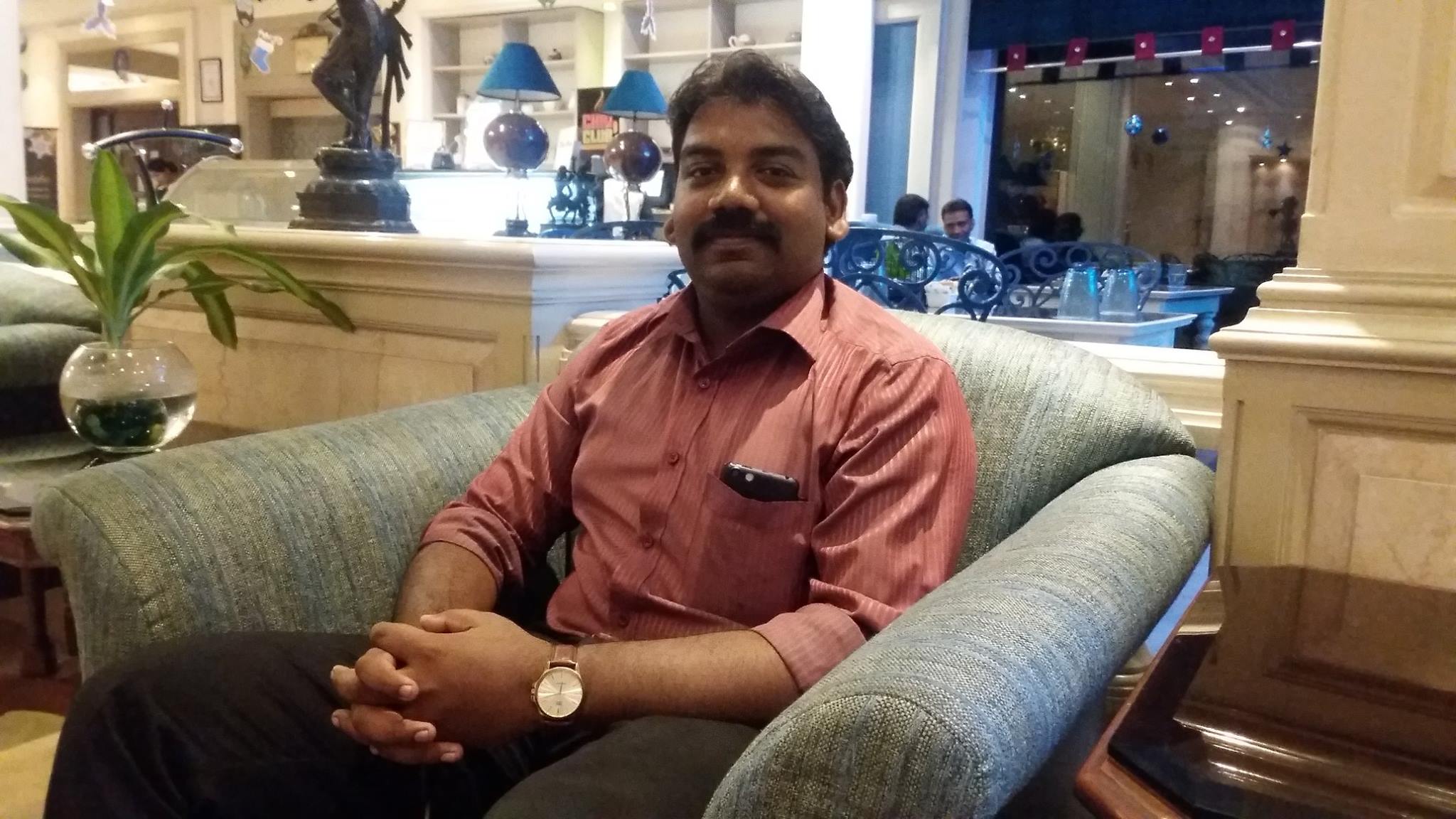
I am Dr. A. Samson Arun Raj, serving as an Assistant Professor (Grade I) in the Division of Computer Science and Engineering, School of Computer Science and Technology at Karunya Institute of Technology and Sciences, Coimbatore.
I earned my Ph.D. in Information Science and Technology (Full-Time) from the College of Engineering, Guindy, Anna University, Chennai, in March 2021.
My research interests and expertise span:
1. Wireless Sensor Networks (WSN)
2. Vehicular Ad Hoc Networks (VANET)
3. Intelligent Transportation Systems (ITS)
I am passionate about advancing modern communication technologies, developing intelligent mobility solutions, and contributing to high-impact research in next-generation networked systems.
EDUCATION
completed my PhD Degree (March 2021) in the Department of Information Science and Technology, College of Engineering Guindy, Anna University, Chennai. My research domain is in the area of Vehicular Ad-Hoc Network for Intelligent Transportation Systems Applications.
Dissertation Title - A Programmable Mobile-Road Side Unit (MOBILE-RSU) Framework for Vehicular Ad-Hoc Networks
RESEARCH, TEACHING, or OTHER INTERESTS
Transportation, Statistics, Probability and Uncertainty, Engineering, Computer Science
35
Scopus Publications
296
Scholar Citations
7
Scholar h-index
5
Scholar i10-index
Scopus Publications
Federated micro-expression mining and multi-modal metadata fusion for Deepfake fraud detection in ubiquitous financial video-KYC systems at IoT network Romil Rawat, Anjali Rawat, Shweta Gupta, A. Samson Arun Raj, T.M. Thiyagu, Hitesh Rawat, Anand Rajavat Franklin Open, 2026 Introduction & Problem Statement- The increasing sophistication of AI-generated deepfakes poses significant challenges for financial video-KYC systems, where identity verification relies on accurate and real-time analysis of user biometrics. Traditional centralized and unimodal detection models struggle to balance accuracy, privacy, and deployment scalability, particularly across heterogeneous IoT edge devices. Need for Research-There is a pressing need for privacy-preserving, scalable, and robust deepfake detection mechanisms capable of identifying subtle manipulations in real-world financial environments. Current solutions often fail under domain-shift conditions, low-resolution inputs, or in scenarios involving complex micro-expression and behavioral cues. Proposed Work & Objective- This research proposes the Federated Micro-Expression Mining and Multi-Modal Metadata Fusion (FED-MEMF) framework, designed to accurately detect deepfake fraud in decentralized video-KYC systems. The objectives are to (i) enhance detection accuracy by leveraging facial micro-expression dynamics, audio signals, and session metadata, and (ii) preserve user privacy through federated learning while ensuring low-latency real-time inference. Novelty- The novelty lies in integrating fine-grained micro-expression analysis with behavioral metadata fusion in a federated learning environment, combined with cross-modal attention mechanisms. This approach enables robust detection across multiple datasets while maintaining privacy and edge-device compatibility. Method- The framework employs modality-specific encoders—μ-Transformer for micro-expressions, CNN for audio, and LSTM for metadata—with features fused via a cross-modal attention engine. Federated Averaging (FedAvg) aggregates local model updates from IoT edge devices without transferring sensitive data. Quantization and hardware optimizations enable real-time performance on low-power devices. Dataset- Experiments utilized FaceForensics++, CAS(ME)^2, and a proprietary KYC-FinVox2024 dataset comprising video, audio, and metadata streams, including micro-expression labels, to evaluate both intra- and cross-dataset performance. Results- FED-MEMF achieved an overall accuracy of 98.7%, F1-score of 0.987, AUC of 0.996, and inference latency of 82 ms, outperforming XceptionNet, EfficientNet-B4, and CNN+LSTM baselines. Multi-modal fusion significantly reduced false positives and false negatives, demonstrating robustness under domain-shift conditions. Conclusion & Future Work- FED-MEMF provides a privacy-conscious, real-time, and scalable solution for deepfake detection in financial video-KYC applications. Future directions include multilingual audio-visual alignment, blockchain-enabled federated auditing, explainable AI integration, and deployment in other regulatory-sensitive sectors such as e-governance, healthcare, and remote education verification.
Analyzing the Impact of Network Vulnerability Propagation Factor on Cyber Security Risk Assessment in Online Social Networks Romil Rawat, A. Samson Arun Raj, Hitesh Rawat, Virendra Dani, Anjali Rawat, Anand Rajavat, Yagyanath Rimal Engineering Reports, 2025 With the increasing reliance on online social networks (OSNs) for communication and information sharing, the threat of cyber‐attacks—ranging from bot‐driven misinformation to account hijacking—has grown significantly. This study introduces a novel metric, the network vulnerability propagation factor (NVPF), designed to assess the risk of threat diffusion within OSNs by integrating behavioral, structural, and exposure‐based indicators. The NVPF comprises three components: node vulnerability score (NVS), connectivity index (CI), and propagation weight (PW). Their respective contributions are optimized using particle swarm optimization (PSO) to maximize detection performance. Utilizing the Cresci‐2017 Twitter dataset, which includes 1.6 million user profiles and over 37,000 labeled malicious accounts, the NVPF was calculated and integrated into a gradient boosting machine (GBM) classifier. Experimental results show that users in the top 15% of NVPF scores are 2.4 times more likely to be malicious, and the proposed model achieved an F1‐score of 0.88, precision of 0.90, and recall of 0.86, representing a 24.7% improvement over traditional centrality‐based approaches. These findings demonstrate the effectiveness and scalability of the NVPF model in enhancing cyber security risk assessment and early threat detection within dynamic OSN environments.
Global perspectives: Comparative child protection laws across countries Anjali Rawat, A. Samson Arun Raj, Janet Olivia Richmond, Anand Rajavat, Antonio González-Torres, Purvee Bhardwaj Child Protection Laws and Crime in the Digital Era, 2025 This study presents a comparative evaluation of child protection laws worldwide, focusing on their effectiveness in preventing abuse, neglect, and exploitation. Drawing from the 2024 Global Child Protection Law Dataset, which includes legal data from over 100 nations, the research examines variables such as age limits, abuse penalties, child welfare structures, and international treaty participation. Using Quantitative Comparative Analysis (QCA), the study assesses legal strength through criteria like enforcement, scope, and public outreach. Machine learning techniques, specifically Random Forest and Support Vector Machine models, classify and rank countries based on the robustness of their child protection frameworks. Findings reveal that countries with comprehensive laws and strong enforcement average an 85.7% effectiveness rate, while those with weaker systems average 62.3%. The research underscores global disparities and offers evidence-based recommendations for legal and policy reform.
Digital literacy initiatives, policy evaluation, and machine learning: Cyber laws and their role in safeguarding children online Hitesh Rawat, Priya Matta, Kuldeep Singh, Prathamesh Muzumdar, A. Samson Arun Raj, Sanjaya Kumar Sarangi Child Protection Laws and Crime in the Digital Era, 2025 As digital education and social media grow rapidly in India, children face increasing risks online, including cyberbullying, exploitation, and exposure to harmful content. This study assesses how effectively Indian cyber laws protect minors in the digital space. A new approach—Legal-Empirical Safeguard Analysis Method (LESAM)—was used, combining legal analysis with real-world data. The study analyzed 7,842 child-targeted cybercrime cases reported to the NCRB from 2018 to 2023. LESAM utilized policy evaluation and machine learning (Random Forest) to classify incidents by severity and response. Findings revealed that 63.4% of cases were handled under the IT Act (2000), while 21.8% involved the POCSO Act. The model accurately identified high-risk cases 91.7% of the time. While current laws provide a strong foundation, enforcement gaps and limited public awareness persist. The study calls for better digital literacy initiatives and improved inter-agency coordination to enhance child safety online.
Preface Integrating Parental Consent and Child Engagement with Digital Protection Rules, 2025
Screen time and safety: How parents can monitor and protect their kids online Yagyanath Rimal, Sunil Parihar, A. Samson Arun Raj, Purvee Bhardwaj, Anjali Rawat, Abhishek Sharma Integrating Parental Consent and Child Engagement with Digital Protection Rules, 2025 As digital technology becomes more integrated into children's lives, ensuring their online safety is increasingly important for parents. This research investigates effective methods for managing screen time and addressing online threats like cyberbullying, harmful content, and phishing. Using the Family Online Safety Dataset (FOSD-2023), which includes 12,000 anonymized records of screen usage and parental controls for children aged 7–16, we developed a hybrid Random Forest–LSTM model. The model identified potential risks with 94.6% accuracy, 92.3% precision, and 93.7% recall. It also offered personalized recommendations to help parents adjust screen time and content filters. The findings underscore the importance of intelligent monitoring tools that promote both safe and balanced digital use.
Designing childcentric platforms: Best practices for social media and gaming - the hidden dangers of online gaming Romil Rawat, Kuldeep Singh, A. Samson Arun Raj, Prathamesh Muzumdar, Sanjaya Kumar Sarangi, Hitesh Rawat Integrating Parental Consent and Child Engagement with Digital Protection Rules, 2025 This study explores the risks children face in online gaming, with a focus on scams such as fraud, harassment, and exploitation. These threats are growing in the digital world and pose serious concerns for young players. Using the 2025 “ChildSafe Gaming Dataset,” which includes over 100,000 reported incidents involving minors, the research analyzes the types and patterns of these scams. The data covers cases of fraud, harassment, and exploitation, along with demographic details. A machine learning model called SecurePlay was developed to detect and classify scam-related content using natural language processing and behavioral analysis. Findings revealed that 42.7% of incidents were fraud-related, 33.1% involved harassment, and 24.2% concerned exploitation. SecurePlay achieved 89.6% accuracy, with an 85.3% precision and 92.4% recall rate, proving effective in identifying threats. The results underscore the urgent need for better safety measures to protect minors in digital gaming environments.
Intelligent Multi-UAV Docking with Predictive Scheduling and Task Reallocation Dhanyashriee S, Samson Arun Raj Proceedings 2025 IEEE 3rd International Symposium on Sustainable Energy Signal Processing and Cybersecurity Isssc 2025, 2025 The growing use of multi-UAV fleets in domains such as surveillance, logistics, and environmental monitoring demands optimized docking operations to avoid congestion and coverage loss. This work proposes an AI-driven docking management framework combining predictive battery scheduling, cooperative task reallocation, and renewable-powered charging stations. The system forecasts time-to-empty using mission context, environmental data, and discharge history, allocating docking slots to maintain minimum active fleet size. A peer-to-peer protocol ensures seamless mission handover to the nearest capable UAV, while docking stations employ hybrid wireless charging and battery swapping powered mainly by solar energy. Simulations show a 30% reduction in docking conflicts, sustained mission coverage above 95%, and up to 22% higher energy efficiency compared to reactive strategies, enabling scalable, sustainable multi-UAV deployments.
Exploring Deep Learning Models for Kidney Stone Prediction: A Comparative Study of ResNet and SENet Architectures 15th International Conference on Advances in Computing Control and Telecommunication Technologies Act 2024, 2024
Video Harmony: Enhancing Emotional Well-being with Video Recommendations for Children with ASD 15th International Conference on Advances in Computing Control and Telecommunication Technologies Act 2024, 2024
Screen Time and Safety: How Parents Can Monitor and Protect Their Kids Online AS Yagyanath Rimal, Sunil Parihar, A. Samson Arun Raj, Purvee Bhardwaj ... Integrating Parental Consent and Child Engagement With Digital Protection … , 2026 2026
Federated Micro-Expression Mining and Multi-Modal Metadata Fusion for Deepfake Fraud Detection in Ubiquitous Financial Video-KYC Systems at IoT Network S Gupta, ASA RAJ, TM Thiyagu Franklin Open, 100523 , 2026 2026
Digital Literacy Initiatives, Policy Evaluation, and Machine Learning: Cyber Laws and Their Role in Safeguarding Children Online H Rawat, P Matta, K Singh, P Muzumdar, ASA Raj, SK Sarangi Child Protection Laws and Crime in the Digital Era, 281-304 , 2026 2026 Citations: 2
Global Perspectives: Comparative Child Protection Laws Across Countries A Rawat, ASA Raj, JO Richmond, A Rajavat, A González-Torres, ... Child Protection Laws and Crime in the Digital Era, 133-154 , 2026 2026 Citations: 10
Designing Child-Centric Platforms: Best Practices for Social Media and Gaming-The Hidden Dangers of Online Gaming R Rawat, K Singh, ASA Raj, P Muzumdar, SK Sarangi, H Rawat Integrating Parental Consent and Child Engagement With Digital Protection … , 2026 2026
How Attackers Can Steal and Manipulate Brainwave Signals ASA Raj, AS Rathore, J Mirza, A Chourasia, A Sharma Cognitive Cyber Crimes in the Era of Artificial Intelligence, 69-84 , 2025 2025
AI‐Powered Misinformation Campaigns and Subliminal Influence Tactics RK Chakrawarti, ASA Raj, A Soni, S Chirgaiya Cognitive Cyber Crimes in the Era of Artificial Intelligence, 135-151 , 2025 2025
Dynamic Quarantine Slicing for DDoS Mitigation in Healthcare SDN Environments S Marshal, JW Kathrine, S Prince, ASA Raj 2025 International Conference on Data, Energy and Communication Networks … , 2025 2025
Cognitive Cyber Crimes in the Era of Artificial Intelligence RK Chakrawarti, R Rawat, KB Singh, ASA Raj, A Singh, H Rawat, ... John Wiley & Sons , 2025 2025
Beyond Memorization: Generalizable Snake AI with DDQN in Cluttered Environments PJ Wesley, SA Raj 2025 IEEE 3rd International Symposium on Sustainable Energy, Signal … , 2025 2025
Intelligent Multi-UAV Docking with Predictive Scheduling and Task Reallocation S Dhanyashriee, SA Raj 2025 IEEE 3rd International Symposium on Sustainable Energy, Signal … , 2025 2025
Analyzing the Impact of Network Vulnerability Propagation Factor on Cyber Security Risk Assessment in Online Social Networks R Rawat, ASA Raj, H Rawat, V Dani, A Rawat, A Rajavat, Y Rimal Engineering Reports 7 (11), e70391 , 2025 2025
Energy-Efficient Hybrid Detection Framework for Suspicious Software Components in Mobile Applications using Echo State Networks H Rawat, A Samson Arun Raj, A González-Torres, P Bhardwaj, ... International Journal of Information Technology, 1-12 , 2025 2025 Citations: 3
Detecting Traffic Police Hand Gestures With Movenet Thunder for Self-Driving Cars SA Raj 2025 International Conference on Inventive Computation Technologies (ICICT … , 2025 2025 Citations: 1
Boosting Multi-Cancer Classification: A Deep Dive into VGG and Efficient Net MD Kannan, SA Raj 2025 3rd International Conference on Advancements in Electrical, Electronics … , 2025 2025
MindMate: AI-Powered Multilingual Mental Health Chatbot with Personalized Voice and Text Support with Rasa and Streamlit S Dharshini, SA Raj A, R Venkatesan 2025 International Conference on Intelligent Computing and Control Systems … , 2025 2025 Citations: 7
Enhanced Cybercrime Detection on Twitter Using Aho-Corasick Algorithm and Machine Learning Techniques R Rawat, ASA Raj, RK Chakrawarti, KS Sankaran, SK Sarangi, H Rawat, ... Informatica 48 (18), 97-108 , 2024 2024 Citations: 53
to Improve Safety of Drivers S Niranjan, TJ Jebaseeli, SA Raj, S Marshal Soft Computing: Theories and Applications: Proceedings of SoCTA 2023, Volume … , 2024 2024
Exploring Deep Learning Models for Kidney Stone Prediction: A Comparative Study of ResNet and SENet Architectures. AS Arun Raj Grenze International Journal of Engineering & Technology (GIJET) 10 , 2024 2024
MOST CITED SCHOLAR PUBLICATIONS
Association rule learning for threat analysis using traffic analysis and packet filtering approach R Rawat, RK Chakrawarti, ASA Raj, G Mani, K Chidambarathanu, ... International journal of information technology 15 (6), 3245-3255 , 2023 2023 Citations: 115
Enhanced Cybercrime Detection on Twitter Using Aho-Corasick Algorithm and Machine Learning Techniques R Rawat, ASA Raj, RK Chakrawarti, KS Sankaran, SK Sarangi, H Rawat, ... Informatica 48 (18), 97-108 , 2024 2024 Citations: 53
An analysis of the significance of spring boot in the market M Mythily, ASA Raj, IT Joseph 2022 international conference on inventive computation technologies (ICICT … , 2022 2022 Citations: 53
An aerial intelligent relay-road side unit (AIR-RSU) framework for modern intelligent transportation system ASA Raj, Y Palanichamy Peer-to-Peer Networking and Applications 13, 965-986 , 2020 2020 Citations: 16
Global Perspectives: Comparative Child Protection Laws Across Countries A Rawat, ASA Raj, JO Richmond, A Rajavat, A González-Torres, ... Child Protection Laws and Crime in the Digital Era, 133-154 , 2026 2026 Citations: 10
Uav assisted automated remote monitoring and control system for smart water bodies PS Perumal, ASA Raj, BMS Bharathi, GM Raju, K Yogeswari 2017 Second International Conference on Recent Trends and Challenges in … , 2017 2017 Citations: 9
A survey on classification of fault tolerance techniques available in wireless sensor network ASA Raj, K Ramalakshmi, C Priyadharsini International Journal of Engineering Research and Technology 3 (1), 668-691 , 2014 2014 Citations: 8
MindMate: AI-Powered Multilingual Mental Health Chatbot with Personalized Voice and Text Support with Rasa and Streamlit S Dharshini, SA Raj A, R Venkatesan 2025 International Conference on Intelligent Computing and Control Systems … , 2025 2025 Citations: 7
Packet classification based aerial intelligent relay-road side unit (air-rsu) framework for vehicular ad-hoc networks ASA Raj, Y Palanichamy Peer-to-Peer Networking and Applications 14, 1132–1153 , 2021 2021 Citations: 5
A Mathematical Queuing Model Analysis Using Secure Data Authentication Framework for Modern Healthcare Applications ASA Raj, R Venkatesan, S Malathi, VDA Kumar, E Thenmozhi, ... Journal of Sensors 2022, 1-15 , 2022 2022 Citations: 4
Energy-Efficient Hybrid Detection Framework for Suspicious Software Components in Mobile Applications using Echo State Networks H Rawat, A Samson Arun Raj, A González-Torres, P Bhardwaj, ... International Journal of Information Technology, 1-12 , 2025 2025 Citations: 3
An image-based fall detection system for the elderly using yolov5 S Marshal, SA Raj, TJ Jebaseeli, S Niranjan 2023 2nd International Conference on Automation, Computing and Renewable … , 2023 2023 Citations: 3
Ensemble deep learning models for accurate prediction of cardiovascular disease risk: a comparative analysis J Midhun, ASA Raj, M Beereddy, SP Gandu, GP Sudha, BH Gandu 2023 2nd international conference on edge computing and applications (ICECAA … , 2023 2023 Citations: 3
Digital Literacy Initiatives, Policy Evaluation, and Machine Learning: Cyber Laws and Their Role in Safeguarding Children Online H Rawat, P Matta, K Singh, P Muzumdar, ASA Raj, SK Sarangi Child Protection Laws and Crime in the Digital Era, 281-304 , 2026 2026 Citations: 2
A queueing model-based experimental analysis of mobile-energy distribution stations (M-EDS) for smart city urbanization SA Raj, V Ramachandran, GN Sundar, S Nachiyappan Journal of Advanced Research in Applied Sciences and Engineering Technology … , 2023 2023 Citations: 2
Detecting Traffic Police Hand Gestures With Movenet Thunder for Self-Driving Cars SA Raj 2025 International Conference on Inventive Computation Technologies (ICICT … , 2025 2025 Citations: 1
The future of modern transportation for smart cities using trackless tram networks A Samson Arun Raj, P Yogesh Conversational Artificial Intelligence, 369-384 , 2024 2024 Citations: 1
Drowsiness Detection Using Adaboost Method and Haar Cascade Classifier to Improve Safety of Drivers S Niranjan, TJ Jebaseeli, SA Raj, S Marshal Soft Computing: Theories and Applications: Proceedings of SoCTA 2023 1, 131 , 2024 2024 Citations: 1
Screen Time and Safety: How Parents Can Monitor and Protect Their Kids Online AS Yagyanath Rimal, Sunil Parihar, A. Samson Arun Raj, Purvee Bhardwaj ... Integrating Parental Consent and Child Engagement With Digital Protection … , 2026 2026
Federated Micro-Expression Mining and Multi-Modal Metadata Fusion for Deepfake Fraud Detection in Ubiquitous Financial Video-KYC Systems at IoT Network S Gupta, ASA RAJ, TM Thiyagu Franklin Open, 100523 , 2026 2026