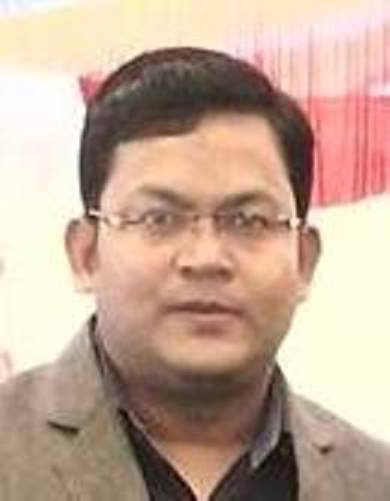
Dr. Ankur Vaidya did his graduation, post graduation and PhD from Deptt. of Pharmaceutical Sciences, Dr. H. S. Gour University, Sagar (M.P.) in 2004, 2008 and 2013 respectively and qualified GATE exam in year 2005 with 87.56 percentile. Dr. Vaidya has a teaching and research experience of more than 10 years and is currently working as Asst. Professor in Pharmacy College UPUMS, Saifai, Etawah (U.P.) India. Dr. Ankur has a key research interest in Drug design and discovery systems and published around 38 outstanding publications in various International journals with h-index of 15 and i-10 index of 19. Dr Vaidya has credited as reviewer of international journals of repute in the field of Pharmaceutical sciences. Dr. Ankur has guided 16 postgraduate theses and was also the recipient of AICTE-NDF (National Doctorate Fellowship) fellowship for PhD research project and UGC fellowship for his M. Pharm project work. Dr. Vaidya has published 5 international book chapters and 1 International boo
EDUCATION
Dr. Ankur Vaidya did his graduation, post graduation and PhD from Deptt. of Pharmaceutical Sciences, Dr. H. S. Gour University, Sagar (M.P.) in 2004, 2008 and 2013 respectively and qualified GATE exam in year 2005 with 87.56 percentile.
Exploring Bioactive Phytochemicals of Hygrophila difformis Blume: Extraction, Isolation, and GC–MS Characterization Krishanu Samanta, Ankur Vaidya, Sanjeev Kumar Sahu, Anil Kumar Sah Journal of Chemistry, 2026 Hygrophila differformis Blume is a traditional plant of scientific interest due to the reported wide range of secondary metabolites. Systematic phytochemical profiling of its solvent fractions is essential to map phytoconstituent distribution, identify bioactive markers, and guide focused pharmacological investigations. Sequential solvent extraction with hexane and ethyl acetate was performed, and the fractions were separated with silica‐gel column chromatography to ascertain numerous fractions. GC–MS of the hexane fractions showed that long‐chain aliphatic hydrocarbons and primary alcohols were the major phytochemicals. Squalene and phytol were terpenoid compounds in significant amounts, which could have some biological importance. Both saturated and unsaturated hydrocarbons and primary alcohols were enriched in the ethyl acetate fractions, and the formation of compounds like neophytadiene and cis, cis, cis‐7,10,13‐hexadecatrienal was only observed in these fractions. Both hexane and ethyl acetate extracts contained fatty acids (n‐hexadecanoic acid), but only ethyl acetate fractions contained linoleic acid and α ‐linolenic acid. A further indication of the pharmacological potential of the plant is the identification of stigmasterol (4.76%) as a marker phytosterol. The GC–MS profiling of hexane and ethyl acetate extracts revealed several bioactive phytochemical classes, which may serve as a chemical reference for future studies focusing on compound isolation, structural characterization, and biological evaluation of this relatively underexplored species.
Indole scaffolds in anticancer drug discovery Diksha Sharma, Shailesh D. Dadge, Kanika Pasrija, Shweta Jain, Umashankar Sharma, et al. Nitrogen Heterocycles in Cancer Therapy, 2025
Caspases activity assay procedures Sourabh Satapathy, Shivam Kumar, Vaibhav Nigam, Balak Das Kurmi, Ankur Vaidya, et al. Caspases as Molecular Targets for Cancer Therapy, 2024
Caspase 7 mutations and their activators Sanjeev Kumar Sahu, Charanjit Kaur, Ankit Yadav, Yashraj Potale, Paranjeet Kaur, et al. Caspases as Molecular Targets for Cancer Therapy, 2024
GRANT DETAILS
Award a research project entitled “Novel pectin 4-aminothiophenole conjugate microspheres for colon cancer” of 3,68,000/- Rs by MPCST, Bhopal (M.P.) India.