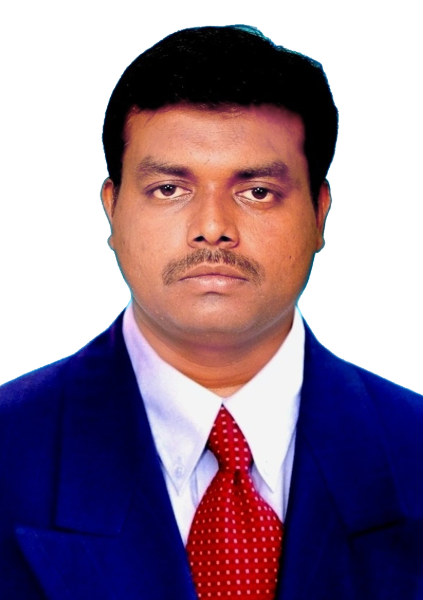
DHANASEKARAN

@mailamengg.com

Associate Professor and Department of Electronics and Communication Engineering
MAILAM ENGINEERING COLLEGE

RESEARCH INTERESTS

Image Processing,
VLSI,
MEMS
NEMS
Artificial Intelligent,
Robotics
7

Scopus Publications

Scopus Publications

  • Energy harvesting techniques for self-sustaining wearables in remote environments
    M. Rajesh, K. Dhanasekaran, B. Kalivara Prasad, Usha Moorthy, Sathishkumar Veerappampalayam Easwaramoorthy
    Discover Internet of Things, 2025
  • RETRACTION: A robust image steganography using teaching learning based optimization based edge detection model for smart cities (Computational Intelligence, (2020), 36, 3, (1275-1289), 10.1111/coin.12348)
    Computational Intelligence, 2025
    RETRACTION : K. Dhanasekaran , P. Anandan , N. Kumaratharan , “,” Computational Intelligence 36 no. 3 ( 2000 ): 1275 – 1289 , https://doi.org/10.1111/coin.12348 . The above article, published online on 28 May 2020 in Wiley Online Library ( wileyonlinelibrary.com ) has been retracted by agreement between the journal Editor‐in‐Chief, Diana Inkpen; and Wiley Periodicals LLC. The article was published as part of a guest‐edited issue. Following an investigation by the publisher, all parties have concluded that this article was accepted solely on the basis of a compromised peer review process. The editors have therefore decided to retract the article. The authors have been informed of the retraction.
  • De-noising the Image Using Non Local Means Filtering
    S. Ganesan, K. Dhanasekaran, N. Nishavithri
    2021 International Conference on System Computation Automation and Networking Icscan 2021, 2021
    Because of the outstanding headway of data innovation, PC, capacity frameworks and systems administration innovation, clinical gadgets and clinical conclusion has gained huge prominence over the most recent twenty years. For the most part in clinical field including biomedical science, the impact of such advances is getting evident, permitting the discovery and determination in a significantly more striking manner. The critical obstacle in the indicative imaging study is to choose a picture with no significant subtleties being lost. All things considered, over the span of recovery or again resulting preparing stages, the information caught can be misshaped by commotions or curios. Clamor is characterized as the underlying pixel esteem being changed aimlessly. Commotion brings down the lucidity of the picture which is especially significant at whatever point the constructions are checked is more modest and indeed, even has relatively helpless force. De-noising of picture information is in this manner significant, and in clinical diagnostics it has consistently been an important pre-preparing level. An investigation of a few critical investigates in the field of picture de-noising is examined in this article. Since pictures were very fundamental in any space, picture de-noising is for sure a significant preprocess earlier towards more picture investigation, such as division, extraction of highlights, surface investigation, and so forth This examination proposed to play out the far reaching investigation of different de-noising systems for clinical imaging that includes MRI, CT and Retinal fundus pictures. An examination concentrate with many existing strategies approaches zeroed in on similarity tests, uncovers that the proposed approach is better in picture consistency than them.
  • An efficient performance analysis using collaborative recommendation system on big data
    Deepak V., M. Rajesh Khanna, K. Dhanasekaran, P. G. Om Prakash, D. Vijendra Babu
    Proceedings of the 5th International Conference on Trends in Electronics and Informatics Icoei 2021, 2021
    In all the technological fields, the data size increases very rapidly and also database becomes very bulk in size. Users using bulk databases confront several challenges, such as determining which query produces the most relevant results. As the number of users has increased dramatically in recent years, there have been various competitions for recommendation systems. For enhancing or building recommendation systems all most or commonly everybody come up with an idea of collaborative filtering technique. When database or the data size increases it also reflect the processing time consumed and as well as the proposals will have potential. It is the best errand to give proposal to huge scope issues to create high greatness suggestions. Nonetheless, several approaches for the expansion of the recommender framework have been presented. Perhaps, the most and famous popular framework in for modern large datasets is Map Reduce, due to the outstanding features as gullibility, fault-tolerance, ease and effective of programming, flexibility. This paper aims to state the enlightening the status of effective and parallel query processing using Apache Mahout, Map Reduce and collaborative filtering.
  • A robust image steganography using teaching learning based optimization based edge detection model for smart cities
    K. Dhanasekaran, P. Anandan, N. Kumaratharan
    Computational Intelligence, 2020
  • Diminishing fall-out and miss-rate in the classification of lung diseases using deep learning techniques
    P Varalakshmi, Gowtham Yuvaraj, Karthiga Dhanasekaran, Kalaiyarasi Samannan
    2018 10th International Conference on Advanced Computing Icoac 2018, 2018
    The evolution of image processing technologies over the recent years along with deep learning has contributed tremendously towards the prediction of many diseases using the training models. Reducing false positive rate and false negative rate to a significant amount results in better outcomes of classification and makes it more reliable to use. Smoking, infections, pollution and genetics prove to be the major causes for lung diseases and they result in affecting interstitium, blood vessels, chest wall, alveoli, pleura and trachea (windpipe). Upon the early symptoms of lung diseases like chronic cough, shortness of breath, wheezing and coughing up blood, the diagnosis becomes inevitable. The medical images of lungs like CT scan, MRI, X-rays etc to detect diseases can be utilized to feed neural networks for training by labelling. Various aspects like better pre-processing methodologies, image reconstruction and image enhancement lead to a good quality of images being given to the neural networks as inputs. As far as the neural network is concerned, choosing appropriate number of hidden layers and effective activation function are expected to yield finer solution in our motto of reducing miss-rate and fall-out. A multitude of neural networks with different activation function is already being proposed paving way for more research on the area to produce further enhancement in the field. Over the recent years, deep learning has definitely emerged as the state of the art, contributing to an improved performance in a variety of medical applications. In this paper, we have proposed few CNN architectures that differ from one another by hyper parameters to classify the images based on Pneumonia affected or not.
  • A computational approach of highly secure hash algorithm for color image steganography using edge detection and honey encryption algorithm
    International Journal of Engineering and Technology Uae, 2018