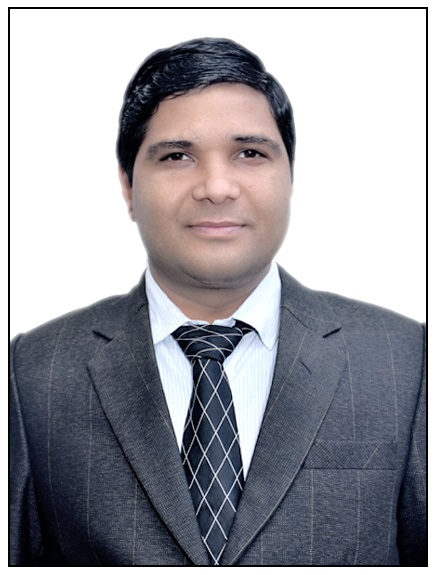
Dr. Pankaj Dadheech

@skit.ac.in

Professor, Computer Science and Engineering
Deputy Head, Computer Science and Engineering
Swami Keshvanand Institute of Technology, Management & Gramothan (SKIT), Jaipur, Rajasthan

Dr. Pankaj Dadheech
Dr. Pankaj Dadheech has more than 18 years of experience in teaching. He has Published 23 Patents & Granted 6 Patents at Intellectual Property India, Office of the Controller General of Patents, Design and Trade Marks, Department of Industrial Policy and Promotion, Ministry of Commerce and Industry, Government of India. He has Published & Granted 5 Australian Patents, 1 German Patent, 1 South African Patent & 1 USA Patent. He has also Registered & Granted 2 Research Copyrights at Registrar of Copyrights, Copyright Office, Department for Promotion of Industry and Internal Trade, Ministry of Commerce and Industry, Government of India. He has presented 62 papers in various National & International Conferences. He has 72 publications in various International & National Journals. He has published 9 Books & 35 Book Chapters. He is a member of many Professional Organizations like the ACM, CSI, IAENG & ISTE. He has been appointed as a Ph.D. Research Supervisor (CSE) at RTU, Kota.

EDUCATION

Dr. Pankaj Dadheech is currently working as a Professor & Deputy Head in the Department of Computer Science & Engineering (NBA Accredited), Swami Keshvanand Institute of Technology, Management & Gramothan (SKIT), Jaipur, Rajasthan, India (Accredited by NAAC A++ Grade).

RESEARCH, TEACHING, or OTHER INTERESTS

Computer Engineering, Artificial Intelligence, Engineering, Information Systems
185

Scopus Publications

Scopus Publications

  • INTEGRATED REVIEW OF EEG SIGNAL CLASSIFICATION MODELS FOR SSVEP, ATTENTION AND MOTOR IMAGERY USING MACHINE AND DEEP LEARNING ALGORITHMS
    Pradeep Kr. Sharma, Pankaj Dadheech
    Journal of Mechanics of Continua and Mathematical Sciences, 2026
    New developments in the Brain-Computer Interface (BCI) technology have increased the rate at which research has been done on precise and quick electroencephalography (EEG)-based signal classification models. This review analyses new trends, procedures, problems, and gaps in research on EEG signal classification in three large cognitive paradigms: Steady-State Visual Evoked Potential (SSVEP), detection of the attention focus, and motor imagery (MI). These paradigms form the focus of real-time BCI applications, e.g., assistive technologies, neurorehabilitation, adaptive learning, and augmented interaction systems. The analysis presented in the paper on the development of the traditional machine learning (ML) and the modern deep learning (DL) models of the EEG interpretation systematically reviews the progression of the original ideas in the EEG interpretation field. Power spectral density analysis, Common Spatial Patterns (CSP), wavelet transform, and empirical mode decomposition (EMD) techniques of feature extraction, and Support Vector Machine (SVM), Random Forest (RF), Convolutional Neural Network (CNN), and Long Short-Term Memory (LSTM) techniques are critically examined. Some of the performance evaluation metrics that are widely employed in the literature are also addressed. Special attention is paid to the real-life issues that accompany real-world EEG data, such as low signal-to-noise ratio, artifact contamination, inter-subject variability, limited diversity of datasets, and bad model interpretability. It is believed that such public benchmark datasets as BCI Competition datasets, PhysioNet, and other multi-subject repositories can be used to support comparative analysis. Additional requirements of unified evaluation frameworks, real-time system-aware assessment, hybrid models, multimodal fusion strategies, transfer learning, and explainable AI have been identified in the review in an attempt to enhance the accuracy, robustness, and trustworthiness of EEG-based cognitive systems. On the whole, the given study can be used as a consolidated basis for the creation of future-generation EEG-based BCI frameworks.
  • A novel algorithmic approach of progressive transfer learning for MRI braintumor classification using VGG16 architecture
    Sunil Kumar Agarwal, Yogesh Kumar Gupta, Pankaj Dadheech
    Journal of Interdisciplinary Mathematics, 2026
    Many diseases exist worldwide. Among them, a brain tumour is the most dangerous and critical disease for human survival. Early detection of this abnormality is essential for effective patient treatment. The objective of the present research is to define a progressive transfer learning technique with the help of the VGG16 model to accurately identify and classify human brain tumour MR images. The results provide evidence of the significance of the applied framework. The experimental efficiency of the framework was 98.15%, demonstrating the importance of the VGG16 model over other frameworks. Moreover, future work suggests important concepts related to improving the fine-tuning process, regularisation methods, and other related work to enhance the overall performance of the suggested framework.
  • Mathematical cognitive modelling enhanced by deep learning for understanding human decision making in complex sequential tasks
    Gayathri Ananthakrishnan, Hayder M. A. Ghanimi, Kolluru Suresh Babu, Anilambica Kata, Gunaganti Sravanthi, et al.
    Journal of Interdisciplinary Mathematics, 2026
    Conventional mathematical models and data-driven deep learning (DL) methods are both tested for Human Decision-Making (HDM) in Complex Sequential Tasks (CST). These methods include complicated cognitive functions. Considering the use of adaptive timing mechanisms, the present research introduces a hybrid model that includes statistical cognitive dynamic models with Bidirectional Long Short-Term Memory (BiLSTM) attention networks. While DL serves as the basis for collecting temporal behavioural patterns, the mathematical model is vital for recording value changes, cognitive load, and decision selection by its application of classical Boltzmann logic. The mathematical model of contraction mapping serves as the basis for the invention of convergence guarantees. The recommended model achieves 84.7% prediction accuracy and improved cognitive state alignment (CSD=0.187) when tested on the Iowa Gambling Task dataset, involving 617 participants. The proposed model improves the accuracy of mathematical models by 12.4% and the validity of DL by 3.5%. This research has enabled the interpretation of artificial intelligence (AI) for human-centred decision support systems.
  • Stochastic differential equation modeling of climate-driven ecological population dynamics
    L. V. Arun Shalin, Hayder M. Ali, Saleh Ali Alomari, T. Santhi Sri, G. Sivakumar, et al.
    Journal of Interdisciplinary Mathematics, 2026
    Complex, non-linear human connections contribute to the significant impact that the inherently unpredictable nature of environmental factors (EF) has on the behavior of environmental populations. To forecast climate-driven population changes, this study proposes a hybrid model combining Statistical Learning (SL) with Stochastic Differential Equations (SDE). For the aim of Feature Selection (FS) and the detection of temperature anomalies, this investigation applies Mutual Information and Bayesian Data Augmentation (MI + BDA). The Earth Solar System (ENSO) index has been identified as the primary predictor. This work implements stochastic forcing variables that characterize ecological risk in the climate-coupled SDE. Forecasting methods have been reported to have lower predictive accuracy (R² = 0.92, RMSE = 0.12) than the proposed model, as tested with the North Atlantic cod and Adélie penguin datasets. The environment faces significant temperature constraints, according to this investigation and other studies on sustainable development. The empirical evidence indicates that a 78% increase in the Risk of Death (RoD) over 52 years is associated with temperatures exceeding 3.5°C. Maintain awareness that this study proves the value of non-linear climate-population correlations, which are vital to the maintenance of biodiversity
  • Secure and transparent artificial intelligence through uncertainty-infused algebraic frameworks
    Bagesh Kumar, Jeba Nega Cheltha, Praveen Kumar Yadav, Manish Kumar Sharma, Pankaj Dadheech, et al.
    Journal of Discrete Mathematical Sciences and Cryptography, 2026
    Explainable Artificial Intelligence (XAI) increasingly demands mathematically grounded frameworks that not only enhance transparency and interpretability but also ensure computational security and trust. Existing explainability methods often rely on post-hoc approximations that lack both structural rigor and security assurance. This work introduces an uncertainty-infused algebraic framework that extends classical algebraic systemssuch as groups, rings, and latticesby embedding probabilistic and fuzzy semantics directly into their operational structure. The proposed formulation enables the structured representation and manipulation of ambiguous or incomplete information while maintaining interpretability through mathematically traceable transformations.By integrating uncertainty within algebraic foundations, the framework bridges symbolic reasoning and data-driven learning, offering a unified approach that enhances both transparency and resilience against adversarial or inconsistent transformations. Moreover, the algebraic traceability of uncertain computations contributes to security-aware interpretability, enabling the detection of anomalous operations and ensuring reliable model reasoning. Demonstrations across interpretable neural architectures, symbolic reasoning, and knowledge graphs highlight the potential of this approach to strengthen robustness, semantic clarity, and computational integrity. This theoretical contribution provides a rigorous mathematical pathway toward the design of transparent, interpretable, and secure AI systems grounded in uncertainty-aware algebraic principles.
  • Evaluating Vegetation Indices for Crop Monitoring Using Multispectral Satellite Imagery
    Priyanka Sharma, Pankaj Dadheech
    Communications in Computer and Information Science, 2026
  • ECn-MultiBSTM: multiclass epileptic seizure classification using electro cetacean optimized bidirectional long short-term memory model
    Pankaj Kunekar, Pankaj Dadheech, Mukesh Kumar Gupta
    Cognitive Neurodynamics, 2025
  • Quantum-resilient cryptographic schemes using multivariate polynomial lattices
    Neha Janu, Loveleen Kumar, Dinesh Kumar Saini, Pankaj Dadheech, Blessy Thankachan
    Journal of Discrete Mathematical Sciences and Cryptography, 2025
    In the changing field of post-quantum cryptography, making digital communications immune to quantum attacks is a footstone. This paper proposes a new cryptographic platform called Multivariate Polynomial Lattices (MPL) which combines the structural hardness of lattice-based cryptography with the algebraic hardness of multivariate polynomial systems. MPL uses discrete mathematics to develop strong cryptographic primitives that are secure against classical and quantum attacks. The introduced scheme extends (beyond) currently Multivariate Polynomial Cryptography (MPC3 (d) where it involves lattice into polynomial forms, thus making attacks more difficult if not impossible for anybody but the parities of the scheme. Our method is not only immune to attacks based on algebraic and Grobner basis but also has practical performance so that it can be practically deployed and used in the real world. A full proof that MPL is secure and a full analysis of its performance are presented to show the viability and security of MPL for post-quantum cryptographic schemes. This paper emphasizes the essential nature of lattice structures based polynomial cryptography for the development of this field for securing the digital communications in the future.
  • Manifold learning and differential geometry for disease detection and risk prediction
    Ashish Kumar, Komal Mehta Bhagat, Pankaj Dadheech, Sanwta Ram Dogiwal, Rakesh Sharma
    Journal of Interdisciplinary Mathematics, 2025
    Healthcare datasets pose unique challenges: they are large, varied, and often contain hidden structure that standard analysis methods struggle to reveal. In this work, we propose a practical approach that combines tools from manifold learning (for example, Isomap or t-SNE) with ideas borrowed from differential geometry (such as curvature and geodesics). First, we use manifold techniques to reduce the dimensionality of complex, multi-modal inputs—ranging from wearable sensors and imaging scans to electronic health records while still preserving the data’s underlying shape. Next, by examining the resulting low-dimensional “surface” through a geometric lens, we extract features that shed light on subtle relationships among patients’ measurements, relationships that might otherwise go unnoticed. These geometric insights are then woven into a deep neural network, effectively guiding the model toward more reliable predictions of disease presence and future health risks. In our experiments, this hybrid strategy yields noticeably higher accuracy for early detection compared to conventional methods. Importantly, because we can trace predictions back to geometric properties such as how data points “bend” or “connect” on the inferred manifold clinicians gain a clearer picture of why certain patients are flagged as high risk. Beyond the technical gains, this framework is well suited for real-world healthcare settings, including resource-limited environments common in parts of India. By focusing on interpretable, scalable methods, we aim to deliver a solution that can be adopted without extensive computational resources. Looking ahead, we plan to refine the pipeline for near-real-time use enabling, for instance, community health workers to monitor groups of patients at once and to explore applications in population-level screening and preventative healthcare.
  • Enhancing crypto-interoperability resilience (CIR) by bridging the gap between classical and post-quantum cryptographic standards
    Tarun Jain, Loveleen Kumar, Ginika Mahajan, Pankaj Dadheech, Blessy Thankachan
    Journal of Discrete Mathematical Sciences and Cryptography, 2025
    With the emergence of real quantum computing technology, the quest to establish strong and secure post-quantum cryptographic (PQC) standards will only grow more urgent. These security standards protect data and communications against the groundbreaking capabilities of quantum computers that threaten to break many of today’s ubiquitous cryptographic systems. But there’s a major practical gap in PQC standards so they can work with current cryptographic infrastructure. In this paper we present the notion of Crypto-Interoperability Resilience (CIR), which is defined as that a cryptographic system possesses the ability to use post-quantum algorithms behind classical protected protocols in an interchangeable way and can transition from a classical secure mode to a quantum secure mode transparently while remaining secure. Integrating post-quantum (PQ) cryptographic algorithms into existing systems are difficult and comes with compatibility issues, performance limitations, and security concern from the insecure period while migrating, which this research addresses. We present holistic frameworks and methodologies for employing PQC standards in practice. These frameworks allow for stepwise adoption with no disruption of existing functionality and offers backward compatibility. We also create tools and protocols for improving CIR which efforts are performance-optimized and are designed to preserve security at a very high level as well.
  • AI-augmented cryptanalysis using combinatorics and reinforcement learning
    Payal Garg, Aruna Verma, Sushama Tanwar, Pankaj Dadheech
    Journal of Discrete Mathematical Sciences and Cryptography, 2025
  • Data-driven, transparent synthesis of lattice-based cryptosystems with hybrid security verification
    Shalini Pathak, Basu Kalyanwat, Ashish Kumar, Pankaj Dadheech
    Journal of Discrete Mathematical Sciences and Cryptography, 2025
  • Explainable machine learning frameworks for cryptography protocol design using discrete structures
    Mayank Namdev, Katib Showkat, Susheela Vishnoi, Pankaj Dadheech
    Journal of Discrete Mathematical Sciences and Cryptography, 2025
  • An efficient image steganography using spider monkey optimization
    Hemlata Goyal, Sunita Singhal, Manya Khater, Adyasha Mahanta, Pankaj Dadheech
    Journal of Discrete Mathematical Sciences and Cryptography, 2025
  • Lightweight HECC-DWT-based secure image encryption with integrity verification and access control
    Anshika Malsaria, Vijay Kumar Sharma, Pankaj Dadheech, Praveen Kumar Yadav, Sanwta Ram Dogiwal, et al.
    Journal of Discrete Mathematical Sciences and Cryptography, 2025
  • Graph-theoretic and geometric methods for social network influence analysis
    Neha Janu, Payal Garg, Komal Mehta Bhagat, Blessy Thankachan, Susheela Vishnoi, et al.
    Journal of Discrete Mathematical Sciences and Cryptography, 2025
  • Comparison of cloud and edge computing based face recognition for security enhancement
    Rekha Chaturvedi, Puja Gupta, Ramesh Chand Pandey, Neeraj Kumar Rathore, Abhay Sharma, et al.
    Journal of Discrete Mathematical Sciences and Cryptography, 2025
  • An enterprise blockchain model: A reliable cryptography-based cyber-physical systems for securing user data
    V. Ramachandran, Hayder M. A. Ghanimi, Bhaskar Marapelli, Navleen Kaur, M. Rajya Laxmi, et al.
    Journal of Discrete Mathematical Sciences and Cryptography, 2025
  • The secured authentication system: Integrated cyber security end-toend based cyber-physical systems for improved DevOps resilience with authentication
    Vishnu Priya Arivanantham, Hayder M. A. Ghanimi, Vijaya Krishna Sonthi, Firas Tayseer Ayasrah, Reena Mahapatra Lenka, et al.
    Journal of Discrete Mathematical Sciences and Cryptography, 2025
  • A cyber-physical system with blockchain integrated chaotic secure hash algorithms-256 for secured supply chain management system
    K. R. Praneeth, Hayder M. A. Ghanimi, M. Srinivasa Narayana, Sireesha Nanduri, Ravi Kumar Bommisetti, et al.
    Journal of Discrete Mathematical Sciences and Cryptography, 2025
  • Cyber security with blockchain-based cyber-physical system for key generation in medi-cloud computer systems
    Vishnu Priya Arivanantham, Hayder M. A. Ghanimi, Sagar Ramesh Rane, V. Jasmine Sowmya, Kamal Poon, et al.
    Journal of Discrete Mathematical Sciences and Cryptography, 2025
  • Blockchain-based cybersecurity: A predictive privacy and security of cyber-physical systems
    N. Keerthana, Hayder M. A. Ghanimi, P. V. V. S. Srinivas, Naveen Reddy Pendli, Firas Tayseer Ayasrah, et al.
    Journal of Discrete Mathematical Sciences and Cryptography, 2025
  • Brain-computer interface applications in customer experience: Secure data management
    Shailendra Kumar Rai, Prathwini, Dilora Abdurakhimova, Hameed Hassan Khalaf, Israa Abed Jawad, et al.
    Brain Computer Interfaces and Applications in Business, 2025
  • Brain-computer interface-controlled smartphones for streamlined organizational data management
    B. T. Geetha, S. P. Tripathi, Chhavi Rani Saxena, Kuldeep Chouhan, Navruzbek Shavkatov, et al.
    Brain Computer Interfaces and Applications in Business, 2025
  • Quantum Cryptography for Biomedical Image Security in Next-Generation Telemedicine Networks
    L. B. Muralidhar, H. R. Swapna, N. Sathyanarayana, K. Nethravathi, Varanasi Rahul, et al.
    Advanced Secure Transmission of Telemedicine Based Bio Medical Images, 2025

Publications

He has presented 62 papers in various National & International Conferences. He has 72 publications in various International & National Journals. He has published 9 Books & 22 Book Chapters.

GRANT DETAILS

• Received a Grant of Rs. 4,00,000/- from All India Council for Technical Education (AICTE) for Organizing an International Conference on “Intelligent Computing, Communication and Information Security“ (ICCIS-2022) held on November 25-26, 2022 at Department of Computer Science & Engineering, Swami Keshvanand Institute of Technology, Management & Gramothan, Jaipur, Rajasthan, India.
• Surbhi Bhatia, Mohammad Alojail, Sudhakar Sengan, Pankaj Dadheech, Research Project on “Robotic Logical Observation Identifiers Names and Codesto Predicate Features and Semantic Relations Detection Using Unified Medical Language System” Subtitle: Automated Lionc Filter Based Concept Attribute and Relationship Detection through Metamap API of Project No. GRANT 159, Start Date: 01/02/2022 & End Date: 01/08/2022 of 6 Months Duration, Research Grant of 15,000 Saudi Riyal (Approx. 3,04,878.27 Indian Rupee), Research Domains: Semantic Relations Detection, Semantic Relation, Deep Learning, Medical Images, Sponsored by: The Deanship of Scientific Research (DSR), Vice Presidency for Graduate Studies and Scientific Research, King Faisal University (KFU), Ministry of Education, Saudi Arabia in the Session 2021-22.
• A Project on “Criminal Record Management System” of B.Tech. Computer Science & Engin
RESEARCH OUTPUTS (PATENTS, SOFTWARE, PUBLICATIONS, PRODUCTS)

He has Published 23 Patents & Granted 6 Patents at Intellectual Property India, Office of the Controller General of Patents, Design and Trade Marks, Department of Industrial Policy and Promotion, Ministry of Commerce and Industry, Government of India. He has Published & Granted 5 Australian Patents, 1 German Patent, 1 South African Patent & 1 USA Patent. He has also Registered & Granted 2 Research Copyrights at Registrar of Copyrights, Copyright Office, Department for Promotion of Industry and Internal Trade, Ministry of Commerce and Industry, Government of India. He has presented 62 papers in various National & International Conferences. He has 72 publications in various International & National Journals. He has published 9 Books & 35 Book Chapters.

Industry, Institute, or Organisation Collaboration

1. Recognized as Gold Partner Faculty under Inspire-The Campus Connect Faculty Partnership Model of Infosys Limited.
2. Awarded as a Certificate of Recognition for Microsoft in Education Certificate in recognition of membership in the “Certified Microsoft Innovative Educator”.
3. IBM Certified Rational Application Developer (RAD) Version 6.0.
4. IBM Certified Solution Developer - WebSphere Integration Developer V6.2.
5. IBM Certified Academic Associate - DB2 9 Database and Application Fundamentals.