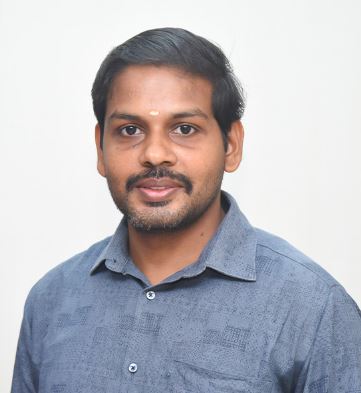
Computer Science, Artificial Intelligence, Computer Vision and Pattern Recognition
9
Scopus Publications
3
Scholar Citations
1
Scholar h-index
Scopus Publications
Non-Invasive Diabetes Detection Through Human Breath Using Hybrid Octave-CenterNet Neural Network With DenseNet-77 Model R. Meena, S. Vinu, J. Omana International Journal of Imaging Systems and Technology, 2025 Diabetes Mellitus (DM), including Type 1 and Type 2, is a metabolic disorder caused by defects in insulin secretion or action. Non‐invasive detection is more critical because invasive methods often lack data and have reduced accuracy, leading to poorer machine learning performance. This research proposes a new Octave‐CenterNet with DenseNet‐77 framework for efficient detection and classification of diabetes from Volatile Organic Compounds (VOCs). The method combines a rapid discrete curvelet transform with wrapping to capture prominent features quickly, uses octave convolution to preserve high and low‐frequency patterns and enrich representations, employs CenterNet to detect acetone as a major biomarker, and leverages DenseNet‐77 for gradient‐efficient classification. Willow sled catkin optimization adaptively fine‐tunes hyperparameters to further enhance performance. The model effectively distinguishes healthy individuals from diabetic patients and differentiates between Type 1 and Type 2 diabetes. Experimental results demonstrate excellent performance with 98.7% accuracy, 98% precision, 99.7% recall, and 99.34% F1 score, validating its robustness. Overall, this end‐to‐end, noise‐resistant, and computationally efficient framework offers a technically advanced and practical solution for non‐invasive diabetic detection.
Optimizing Hospital Workflows Through Artificial Intelligence Karthic Sundaram, S. Vinu, Arunkumar Ramamoorthy, S. Venkatesan Evaluation and Assessment of AI Driven Systems in Hospitals, 2025 The integration of latest technologies like Artificial Intelligence (AI) plays a vital role in improving the Healthcare systems right from real time monitoring, health record maintenance and efficient disease diagnosis and appropriate treatment. AI systems incorporate machine learning (ML) models, Deep learning models (DL) models, IOT devices and sensor data to provide real time monitoring of patient health. AI models assess lung imaging and real-time oxygen saturation data to predict respiratory deterioration. The power of AI in predictive analytics helps in identifying disease at the early stage to plan for faster treatment and recovery. Automated documentation and AI-powered EHR enhances clinical workflows reducing errors and improves patient data management. Generally, the hospitals have large amount of patient data. The usage of AI helps to derive actionable insights from these data that aids in better and faster recovery reducing mortality rates
Blockchain Based Decentralized Adaptive Client Selection for Heterogeneous IIoT Environments Federated Learning Vinu S, Maheswaran N, Karthic Sundaram, Karthick S 4th International Conference on Applied Artificial Intelligence and Computing Icaaic 2025, 2025 Federated Learning (FL) has emerged as a potential approach for privacy-preserving collaborative learning within Industrial Internet of Things (IIoT) systems, where devices generate vast amounts of sensitive and diverse data. Nevertheless, traditional federated learning models encounter significant challenges, such as inefficiencies in handling non-independent and identically distributed (non-IID) data, communication costs, privacy issues, and vulnerability to adversarial attacks. This paper introduces an innovative distributed federated learning system that integrates blockchain technology with active client selection and differential privacy methodologies to address these challenges. The proposed approach eliminates reliance on a central server by employing blockchain technology to disseminate and safeguard the consolidation of model updates. By giving customers with highquality updates top priority, dynamic client selection based on uncertainty sampling and entropy measurements helps to speed up model convergence and improve communication efficiency. Differential privacy adds controlled noise to local model updates, which keeps data private while also making sure it is accurate. The system also uses a lightweight Proof-of-Contribution (PoC) consensus method to check client updates, give reputation ratings, and get people to be honest. Tests on benchmark datasets including MNIST, CIFAR-10, and LEAF synthetic reveal that the proposed system works better than current methods like FedAvg, clustered FL (CFL), and blockchain-based FL. More accurate (96.8 % on MNIST and 88.7 % on CIFAR-10), faster convergence (up to 25 % less rounds), and improved protection against attacks from bad actors The proposed approach only results in a 2.5 % loss in performance when 30 % of clients are malevolent. This study solves the problems of scalability, privacy, and security, making it possible to create reliable and large-scale decentralized learning systems. This makes it a robust and efficient solution for federated learning in IIoT environments.
Integrating blockchain and IoT using dew computing and light weight election based consensus for smart city S. Vinu, B. Diwan Aip Conference Proceedings, 2024 IoT Playing Remarkable roll in today's world, Nowadays, most smart devices have many sensors such as temperature sensor, humidity sensor, heartbeat sensor etc., these smart devices to detect information about their surroundings through sensors, and act accordingly. Internet connection of such devices are called the Internet of Things. As IoT is implemented successfully in different fields around the world, number of IoT networks newly created increase. It opens up new research area. IoT involves integration of multiple technologies. Integration of these multiple technologies increase the IoT system complexity. For authentication purpose Central server structure was used. Integrating multiple technologies with not reliable interconnection network may leads to sharing false data with wrong authentication. Central server is used for Data processing, it will require increase in processing infrastructure requirement for large scale IoT. Centralized architecture also affected by the problem Single point of failure. In smart city application privacy of the participant and security of the user data are more important. So, in order to solve these issues, we need a solution which is decentralized, verifiable, and privacy preserving technology. Here the roll of blockchain will come. Blockchain technology use distributed node to node communication technique. Blockchain helps to exchange information between untrusted parties without the need of thrusted third party. So, by communicating the IoT data through Blockchain solves such problems. But heterogeneity of the IoT network and resource constrained environment of it make difficulty to integrating Blockchain with IoT. So, we need to develop a blockchain model which will work effectively in resource constrained environment. This paper proposed a Dew computing based IoT Blockchain integration method which use election-based consensus algorithm for improving performance in resource constrained IoT network.
Detection of tuberculosis bacilli from Ziehl Neelson stained sputum smear images G Evangelin Sugirtha, G Murugesan, S Vinu 2017 International Conference on Information Communication and Embedded Systems Icices 2017, 2017 Tuberculosis is a contagious illness caused by the Mycobacterium Tuberculosis, also known as Koch bacillus. Many developing countries follow the manual method for diagnosing TB, which causes false alarms in the detection of TB positive or negative. In order to reduce the intervention of human we have developed an effective algorithm for the detection of tuberculosis bacilli as an automated system. This paper proposes a color segmentation and classification approach for automatic detection of Mycobacterium Tuberculosis, which causes TB from the image of Ziehl-Nielsen stained sputum smear obtained from a bright microscope. Segment the bacilli called candidate bacilli using its characteristics from the image using Particle Swarm Optimization technique, depending on pixel intensities, each bacillus is segmented by extracting blue component of pixel values. The candidate bacilli are then grouped together using connected component analysis after using morphological operations. Detection of Tuberculosis bacilli from sputum smear by random forest technique is a prominent method used in diagnosing the tuberculosis by classifying the subject samples. The combination of particle swarm optimization and random forest classification provides better results and correct diagnosis in term of infection level. The experimental result shows that our approach is significantly better compared to the existing approaches.
Codon based protein synthesis for breast cancer risk prediction through parallel computing S Vinu, G. Murugesan 2014 International Conference on Information Communication and Embedded Systems Icices 2014, 2015 Distributed parallel computing have more advantages in large data processing. By the help of normally available single CPU, single-core computers, it is possible to perform distributed parallel processing by connecting the computers in a network. A computer which receives a job called as Coordinator, acts as the job manager that distributes jobs amongst the other computers. All the pre-processing and postprocessing is done on the coordinator processor. Subordinates refer to any one of the computers on the network that is not a coordinator. Protein and its DNA sequence analysis is one of the large data processing applications. DNA is the chemical in each of our cells that makes up the instructions for how our cells function. DNA translated as protein and get stability. Certain protein mutations can dramatically increase the risk for developing certain cancers. Here analyzing protein and DNA sequence refers analysis the sequence of amino acids and nucleic acid to check certain mutation in it. By analyzing protein and DNA sequence, can predict the current as well as future possibility for cancer. To predict accurate risk for breast cancer number of proteins and their DNAs need to be analysis. This is a time consuming process. In order to speed-up this process distributed parallel analysis of protein and DNA sequences to be performed. Here coordinator of the system distributes each protein and its DNA sequences to different subordinates in the distributed system. Subordinates calculate current and future local risk with the help of mutation table and codon translation rules then send it back to coordinator. Finally Coordinator calculates the overall risk and reports it. This system improves the speed and accuracy of protein and DNA sequence analysis process. But to predict the risk for breast cancer accurately, required number of breast cancer related proteins and their DNA sequence, it requires more cost.
RECENT SCHOLAR PUBLICATIONS
Optimizing Hospital Workflows Through Artificial Intelligence K Sundaram, S Vinu, A Ramamoorthy, S Venkatesan Evaluation and Assessment of AI-Driven Systems in Hospitals, 169-204 , 2026 2026
Blockchain Based Decentralized Adaptive Client Selection for Heterogeneous IIoT Environments Federated Learning S Vinu, N Maheswaran, S Karthick 2025 4th International Conference on Applied Artificial Intelligence and … , 2025 2025
Non‐Invasive Diabetes Detection Through Human Breath Using Hybrid Octave‐CenterNet Neural Network With DenseNet‐77 Model R Meena, S Vinu, J Omana International Journal of Imaging Systems and Technology 35 (6), e70237 , 2025 2025
A Blockchain-Enhanced Federated Learning Framework for Secure and Scalable Smart Healthcare Systems with Intermittent Clients S Vinu, N Maheswaran, S Karthick 2025 10th International Conference on Communication and Electronics Systems … , 2025 2025
AI-Driven Dress Fitting System Using Deep Learning and Immersive Technologies K Sundaram, N Maheswaran, S Karthick, S Vinu 2025 10th International Conference on Communication and Electronics Systems … , 2025 2025
Tangent Pelican search optimization for block assignment in blockchain based IoT S Vinu, B Diwan Peer-to-Peer Networking and Applications , 2024 2024 Citations: 1
Integrating blockchain and IoT using dew computing and light weight election based consensus for smart city BD S. Vinu AIP Conference Proceedings 2802 (1), 090003-1 to 090003-6 , 2024 2024 Citations: 2
Detection of tuberculosis bacilli from Ziehl Neelson stained sputum smear image GE Sugirtha, G Murugesan, S Vinu IEEE , 2017 2017
Codon Based Protein Synthesis for Breast Cancer Risk Prediction through Parallel Computing GM S Vinu IEEE , 2014 2014
MOST CITED SCHOLAR PUBLICATIONS
Integrating blockchain and IoT using dew computing and light weight election based consensus for smart city BD S. Vinu AIP Conference Proceedings 2802 (1), 090003-1 to 090003-6 , 2024 2024 Citations: 2
Tangent Pelican search optimization for block assignment in blockchain based IoT S Vinu, B Diwan Peer-to-Peer Networking and Applications , 2024 2024 Citations: 1
Optimizing Hospital Workflows Through Artificial Intelligence K Sundaram, S Vinu, A Ramamoorthy, S Venkatesan Evaluation and Assessment of AI-Driven Systems in Hospitals, 169-204 , 2026 2026
Blockchain Based Decentralized Adaptive Client Selection for Heterogeneous IIoT Environments Federated Learning S Vinu, N Maheswaran, S Karthick 2025 4th International Conference on Applied Artificial Intelligence and … , 2025 2025
Non‐Invasive Diabetes Detection Through Human Breath Using Hybrid Octave‐CenterNet Neural Network With DenseNet‐77 Model R Meena, S Vinu, J Omana International Journal of Imaging Systems and Technology 35 (6), e70237 , 2025 2025
A Blockchain-Enhanced Federated Learning Framework for Secure and Scalable Smart Healthcare Systems with Intermittent Clients S Vinu, N Maheswaran, S Karthick 2025 10th International Conference on Communication and Electronics Systems … , 2025 2025
AI-Driven Dress Fitting System Using Deep Learning and Immersive Technologies K Sundaram, N Maheswaran, S Karthick, S Vinu 2025 10th International Conference on Communication and Electronics Systems … , 2025 2025
Detection of tuberculosis bacilli from Ziehl Neelson stained sputum smear image GE Sugirtha, G Murugesan, S Vinu IEEE , 2017 2017
Codon Based Protein Synthesis for Breast Cancer Risk Prediction through Parallel Computing GM S Vinu IEEE , 2014 2014