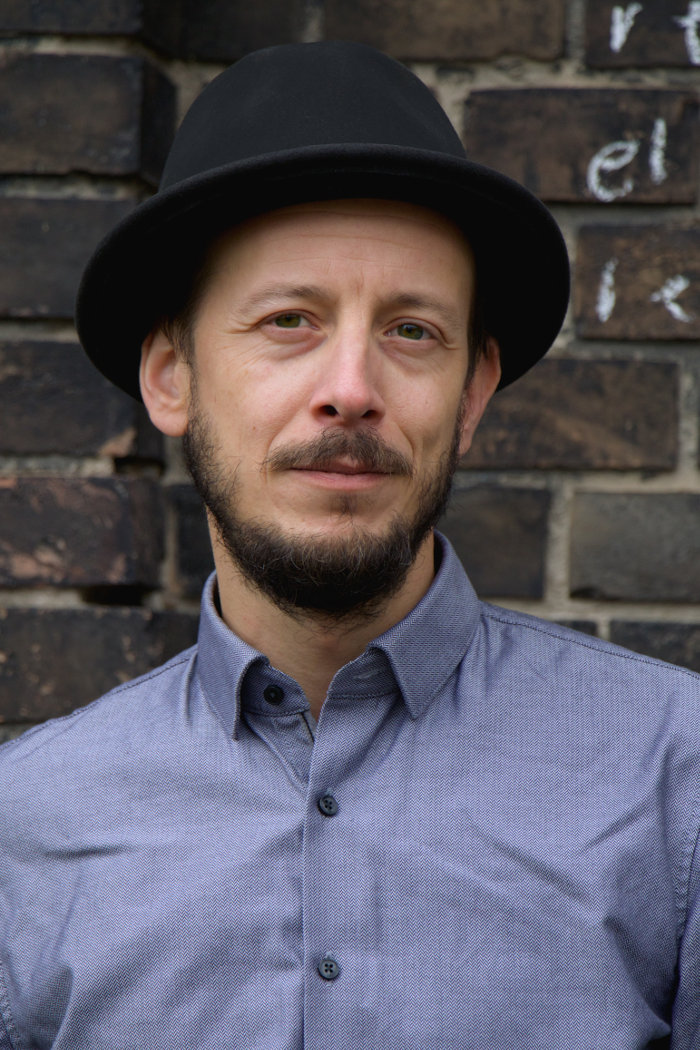
During my master, my PhD and my first postdoc position, I worked on research in optical quantum information processing, quantum communication, quantum computation, multi-photon entanglement and nonlinear optical imaging. As a senior postdoc and senior researcher I led efforts towards the realization of a dedicated space mission to test the foundations of quantum physics, and to use quantum optomechanics for high-precision sensing in space. In 2019, I started my own research group, and my research is centered on quantum optics, quantum communication, optical quantum computing, entanglement generation, non-linear optics, quantum optomechanics, and the development of technologies for experiments in space and microgravity. In recent years, I have concentrated on the application of quantum technology to quantum networks, specifically focusing on the creation of narrow-band entangled photon sources to facilitate coupling photons to quantum memories and optomechanical systems.
EDUCATION
2020: Habilitation (postdoctoral degree), University of Ljubljana, Slovenia
2019: Habilitation (postdoctoral degree), University of Vienna, Austria
2008: PhD, Faculty of Physics, University of Vienna, Austria, Supervisor: Anton Zeilinger
2003: Master, Faculty of Physics, University of Vienna, Austria, Supervisor: Anton Zeilinger
RESEARCH, TEACHING, or OTHER INTERESTS
Atomic and Molecular Physics, and Optics
56
Scopus Publications
5672
Scholar Citations
29
Scholar h-index
38
Scholar i10-index
Scopus Publications
Designing a compact cavity-enhanced source of entangled photons Žiga Pušavec, Lara Ulčakar, Rainer Kaltenbaek Physical Review A, 2025 Entanglement will be the key resource of future large-scale quantum networks, enabling quantum communication and advanced quantum applications like distributed quantum sensing and distributed quantum computing. To this end, entanglement will have to be distributed over large distances and efficiently coupled to quantum devices at the network nodes. This requires the entangled photons to have wavelengths and bandwidths compatible with the quantum memories in quantum repeater nodes or quantum devices at client nodes. Here, we present a cavity-enhanced source design using two nonlinear crystals inside a single cavity. We provide detailed considerations balancing the complexity of the cavity design with the photon bandwidth and the entanglement quality. Published by the American Physical Society 2025
Deploying an Inter-European Quantum Network Domenico Ribezzo, Mujtaba Zahidy, Ilaria Vagniluca, Nicola Biagi, Saverio Francesconi, et al. Advanced Quantum Technologies, 2023 Around 40 years have passed since the first pioneering works introduced the possibility of using quantum physics to enhance communications safety. Nowadays, quantum key distribution (QKD) exited the physics laboratories to become a mature technology, triggering the attention of States, military forces, banks, and private corporations. This work takes on the challenge of bringing QKD closer to a consumer technology: deployed optical fibers by telecommunication companies of different States have been used to realize a quantum network, the first‐ever connecting three different countries. This work also emphasizes the necessity of networks where QKD can come up besides classical communications, whose coexistence currently represents the main limitation of this technology. This network connects Trieste to Rijeka and Ljubljana via a trusted node in Postojna. A key rate of over 3 kbps in the shortest link and a 7‐hour‐long measurement demonstrate the system's stability and reliability. The network has been used to present the QKD at the G20 Digital Ministers' Meeting in Trieste. The experimental results, together with the interest that one of the most important events of international politics has attracted, showcase the maturity of the QKD technology bundle, placing it in the spotlight for consumer applications in the near term.
Research campaign: Macroscopic quantum resonators (MAQRO) Rainer Kaltenbaek, Markus Arndt, Markus Aspelmeyer, Peter F Barker, Angelo Bassi, et al. Quantum Science and Technology, 2023 The objective of the proposed macroscopic quantum resonators (MAQRO) mission is to harness space for achieving long free-fall times, extreme vacuum, nano-gravity, and cryogenic temperatures to test the foundations of physics in macroscopic quantum experiments at the interface with gravity. Developing the necessary technologies, achieving the required sensitivities and providing the necessary isolation of macroscopic quantum systems from their environment will lay the path for developing novel quantum sensors. Earlier studies showed that the proposal is feasible but that several critical challenges remain, and key technologies need to be developed. Recent scientific and technological developments since the original proposal of MAQRO promise the potential for achieving additional science objectives. The proposed research campaign aims to advance the state of the art and to perform the first macroscopic quantum experiments in space. Experiments on the ground, in micro-gravity, and in space will drive the proposed research campaign during the current decade to enable the implementation of MAQRO within the subsequent decade.
Cold atoms in space: community workshop summary and proposed road-map Iván Alonso, Cristiano Alpigiani, Brett Altschul, Henrique Araújo, Gianluigi Arduini, et al. EPJ Quantum Technology, 2022 We summarise the discussions at a virtual Community Workshop on Cold Atoms in Space concerning the status of cold atom technologies, the prospective scientific and societal opportunities offered by their deployment in space, and the developments needed before cold atoms could be operated in space. The cold atom technologies discussed include atomic clocks, quantum gravimeters and accelerometers, and atom interferometers. Prospective applications include metrology, geodesy and measurement of terrestrial mass change due to, e.g., climate change, and fundamental science experiments such as tests of the equivalence principle, searches for dark matter, measurements of gravitational waves and tests of quantum mechanics. We review the current status of cold atom technologies and outline the requirements for their space qualification, including the development paths and the corresponding technical milestones, and identifying possible pathfinder missions to pave the way for missions to exploit the full potential of cold atoms in space. Finally, we present a first draft of a possible road-map for achieving these goals, that we propose for discussion by the interested cold atom, Earth Observation, fundamental physics and other prospective scientific user communities, together with the European Space Agency (ESA) and national space and research funding agencies.
Quantum physics in space Alessio Belenchia, Matteo Carlesso, Ömer Bayraktar, Daniele Dequal, Ivan Derkach, et al. Physics Reports, 2022
Feasibility considerations for free-fall tests of gravitational decoherence R. Kaltenbaek Avs Quantum Science, 2022 Space offers exciting opportunities to test the foundations of quantum physics using macroscopic quantum superpositions. It has been proposed to perform such tests in a dedicated space mission (MAQRO) using matter-wave interferometry with massive test particles or monitoring how the wave function of a test particle expands over time. Such experiments could test quantum physics with sufficiently high precision to resolve potential deviations from its unitary evolution due to gravitational decoherence. For example, such deviations have been predicted by the Diósi–Penrose (DP) model and the Károlyházy (K) model. The former predicts the collapse of massive or large superpositions due to a nonlinear modification of quantum evolution. The latter predicts decoherence because of an underlying uncertainty of space time. Potential advantages of a space environment are (1) long free-fall times, (2) low noise, and (3) taking a high number of data points over several years in a dedicated space mission. In contrast to interferometric tests, monitoring wave function expansion is less complex, but it does face some practical limitations. Here, we will discuss limitations of such non-interferometric experiments due to the limited number of data points achievable during a mission lifetime. Our results show that it will require an interferometric approach to conclusively test for gravitational decoherence as predicted by the DP or K models. In honor of the Nobel prize of Sir Roger Penrose, we will focus our discussion on the Diósi–Penrose model.
Towards a European quantum network 2022 European Conference on Optical Communication ECOC 2022, 2022
Testing the foundation of quantum physics in space via Interferometric and non-interferometric experiments with mesoscopic nanoparticles Giulio Gasbarri, Alessio Belenchia, Matteo Carlesso, Sandro Donadi, Angelo Bassi, et al. Communications Physics, 2021 Quantum technologies are opening novel avenues for applied and fundamental science at an impressive pace. In this perspective article, we focus on the promises coming from the combination of quantum technologies and space science to test the very foundations of quantum physics and, possibly, new physics. In particular, we survey the field of mesoscopic superpositions of nanoparticles and the potential of interferometric and non-interferometric experiments in space for the investigation of the superposition principle of quantum mechanics and the quantum-to-classical transition. We delve into the possibilities offered by the state-of-the-art of nanoparticle physics projected in the space environment and discuss the numerous challenges, and the corresponding potential advancements, that the space environment presents. In doing this, we also offer an ab-initio estimate of the potential of space-based interferometry with some of the largest systems ever considered and show that there is room for tests of quantum mechanics at an unprecedented level of detail.
Quantum technologies in space Rainer Kaltenbaek, Antonio Acin, Laszlo Bacsardi, Paolo Bianco, Philippe Bouyer, et al. Experimental Astronomy, 2021 Recently, the European Commission supported by many European countries has announced large investments towards the commercialization of quantum technology (QT) to address and mitigate some of the biggest challenges facing today’s digital era – e.g. secure communication and computing power. For more than two decades the QT community has been working on the development of QTs, which promise landmark breakthroughs leading to commercialization in various areas. The ambitious goals of the QT community and expectations of EU authorities cannot be met solely by individual initiatives of single countries, and therefore, require a combined European effort of large and unprecedented dimensions comparable only to the Galileo or Copernicus programs. Strong international competition calls for a coordinated European effort towards the development of QT in and for space, including research and development of technology in the areas of communication and sensing. Here, we aim at summarizing the state of the art in the development of quantum technologies which have an impact in the field of space applications. Our goal is to outline a complete framework for the design, development, implementation, and exploitation of quantum technology in space.
Single-shot Stern-Gerlach magnetic gradiometer with an expanding cloud of cold cesium atoms Katja Gosar, Tina Arh, Tadej Mežnaršič, Ivan Kvasič, Dušan Ponikvar, et al. Physical Review A, 2021 We combine the Ramsey interferometry protocol, the Stern-Gerlach detection scheme, and the use of elongated geometry of a cloud of fully polarized cold cesium atoms to measure the selected component of the magnetic-field gradient along the atomic cloud in a single shot. In contrast to the standard method where the precession of two spatially separated atomic clouds is simultaneously measured to extract their phase difference, which is proportional to the magnetic-field gradient, we here demonstrate a gradiometer using a single image of an expanding atomic cloud with the phase difference imprinted along the cloud. Using resonant radio-frequency pulses and Stern-Gerlach imaging, we first demonstrate nutation and Larmor precession of atomic magnetization in an applied magnetic field. Next, we let the cold atom cloud expand in one dimension and apply the protocol for measuring the magnetic-field gradient. The resolution of our single-shot gradiometer is not limited by thermal motion of atoms and has an estimated absolute accuracy below $\\ifmmode\\pm\\else\\textpm\\fi{}0.2$ mG/cm ($\\ifmmode\\pm\\else\\textpm\\fi{}20$ nT/cm).
Tests in space Rainer Kaltenbaek Fundamental Theories of Physics, 2021
Testing quantum physics in space using high-mass matter-wave interferometry Proceedings of the 50th Rencontres De Moriond 2015 Gravitation 100 Years After Gr, 2015
Macroscopic quantum resonators in space R. Kaltenbaek, G. Hechenblaikner, N. Kiesel, U. Johann, M. Aspelmeyer 2011 Conference on Lasers and Electro Optics Europe and 12th European Quantum Electronics Conference CLEO Europe Eqec 2011, 2011
Chirped-pulse interferometry for dispersion-cancelled OCT Robert Prevedel, Kurt Schreiter, Rainer Kaltenbaek, Jonathan Lavoie, Devon Biggerstaff, et al. 2011 Conference on Lasers and Electro Optics Europe and 12th European Quantum Electronics Conference CLEO Europe Eqec 2011, 2011
Photon triplets and bound entanglement K. J. Resch, H. Hübel, D. R. Hamel, A. Fedrizzi, S. Ramelow, et al. 2011 Ico International Conference on Information Photonics Ip 2011, 2011
Proof-of-Concept Experiments for Quantum Physics in Space Rainer Kaltenbaek, Markus Aspelmeyer, Thomas Jennewein, Caslav Brukner, Anton Zeilinger, et al. Proceedings of SPIE the International Society for Optical Engineering, 2004
Designing a compact cavity-enhanced source of entangled photons Ž Pušavec, L Ulčakar, R Kaltenbaek Physical Review A 111 (4), 043707 , 2025 2025
Priložnosti in izzivi kvantnih satelitskih komunikacij. K Radaković, V Eržen, L Ulčakar, A Ramšak, B Batagelj, R Kaltenbaek, ... Electrotechnical Review/Elektrotehniski Vestnik 92 , 2025 2025
Deploying an inter‐European quantum network D Ribezzo, M Zahidy, I Vagniluca, N Biagi, S Francesconi, T Occhipinti, ... Advanced Quantum Technologies 6 (2), 2200061 , 2023 2023 Citations: 123
Research campaign: Macroscopic quantum resonators (MAQRO) R Kaltenbaek, M Arndt, M Aspelmeyer, PF Barker, A Bassi, J Bateman, ... Quantum Science and Technology 8 (1), 014006 , 2023 2023 Citations: 32
Cold atoms in space: community workshop summary and proposed road-map I Alonso, C Alpigiani, B Altschul, H Araújo, G Arduini, J Arlt, L Badurina, ... EPJ Quantum Technology 9 (1), 1-55 , 2022 2022 Citations: 93
Towards a european quantum network D Ribezzo, M Zahidy, I Vagniluca, N Biagi, S Francesconi, T Occhipinti, ... European Conference and Exhibition on Optical Communication, Th1G. 2 , 2022 2022 Citations: 4
MAQRO 2022 proposal for testing quantum physics in space R Kaltenbaek 44th COSPAR Scientific Assembly. Held 16-24 July 44, 3008 , 2022 2022
Quantum physics in space A Belenchia, M Carlesso, Ö Bayraktar, D Dequal, I Derkach, G Gasbarri, ... Physics Reports 951, 1-70 , 2022 2022 Citations: 136
Feasibility considerations for free-fall tests of gravitational decoherence R Kaltenbaek AVS Quantum Science 4 (1) , 2022 2022 Citations: 8
MAQRO--BPS 2023 research campaign whitepaper R Kaltenbaek, M Arndt, M Aspelmeyer, PF Barker, A Bassi, J Bateman, ... arXiv preprint arXiv:2202.01535 , 2022 2022 Citations: 6
Cold atoms in space: community workshop summary and proposed road-map C Alpigiani, B Altschul, G Arduini, J Arlt, L Badurina, S Bandarupally, ... 2022
D. Ribezzo, M. Zahidy, I. Vagniluca, N. Biagi, S. Francesconi, T. Occhipinti, LK Oxenløwe, M. Lončarić, I. Cvitić, M. Stipčević, Ž. Pušavec, R. Kaltenbaek, A. Ramšak, F. Cesa … M Zahidy, I Vagniluca, N Biagi, S Francesconi, T Occhipinti, LK Oxenløwe, ... ECOC, 0-0 , 2022 2022
IEEE: Towards a European quantum network D Ribezzo, M Zahidy, G Giorgetti, Ž Pušavec, I Vagniluca, A Zavatta, ... 2022
Testing the foundation of quantum physics in space via Interferometric and non-interferometric experiments with mesoscopic nanoparticles G Gasbarri, A Belenchia, M Carlesso, S Donadi, A Bassi, R Kaltenbaek, ... Communications Physics 4 (1), 155 , 2021 2021 Citations: 86
Testing the foundations of quantum physics in space Interferometric and non-interferometric tests with Large Particles G Gasbarri, A Belenchia, M Carlesso, S Donadi, A Bassi, R Kaltenbaek, ... arXiv preprint arXiv:2106.05349 , 2021 2021 Citations: 13
Quantum technologies in space R Kaltenbaek, A Acin, L Bacsardi, P Bianco, P Bouyer, E Diamanti, ... Experimental Astronomy 51 (3), 1677-1694 , 2021 2021 Citations: 101
Single-shot Stern-Gerlach magnetic gradiometer with an expanding cloud of cold cesium atoms K Gosar, T Arh, T Mežnaršič, I Kvasič, D Ponikvar, T Apih, R Kaltenbaek, ... Physical Review A 103 (2), 022611 , 2021 2021 Citations: 6
Testing the foundation of quantum physics in space via Interferometric and non-interferometric experiments with mesoscopic nanoparticles S Donadi, A Bassi, R Kaltenbaek, M Paternostro, H Ulbricht 2021
Macroscopic tests of quantum physics: critical challenges and recent developments R Kaltenbaek 43rd COSPAR Scientific Assembly. Held 28 January-4 February 43, 2121 , 2021 2021
Tests in space R Kaltenbaek Do Wave Functions Jump? Perspectives of the Work of GianCarlo Ghirardi, 401-411 , 2020 2020 Citations: 6
MOST CITED SCHOLAR PUBLICATIONS
An experimental test of non-local realism S Gröblacher, T Paterek, R Kaltenbaek, Č Brukner, M Żukowski, ... Nature 446 (7138), 871-875 , 2007 2007 Citations: 777
Large quantum superpositions and interference of massive nanometer-sized objects O Romero-Isart, AC Pflanzer, F Blaser, R Kaltenbaek, N Kiesel, ... Physical review letters 107 (2), 020405 , 2011 2011 Citations: 654
High-speed linear optics quantum computing using active feed-forward R Prevedel, P Walther, F Tiefenbacher, P Böhi, R Kaltenbaek, ... Nature 445 (7123), 65-69 , 2007 2007 Citations: 510
Quantum teleportation across the Danube R Ursin, T Jennewein, M Aspelmeyer, R Kaltenbaek, M Lindenthal, ... Nature 430 (7002), 849-849 , 2004 2004 Citations: 507
Cavity cooling of an optically levitated submicron particle N Kiesel, F Blaser, U Delić, D Grass, R Kaltenbaek, M Aspelmeyer Proceedings of the National Academy of Sciences 110 (35), 14180-14185 , 2013 2013 Citations: 425
Long-distance free-space distribution of quantum entanglement M Aspelmeyer, HR Bohm, T Gyatso, T Jennewein, R Kaltenbaek, ... science 301 (5633), 621-623 , 2003 2003 Citations: 310
Experimental interference of independent photons R Kaltenbaek, B Blauensteiner, M Żukowski, M Aspelmeyer, A Zeilinger Physical review letters 96 (24), 240502 , 2006 2006 Citations: 286
Macroscopic quantum resonators (MAQRO) Testing quantum and gravitational physics with massive mechanical resonators R Kaltenbaek, G Hechenblaikner, N Kiesel, O Romero-Isart, KC Schwab, ... Experimental Astronomy 34 (2), 123-164 , 2012 2012 Citations: 161
High-fidelity entanglement swapping with fully independent sources R Kaltenbaek, R Prevedel, M Aspelmeyer, A Zeilinger Physical Review A—Atomic, Molecular, and Optical Physics 79 (4), 040302 , 2009 2009 Citations: 137
Quantum physics in space A Belenchia, M Carlesso, Ö Bayraktar, D Dequal, I Derkach, G Gasbarri, ... Physics Reports 951, 1-70 , 2022 2022 Citations: 136
Macroscopic quantum resonators (MAQRO): 2015 update R Kaltenbaek, M Aspelmeyer, PF Barker, A Bassi, J Bateman, K Bongs, ... EPJ Quantum Technology 3 (1), 5 , 2016 2016 Citations: 129
Deploying an inter‐European quantum network D Ribezzo, M Zahidy, I Vagniluca, N Biagi, S Francesconi, T Occhipinti, ... Advanced Quantum Technologies 6 (2), 2200061 , 2023 2023 Citations: 123
Experimental bound entanglement in a four-photon state J Lavoie, R Kaltenbaek, M Piani, KJ Resch Physical review letters 105 (13), 130501 , 2010 2010 Citations: 115
Quantum technologies in space R Kaltenbaek, A Acin, L Bacsardi, P Bianco, P Bouyer, E Diamanti, ... Experimental Astronomy 51 (3), 1677-1694 , 2021 2021 Citations: 101
Experimental violation of Svetlichny's inequality J Lavoie, R Kaltenbaek, KJ Resch New Journal of Physics 11 (7), 073051 , 2009 2009 Citations: 101
Optical one-way quantum computing with a simulated valence-bond solid R Kaltenbaek, J Lavoie, B Zeng, SD Bartlett, KJ Resch Nature Physics 6 (11), 850-854 , 2010 2010 Citations: 98
Cold atoms in space: community workshop summary and proposed road-map I Alonso, C Alpigiani, B Altschul, H Araújo, G Arduini, J Arlt, L Badurina, ... EPJ Quantum Technology 9 (1), 1-55 , 2022 2022 Citations: 93
Testing the foundation of quantum physics in space via Interferometric and non-interferometric experiments with mesoscopic nanoparticles G Gasbarri, A Belenchia, M Carlesso, S Donadi, A Bassi, R Kaltenbaek, ... Communications Physics 4 (1), 155 , 2021 2021 Citations: 86