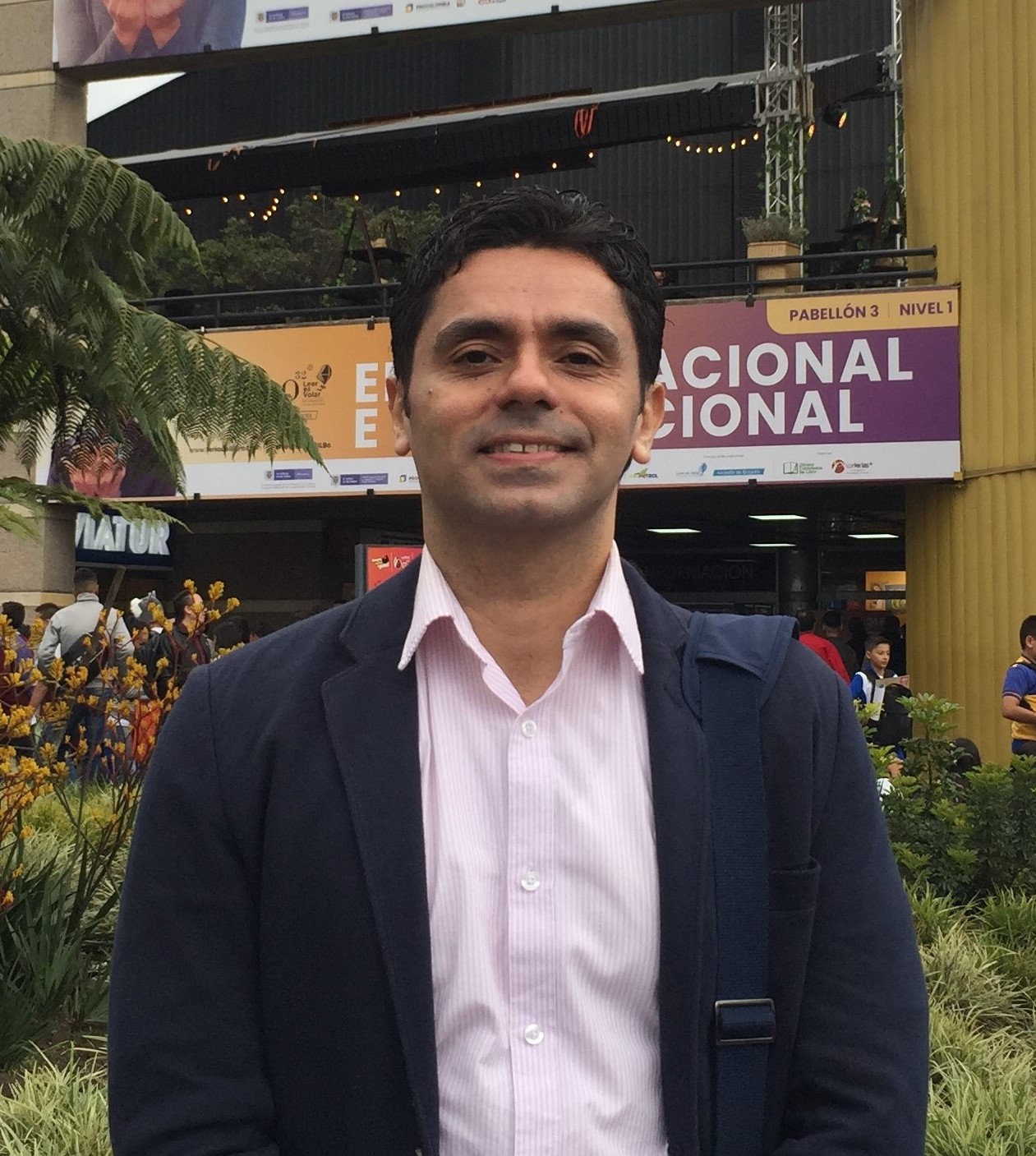
Ph. D. in Tourism from the University of Malaga. Professor at the Faculty of Business and Economic Sciences, Universidad del Magdalena (Colombia). I have work experience in the academic and professional fields in different countries like Colombia, Spain and USA. My lines of research are Corporate Social Responsibility in tourism, sustainable tourism and tourism management. I have a variety of publications and participations in academic events on the subject, through academic articles, book, book chapters and conference paper at national and international congresses.
EDUCATION
- PhD in Tourism. Doctoral Dissertation awarded Sobresaliente, Cum Laude, and International Doctorate Mention. University of Malaga, Interuniversity doctorate of tourism of the Universities of Malaga, Alicante, Seville, and Rey Juan Carlos I, Malaga, Spain. 26/02/2018.
- Master’s in Planning and Management of Domestic and Health Tourism. Final Master’s Thesis awarded Matrícula de Honor. University of Vigo, Spain. 18/06/2013.
- Master’s in Tourism Administration - Planning and Sustainable Tourism. Final Master’s Project awarded Matrícula de Honor. University of the Balearic Islands, Palma de Mallorca, Balearic Islands, Spain. 31/09/2007.
- Bachelor’s Degree in Industrial Engineering. Universidad del Norte, Barranquilla, Colombia. 9/06/1999.
RESEARCH, TEACHING, or OTHER INTERESTS
Tourism, Leisure and Hospitality Management, Strategy and Management
11
Scopus Publications
841
Scholar Citations
12
Scholar h-index
14
Scholar i10-index
Scopus Publications
Corporate Social Responsibility in the Hospitality Industry David Daniel Peña-Miranda, Antoni Serra-Cantallops, José Ramón-Cardona Sustainability Switzerland, 2026 A holistic approach that prioritizes economic success and sustainable practices through Corporate Social Responsibility (CSR) is crucial for the long-term sustainability of organizations, including the tourism and hospitality industry, and the first step is CSR knowledge. The aim of this study is to identify the key factors influencing the level of Corporate Social Responsibility (CSR) knowledge in the hospitality industry, as a practical tool for the sustainability of the territories. For this purpose, the research was conducted using a quantitative methodological approach by applying a CSR questionnaire to hotel managers from a sample of 222 hotels in the Colombian Caribbean. Multivariate statistical techniques were applied, specifically Principal Component Analysis (PCA) and Multiple Linear Regression (MLR). The Principal Component Analysis determined two dependent variables (Basic CSR Knowledge and Advanced CSR Knowledge) and subsequently a Multiple Linear Regression was applied to each one, determining which independent variables (treated as dummy variables) have significant effects. The results have led to the conclusion that the CSR knowledge of the hotel sector in the Colombian Caribbean is positively influenced by hotel-related factors—such as age, management contract type, financial performance, and investment in innovation—as well as by managers’ gender and educational attainment. These results have important implications for the hotel sector and academia. Future research should consider more stakeholders and other geographical areas.
Agent-Based Model Applied for the Study of Overtourism in an Urban Context Janwar Moreno, Jairo Parada, David Daniel Peña-Miranda Sustainability Switzerland, 2025 This research aims to analyze the spatial and temporal distribution of residents and tourists in an urban context, assessing the risk of overtourism. To achieve this, a tourist city is conceptualized as a complex system and examined through an agent-based model (ABM), which simulates the interactions between heterogeneous agents and their environment. This computational approach enables the exploration of emergent spatial-temporal patterns and facilitates the interpretation of overtourism as a real-world experiment. The case study focuses on Santa Marta (Colombia), a well-established coastal destination currently facing potential entry into a phase of tourism decline if management remains reactive. Simulation results reveal a high risk of overtourism and illustrate the differentiated effects of two plausible management strategies at distinct spatial scales. Additionally, this study proposes a tourism intensity indicator, addressing the problem of overestimating tourism pressure in existing metrics. The proposed model offers a valuable decision-support tool for assessing impacts and designing proactive management measures in destinations experiencing rapid tourist growth across multiple spatial and temporal dimensions.
The KAC-CSR Model in the Tourism Sector David Daniel Peña-Miranda, Antoni Serra-Cantallops, José Ramón-Cardona Sustainability Switzerland, 2023 This article carries out, for the first time in the scientific literature, an integrated analysis of the variables of knowledge, application, and communication of CSR in an economic sector (in this case, tourism), through the application of a novel model called KAC-CSR (knowledge, application, and communication of corporate social responsibility); this model interrelates the three concepts and the possible factors causing them. The objective is to identify the possible causal relationships among these CSR variables and their respective determining factors. In practice, this implies carrying out a first empirical verification of the proposed model, seeking to determine its viability as an explanatory tool. Applying the structural equation modeling (SEM) approach, using partial least squares (PLS), to a sample of 224 hotels in the Colombian Caribbean region, this analysis verifies the proposed model and specifies its characteristics. This study finds that a greater degree of advanced CSR knowledge lends itself to a greater degree of CSR application. This, in turn, positively influences CSR communication. Likewise, motivations have a positive influence on CSR application, particularly in economic and social activities, while obstacles have a negative influence on CSR application. Moreover, different characteristics of the manager and the hotels determine the levels of knowledge, application, and communication of CSR. The paper also provides evidence on the determining factors influencing the ‘knowledge–application–communication’ sequence of CSR, an aspect not studied until now. Future research should consider more stakeholders and replicate the KAC-CSR model in other economic sectors and geographical areas.
Corporate social responsibility model for a competitive and resilient hospitality industry David Daniel Peña‐Miranda, Antonio Guevara‐Plaza, José Antonio Fraiz‐Brea, Mark Anthony Camilleri Sustainable Development, 2022 Despite there was significant increase in the corporate social responsibility (CSR) literature, in the last decade, little attention has been devoted to shed light on strategic CSR practices in the hospitality industry, especially in the context of developing countries. This paper uses a case‐study methodology to investigate the CSR practices of eight hotels in Santa Marta, Colombia. The results show that the hotel companies were implementing different CSR behaviors that can be classified as philanthropic‐reactive, legal‐reactive, and active groups. The findings revealed that their CSR activities were focused on adding value to their economic performance. This contribution implies that Individual improvement plans for each establishment and a CSR management model for the entire industry are proposed. The results have important theoretical and practical implications for academia and the hospitality industry. Future research should take into account more stakeholders and companies from other industries in the study area.
Critical analysis of a world heritage site in terms of conservation and tourism promotion: The case of “ibiza, biodiversity and culture” (ibiza, spain) José Ramón-Cardona, David Daniel Peña-Miranda, María Dolores Sánchez-Fernández Sustainability Switzerland, 2021 United Nations Educational, Scientific and Cultural Organization (UNESCO) World Heritage Sites (WHS) have great prestige. Each year, candidatures are presented by advocates seeking to raise awareness of the importance of certain cultural and natural sites, to achieve better protection and to make them known, which can promote tourism to benefit the surrounding regions. One of these cases is Ibiza, which, after a first rejection in 1986, obtained the inscription of “Ibiza, Biodiversity and Culture” in 1999. This WHS is made up of various cultural and natural elements of the island, although the best known is the fortified Upper Town of Ibiza (Dalt Vila). Since then, important restoration and musealization actions have been carried out in the old town, and some tourism promotion events have been held, but there have been failures in its conversion into a tourist product: Both residents and tourists see this as complementary to the traditional offer (sun and beach tourism); confusion has been generated in communication, focusing on the old town and forgetting the other elements; tourist visits to the registered elements have not taken off and are concentrated in the summer months (the traditional high season); some decisions have been politicized, among other problems. Finally, different lines of tourism development are proposed.
Antecedents of CSR communication by hotels: The case of the Colombian Caribbean Region Antoni Serra‐Cantallops, David D. Peña Miranda, José Ramón‐Cardona Business Ethics the Environment and Responsibility, 2021 By measuring the level of CSR communication carried out by hotels located in the Colombian Caribbean region and identifying the main determinant factors influencing this level (including pressure from the different stakeholders), this paper contributes to deepening our understanding of the antecedents of CSR communication in small and medium‐sized enterprises (SMEs) operating in emerging economies and, particularly, in the hotel industry, for which no previous studies on this topic could be uncovered. The results reveal that the level of CSR disclosure is low in the region and that the size of the hotel, the pressure from government agencies, and the age and educational background of the hotel’s top manager have a significant influence on the level of CSR communication. Results indicate a reactive approach to CSR communication confirming the prominent role played by government agencies, thus contributing to gain a richer understanding of institutional influences on CSR in Latin American countries. In terms of practical implications, findings suggest that governments should play a more active role in stimulating CSR communication in emerging countries, particularly in the case of SMEs.
Acceptance of tourist offers and territory: Cluster analysis of ibiza residents (Spain) José Ramón-Cardona, David Daniel Peña-Miranda, María Dolores Sánchez-Fernández Land, 2021 Heterogeneity studies have analyzed different clusters of residents according to their perception and attitude toward tourism in general or a specific type of tourism, but there are still no studies on the heterogeneity in the acceptance of tourist offers. The aim of this article was to segment residents according to their acceptance of different tourist offers focused on the territory. This is a new approach that seeks to determine the profiles of residents based on their preferences for the future development of a destination’s offer in order to solve land-related problems. Cluster analysis carried out by the K-means algorithm made it possible to create five clusters: Disappointed, favorable with nuances, moderate, enthusiasts but anti-nightclub, and enthusiasts. The clusters were characterized by the rejection of the “all inclusive” offer and by the acceptance of most offers. The types of tourism that involve an enhancement of the landscape and heritage were shown to be the best valued. The differences between the clusters were marked by the degree of general acceptance and by the rejection of some offers considered “conflicting.” The offers that imply a high consumption of land (golf courses) or annoyances from the immediate surroundings (nightclubs) generated discrepancies.
Determinants of CSR application in the hotel industry of the Colombian Caribbean David Daniel Peña-Miranda, Jesús Arteaga-Ortiz, José Ramón-Cardona Sustainability Switzerland, 2019 This study identifies the determinants of corporate social responsibility (CSR) application in the hotel industry of the Colombian Caribbean. A structured CSR questionnaire was applied to a sample of 224 hotels and multivariate statistical analysis was carried out with the support of the DYANE software. The findings suggest that the degree of CSR application is influenced by the size, age, category, type of contract, financial performance, and level of investment in innovation of the establishments; as well as by the sex, age, level of education, and degree of the directors’ autonomy in CSR-related decision-making and their motivations and perceived obstacles. This study on CSR is one of the first that has been applied in the hotel industry of the Colombian Caribbean and the results have important theoretical and practical implications to academia and the hospitality industry. Businessmen have valuable information to improve the levels of CSR in their companies and therefore contribute to a more responsible and sustainable tourism development in the Colombian Caribbean. Future research should include other variables like the type of corporate governance and the risk appetite of the decision-making body of the hotel and the social responsibility of all the stakeholders implicated in the destination.
Corporate social responsibility practices in the hotel sector. Case studies in Santa Marta city, Colombia David Daniel Peña Miranda, Antonio Guevara Plaza, Jose Antonio Fraiz Brea, Camilo M. Botero, and Cuadernos De Gestion, 2019 This paper aims to identify, diagnose and evaluate the practices of Corporate Social Responsibility (CSR) of eight hotels of different sizes located in Santa Marta, Colombia. From the theory of sustainable development based on ethic, the case study method was applied. It was found that hotel companies are located within a range of minimum, low and medium application, classified in philanthropic-reactive, legal-reactive and active groups, giving greater importance and value to the development of economic activities related to customers, product, workers and local suppliers. The study provides useful information on CSR, to improve decision making, both hotel owners, and their most influential stakeholders. Specifically, for employers, management and operation; for political leaders, public policy in the sector; for customers, in purchasing decisions; for academy, in decisions about ongoing investigations or further research; for local community, enabling control and monitoring legitimize or business. Future research should include more stakeholders and companies from other economic sectors in the study area.
Progress in Research on CSR and the Hotel Industry (2006-2015)* Antoni Serra-Cantallops, David D. Peña-Miranda, José Ramón-Cardona, Onofre Martorell-Cunill Cornell Hospitality Quarterly, 2018 This study reviews and synthesizes the contemporary literature focusing on the role of corporate social responsibility (CSR) in the hotel industry over the period 2006-2015. The revision process has covered articles meeting two conditions: first, articles focusing exclusively on the hotel industry (not on the tourism sector as a whole) and, second, the issue of CSR is addressed from a broader perspective (economic-social-environmental) and not only environmental. A total of 48 papers have been identified and grouped in three streams of research: CSR-Practices, CSR-Reporting, and CSR-Impacts; the last one been divided into two sublines of research: one from the consumer perspective (Marketing) and the second from the company’s perspective (Firm Business-Performance). For every line, the variables and topics studied are also established. The research lines “Practices” and “Impacts” have received a similar amount of research interest although there is a growing research interest in the impacts of CSR during recent years, either internal or external. Despite this fact, consumer reactions to CSR and the link between CSR and corporate financial performance (CFP) are still important gaps regarding research on CSR in the hotel industry. It is also worth to highlight that a key CSR stakeholder for hotels, like the local community, is particularly underresearched. Additional gaps of research are identified and suggestions for future lines of research are provided.
The practice of Corporate Social Responsibility. Case study in the tourism sector Innovar, 2013
RECENT SCHOLAR PUBLICATIONS
Corporate Social Responsibility in the Hospitality Industry DD Peña-Miranda, A Serra-Cantallops, J Ramón-Cardona Sustainability 18 (8), 4091 , 2026 2026
Agent-Based Model Applied for the Study of Overtourism in an Urban Context J Moreno, J Parada, DD Peña-Miranda Sustainability 17 (7), 3248 , 2025 2025 Citations: 5
An Approach to the Internationalization Process of Tourism Enterprises J Arteaga Ortiz, DD Peña Miranda, AP Fernández del Hoyo Revista Facultad de Ciencias Económicas: Investigación y Reflexión 31 (2 … , 2023 2023
Una aproximación al proceso de internacionalización de las empresas turísticas J Arteaga Ortiz, DD Peña Miranda, AP Fernández del Hoyo Revista Facultad de Ciencias Económicas: Investigación y Reflexión 31 (2 … , 2023 2023 Citations: 4
The KAC-CSR model in the tourism sector DD Peña-Miranda, A Serra-Cantallops, J Ramón-Cardona Sustainability 15 (3), 1840 , 2023 2023 Citations: 4
Corporate social responsibility model for a competitive and resilient hospitality industry DD Peña‐Miranda, A Guevara‐Plaza, JA Fraiz‐Brea, MA Camilleri Sustainable Development 30 (3), 433-446 , 2022 2022 Citations: 49
Corporate social responsibility model for a competitive and resilient hospitality industry A Guevara-Plaza, DD Peña Miranda, JA Fraiz-Brea, MA Camilleri Wiley , 2022 2022
Critical analysis of a World Heritage Site in terms of conservation and tourism promotion: The case of “Ibiza, Biodiversity and Culture”(Ibiza, Spain) J Ramón-Cardona, DD Peña-Miranda, MD Sánchez-Fernández Sustainability 13 (23), 13250 , 2021 2021 Citations: 12
Acceptance of tourist offers and territory: cluster analysis of Ibiza residents (Spain) J Ramón-Cardona, DD Peña-Miranda, MD Sánchez-Fernández Land 10 (7), 734 , 2021 2021 Citations: 12
Antecedents of CSR communication by hotels: The case of the Colombian Caribbean Region A Serra‐Cantallops, DD Peña Miranda, J Ramón‐Cardona Business Ethics, the Environment & Responsibility 30 (3), 323-337 , 2021 2021 Citations: 8
Digital tourist: Variables that define their purchasing behaviour DD Miranda, D Briley Investigaciones Turísticas 21, 1-21 , 2021 2021 Citations: 7
Prosthetic Valve Endocarditis From Trichosporon asahii in an Immunocompetent Patient LM Paniagua, D Sudhakar, LE Perez, D Miranda, P Urena, I Gregoric, ... Case Reports 2 (5), 693-696 , 2020 2020 Citations: 5
Determinants of CSR application in the hotel industry of the Colombian Caribbean DD Peña-Miranda, J Arteaga-Ortiz, J Ramón-Cardona Sustainability 11 (18), 5045 , 2019 2019 Citations: 23
Prácticas de responsabilidad social empresarial en el sector hotelero. Estudio de casos en la ciudad de Santa Marta, Colombia DDP Miranda, AG Plaza, JAF Brea, CM Botero Cuadernos de Gestión 19 (1), 175-202 , 2019 2019 Citations: 29
Corporate social responsibility practices in the hotel sector. Case studies in Santa Marta city, Colombia D Peña MiranDa, A Guevara Plaza, J Fraiz Brea, C Botero Cuadernos de Gestion 19 (1), 175-202 , 2019 2019 Citations: 9
Progress in research on CSR and the hotel industry (2006-2015) A Serra-Cantallops, DD Peña-Miranda, J Ramón-Cardona, ... Cornell Hospitality Quarterly 59 (1), 15-38 , 2018 2018 Citations: 292
Progress in Research on CSR and the Hotel Industry (2006-2015)(vol 59, pg 15, 2017) A Serra-Cantallops, DD Pena-Miranda, J Ramón-Cardona, ... CORNELL HOSPITALITY QUARTERLY 59 (1), NP1-NP1 , 2018 2018 Citations: 4
La práctica de la responsabilidad social empresarial en el sector turístico. Estudio de casos en empresas turísticas hoteleras de la ciudad de Santa Marta, Colombia D Peña Estudios y perspectivas en turismo 21, 1456-1480 , 2018 2018 Citations: 15
La práctica de la ética mediante la responsabilidad social empresarial como elemento fundamental para el desarrollo sostenible de territorios con vocación turística DD Peña Miranda, A Serra Cantallops, JR Cardona Universidad Externado de Colombia , 2018 2018 Citations: 4
MOST CITED SCHOLAR PUBLICATIONS
Progress in research on CSR and the hotel industry (2006-2015) A Serra-Cantallops, DD Peña-Miranda, J Ramón-Cardona, ... Cornell Hospitality Quarterly 59 (1), 15-38 , 2018 2018 Citations: 292
Responsabilidad social empresarial en el sector turístico: Estudio de caso en empresa de alojamiento de la ciudad de Santa Marta, Colombia DD Peña Miranda, A Serra Cantallops Estudios y perspectivas en turismo 21 (6), 0-0 , 2012 2012 Citations: 121
La práctica de la responsabilidad social empresarial: Estudio de caso en el sector turístico DD Peña Miranda, A Serra Cantallops Innovar 23 (49), 101-114 , 2013 2013 Citations: 79
Corporate social responsibility model for a competitive and resilient hospitality industry DD Peña‐Miranda, A Guevara‐Plaza, JA Fraiz‐Brea, MA Camilleri Sustainable Development 30 (3), 433-446 , 2022 2022 Citations: 49
Factores determinantes del conocimiento de la responsabilidad social empresarial en el sector hotelero del caribe colombiano DD Peña, A Serra, J Ramón Revista Ibero Americana de Estratégia 16 (2), 104-124 , 2017 2017 Citations: 38
La investigación de la responsabilidad social empresarial en el sector hotelero. Análisis y revisión de la literatura científica DDP MIranda, AG Plaza, JAF Brea Turismo y Sociedad 18, 137-158 , 2016 2016 Citations: 35
Prácticas de responsabilidad social empresarial en el sector hotelero. Estudio de casos en la ciudad de Santa Marta, Colombia DDP Miranda, AG Plaza, JAF Brea, CM Botero Cuadernos de Gestión 19 (1), 175-202 , 2019 2019 Citations: 29
Determinants of CSR application in the hotel industry of the Colombian Caribbean DD Peña-Miranda, J Arteaga-Ortiz, J Ramón-Cardona Sustainability 11 (18), 5045 , 2019 2019 Citations: 23
Progress in Research on CSR and the Hotel Industry (2006-2015)*. Cornell Hospitality Quarterly, 59 (1), 15–38 A Serra-Cantallops, DD Peña-Miranda, J Ramón-Cardona, ... 2018 Citations: 17
Perfil característico y responsabilidad social empresarial del sector hotelero de la región Caribe colombiana DDP Miranda, AS Cantallops, JR Cardona Pensamiento & Gestión, 128-149 , 2017 2017 Citations: 16
La práctica de la responsabilidad social empresarial en el sector turístico. Estudio de casos en empresas turísticas hoteleras de la ciudad de Santa Marta, Colombia D Peña Estudios y perspectivas en turismo 21, 1456-1480 , 2018 2018 Citations: 15
Critical analysis of a World Heritage Site in terms of conservation and tourism promotion: The case of “Ibiza, Biodiversity and Culture”(Ibiza, Spain) J Ramón-Cardona, DD Peña-Miranda, MD Sánchez-Fernández Sustainability 13 (23), 13250 , 2021 2021 Citations: 12
Acceptance of tourist offers and territory: cluster analysis of Ibiza residents (Spain) J Ramón-Cardona, DD Peña-Miranda, MD Sánchez-Fernández Land 10 (7), 734 , 2021 2021 Citations: 12
La práctica de la responsabilidad social empresarial en el sector turístico: estudio de casos en empresas turísticas hoteleras de la ciudad de Santa Marta, Colombia D Peña Miranda La práctica de la responsabilidad social empresarial en el sector turístico … , 2018 2018 Citations: 10
Corporate social responsibility practices in the hotel sector. Case studies in Santa Marta city, Colombia D Peña MiranDa, A Guevara Plaza, J Fraiz Brea, C Botero Cuadernos de Gestion 19 (1), 175-202 , 2019 2019 Citations: 9
Ram on-Cardona A Serra-Cantallops, DD Peña-Miranda J. and Martorell-Cunill, O, 2006-2015 , 2018 2018 Citations: 9
Antecedents of CSR communication by hotels: The case of the Colombian Caribbean Region A Serra‐Cantallops, DD Peña Miranda, J Ramón‐Cardona Business Ethics, the Environment & Responsibility 30 (3), 323-337 , 2021 2021 Citations: 8
Digital tourist: Variables that define their purchasing behaviour DD Miranda, D Briley Investigaciones Turísticas 21, 1-21 , 2021 2021 Citations: 7
Relatos, himnos y camisetas. Clubes deportivos y vida barrial en Quinta Normal D Miranda, G Araneda, N Jofré, R González Editorial Victorino Lainez. Santiago , 2014 2014 Citations: 7
Política turística para un turismo responsable y sostenible en latinoamérica: análisis de Colombia, Perú, Méjico y Honduras DDP Miranda, AS Cantallops Annals of Tourism Research en español 11 (1), 151-172 , 2009 2009 Citations: 6