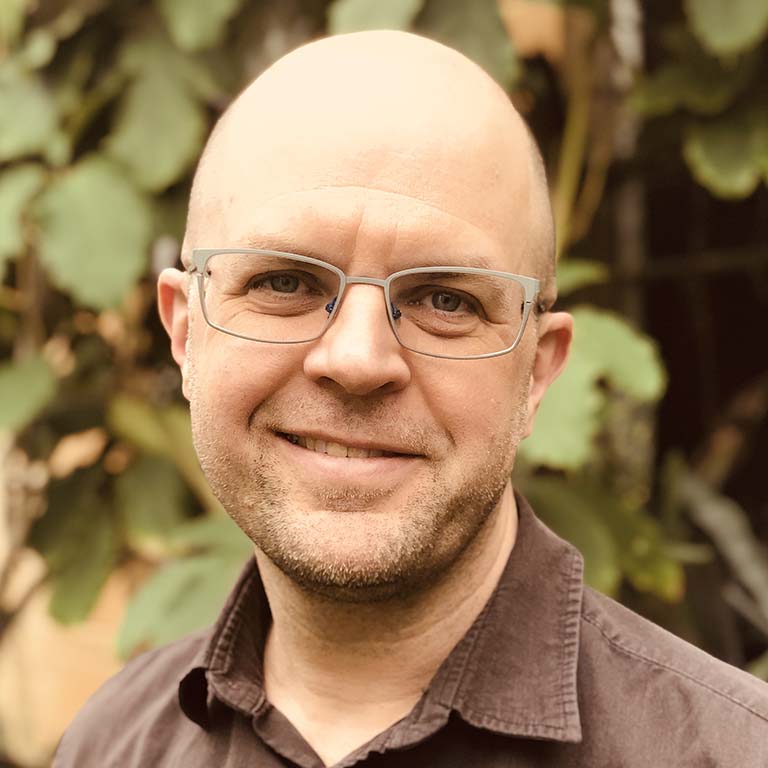
Lennon is a Professor in the Department of Biology at Indiana University and former Chair of the Evolution, Ecology, and Behavior (EEB) Section. He teaches a computationally focused graduate course in Quantitative Biodiversity and an undergraduate course on Microbiomes: Host and Environmental Health, and was an instructor for the Microbial Diversity course at the Marine Biological Laboratory (MBL) in Woods Hole. Previously, Lennon was an Assistant and Associate Professor
in the Department of Microbiology & Molecular Genetics and the W.K. Kellogg Biological Station (KBS) at Michigan State University. He completed postdoctoral training at Brown University and earned a Ph.D. at Dartmouth College, a Master’s degree at the University of Kansas, and a Bachelor’s degree at the SUNY College of Environmental Science and Forestry (ESF) at Syracuse University.
EDUCATION
1995 BS Environmental Forest Biology SUNY-ESF at Syracuse
1999 MA Ecology & Evolutionary Biology University of Kansas
2004 Ph.D. Ecology & Evolutionary Biology Dartmouth College
RESEARCH, TEACHING, or OTHER INTERESTS
Ecology, Evolution, Behavior and Systematics, Microbiology, Ecology, Soil Science
167
Scopus Publications
22298
Scholar Citations
62
Scholar h-index
123
Scholar i10-index
Scopus Publications
Evolutionary bioenergetics of sporulation Canan Karakoç, William R. Shoemaker, Jay T. Lennon Proceedings of the National Academy of Sciences of the United States of America, 2026 Energy is required for the expression and maintenance of complex traits. In many habitats, however, free energy available to support biosynthesis is in vanishingly short supply. As a result, many taxa have evolved persistence strategies that support survival in unfavorable environments. Among these is sporulation, an ancient bacterial program governed by a large genetic network that requires energy for both regulation and execution. Yet sporulation is a last resort, initiated when cellular energy is nearly exhausted. To resolve this paradox, we quantified the energetic cost of sporulation in units of ATP by integrating time-resolved genome, transcriptome, and proteome profiles. The full cost of the spore cycle, including both formation and revival, ranks among the most energy-intensive processes in the bacterial cell, requiring almost 10 10 ATP and consuming about 10% of the total energy budget. The majority of this cost arises from translation, membrane synthesis, and protein turnover. Despite its considerable upfront investment, sporulation enables long-term survival and becomes optimal when harsh conditions extend over timescales of months or longer. This trade-off between immediate cost and delayed benefit helps explain when sporulation is maintained or replaced by alternative strategies. By incorporating our estimates into mechanistic models, we show how metabolic constraints shape sporulation efficiency, while genome-wide mutation accumulation data reveal that even modest energetic burdens can become visible to selection, influencing the evolutionary fate of this complex and widespread trait.
Phage infection fronts trigger early sporulation and viral entrapment in bacterial populations Andreea Măgălie, Anastasios Marantos, Joy M O’Brien, Daniel A Schwartz, Jacopo Marchi, Jay T Lennon, Joshua S Weitz Isme Journal, 2026 Bacteriophages (phages) infect, lyse, and propagate within bacterial populations. However, physiological changes in bacterial cell state can protect against infection even within genetically susceptible populations. One such example is the generation of endospores by Bacillus and its relatives, characterized by a reversible state of reduced metabolic activity that protects cells against stressors including desiccation, energy limitation, antibiotics, and infection by phage. Here we tested how sporulation at the cellular scale impacts phage dynamics at population scales when propagating amongst B. subtilis in spatially structured environments. Plaques resulting from infection and lysis were approximately three-fold smaller on lawns of spore-forming bacteria vs. non-spore-forming bacteria. Analysis of plaque growth revealed that final plaque size was reduced due to an early termination of expanding phage plaques rather than the reduction of plaque growth speed. Microscopic imaging of the plaques revealed “sporulation rings,” i.e. spores enriched around plaque edges relative to phage-free regions. We developed a series of mathematical models of phage, bacteria, spores, and small molecules that recapitulate plaque dynamics. We show evidence that phage infections trigger the formation of sporulation rings that reduce the productivity of phage infections and halt plaque spread even when resources are available for infection and lysis further away from plaque centers. Moreover, sporulation rings are also enriched in viable virospores, suggesting that although dormancy limits phage infections at population scales in the near term, viruses may co-opt phage-avoidance strategies to re-emerge over the long term, opening new avenues to explore the entangled fates of phages and their bacterial hosts.
Microscale assay for the quantification of total polysaccharides to estimate extracellular polymeric substances (EPS) in soil G. Bogar, J.T. Lennon, H.M. Vander Stel, S.E. Evans Journal of Microbiological Methods, 2025 We present an inexpensive and practical microscale spectrophotometric acid-phenol assay to quantify polysaccharides in aqueous solution. The instant reaction within disposable materials is designed and benchmarked for use in quantifying extracellular polymeric substances (EPS) in soils. Precipitation recovery was high across expected ranges of soil EPS content.
Microbes without borders: uniting societies for climate action J. T. Lennon, L. S. Bittleston, Q. Chen, V. S. Cooper, J. Fernández, J. A. Gilbert, M. M. Häggblom, L. V. Harper, J. K. Jansson, N. Jiao, E. M. Kuurstra, R. S. Peixoto, R. Rappuoli, M. A. Schembri, A. Ventosa, D. L. Vullo, C. Zhang, N. K. Nguyen Mbio, 2025 The climate crisis is one of the greatest challenges of our time, yet the role of microorganisms remains underrecognized in climate science and policy. Microbes are highly sensitive to environmental change and regulate essential biogeochemical processes, while also offering solutions for reducing emissions, restoring ecosystems, and enhancing resilience. Microbiology societies from five continents recently convened in Washington, DC, for the inaugural Global Strategy Meeting on Microbes and Climate Change. The gathering launched a global alliance to position microbial science as a pillar of climate action and identified four priorities: building a coalition, embedding microbes in climate frameworks, transforming communication, and advancing real-world demonstration projects. This initiative marks the beginning of coordinated global action to harness microbial life for climate solutions.
Toward the Chemogeography of Dissolved Organic Matter in the Global Ocean Jianjun Wang, Ang Hu, Yifan Cui, Sarah Bercovici, Xiancai Lu, Jay Lennon, Janne Soininen, Yongqin Liu, Nianzhi Jiao Environmental Science and Technology, 2025 Dissolved organic matter (DOM) comprises a diverse mixture of organic molecules, playing a critical role in marine biogeochemistry and Earth's climate. However, the ecological patterns and drivers of DOM composition at the global scale and their variation across compound classes remain unclear. Here we quantify the compositional turnover of over 800 DOM samples covering the surface waters to the deep across the global ocean, using distance-decay relationships based on an ultrahigh-resolution mass spectrometry data set. Molecular compositions become increasingly dissimilar to greater geographical distances in both horizontal and vertical dimensions. The observed turnover rates, consistent across biochemically labile and recalcitrant compound classes, progressively decrease toward the deep ocean and high latitudes, indicating a trend of chemohomogenization. The geographical distribution is jointly influenced by horizontal spatial distance, water depth, and physicochemical environments, which suggests that both stochastic and deterministic processes shape the DOM composition homogenization, effectively acting as a "carbon homogenizer". This study unravels geographical patterns of DOM compositional turnover in the global ocean from an ecological perspective, deepening understanding of the forthcoming biogeochemical changes under global warming.
Microbes without borders: uniting societies for climate action J T Lennon, L S Bittleston, Q Chen, V S Cooper, J Fernández, J A Gilbert, M M Häggblom, L V Harper, J K Jansson, N Jiao, E M Kuurstra, R S Peixoto, R Rappuoli, M A Schembri, A Ventosa, D L Vullo, C Zhang, N K Nguyen FEMS Microbiology Ecology, 2025
Launching the IUCN Microbial Conservation Specialist Group as a global safeguard for microbial biodiversity Jack A. Gilbert, Raquel S. Peixoto, Amber Hartman Scholz, Maria Gloria Dominguez Bello, Lise Korsten, Gabriele Berg, Brajesh Singh, Antje Boetius, Fengping Wang, Chris Greening, Kelly Wrighton, Seth Bordenstein, Janet K. Jansson, Jay T. Lennon, Valeria Souza, Torsten Thomas, Don Cowan, Thomas W. Crowther, Nguyen Nguyen, Lucy Harper, Louis-Patrick Haraoui, Suzanne L. Ishaq, Kent Redford Nature Microbiology, 2025
Microbes without borders: uniting societies for climate action J. T. Lennon, L. S. Bittleston, Q. Chen, V. S. Cooper, J. Fernández, J. A. Gilbert, M. M. Häggblom, L. V. Harper, J. K. Jansson, N. Jiao, E. M. Kuurstra, R. S. Peixoto, R. Rappuoli, M. A. Schembri, A. Ventosa, D. L. Vullo, C. Zhang, N. K. Nguyen Microbiology Australia, 2025 The climate crisis is one of the greatest challenges of our time, yet the role of microorganisms remains underrecognised in climate science and policy. Microbes are highly sensitive to environmental change and regulate essential biogeochemical processes, while also offering solutions for reducing emissions, restoring ecosystems, and enhancing resilience. Microbiology societies from five continents recently convened in Washington, DC, for the inaugural Global Strategy Meeting on Microbes and Climate Change. The gathering launched a global alliance to position microbial science as a pillar of climate action and identified four priorities: building a coalition, embedding microbes in climate frameworks, transforming communication, and advancing real-world demonstration projects. This initiative marks the beginning of coordinated global action to harness microbial life for climate solutions. This article has been co-published with permission in mBio, Sustainable Microbiology, The ISME Journal, FEMS Microbiology Ecology, Microbiology Australia, and Ocean-Land-Atmosphere Research.
Microbial Ecology of Permafrost Soils: Populations, Processes, and Perspectives Mark P. Waldrop, Jessica Gilman Ernakovich, Tatiana A. Vishnivetskaya, Sean R. Schaefer, Rachel Mackelprang, Jiri Barta, Joy M. O′Brien, Matthias Winkel, Robyn A. Barbato, Liam Heffernan, Mary‐Cathrine Leewis, Rebecca E. Hewitt, Jenni Hultman, Yanchen Sun, Christina Biasi, James A. Bradley, Susanne Liebner, Michael P. Ricketts, Mario E. Muscarella, Ursel Schütte, Fumnanya Abuah, Emily Whalen, Ina Timling, Carolina Voigt, Neslihan Taş, Karen G. Lloyd, Henri M. P. Siljanen, Elizaveta M. Rivkina, Jana Voříšková, Jing Tao, Renxing Liang, Zhen Li, Jay T. Lennon, T. C. Onstott Permafrost and Periglacial Processes, 2025
Microbial solutions for climate change require global partnership J. T. Lennon, R. Rappuoli, D. E. Bloom, C. Brooke, R. M. Burckhardt, A. D. Dangour, D. Egamberdieva, G. K. Gronvall, T. D. Lawley, R. Morhard, A. Mukhopadhyay, R. S. Peixoto, P. A. Silver, V. Sperandio, L. Y. Stein, N. K. Nguyen Mbio, 2025
Microbes can capture carbon and degrade plastic — why aren’t we using them more? Rino Rappuoli, Nguyen K. Nguyen, David E. Bloom, Charles Brooke, Rachel M. Burckhardt, Alan D. Dangour, Dilfuza Egamberdieva, Gigi K. Gronvall, Trevor D. Lawley, Jay T. Lennon, Ryan Morhard, Aindrila Mukhopadhyay, Raquel Peixoto, Pamela A. Silver, Lisa Y. Stein Nature, 2025
Soil microbiome interventions for carbon sequestration and climate mitigation Gwyn A. Beattie, Anna Edlund, Nwadiuto Esiobu, Jack Gilbert, Mette Haubjerg Nicolaisen, Janet K. Jansson, Paul Jensen, Marco Keiluweit, Jay T. Lennon, Jennifer Martiny, Vanessa R. Minnis, Dianne Newman, Raquel Peixoto, Christopher Schadt, Jan Roelof van der Meer Msystems, 2025
Microbial solutions must be deployed against climate catastrophe Raquel Peixoto, Christian R. Voolstra, Lisa Y. Stein, Philip Hugenholtz, Joana Falcao Salles, Shady A. Amin, Max Häggblom, Ann Gregory, Thulani P. Makhalanyane, Fengping Wang, Nadège Adoukè Agbodjato, Yinzhao Wang, Nianzhi Jiao, Jay T. Lennon, Antonio Ventosa, Patrik M. Bavoil, Virginia Miller, Jack A. Gilbert Nature Reviews Microbiology, 2025
Microbial solutions must be deployed against climate catastrophe Raquel Peixoto, Christian R. Voolstra, Lisa Y. Stein, Philip Hugenholtz, Joana Falcao Salles, Shady A. Amin, Max Häggblom, Ann Gregory, Thulani P. Makhalanyane, Fengping Wang, Nadège Adoukè Agbodjato, Yinzhao Wang, Nianzhi Jiao, Jay T. Lennon, Antonio Ventosa, Patrik M. Bavoil, Virginia Miller, Jack A. Gilbert Nature Reviews Earth and Environment, 2025
Microbes without borders: uniting societies for climate action Jay T Lennon, Leonora S Bittleston, Quanrui Chen, Vaughn S Cooper, Julieta Fernández, Jack A Gilbert, Max M Häggblom, Lucy V Harper, Janet K Jansson, Nianzhi Jiao, Elise M Kuurstra, Raquel S Peixoto, Rino Rappuoli, Mark A Schembri, Antonio Ventosa, Diana L Vullo, Chuanlun Zhang, Nguyen K Nguyen Isme Journal, 2025
Microbes without Borders: Uniting Societies for Climate Action Jay T. Lennon, Leonora S. Bittleston, Quanrui Chen, Vaughn S. Cooper, Julieta Fernández, Jack A. Gilbert, Max M. Häggblom, Lucy V. Harper, Janet K. Jansson, Nianzhi Jiao, Elise M. Kuurstra, Raquel S. Peixoto, Rino Rappuoli, Mark A. Schembri, Antonio Ventosa, Diana L. Vullo, Chuanlun Zhang, Nguyen K. Nguyen Ocean Land Atmosphere Research, 2025
Microbes without borders: uniting societies for climate action J T Lennon, L S Bittleston, Q Chen, V S Cooper, J Fernández, J A Gilbert, M M Häggblom, L V Harper, J K Jansson, N Jiao, E M Kuurstra, R S Peixoto, R Rappuoli, M A Schembri, A Ventosa, D L Vullo, C Zhang, N K Nguyen Sustainable Microbiology, 2025
Microbial solutions must be deployed against climate catastrophe Raquel Peixoto, Christian R. Voolstra, Lisa Y. Stein, Philip Hugenholtz, Joana Falcao Salles, Shady A. Amin, Max Häggblom, Ann Gregory, Thulani P. Makhalanyane, Fengping Wang, Nadège Adoukè Agbodjato, Yinzhao Wang, Nianzhi Jiao, Jay T. Lennon, Antonio Ventosa, Patrik M. Bavoil, Virginia Miller, Jack A. Gilbert Msystems, 2025
Microbial solutions must be deployed against climate catastrophe Raquel Peixoto, Christian R. Voolstra, Lisa Y. Stein, Philip Hugenholtz, Joana Falcao Salles, Shady A. Amin, Max Häggblom, Ann Gregory, Thulani P. Makhalanyane, Fengping Wang, Nadège Adoukè Agbodjato, Yinzhao Wang, Nianzhi Jiao, Jay T. Lennon, Antonio Ventosa, Patrik M. Bavoil, Virginia Miller, Jack A. Gilbert Npj Biodiversity, 2024
Microbial solutions must be deployed against climate catastrophe Raquel Peixoto, Christian R. Voolstra, Lisa Y. Stein, Philip Hugenholtz, Joana Falcao Salles, Shady A. Amin, Max Häggblom, Ann Gregory, Thulani P. Makhalanyane, Fengping Wang, Nadège Adoukè Agbodjato, Yinzhao Wang, Nianzhi Jiao, Jay T. Lennon, Antonio Ventosa, Patrik M. Bavoil, Virginia Miller, Jack A. Gilbert Npj Sustainable Agriculture, 2024
Microbial solutions must be deployed against climate catastrophe Raquel Peixoto, Christian R. Voolstra, Lisa Y. Stein, Philip Hugenholtz, Joana Falcao Salles, Shady A. Amin, Max Häggblom, Ann Gregory, Thulani P. Makhalanyane, Fengping Wang, Nadège Adoukè Agbodjato, Yinzhao Wang, Nianzhi Jiao, Jay T. Lennon, Antonio Ventosa, Patrik M. Bavoil, Virginia Miller, Jack A. Gilbert Npj Biofilms and Microbiomes, 2024
Microbial solutions must be deployed against climate catastrophe Raquel Peixoto, Christian R. Voolstra, Lisa Y. Stein, Philip Hugenholtz, Joana Falcao Salles, Shady A. Amin, Max Häggblom, Ann Gregory, Thulani P. Makhalanyane, Fengping Wang, Nadège Adoukè Agbodjato, Yinzhao Wang, Nianzhi Jiao, Jay T. Lennon, Antonio Ventosa, Patrik M. Bavoil, Virginia Miller, Jack A. Gilbert Nature Microbiology, 2024
Microbial solutions must be deployed against climate catastrophe Raquel Peixoto, Christian R. Voolstra, Lisa Y. Stein, Philip Hugenholtz, Joana Falcao Salles, Shady A. Amin, Max Häggblom, Ann Gregory, Thulani P. Makhalanyane, Fengping Wang, Nadège Adoukè Agbodjato, Yinzhao Wang, Nianzhi Jiao, Jay T. Lennon, Antonio Ventosa, Patrik M. Bavoil, Virginia Miller, Jack A. Gilbert Communications Earth and Environment, 2024
Microbial solutions must be deployed against climate catastrophe Raquel Peixoto, Christian R. Voolstra, Lisa Y. Stein, Philip Hugenholtz, Joana Falcao Salles, Shady A. Amin, Max Häggblom, Ann Gregory, Thulani P. Makhalanyane, Fengping Wang, Nadège Adoukè Agbodjato, Yinzhao Wang, Nianzhi Jiao, Jay T. Lennon, Antonio Ventosa, Patrik M. Bavoil, Virginia Miller, Jack A. Gilbert Communications Biology, 2024
Microbial solutions must be deployed against climate catastrophe Raquel Peixoto, Christian R. Voolstra, Lisa Y. Stein, Philip Hugenholtz, Joana Falcao Salles, Shady A. Amin, Max Häggblom, Ann Gregory, Thulani P. Makhalanyane, Fengping Wang, Nadège Adoukè Agbodjato, Yinzhao Wang, Nianzhi Jiao, Jay T. Lennon, Antonio Ventosa, Patrik M. Bavoil, Virginia Miller, Jack A. Gilbert Nature Communications, 2024
Microbial solutions must be deployed against climate catastrophe Raquel Peixoto, Christian R Voolstra, Lisa Y Stein, Philip Hugenholtz, Joana Falcao Salles, Shady A Amin, Max Häggblom, Ann Gregory, Thulani P Makhalanyane, Fengping Wang, Nadège Adoukè Agbodjato, Yinzhao Wang, Nianzhi Jiao, Jay T Lennon, Antonio Ventosa, Patrik M Bavoil, Virginia Miller, Jack A Gilbert FEMS Microbiology Ecology, 2024
Microbial solutions must be deployed against climate catastrophe Raquel Peixoto, Christian R Voolstra, Lisa Y Stein, Philip Hugenholtz, Joana Falcao Salles, Shady A Amin, Max Häggblom, Ann Gregory, Thulani P Makhalanyane, Fengping Wang, Nadège Adoukè Agbodjato, Yinzhao Wang, Nianzhi Jiao, Jay T Lennon, Antonio Ventosa, Patrik M Bavoil, Virginia Miller, Jack A Gilbert Isme Journal, 2024
Microbial solutions must be deployed against climate catastrophe Raquel Peixoto, Christian R Voolstra, Lisa Y Stein, Philip Hugenholtz, Joana Falcao Salles, Shady A Amin, Max Häggblom, Ann Gregory, Thulani P Makhalanyane, Fengping Wang, Nadège Adoukè Agbodjato, Yinzhao Wang, Nianzhi Jiao, Jay T Lennon, Antonio Ventosa, Patrik M Bavoil, Virginia Miller, Jack A Gilbert Sustainable Microbiology, 2024
Evolution of a minimal cell R. Z. Moger-Reischer, J. I. Glass, K. S. Wise, L. Sun, D. M. C. Bittencourt, B. K. Lehmkuhl, D. R. Schoolmaster, M. Lynch, J. T. Lennon Nature, 2023
Human-Gut Phages Harbor Sporulation Genes Daniel A. Schwartz, Josué A. Rodríguez-Ramos, Michael Shaffer, Rory M. Flynn, Rebecca A. Daly, Kelly C. Wrighton, Jay T. Lennon Mbio, 2023
Macroecology to Unite All Life, Large and Small Ashley Shade, Robert R. Dunn, Shane A. Blowes, Petr Keil, Brendan J.M. Bohannan, Martina Herrmann, Kirsten Küsel, Jay T. Lennon, Nathan J. Sanders, David Storch, Jonathan Chase Trends in Ecology and Evolution, 2018
Understanding how microbiomes influence the systems they inhabit Ed K. Hall, Emily S. Bernhardt, Raven L. Bier, Mark A. Bradford, Claudia M. Boot, James B. Cotner, Paul A. del Giorgio, Sarah E. Evans, Emily B. Graham, Stuart E. Jones, Jay T. Lennon, Kenneth J. Locey, Diana Nemergut, Brooke B. Osborne, Jennifer D. Rocca, Joshua P. Schimel, Mark P. Waldrop, Matthew D. Wallenstein Nature Microbiology, 2018
Evolutionary determinants of genome-wide nucleotide composition Hongan Long, Way Sung, Sibel Kucukyildirim, Emily Williams, Samuel F. Miller, Wanfeng Guo, Caitlyn Patterson, Colin Gregory, Chloe Strauss, Casey Stone, Cécile Berne, David Kysela, William R. Shoemaker, Mario E. Muscarella, Haiwei Luo, Jay T. Lennon, Yves V. Brun, Michael Lynch Nature Ecology and Evolution, 2018
Re-examination of the relationship between marine virus and microbial cell abundances Charles H. Wigington, Derek Sonderegger, Corina P. D. Brussaard, Alison Buchan, Jan F. Finke, Jed A. Fuhrman, Jay T. Lennon, Mathias Middelboe, Curtis A. Suttle, Charles Stock, William H. Wilson, K. Eric Wommack, Steven W. Wilhelm, Joshua S. Weitz Nature Microbiology, 2016
The under-ice microbiome of seasonally frozen lakes Stefan Bertilsson, Amy Burgin, Cayelan C. Carey, Samuel B. Fey, Hans-Peter Grossart, Lorena M. Grubisic, Ian D. Jones, Georgiy Kirillin, Jay T. Lennon, Ashley Shade, Robyn L. Smyth Limnology and Oceanography, 2013
Integrating microbial ecology into ecosystem models: Challenges and priorities Kathleen K. Treseder, Teri C. Balser, Mark A. Bradford, Eoin L. Brodie, Eric A. Dubinsky, Valerie T. Eviner, Kirsten S. Hofmockel, Jay T. Lennon, Uri Y. Levine, Barbara J. MacGregor, Jennifer Pett-Ridge, Mark P. Waldrop Biogeochemistry, 2012
Fundamentals of microbial community resistance and resilience Ashley Shade, Hannes Peter, Steven D. Allison, Didier L. Baho, Mercè Berga, Helmut Bürgmann, David H. Huber, Silke Langenheder, Jay T. Lennon, Jennifer B. H. Martiny, Kristin L. Matulich, Thomas M. Schmidt, Jo Handelsman Frontiers in Microbiology, 2012
Transforming the American Academy of Microbiology for social good through scientific portfolios NK Nguyen, RM Burckhardt, S Bertuzzi, A Casadevall, V Sperandio, ... mBio, e00828-26 , 2026 2026
Metabolic inequality in microbial communities EA Mueller, JT Lennon bioRxiv, 2026.04. 14.718602 , 2026 2026
Microbe-mediated plant acclimation to drought may be rare in agriculture MM Howard, LG Bolin, GD Bogar, SE Evans, JT Lennon, ... bioRxiv, 2026.04. 02.715620 , 2026 2026
Microbial Inoculants for Soil Restoration: A Practical Framework for Risk-Governed Stewardship A Edlund, G Beattie, JF Salles, JA Gilbert, JK Jansson, JT Lennon, ... EcoEvoRxiv , 2026 2026
Microbial inoculants for soil restoration: a practical framework for risk-governed stewardship G Beattie, A Edlund, JF Salles, JA Gilbert, JK Jansson, JT Lennon, ... EcoEvoRxiv , 2026 2026 Citations: 1
Evolutionary bioenergetics of sporulation C Karakoç, WR Shoemaker, JT Lennon Proceedings of the National Academy of Sciences 123 (6), e2524274123 , 2026 2026 Citations: 2
Phage infection fronts trigger early sporulation and viral entrapment in bacterial populations A Măgălie, A Marantos, JM O’Brien, DA Schwartz, J Marchi, JT Lennon, ... The ISME Journal 20 (1), wrag023 , 2026 2026 Citations: 4
Safeguarding microbial biodiversity: microbial conservation specialist group within the species survival commission of the International Union for Conservation of Nature JA Gilbert, AH Scholz, MG Dominguez Bello, L Korsten, G Berg, BK Singh, ... FEMS Microbiology Ecology 101 (12), fiaf107 , 2025 2025 Citations: 10
Microscale assay for the quantification of total polysaccharides to estimate extracellular polymeric substances (EPS) in soil G Bogar, JT Lennon, HM Vander Stel, SE Evans Journal of Microbiological Methods 239, 107324 , 2025 2025 Citations: 1
Toward the chemogeography of dissolved organic matter in the global ocean J Wang, A Hu, Y Cui, S Bercovici, X Lu, JT Lennon, J Soininen, Y Liu, ... Environmental Science & Technology , 2025 2025 Citations: 2
Microbes without borders: uniting societies for climate action JT Lennon, LS Bittleston, Q Chen, VS Cooper, J Fernández, JA Gilbert, ... FEMS Microbiology Ecology 101 (10), fiaf084 , 2025 2025 Citations: 6
Launching the IUCN Microbial Conservation Specialist Group as a global safeguard for microbial biodiversity JA Gilbert, RS Peixoto, AH Scholz, MG Dominguez Bello, L Korsten, ... Nature Microbiology 10 (10), 2359-2360 , 2025 2025 Citations: 20
The Enterostat: a 3D-printed bioreactor for simulating gut microbiome dynamics EA Mueller, LA van der Elst, A Gumennik, JT Lennon bioRxiv, 2025.08. 21.671663 , 2025 2025 Citations: 1
Water, Waterborne Pathogens and Public Health: Environmental Drivers. Report on an American Academy of Microbiology Colloquium held on Dec. 5 and 6, 2024 Washington (DC) RR Colwell, AS Jutla, N Hasan, J Patz, G Madhavan, AR Ottesen, K Beck, ... American Society for Microbiology , 2025 2025
Resuscitation-promoting factor (Rpf) terminates dormancy among diverse soil bacteria JT Lennon, BK Lehmkuhl, L Chen, M Illingworth, V Kuo, ME Muscarella mSystems 10 (5), e01517-24 , 2025 2025 Citations: 8
Microbial solutions for climate change require global partnership JT Lennon, R Rappuoli, DE Bloom, C Brooke, RM Burckhardt, ... mBio 16 (5), e00778-25 , 2025 2025 Citations: 2
The Community Genetic Distribution (CGD): A unifying measure for monitoring biodiversity change I Overcast, I Calderon-Sanou, S Creer, V Dominguez-Garcia, O Hagen, ... EcoEvoRxiv , 2025 2025
Geographical patterns and drivers of dissolved organic matter in the global ocean J Wang, A Hu, Y Cui, S Bercovici, X Lu, JT Lennon, J Soininen, Y Liu, ... 2025 Citations: 1
The distribution of genetic diversity in ecological communities: A unifying measure for monitoring biodiversity change I Overcast, I Calderon-Sanou, S Creer, V Dominguez-Garcia, O Hagen, ... EcoEvoRxiv , 2025 2025
Microbes can capture carbon and degrade plastic—why aren’t we using them more? R Rappuoli, NK Nguyen, DE Bloom, C Brooke, RM Burckhardt, ... Nature 639 (8056), 864-866 , 2025 2025 Citations: 9
MOST CITED SCHOLAR PUBLICATIONS
Microbial seed banks: the ecological and evolutionary implications of dormancy JT Lennon, SE Jones Nature Reviews Microbiology 9 (2), 119-130 , 2011 2011 Citations: 2048
Fundamentals of microbial community resistance and resilience A Shade, H Peter, SD Allison, D Baho, M Berga, H Bürgmann, DH Huber, ... Frontiers in Microbiology 3, 417 , 2012 2012 Citations: 1988
Scaling laws predict global microbial diversity KJ Locey, JT Lennon Proceedings of the National Academy of Sciences 113 (21), 5970-5975 , 2016 2016 Citations: 1556
Dormancy contributes to the maintenance of microbial diversity SE Jones, JT Lennon Proceedings of the National Academy of Sciences 107 (13), 5881-5886 , 2010 2010 Citations: 1081
Rapid responses of soil microorganisms improve plant fitness in novel environments JA Lau, JT Lennon Proceedings of the National Academy of Sciences 109 (35), 14058-14062 , 2012 2012 Citations: 911
Microbiomes in light of traits: a phylogenetic perspective JBH Martiny, SE Jones, JT Lennon, AC Martiny Science 350 (6261), aac9323 , 2015 2015 Citations: 901
Fungal traits that drive ecosystem dynamics on land KK Treseder, JT Lennon Microbiology and molecular biology reviews 79 (2), 243-262 , 2015 2015 Citations: 720
Ecosystem consequences of changing inputs of terrestrial dissolved organic matter to lakes: current knowledge and future challenges CT Solomon, SE Jones, BC Weidel, I Buffam, ML Fork, J Karlsson, ... Ecosystems 18 (3), 376-389 , 2015 2015 Citations: 658
Temporal variability in soil microbial communities across land-use types CL Lauber, KS Ramirez, Z Aanderud, JT Lennon, N Fierer The ISME Journal 7 (8), 1641-1650 , 2013 2013 Citations: 640
Biodiversity may regulate the temporal variability of ecological systems KL Cottingham, BL Brown, JT Lennon Ecology Letters 4 (1), 72-85 , 2001 2001 Citations: 597
Evolutionary ecology of plant-microbe interactions: soil microbial structure alters selection on plant traits JA Lau, JT Lennon New Phytologist 192 (1), 215-224 , 2011 2011 Citations: 498
Trait-based approaches for understanding microbial biodiversity and ecosystem functioning S Krause, X Le Roux, PA Niklaus, PM Van Bodegom, JT Lennon, ... Frontiers in Microbiology 5, 251 , 2014 2014 Citations: 497
Mapping the niche space of soil microorganisms using taxonomy and traits JT Lennon, ZT Aanderud, BK Lehmkuhl, DR Schoolmaster Jr Ecology 93 (8), 1867-1879 , 2012 2012 Citations: 494
Knowing when to draw the line: designing more informative ecological experiments KL Cottingham, JT Lennon, BL Brown Frontiers in Ecology and the Environment 3 (3), 145-152 , 2005 2005 Citations: 455
Relationships between protein-encoding gene abundance and corresponding process are commonly assumed yet rarely observed JD Rocca, EK Hall, JT Lennon, SE Evans, MP Waldrop, JB Cotner, ... The ISME Journal 9 (8), 1693-1699 , 2015 2015 Citations: 396
Re-examination of the relationship between marine virus and microbial cell abundances CH Wigington, D Sonderegger, CPD Brussaard, A Buchan, JF Finke, ... Nature Microbiology 1 (3), 15024 , 2016 2016 Citations: 365
The generation and maintenance of diversity in microbial communities N Fierer, JT Lennon American Journal of Botany 98 (3), 439-448 , 2011 2011 Citations: 338
Ecological networks of dissolved organic matter and microorganisms under global change A Hu, M Choi, AJ Tanentzap, J Liu, KS Jang, JT Lennon, Y Liu, J Soininen, ... Nature Communications 13 (1), 1-15 , 2022 2022 Citations: 315
Integrating microbial ecology into ecosystem models: challenges and priorities KK Treseder, TC Balser, MA Bradford, EL Brodie, EA Dubinsky, VT Eviner, ... Biogeochemistry 109 (1), 7-18 , 2012 2012 Citations: 310
A multitrophic model to quantify the effects of marine viruses on microbial food webs and ecosystem processes JS Weitz, CA Stock, SW Wilhelm, L Bourouiba, ML Coleman, A Buchan, ... The ISME Journal 9 (6), 1352-1364 , 2015 2015 Citations: 297