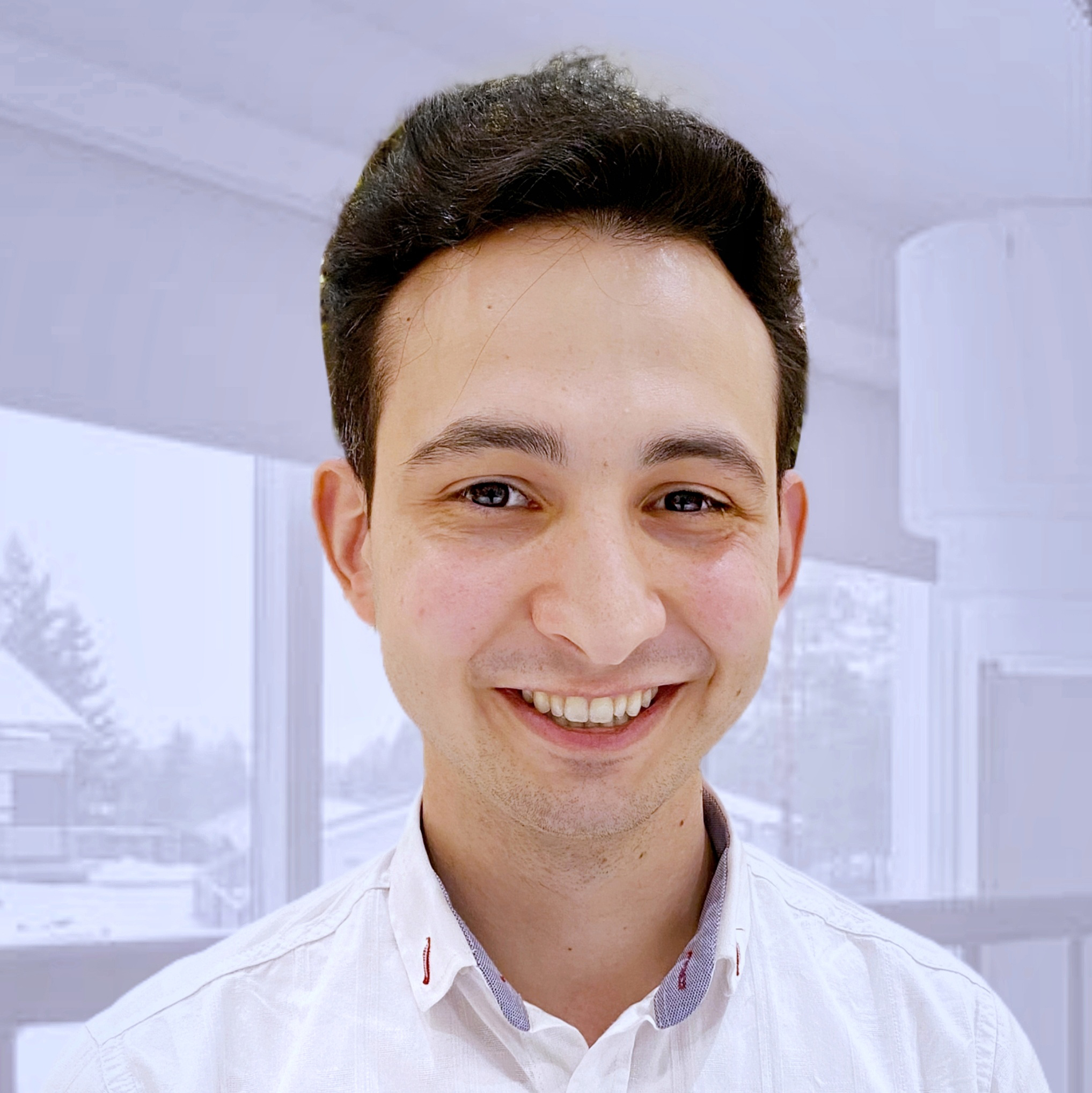
I am a careful clinician and enthusiastic researcher focused on solving everyday challenges in dental practice. My work bridges clinical experience with research, aiming to improve patient care and support better outcomes.
RESEARCH, TEACHING, or OTHER INTERESTS
Dentistry, Multidisciplinary, General Dentistry
5
Scopus Publications
44
Scholar Citations
3
Scholar h-index
1
Scholar i10-index
Scopus Publications
Comparison between the Prognosis of Temporomandibular Disorders with and without Accompanying Otologic Symptoms after Non-Invasive Non-Pharmacological Treatment: Controlled Clinical Trial Samer Al Akkad, Mohammad Y. Hajeer, Marwan Al Akkad Acta Medica, 2026 Background: Otologic symptoms are commonly reported by patients with temporomandibular disorders. Objective: This study aims to investigate the likely outcome or progression of temporomandibular disorders with and without accompanying otologic symptoms when treated in the dental clinic. Methods: The study is registered under the International Standard Randomised Controlled Trial Number: ISRCTN49976724, DOI: 10.1186/ISRCTN49976724. Forty patients with temporomandibular disorders were included and allocated into two groups: Control group (n=20): isolated temporomandibular disorders symptoms, and Experimental group (n=20): temporomandibular disorders symptoms with otologic symptoms (confirmed by otorhinolaryngological evaluation to exclude primary ear pathology). All participants underwent non-invasive, non-pharmacological treatment. The treatment contained physiotherapy and custom-made occlusal splints. Outcomes (full/partial/no recovery) were assessed at 3 months by a single maxillofacial surgeon, with follow-up every 3 weeks. Statistical analysis included Fisher’s exact test and odds ratios. Results: Fisher’s exact test revealed a statistically significant association between group allocation and recovery outcomes (χ 2 =5.979, p=0.041). The odds ratio was 5.33. Conclusion: The presence of otological symptoms accompanying temporomandibular disorders might predict a better prognosis after non-invasive, non-pharmacological treatment, perhaps not as a direct predictor per se but as a confounding factor.
Assessment of impact of a control die on marginal fidelity of milled zirconia crown copings for finishing and polishing Marwan Al Akkad, John Sorensen, Omar Hamadah, Iva Voborna, Marek Matoušek, et al. Journal of Prosthodontics, 2025 PurposeThis study evaluated and compared the marginal fidelity of milled zirconia copings before and after finishing and polishing with and without a control die.Materials and MethodsThis prospective multicenter in vitro trial involved two methods regularly used in two clinics for hybrid and full‐digital workflows. A typodont mandibular molar was prepared. From each workflow, 20 zirconia crown copings were milled from a single scan. Ten zirconia crown copings were assigned randomly from each workflow to be finished and polished. Finishing and polishing in the hybrid workflow were done directly on the typodont, representing the control die. There were four groups in this study: No‐die‐Before (full‐digital without finishing and polishing), No‐die‐After (hybrid without finishing and polishing), Die‐based‐Before (full‐digital with finishing and polishing), and Die‐based‐After (hybrid with finishing and polishing). The typodont tooth was divided into eight zones for systematic measurement. All groups were evaluated using a digital optical microscope.ResultsThe mean values with the standard deviation of No‐die‐Before, No‐die‐After, Die‐based‐Before, and Die‐based‐After groups were 24.90 ± 23.88, 30.62 ± 32.63, 21.03 ± 16.65, and 18.93 ± 18.27, respectively. The maximum values for the No‐die‐Before and No‐die‐After groups were 124 and 131 µm, respectively. All the values in the Die‐based‐Before and Die‐based‐After groups were less than the acceptable marginal gap of 75 µm.ConclusionsThere was no statistical significance between the two workflows. However, the control die enabled achieving superior accuracy. Without it, the marginal gap might worsen after finishing and polishing in the full‐digital workflow.
Zirconia Ceramics Bedirhan Savas Yigit, Marwan Al-Akkad, Radek Mounajjed Acta Medica, 2024 Zirconia ceramics have become popular among other dental ceramics thanks to their biological, mechanical, optical, and aesthetic properties. CAD/CAM (computer-aided design/ computer-aided manufacturing) technology improvement has played a vital role in the increased popularity of zirconia ceramics; easy computer manipulation significantly expanded the possibility of using different types of restorations. Zirconia ceramics have a broad spectrum of indications in prosthetic dentistry, from simple restorations to complex structures supported by dental implants. A good orientation in the classification, features, and manipulation of zirconia ceramics is the main key to success.
Assessment of the readiness of restorations manufactured by CAD/CAM in terms of marginal fit (Part I) Radek Mounajjed, Thomas Taylor, Omar Hamadah, Iva Voborná, Marwan Al-akkad Peerj, 2022 Background The master cast is the gold standard for the control and eventual adjustment of restorations produced by conventional procedures. Some digital workflow bypasses the master cast and relies completely on the precision of the CAD/CAM restoration. Aim To examine the reproducibility of the margins of CAD/CAM restorations generated from a single digital scan. Also, to check the readiness of these restorations for delivery directly after fabrication without adjustment on a master cast and thereby eliminate the need for the master cast. Methods A total of 18 metal substructures made from cobalt chrome alloy were fabricated utilizing a single STL file. The circumference was divided into eight zones. The vertical marginal discrepancy (VMD) was measured at each zone of each metal substructure, with optical microscopy at ×200 magnification. Results Measurements of vertical marginal discrepancy were in a range of (−94: 300) with a mean of 62 ± 60 μm. A one-way ANOVA test revealed that the mean VMD is significantly different among the 18 substructures (F17, 1,134 = 63.948, p < 0.001). Conclusion Although all the received substructures were fabricated from the same scan file, they were not identical and varied widely, and they were going outside the acceptable range in some zones. Within the limitations of this study, the marginal fit can be improved by extraoral adjustments on the master cast. Thus, skipping the master cast deprives the dentist of delivering a restoration of higher quality.
RECENT SCHOLAR PUBLICATIONS
Assessment of impact of a control die on marginal fidelity of milled zirconia crown copings for finishing and polishing M Al Akkad, J Sorensen, O Hamadah, I Voborna, M Matoušek, ... Journal of Prosthodontics , 2025 2025.0 Citations: 2
Zirconia ceramics BS Yigit, M Al-Akkad, R Mounajjed Acta Medica 67 (2), 39-45 , 2024 2024.0 Citations: 9
Evaluation of the injection pain with the use of Vibraject during local anesthesia injection for children: a randomized clinical trial MA Albouni, C Kouchaji, M Al-Akkad, I Voborna, R Mounajjed The Journal of Contemporary Dental Practice 23 (7), 749-754 , 2022 2022.0 Citations: 22
Assessment of the readiness of restorations manufactured by CAD/CAM in terms of marginal fit (Part I) R Mounajjed, T Taylor, O Hamadah, I Voborná, M Al-Akkad PeerJ 10, e13280 , 2022 2022.0 Citations: 9
Pulpotómia s použitím portlandského cementu pri stálych zuboch s ireverzibilnou pulpitídou S Albatal, C Kouchaji, M Al-Akkad, R Mounajjed Stomatológ 31 (2), 46-51 , 2021 2021.0
Pulpotomy using Portland cement in Mature Permanent Teeth with Irreversible Pulpitis S Albatal, C Kouchaji, M Al-Akkad, R Mounajjed stomatológ, 46 , 2021 2021.0
Proper selection of dental cements in fixed prosthodontics M Akkad, I VOBORNÁ, D ČERNÝ, MUDR Mounajjed STOMATOLÓG 30 (2), 39-44 , 2020 2020.0 Citations: 2
FACTORS AFFECTING THE MARGINAL FIT OF M AL AKKAD
FACTORS AFFECTING THE MARGINAL FIT OF CAD/CAM CROWNS M AL AKKAD
MOST CITED SCHOLAR PUBLICATIONS
Evaluation of the injection pain with the use of Vibraject during local anesthesia injection for children: a randomized clinical trial MA Albouni, C Kouchaji, M Al-Akkad, I Voborna, R Mounajjed The Journal of Contemporary Dental Practice 23 (7), 749-754 , 2022 2022.0 Citations: 22
Zirconia ceramics BS Yigit, M Al-Akkad, R Mounajjed Acta Medica 67 (2), 39-45 , 2024 2024.0 Citations: 9
Assessment of the readiness of restorations manufactured by CAD/CAM in terms of marginal fit (Part I) R Mounajjed, T Taylor, O Hamadah, I Voborná, M Al-Akkad PeerJ 10, e13280 , 2022 2022.0 Citations: 9
Assessment of impact of a control die on marginal fidelity of milled zirconia crown copings for finishing and polishing M Al Akkad, J Sorensen, O Hamadah, I Voborna, M Matoušek, ... Journal of Prosthodontics , 2025 2025.0 Citations: 2
Proper selection of dental cements in fixed prosthodontics M Akkad, I VOBORNÁ, D ČERNÝ, MUDR Mounajjed STOMATOLÓG 30 (2), 39-44 , 2020 2020.0 Citations: 2
Pulpotómia s použitím portlandského cementu pri stálych zuboch s ireverzibilnou pulpitídou S Albatal, C Kouchaji, M Al-Akkad, R Mounajjed Stomatológ 31 (2), 46-51 , 2021 2021.0
Pulpotomy using Portland cement in Mature Permanent Teeth with Irreversible Pulpitis S Albatal, C Kouchaji, M Al-Akkad, R Mounajjed stomatológ, 46 , 2021 2021.0
FACTORS AFFECTING THE MARGINAL FIT OF M AL AKKAD
FACTORS AFFECTING THE MARGINAL FIT OF CAD/CAM CROWNS M AL AKKAD