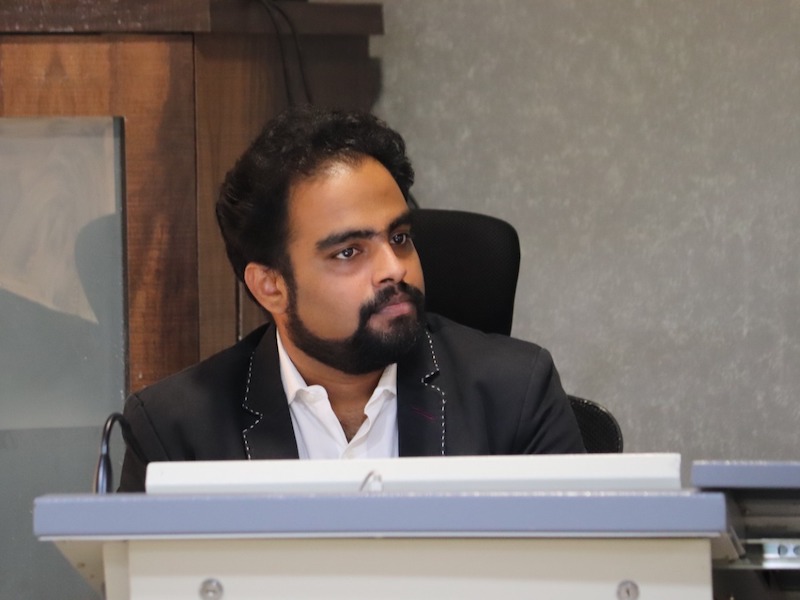
Velprashanth Venkatesan

@smvmch.ac.in

Assistant Professor of Psychiatry
Sri Manakula Vinayagar Medical College & Hospital

Velprashanth Venkatesan

RESEARCH, TEACHING, or OTHER INTERESTS

Psychiatry and Mental health, Behavioral Neuroscience, Biological Psychiatry, Developmental and Educational Psychology
12

Scopus Publications

38

Scholar Citations

3

Scholar h-index

1

Scholar i10-index

Scopus Publications

  • Non-invasive brain stimulation as an experimental treatment approach for bulimia nervosa and binge eating disorders: A meta-analysis and systematic review of literature
    Barath Ramanathan, Souganya Vijayan, Meera Mohan, Velprashanth Venkatesan, Arun Selvaraj, Perarul Sivakumar
    Indian Journal of Psychiatry, 2026
    Background: Bulimia nervosa (BN) is characterized by recurrent binge eating episodes followed by compensatory behaviours, whereas binge eating disorder (BED) involves similar binge episodes without purging. Recent advances in aetiology and functional pathways in the brain have opened the gateway for assessing brainfocused interventions. Aim: This systematic review and meta-analysis explored the therapeutic benefits of non-invasive brain stimulation (NIBS) techniques such as repetitive transcranial magnetic stimulation (rTMS) and transcranial direct current stimulation (tDCS) in BN and BED. Methods: Based on Preferred Reporting Items for Systematic Reviews and Meta-Analyses (PRISMA) guidelines, Electronic databases were searched using relevant keywords. This study included articles published in English until April 2025. The data extracted from the studies included study design, stimulation methods, sessions, outcomes, and comorbid symptoms. Results: The Meta-analysis revealed a significant reduction in food craving questionnaire–state scores following rTMS/tDCS (FCQ-S: standardized mean difference [SMD] = 0.69, P = 0.02). However, this two study meta-analysis was heavily influenced by an experimental study that assessed food craving 24 hours following a single-session rTMS. No significant reduction was observed in binge episodes, vomiting episodes, eating disorder (ED) pathology, or urge to eat. A trend toward improvement in depressive symptoms were noted but not statistical significance. Conclusion: rTMS may reduce food cravings in BN and BED but shows limited impact on binge or purging behaviours. Current evidence does not support a clinically meaningful benefit of neuromodulation for core BN or BED symptoms, and its use should be considered investigational rather than therapeutic. Experimental findings indicating the reduction in food cravings need to be confirmed in larger, well-designed clinical trials.
  • Efficacy of Transcranial Alternating Current Stimulation (tACS) for Treating Hallucinations: A Systematic Review and Meta-analysis
    Velprashanth Venkatesan, Darshankumar Dharaiya, Garima Patel, Raj Kiran Donthu, Kowsalya Arjunan, Brijesh Sathian, Samir Kumar Praharaj
    Indian Journal of Psychological Medicine, 2026
    Purpose of the Review: Transcranial alternating current stimulation (tACS) is a non-invasive technique that modulates brain oscillations and may help treat hallucinations when conventional treatments fail. This systematic review evaluated the efficacy of tACS in reducing hallucinations in psychiatric disorders. Collection and Analysis of Data: A systematic search of PubMed, Scopus, EMBASE, and clinical trial registries was conducted. Studies included adult psychiatric populations receiving tACS with hallucinations measured using standardized scales. Three randomized controlled trials (RCTs) were included in the meta-analysis, and five additional studies were synthesized qualitatively. Risk of bias was assessed using the Cochrane RoB 2 tool for RCTs, and the Joanna Briggs Institute tools for other designs, and certainty of evidence was assessed using GRADE. Results: Meta-analysis of three RCTs (72 participants) showed no significant difference between tACS and sham treatment in reducing hallucinations post-intervention (SMD = –0.14, 95% CI = –0.61 to 0.32) or at study endpoint (SMD = 0.10, 95% CI = –0.41 to 0.61). Qualitative findings suggested potential benefits with gamma-frequency (40 Hz) tACS for auditory hallucinations in schizophrenia. Side effects were mild and infrequent. Overall risk of bias was moderate to high, and evidence certainty was low. Conclusions: Gamma-frequency tACS shows potential, but evidence remains inconclusive. Larger, well-designed trials are needed to determine its effectiveness for hallucinations in psychiatric disorders. Summary: Persistent auditory hallucinations pose treatment challenges in schizophrenia. Non-invasive brain stimulation such as TMS and tDCS has been found to offer some benefit for auditory hallucinations. However, the literature on the efficacy of tACS for auditory hallucinations has not been reviewed. This systematic review has synthesized all published studies and reported the pooled effect for efficacy and safety.
  • Utilizing short experiential teaching methods for school mental health awareness among adolescents from Rural India – A Quasi experimental pilot study
    Velprashanth Venkatesan, Barath Ramanathan, Souganya Vijayan, Perarul Sivakumar, Arun Selvaraj, Harish Kumar Jaikumar, Parvathy Valalan
    Asian Journal of Psychiatry, 2026
  • Sexual and Marital Satisfaction Among Couples Opting for Assisted Reproductive Technology for Primary Infertility: A Qualitative Study
    Souganya Vijayan, Madhivanan Arulmozhi, Priyadharshini Durairaju, Barath Ramanathan, Velprashanth Venkatesan, Arun Selvaraj
    Journal of Psychosexual Health, 2026
    Procreation is increasingly perceived as an essential expectation of marriage and is often seen as a symbol of social status and acceptance. The global prevalence of infertility has been estimated as about 17.5%. The prevalence of psychological distress associated with infertility is about 25%–60%. Assisted reproductive technology (ART) also has a significant impact on the overall quality of life, sexual life, and marital harmony. This study qualitatively assessed the sexual and marital satisfaction among couples opting for ARTs. The study was conducted in couples with primary infertility who were taking ART. In-depth interviews were conducted with 12 couples with a preset interview guide structured in simple language. The interview was voice-recorded, transcribed verbatim, and analyzed using a manual content analysis method. In the analysis, six major themes emerged: Psychological impact of infertility, marital dynamics, intimacy and sexual satisfaction, coping strategies, support systems, and perceptions of ART. The couples experienced mental stress secondary to self-perceived stigma and role expectations. The involvement of family and society had been more supportive and less detrimental. Couples demonstrated adaptive coping, strong spousal support, and openness to treatment despite financial burdens. There was a significant impact on the sexual functioning of the couples secondary to treatment for infertility; however, there was adequate emotional fulfillment. Addressing both partners’ mental health and sexual well-being may improve treatment outcomes and quality of life, while promoting a more compassionate societal outlook on infertility and ART.
  • Efficacy and adverse effect profile of vortioxetine in major depressive disorder: A meta-analysis
    Souganya Vijayan, Barath Ramanathan, Reenaa Mohan, Velprashanth Venkatesan, Arun Selvaraj, Meinaakshi Coumaravelou
    Journal of Psychopharmacology, 2025
    Background: Major depressive disorder (MDD) is a globally prevalent condition associated with significant morbidity and cognitive dysfunction. Vortioxetine, a novel antidepressant with multimodal serotonergic activity, has shown potential advantages over conventional antidepressants in both efficacy and tolerability. This meta-analysis evaluates the efficacy, cognitive improvement, and safety profile of vortioxetine in MDD. Methods: A comprehensive search of multiple search engines yielded 16 randomized controlled trials that studied the efficacy of vortioxetine and other antidepressants. About 3127 MDD patients in the vortioxetine group and 3102 in the control group were analyzed. Primary efficacy outcomes were changes in Montgomery-Åsberg Depression Rating Scale, Clinical Global Impression-Improvement, and Clinical Global Impression-Severity scores, and the secondary outcome measure was cognition using the digit symbol substitution test scores. Safety was assessed via reported adverse effects (AEs), including the treatment-induced sexual dysfunction. The sensitivity analysis was done excluding the study with a high impact. Results: Vortioxetine demonstrated a small but significant reduction in depressive symptoms compared to placebo, but showed similar efficacy to duloxetine and venlafaxine. Excluding the high-impact study did not cause much variation in the findings. There was a small but statistically insignificant improvement in cognition with vortioxetine compared to the control group. Vortioxetine had a favorable safety profile with only mild symptoms reported. The most commonly reported symptom was nausea. Vortioxetine also showed a non-significant trend toward fewer sexual AEs. Conclusion: Vortioxetine is an effective and well-tolerated antidepressant for the management of MDD. Though the tolerability was comparable to other antidepressants, there was a potentially lower incidence of sexual side effects. A further elaborate exploration in terms of dose-specific efficacy and cognitive improvement will be promising for optimizing individualized treatment strategies.
  • ADHD Through the White Coat: An Autoethnographic Account from MBBS to DM Through the Lens of Self-Determination Theory
    Velprashanth Venkatesan
    Journal of Indian Association for Child and Adolescent Mental Health, 2025
    This study examines the lived experience of an adult psychiatrist with attention-deficit/hyperactivity disorder (ADHD) through the lens of self-determination theory, exploring how neurodevelopmental challenges interact with the demanding environment of medical training and practice. A case report using autoethnographic methodology, analyzing 16 years of personal diary entries and illustrations from ages 17 to 32 years (2008–2023), documenting the author’s journey from medical school through speciality training. Thematic analysis was conducted through the lens of self-determination theory to identify recurring patterns related to autonomy, competency, and relatedness. Three major domains of challenge were identified: Autonomy (excessive curiosity, incomplete plans, compensatory lethargy), competency (fear-based motivation, difficulty with mundane tasks, recognizing dysfunctional patterns), and relatedness (gradual development of self-acceptance). ADHD symptoms created persistent conflicts with professional demands, presenting unique obstacles to motivation and self-determination. “Radical acceptance” of neurological differences, coupled with personalized adaptive strategies and strong foundational values, enables individuals with ADHD to navigate medical careers through unconventional means. This account provides insights into the complex intersection of ADHD and professional development in healthcare environments.
  • Unpacking medication choices: Key factors influencing treatment decisions in children with newly diagnosed attention deficit hyperactivity disorder
    Nidhi Chauhan, Velprashanth Venkatesan, Akhilesh Sharma, Ruchita Shah, Sandeep Grover, Debashish Basu
    Indian Journal of Psychiatry, 2025
    Background: Following a diagnosis of Attention-deficit/hyperactivity disorder (ADHD) many children require immediate use of pharmacological agents for symptom control, while for some children a trial of non-pharmacological management may be warranted initially. Aim: To study and identify the clinical and socio-economic factors associated with immediate use of pharmacotherapy versus non pharmacological management in children with newly diagnosed ADHD. Methods: A retrospective cross sectional study design using chart review was conducted in child and adolescent psychiatry services of a tertiary care hospital. The medical records between 2018 and 2020 were reviewed. The socio-demographic factors, symptom profiles and comorbidities were recorded. Descriptive statistics and Binary Logistic regression analyses were calculated for factors associated with use versus non-use of pharmacotherapy. Results: 187 patients screened positive for ADHD at the walk-in clinic and after detailed assessments, 101 were diagnosed with ADHD. With every one-point increase in Vanderbilt ADHD Parent Rating Scale (VADPRS) severity score, there is 1.2 times [P = 0.002; Exp(B) = 1.281; 99% CI: 1.089–1.494] higher likelihood of getting a pharmacological prescription for ADHD. Combined presentation has 3.8 times [P = 0.015; Exp(B) = 3.808; 99% CI: 1.295–11.198] higher likelihood of getting a pharmacological prescription compared to only hyperactive/impulsive and inattentive presentations. Among the socio-demographic variables, no statistically significant variables were observed, although the odds ratios among all social categories displayed a meaningful trend. Conclusion: Pharmacotherapy for ADHD at initial diagnosis is strongly predicted by the severity of ADHD and other socio-economic variable that may require equal attention in the coming years.
  • Association of Attention Deficit Hyperactivity Disorder with the Use of Oral Propranolol in Infantile Haemangiomas: An Ambispective Comparative Study
    Apoorva Sharma, Velprashanth Venkatesan, Akhilesh Sharma, Raihan Ashraf, Dipankar De, Sanjeev Handa, Rahul Mahajan
    Indian Journal of Dermatology, 2024
    Previous studies have raised concerns about the effects of oral propranolol on the central nervous system in infants, the exact measure and mechanism and the long-term follow-up of which is less well studied. This was an ambispective comparative study of children with infantile haemangioma (IH) followed by a repeat visit 4–10 years after completion of propranolol therapy. Parents were asked about psychologic functioning along with an initial screening examination. All patients were evaluated by a paediatric psychiatrist. After evaluation by the Strength and Difficulties Questionnaire, and subsequently by the paediatric psychiatrist, 2 of 12 patients (16.67%) showed features of attention deficit hyperactivity disorder in comparison to 0 of 40 subjects in the control group (0.0498; α = 0.05). These results indicate an increased risk of neuropsychiatric illnesses such as attention deficit hyperactivity disorder (ADHD) in patients given propranolol for IH, as supporting evidence to previous claims.
  • 'Coming out'/self-disclosure in LGBTQ+ adolescents and youth: International and Indian scenario - A narrative review of published studies in the last decade (2012-2022)
    Swapnajeet Sahoo, Velprashanth Venkatesan, Rahul Chakravarty
    Indian Journal of Psychiatry, 2023
    Background: People who identify themselves as Lesbian, Gay, Bisexual, Transgender, Queer, and others (LGBTQ+) go through a process of self-exploration and self-identification during adolescence, and the process resolves when one decides to self-disclosure. The experience of ‘Coming Out’ (CO) can be positive, leading to acceptance and a feeling of liberation, or it can be harmful, leading to stigma, humiliation, and discrimination, subsequently leading to significant psychological distress. Aim: This study was to do a narrative review on the studies published in the area/topic of CO in youth in the last decade (2012-2022) and to look for factors that act as barriers and facilitators of CO. Additionally, we have tried to look for differences in CO in LGBTQ+ adolescents and youth in the Western world vis-a-vis Indian/Eastern societies. Materials and Methods: An extensive literature search in electronic databases, PUBMED, Web of Science, EMBASE, Medline, Scopus, and search engine ‘Google Scholar’ using specific search terms and assessment of all published articles until 20th May 2023 was done. Results: Twenty-three studies were found eligible for data extraction, which discussed the problems faced during the CO process. Most of the studies are from developed countries, and only one is from India. Eleven were qualitative studies, 11 were cross-sectional studies, and one was a case study. The qualitative studies focused on generating themes of CO along with various issues/problems faced by the participants. The cross-sectional studies mainly explored parental reactions, stigma, parental support, psychological distress, and perceived stress in the participants. Major themes emerging from the qualitative studies were the experience of prejudice from various strata of society, such as parental, societal, racial, cultural, and religious factors that lead to problems of hiding, internalized homophobia, and anticipatory rejections that put this population under extreme conditions. Limited research is available from Eastern societies. More recently, the new generation of adolescents has taken the help of social media platforms for self-disclosure. Conclusions: CO is an elaborate multi-step process that considers the presence of parental/family and societal support, cultural/traditional values, and several psychosocial factors that determine the degree of positive outcomes. Emerging data indicated an improved trend of adolescents deciding to come out to families or in online platforms, both of which are associated with challenges, more in eastern collectivistic societies and developing countries.
  • Personality Disorder Chiefly Presenting With Chronic Dream Reality Confusion: A Case Report
    Satyanarayanprabhu Mudaliyar, Velprashanth Venkatesan, Sneha Toppo, Monaspika Das, Daya Ram, Nimish Gupta
    Dreaming, 2022
  • Response Processes to Looming Appetitive and Aversive Cues in Euthymic Bipolar Patients and Their First-Degree Relatives: An Exploratory Study
    Velprashanth Venkatesan, Christoday R J Khess, Umesh Shreekantiah, Nishant Goyal, K. K. Kshitiz
    Indian Journal of Psychological Medicine, 2021
  • Postinjection delirium/sedation syndrome after 31st long-acting olanzapine depot injection
    Velprashanth Venkatesan, Sourav Khanra, Kamalika Mandal, MB Deepak
    Clinical Neuropharmacology, 2019

RECENT SCHOLAR PUBLICATIONS

  • Non-invasive brain stimulation as an experimental treatment approach for bulimia nervosa and binge eating disorders: A meta-analysis and systematic review of literature
    B Ramanathan, S Vijayan, M Mohan, V Venkatesan, A Selvaraj, ...
    Indian Journal of Psychiatry 68 (5), 411-428 , 2026
    2026
  • Efficacy of Transcranial Alternating Current Stimulation (tACS) for Treating Hallucinations: A Systematic Review and Meta-analysis
    V Venkatesan, D Dharaiya, G Patel, RK Donthu, K Arjunan, B Sathian, ...
    Indian Journal of Psychological Medicine 48 (3), 2026283 , 2026
    2026
  • Utilizing Short Experiential Teaching Methods for School Mental Health Awareness among Adolescents from Rural India–A Quasi Experimental Pilot Study
    V Venkatesan, B Ramanathan, S Vijayan, P Sivakumar, A Selvaraj, ...
    Asian Journal of Psychiatry, 104872 , 2026
    2026
    Citations: 1
  • Sexual and Marital Satisfaction Among Couples Opting for Assisted Reproductive Technology for Primary Infertility: A Qualitative Study
    S Vijayan, M Arulmozhi, P Durairaju, B Ramanathan, V Venkatesan, ...
    Journal of Psychosexual Health, 26318318261431523 , 2026
    2026
  • ADHD Through the White Coat: An Autoethnographic Account from MBBS to DM Through the Lens of Self-Determination Theory
    V Venkatesan
    Journal of Indian Association for Child and Adolescent Mental Health 21 (4 … , 2025
    2025
  • Efficacy and adverse effect profile of vortioxetine in major depressive disorder: A meta-analysis
    S Vijayan, B Ramanathan, R Mohan, V Venkatesan, A Selvaraj, ...
    Journal of Psychopharmacology 39 (12), 1365-1377 , 2025
    2025
  • Unpacking medication choices: Key factors influencing treatment decisions in children with newly diagnosed attention deficit hyperactivity disorder
    N Chauhan, V Venkatesan, A Sharma, R Shah, S Grover, D Basu
    Indian Journal of Psychiatry 67 (10), 981-986 , 2025
    2025
  • Noninvasive Brain Stimulation as a Novel Treatment Approach for Anorexia Nervosa: A Meta-analysis and Systematic Review of Literature
    B Ramanathan, S Vijayan, A Selvaraj, V Venkatesan, P Sivakumar
    Indian Journal of Psychological Medicine, 02537176251351253 , 2025
    2025
    Citations: 1
  • Association of Attention Deficit Hyperactivity Disorder with the Use of Oral Propranolol in Infantile Haemangiomas: An Ambispective Comparative Study
    A Sharma, V Venkatesan, A Sharma, R Ashraf, D De, S Handa, ...
    Indian Journal of Dermatology 69 (2), 171-173 , 2024
    2024
    Citations: 3
  • ‘Coming out’/self-disclosure in LGBTQ+ adolescents and youth: International and Indian scenario-A narrative review of published studies in the last decade (2012-2022)
    S Sahoo, V Venkatesan, R Chakravarty
    Indian Journal of Psychiatry 65 (10), 1012-1024 , 2023
    2023
    Citations: 26
  • Personality disorder chiefly presenting with chronic dream reality confusion: A case report.
    S Mudaliyar, V Venkatesan, S Toppo, M Das, D Ram, N Gupta
    Dreaming 32 (4), 375 , 2022
    2022
  • Response processes to looming appetitive and aversive cues in euthymic bipolar patients and their first-degree relatives: An exploratory study
    V Venkatesan, CRJ Khess, U Shreekantiah, N Goyal, KK Kshitiz
    Indian Journal of Psychological Medicine 43 (3), 209-216 , 2021
    2021
    Citations: 1
  • Children and Adolescents Mental Health in the Era of Globalization
    N Goyal, V Venkateshan
    Mental Health: Psycho-Social Perspective: Volume 5: Adolescents & Children … , 2021
    2021
  • MURUGAPPAN AWARD
    V Venkatesan, CRJ Khes, KK Kshitiz
    Indian Journal of Psychiatry 62 (Suppl 1), S23-S29 , 2020
    2020
  • CAN REWARD HYPERSENSITIVITY BE A MARKER OF BIPOLAR VULNERABILITY?-AN EVENT RELATED POTENTIAL STUDY
    V Venkatesan, CRJ Khes, KK Kshitiz
    INDIAN JOURNAL OF PSYCHIATRY 62, S28-S29 , 2020
    2020
  • Western colonial wave in Indian psychiatry-An overview
    VV Prashanth, P Dey
    Archives of Mental Health 20 (2), 61-63 , 2019
    2019
  • Postinjection delirium/sedation syndrome after 31st long-acting olanzapine depot injection
    V Venkatesan, S Khanra, K Mandal, MB Deepak
    Clinical Neuropharmacology 42 (2), 64-65 , 2019
    2019
    Citations: 6
  • Behavioural and Electrophysiological Correlates of Appetitive and Aversive Motivational Cues in Remitted Bipolar Patients and Their First Degree Relatives–an Erp Study
    V Venkatesan
    PQDT-Global , 2019
    2019

MOST CITED SCHOLAR PUBLICATIONS

  • ‘Coming out’/self-disclosure in LGBTQ+ adolescents and youth: International and Indian scenario-A narrative review of published studies in the last decade (2012-2022)
    S Sahoo, V Venkatesan, R Chakravarty
    Indian Journal of Psychiatry 65 (10), 1012-1024 , 2023
    2023
    Citations: 26
  • Postinjection delirium/sedation syndrome after 31st long-acting olanzapine depot injection
    V Venkatesan, S Khanra, K Mandal, MB Deepak
    Clinical Neuropharmacology 42 (2), 64-65 , 2019
    2019
    Citations: 6
  • Association of Attention Deficit Hyperactivity Disorder with the Use of Oral Propranolol in Infantile Haemangiomas: An Ambispective Comparative Study
    A Sharma, V Venkatesan, A Sharma, R Ashraf, D De, S Handa, ...
    Indian Journal of Dermatology 69 (2), 171-173 , 2024
    2024
    Citations: 3
  • Utilizing Short Experiential Teaching Methods for School Mental Health Awareness among Adolescents from Rural India–A Quasi Experimental Pilot Study
    V Venkatesan, B Ramanathan, S Vijayan, P Sivakumar, A Selvaraj, ...
    Asian Journal of Psychiatry, 104872 , 2026
    2026
    Citations: 1
  • Noninvasive Brain Stimulation as a Novel Treatment Approach for Anorexia Nervosa: A Meta-analysis and Systematic Review of Literature
    B Ramanathan, S Vijayan, A Selvaraj, V Venkatesan, P Sivakumar
    Indian Journal of Psychological Medicine, 02537176251351253 , 2025
    2025
    Citations: 1
  • Response processes to looming appetitive and aversive cues in euthymic bipolar patients and their first-degree relatives: An exploratory study
    V Venkatesan, CRJ Khess, U Shreekantiah, N Goyal, KK Kshitiz
    Indian Journal of Psychological Medicine 43 (3), 209-216 , 2021
    2021
    Citations: 1
  • Non-invasive brain stimulation as an experimental treatment approach for bulimia nervosa and binge eating disorders: A meta-analysis and systematic review of literature
    B Ramanathan, S Vijayan, M Mohan, V Venkatesan, A Selvaraj, ...
    Indian Journal of Psychiatry 68 (5), 411-428 , 2026
    2026
  • Efficacy of Transcranial Alternating Current Stimulation (tACS) for Treating Hallucinations: A Systematic Review and Meta-analysis
    V Venkatesan, D Dharaiya, G Patel, RK Donthu, K Arjunan, B Sathian, ...
    Indian Journal of Psychological Medicine 48 (3), 2026283 , 2026
    2026
  • Sexual and Marital Satisfaction Among Couples Opting for Assisted Reproductive Technology for Primary Infertility: A Qualitative Study
    S Vijayan, M Arulmozhi, P Durairaju, B Ramanathan, V Venkatesan, ...
    Journal of Psychosexual Health, 26318318261431523 , 2026
    2026
  • ADHD Through the White Coat: An Autoethnographic Account from MBBS to DM Through the Lens of Self-Determination Theory
    V Venkatesan
    Journal of Indian Association for Child and Adolescent Mental Health 21 (4 … , 2025
    2025
  • Efficacy and adverse effect profile of vortioxetine in major depressive disorder: A meta-analysis
    S Vijayan, B Ramanathan, R Mohan, V Venkatesan, A Selvaraj, ...
    Journal of Psychopharmacology 39 (12), 1365-1377 , 2025
    2025
  • Unpacking medication choices: Key factors influencing treatment decisions in children with newly diagnosed attention deficit hyperactivity disorder
    N Chauhan, V Venkatesan, A Sharma, R Shah, S Grover, D Basu
    Indian Journal of Psychiatry 67 (10), 981-986 , 2025
    2025
  • Personality disorder chiefly presenting with chronic dream reality confusion: A case report.
    S Mudaliyar, V Venkatesan, S Toppo, M Das, D Ram, N Gupta
    Dreaming 32 (4), 375 , 2022
    2022
  • Children and Adolescents Mental Health in the Era of Globalization
    N Goyal, V Venkateshan
    Mental Health: Psycho-Social Perspective: Volume 5: Adolescents & Children … , 2021
    2021
  • MURUGAPPAN AWARD
    V Venkatesan, CRJ Khes, KK Kshitiz
    Indian Journal of Psychiatry 62 (Suppl 1), S23-S29 , 2020
    2020
  • CAN REWARD HYPERSENSITIVITY BE A MARKER OF BIPOLAR VULNERABILITY?-AN EVENT RELATED POTENTIAL STUDY
    V Venkatesan, CRJ Khes, KK Kshitiz
    INDIAN JOURNAL OF PSYCHIATRY 62, S28-S29 , 2020
    2020
  • Western colonial wave in Indian psychiatry-An overview
    VV Prashanth, P Dey
    Archives of Mental Health 20 (2), 61-63 , 2019
    2019
  • Behavioural and Electrophysiological Correlates of Appetitive and Aversive Motivational Cues in Remitted Bipolar Patients and Their First Degree Relatives–an Erp Study
    V Venkatesan
    PQDT-Global , 2019
    2019