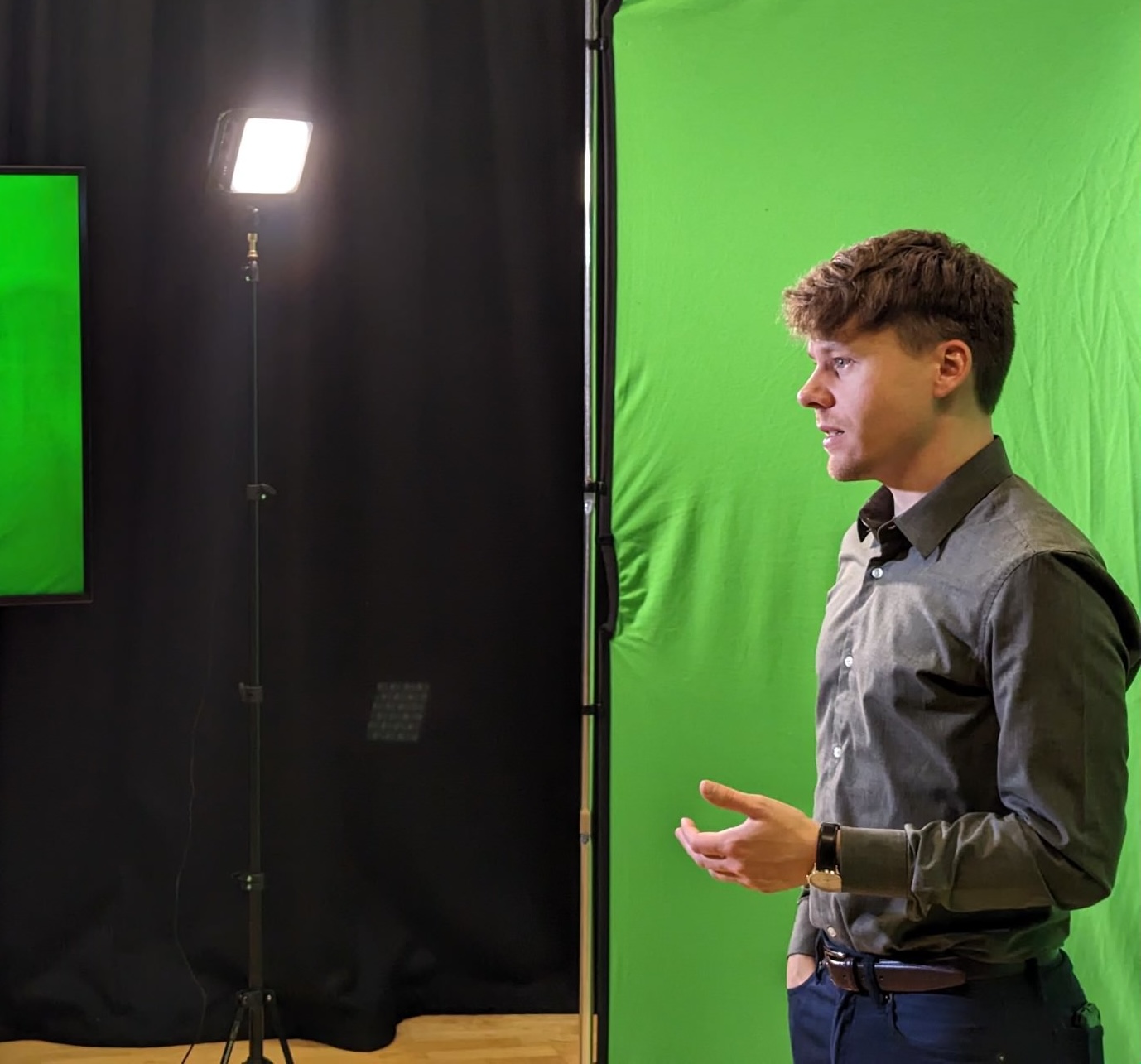
A.R.E. Taylor

@experts.exeter.ac.uk

Senior Lecturer in Communications, Faculty of Humanities, Arts, and Social Sciences
University of Exeter

A.R.E. Taylor

RESEARCH, TEACHING, or OTHER INTERESTS

Anthropology, Social Sciences, Arts and Humanities, Communication
11

Scopus Publications

215

Scholar Citations

8

Scholar h-index

8

Scholar i10-index

Scopus Publications

  • THE ANALOGUE IDYLL: Disconnection, Detox, and Departure from the Digital World
    Analogue Idyll Disconnection Detox and Departure from the Digital World, 2026
  • Spaceport Cornwall: Scaling environmentally responsible space futures in South West England
    ARE Taylor
    Environment and Planning D Society and Space, 2025
    This article explores conflicting environmental imaginaries that have surfaced around the development of Spaceport Cornwall, a satellite launch site in South West England. Spaceport Cornwall is significant for foregrounding environmental responsibility as a key promise of its development. In press releases they highlight that they are the first spaceport to carry out a full carbon impact assessment of their operations. They also present satellite data as an essential tool for monitoring climate change. Through the development of this ‘climate conscious’ space infrastructure, the spaceport promises to open a new economic future for Cornwall, grounded not in the extractive industries that shaped the region’s industrial past, but in visions of the region as an environmentally responsible space hub. However, the eco-friendly futures promoted by the spaceport have attracted criticism from local climate activists concerned with the environmental impact of the infrastructure. Drawing on fieldwork conducted with Spaceport Cornwall and local environmental groups, as well as the analysis of government documents and marketing materials, this article examines imaginaries of climate promise and peril that were articulated across multiple spatial and temporal scales in relation to this infrastructure during its pre-launch phase, as space became a key place-making tool for South West England.
  • Digital Emissions: Edtech Platforms and the Extended Carbon Relations of Higher Education Institutions
    A. R. E. Taylor, Emanuela Vai
    Critical Perspectives on Edtech in Higher Education Varieties of Platformisation, 2025
    Universities around the world are increasingly utilising edtech platforms to deliver their services, but at what environmental cost? Online platforms are often promoted as eco-friendly solutions because they are imagined and described as ‘virtual’ services. Metaphors like the ‘cloud’ present these services as detached from planetary ecologies and problematically erase any sense of their material infrastructure and associated carbon emissions. Through a focus on edtech infrastructure, this chapter examines the extended carbon relations within which higher education institutions are entangled, and the policy blind-spots through which these edtech carbon costs are rendered invisible. The environmental footprint of digital services is persistently overlooked in university carbon calculations and sustainability pledges. As higher education institutions outsource their information technology workloads to the cloud and form partnerships with edtech providers, they increasingly find themselves enmeshed within a complex relational web of globally distributed and energy-intensive IT infrastructure. Digital tools have a key role to play in building a low-carbon academy, but they also have environmental impacts that must be examined if the transition to a green economy is to be successful.
  • Concrete clouds: Bunkers, data, preparedness
    ARE Taylor
    New Media and Society, 2023
    As visions of the end-times accelerate under neoliberal capitalism, corporations and governments are moving their valuable digital data into that most iconic end-of-the-world architecture: the nuclear bunker. This article traces the rise of the bunker as a prominent architectural form for the industrial storage of data. In doing so, it introduces the concept of ‘data preparedness’ to explore one way that data centres and cloud back-up providers strategically position themselves and their clients in imaginative relation to threatening futures. Rebranded as an ‘ultra-secure’ data centre, the bunker is no longer orientated towards the omnipresent threat of nuclear terror that structured everyday life during the Cold War. Rather, the bunkered data centre promises preparedness for an existential threat that lurks behind the screens of daily life in the digital world: the unending prospect of data loss or IT system failure.
  • Cloud Backup and Restore: The Infrastructure of Digital Failure
    A.R.E. Taylor
    Routledge International Handbook of Failure, 2023
    Digital devices are prone to failure. An increasing range of cloud backup solutions aim to ensure that no matter what should happen to a user’s device, their files and data can be quickly re-downloaded and reinstalled on a new device with ease. Whereas the failure or breakdown of a digital device may once have resulted in a potentially devastating data loss event, cloud backup and recovery tools now work to reduce the disruptive impact of device failure. This has implications for theories of failure that are based on the premise that breakdown or failure are disruptive events. Drawing on Apple’s cloud-based data backup and restore service, this chapter conceptualises the cloud as an infrastructure designed to anticipate and absorb digital failure. In doing so, it explores how cloud services bolster cultures of routine device upgrading and e-waste production.
  • PREPARING FOR THE “INTERNET APOCALYPSE”: PREPARING FOR THE “INTERNET APOCALYPSE”: Data Centres and the Space Weather Threat
    A. R. E. Taylor
    Routledge Handbook of Social Studies of Outer Space, 2023
    Over the last decade, space weather has become a key target of critical infrastructure protection efforts. Space weather produces disturbances in Earth’s upper atmosphere that can disrupt technology systems such as satellites and aircraft. The geomagnetic currents generated can also damage ground-surface infrastructure, including power grids and pipelines. This chapter traces an expanding cosmology of internet security by exploring how the space weather threat is being addressed in the data centre industry. Data centres support and enable the internet services that underpin digital societies. Amidst growing awareness of the space weather threat in the industry, some data centres are now taking precautions to increase their resilience to this risk. Drawing from ethnographic fieldwork, this chapter investigates how space weather arises as both a threat and a marketing opportunity in the data centre industry, generating preparedness measures but also providing data centres with a means to promote their security.
  • Powering 'smart' futures: Data centres and the energy politics of digitalisation
    Nathalie Ortar, A. R. E. Taylor, Julia Velkova, Patrick Brodie, Alix Johnson, Clément Marquet, Andrea Pollio, Liza Cirolia
    Energy Futures Anthropocene Challenges Emerging Technologies and Everyday Life, 2022
    International audience
  • Introducing Stories Into Downward Counterfactual Analysis: Examples From a Potential Mediterranean Disaster
    Camilla Penney, Rory Walshe, Hannah Baker, Henri van Soest, Sarah Dryhurst, A. R. E. Taylor
    Frontiers in Earth Science, 2022
    How to recognise potential disasters is a question at the centre of risk analysis. Over-reliance on an incomplete, often epistemologically-biased, historical record, and a focus on quantified and quantifiable risks, have contributed to unanticipated disasters dominating both casualties and financial losses in the first part of the 21st century. Here we present the findings of an online workshop implementing a new scenario-planning method, called downward counterfactual analysis, which is designed to expand the range of risks considered. Interdisciplinary groups of disaster researchers constructed downward counterfactuals for a present-day version of the 365CE Cretan earthquake and tsunami, imagining how these events might have been worse. The resulting counterfactuals have trans-national, long-term impacts, particularly in terms of economic losses, and connect risks previously identified in separate sectors. Most counterfactuals involved socio-political factors, rather than intrinsic components of the hazard, consistent with the idea that there are “no natural disasters”. The prevalence of cascading counterfactuals in our workshop suggests that further work is required to give the appropriate weight to pre-existing economic and social conditions in scenario-planning methods, such as downward counterfactual analysis, which focus on the occurrence of a hazard as the temporal starting point for a disaster. Both proposed counterfactuals and their justifications reflect a bias towards contemporary issues and recent historical disasters. We suggest that interdisciplinary groups can expand the range of imagined risks. However, the setup used here would be improved by including local stakeholders. Qualitative forms of downward counterfactual analysis have potential applications for community engagement and education, as well as for risk analysis.
  • CLOUDWORK: Data Centre Labour and the Maintenance of Media Infrastructure
    A.R.E. Taylor
    Routledge Companion to Media Anthropology, 2022
    Data centres underpin the architecture of cloud computing and form the operational backbone for digital communications and internet media. Yet, despite the rhetoric of the “on demand”, “real-time” and “instant access” that characterises online consumption, it takes continuous work and upkeep to ensure that the online services provided by data centres remain constantly available, ready to be streamed or downloaded at the click of a button. This chapter follows the work of those tasked with operating and maintaining cloud infrastructure. It draws from fieldwork in a London-based data centre to explore the lived experiences of data centre labour that form the conditions of possibility for cloud media cultures and digital societies. Contributing to discussions of media infrastructures and digital labour, this chapter presents “maintenance” as an essential, but overlooked, form of media labour. If production, consumption and distribution have been understood as key media processes, less attention has been paid to maintenance, and to the people who operate and fix media infrastructure..
  • Future-proof: bunkered data centres and the selling of ultra-secure cloud storage
    A.R.E. Taylor
    Journal of the Royal Anthropological Institute, 2021
    Abandoned after the Cold War, nuclear bunkers around the world have found afterlives as ultra‐secure data storage sites for cloud computing providers. The operators of these bunkered data centres capitalize on the spatial, temporal, and material security affordances of their subterranean fortresses, promoting them as ‘future‐proof’ cloud storage solutions. Taking the concept of ‘future‐proofing’ as its entry‐point, this essay explores how data centre professionals work with the imaginative properties of the bunker to configure data as an object to be securitized. The essay takes the form of an ethnographic tour through a UK‐based data bunker. During this tour, threatening data futures and fragile data materialities are conjured in order to secure the conditions of possibility for the bunkered data centre's commercial continuity. Future‐proofing, it is argued, provides a conceptual opening onto the entangled imperatives of security and marketing that drive the commercial data storage industry.
  • And lo, the monster blackout was born. Data center security and black sky hazards
    A.R.E. TAYLOR
    Nanotechnology Perceptions, 2017

RECENT SCHOLAR PUBLICATIONS

  • Analogue Celebrity: Digital Refusal Among the Rich and Famous
    ARE Taylor, N Ewen
    The Analogue Idyll, 125-152 , 2026
    2026
  • The Analogue Idyll: A New Myth for the Post-Digital Age?
    ARE Taylor
    The Analogue Idyll, 1-45 , 2026
    2026
  • The Analogue Idyll: Disconnection, Detox, and Departure from the Digital World
    ARE Taylor
    Bristol University Press , 2026
    2026
    Citations: 2
  • Digital Emissions: Edtech Platforms and the Extended Carbon Relations of Higher Education Institutions
    ARE Taylor, E Vai
    Critical Perspectives on EdTech in Higher Education: Varieties of … , 2025
    2025
    Citations: 1
  • Spaceport Cornwall: Scaling environmentally responsible space futures in South West England
    ARE Taylor
    Environment and Planning D: Society and Space 43 (2), 331-357 , 2025
    2025
    Citations: 1
  • Spaceport Cornwall: Scaling environmentally responsible space futures in South West England (vol 43, pg 331, 2025)
    ARE Taylor
    ENVIRONMENT AND PLANNING D-SOCIETY & SPACE 43 (2), 380-381 , 2025
    2025
  • Launching the STS of Spaceports
    R Tutton, E Armstrong, P Goldschmidt, M Presley, ARE Taylor, M Vidmar
    2024
  • Spaceports need social scientists. Here’s why.
    R Tutton, ARE Taylor, P Goldschmidt, E Armstrong, M Presley, M Vidmar
    2023
  • Preparing for the “Internet Apocalypse”: Data Centres and the Space Weather Threat
    ARE Taylor
    The Routledge Handbook of Social Studies of Outer Space, 313-327 , 2023
    2023
    Citations: 1
  • Concrete clouds: Bunkers, data, preparedness
    ARE Taylor
    new media & society 25 (2), 405-430 , 2023
    2023
    Citations: 15
  • Cloud Backup and Restore: The Infrastructure of Digital Failure
    ARE Taylor
    Routledge International Handbook of Failure, 223-236 , 2023
    2023
    Citations: 10
  • Cloudwork: Data Centre labour and the maintenance of media infrastructure
    ARE Taylor
    Routledge companion to media anthropology , 2023
    2023
    Citations: 7
  • Chapter 15 Cloudwork: Data Centre Labour and the Maintenance of Media Infrastructure
    ARE Taylor
    Taylor & Francis , 2023
    2023
  • Building planetary preparedness: The Arctic circle as space weather sentinel territory
    ARE Taylor
    University of Exeter , 2022
    2022
    Citations: 5
  • Introducing stories into downward counterfactual analysis: examples from a potential Mediterranean disaster
    C Penney, R Walshe, H Baker, H Van Soest, S Dryhurst, ARE Taylor
    Frontiers in Earth Science 10, 742016 , 2022
    2022
    Citations: 3
  • Introducing Stories Into Downward Counterfactual Analysis: Examples From a Potential Mediterranean Disaster
    R Walshe, H Baker, H van Soest, S Dryhurst, ARE Taylor, C Penney
    Frontiers Media SA , 2022
    2022
  • Imagining Future Disasters: Examples from the Mediterranean
    C Penney, R Walshe, H Baker, H van Soest, S Dryhurst, A Taylor
    AGU Fall Meeting Abstracts 2021, NH21A-07 , 2021
    2021
  • Future‐proof: bunkered data centres and the selling of ultra‐secure cloud storage
    ARE Taylor
    Journal of the Royal Anthropological Institute 27 (S1), 76-94 , 2021
    2021
    Citations: 46
  • Standing by for data loss: Failure, preparedness and the cloud.
    ARE Taylor
    ephemera: theory & politics in organization 21 (1) , 2021
    2021
    Citations: 27
  • Sensing data centres
    ARE Taylor, J Velkova
    Mattering Press , 2021
    2021
    Citations: 7

MOST CITED SCHOLAR PUBLICATIONS

  • Future‐proof: bunkered data centres and the selling of ultra‐secure cloud storage
    ARE Taylor
    Journal of the Royal Anthropological Institute 27 (S1), 76-94 , 2021
    2021.0
    Citations: 46
  • The data center as technological wilderness
    ARE Taylor
    Culture machine 18 (1) , 2019
    2019.0
    Citations: 37
  • Standing by for data loss: Failure, preparedness and the cloud.
    ARE Taylor
    ephemera: theory & politics in organization 21 (1) , 2021
    2021.0
    Citations: 27
  • The Technoaesthetics of data centre “white space”
    ARE Taylor
    Imaginations: Journal of Cross-Cultural Image Studies 8 (2), 42-55 , 2017
    2017.0
    Citations: 23
  • Concrete clouds: Bunkers, data, preparedness
    ARE Taylor
    new media & society 25 (2), 405-430 , 2023
    2023.0
    Citations: 15
  • Space weather as a threat to critical infrastructure
    ARE Taylor
    Roadsides 3, 63-72 , 2020
    2020.0
    Citations: 15
  • Failover architectures: The infrastructural excess of the data centre industry
    ARE Taylor
    Failed architecture 19 , 2018
    2018.0
    Citations: 11
  • Cloud Backup and Restore: The Infrastructure of Digital Failure
    ARE Taylor
    Routledge International Handbook of Failure, 223-236 , 2023
    2023.0
    Citations: 10
  • Cloudwork: Data Centre labour and the maintenance of media infrastructure
    ARE Taylor
    Routledge companion to media anthropology , 2023
    2023.0
    Citations: 7
  • Sensing data centres
    ARE Taylor, J Velkova
    Mattering Press , 2021
    2021.0
    Citations: 7
  • Building planetary preparedness: The Arctic circle as space weather sentinel territory
    ARE Taylor
    University of Exeter , 2022
    2022.0
    Citations: 5
  • Introducing stories into downward counterfactual analysis: examples from a potential Mediterranean disaster
    C Penney, R Walshe, H Baker, H Van Soest, S Dryhurst, ARE Taylor
    Frontiers in Earth Science 10, 742016 , 2022
    2022.0
    Citations: 3
  • Clouds of Failure
    ARE Taylor
    2020.0
    Citations: 3
  • The Analogue Idyll: Disconnection, Detox, and Departure from the Digital World
    ARE Taylor
    Bristol University Press , 2026
    2026.0
    Citations: 2
  • Digital Emissions: Edtech Platforms and the Extended Carbon Relations of Higher Education Institutions
    ARE Taylor, E Vai
    Critical Perspectives on EdTech in Higher Education: Varieties of … , 2025
    2025.0
    Citations: 1
  • Spaceport Cornwall: Scaling environmentally responsible space futures in South West England
    ARE Taylor
    Environment and Planning D: Society and Space 43 (2), 331-357 , 2025
    2025.0
    Citations: 1
  • Preparing for the “Internet Apocalypse”: Data Centres and the Space Weather Threat
    ARE Taylor
    The Routledge Handbook of Social Studies of Outer Space, 313-327 , 2023
    2023.0
    Citations: 1
  • The Environmental Impact of the Digital Humanities
    E Vai, ARE Taylor
    Citations: 1
  • Analogue Celebrity: Digital Refusal Among the Rich and Famous
    ARE Taylor, N Ewen
    The Analogue Idyll, 125-152 , 2026
    2026.0
  • The Analogue Idyll: A New Myth for the Post-Digital Age?
    ARE Taylor
    The Analogue Idyll, 1-45 , 2026
    2026.0