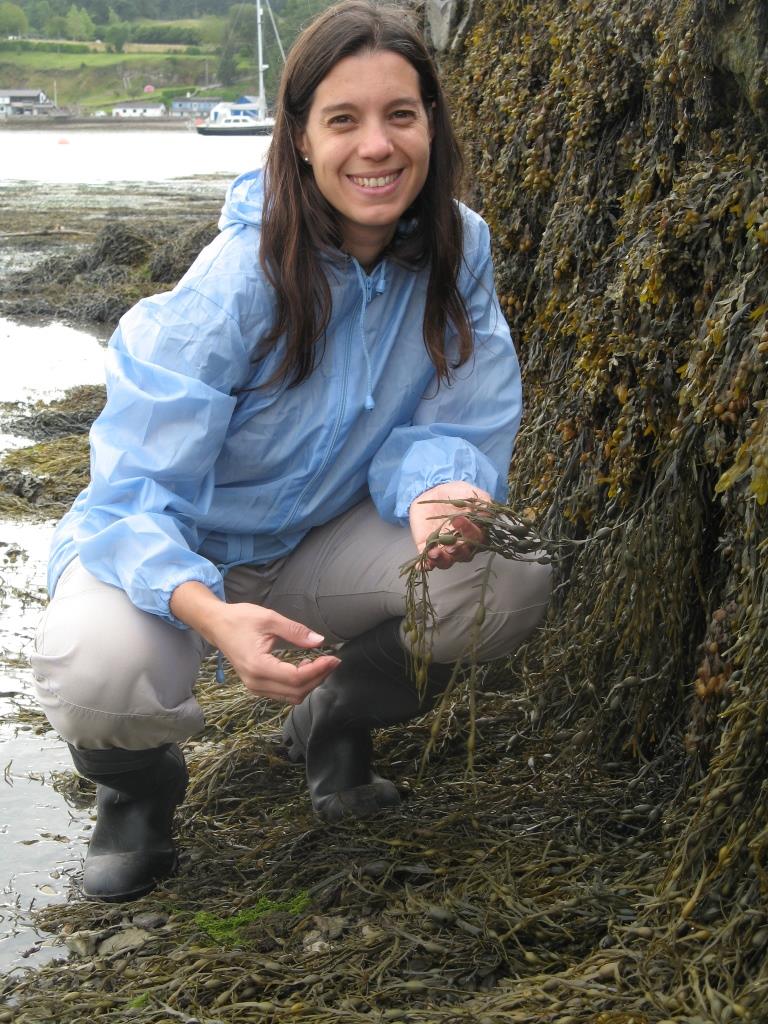
Biologist by Uiversidad Nacional de Córdoba/Argentina. MSc. Aquatic Ecossystem by Universidad Internacional de Andalucía/Spain. Dr. in Ecology by Universidade Federal do Rio de Janeiro/Brazil.
A new method to control the invasive sun corals (Tubastraea spp.): Underwater compressed-air blasting Gustavo H. Piazzaroli, Fábio H. C. Sanches, Sérgio A. Coelho‐Souza, María Soledad López, Fabio S. Motta, Guilherme H. Pereira‐Filho Ecological Solutions and Evidence, 2026 Accurate and safe management of invasive species, such as sun coral ( Tubastraea spp.), requires robust and improved control methods to overcome existing challenges. Existing physical removal techniques suffer from critical methodological limitations, specifically the high risk of accidental fragment dispersal and subsequent regeneration, which undermines effective long‐term management. This study introduces and validates a novel control protocol: underwater compressed‐air blasting, specifically designed for non‐extractive soft tissue removal. We detail the operational parameters of this method and provide a rigorous testing of its advantages over conventional techniques. Our results demonstrate that air blasting achieves nearly complete soft tissue removal; furthermore, laboratory tests confirmed that the dispersed tissue has negligible regenerative capacity. This lack of regeneration acts as a key safety feature, significantly reducing the risk of accidental spread during management operations. The compressed‐air blasting protocol represents a significant methodological advance for the management of invasive corals. Solution: This method offers a safer, non‐extractive alternative suitable for both sensitive ecological environments and industrial biofouling control (e.g. decommissioning), showing great potential for widespread application in marine ecosystems worldwide.
Sightings of the endangered scalloped hammerhead shark (Sphyrna lewini) in a coastal no-take marine protected area in southeastern Brazil Heitor de Macedo Meira, Maria Soledad López, Ludmilla Nascimento Falsarella, Hudson Tercio Pinheiro, Geraldo de França Ottoni Neto, Sergio Augusto Coelho‐Souza Aquatic Conservation Marine and Freshwater Ecosystems, 2024 During the past decades, human exploitation has driven the world's shark populations to a progressive decline, affecting the food web dynamics and leading cascade effects in marine ecosystems (Dulvy et al., 2014; Ferretti et al., 2010; Simpfendorfer et al., 2023). However, several studies have shown the positive biological responses that marine protected areas (MPAs) have on marine life, especially no-take marine reserves (Gaines et al., 2010; Lester et al., 2009; Sala & Giakoumi, 2018), which also benefit sharks (Albano et al., 2021; Gallagher et al., 2021; Knip et al., 2012). Here, we report the first documented scuba diving video sighting of juvenile scalloped hammerhead sharks Sphyrna lewini (Griffith & Smith 1834) (Chondrichthyes, Sphyrnidae) in the Alcatrazes Archipelago, a Wildlife Refuge MPA considered the largest no-take reserve in subtropical Brazil (Figure 1). Three individuals were recorded on 12 December 2022 at Sapata Island (24°04′33.00″S, 45°39′19.38″W) (Figure 2a; Video S1), a buffer zone area that is reserved for military activities and shooting exercises by the Brazilian Navy (MB). Hence, all activities, such as diving, fishing, spearfishing and anchoring, are permanently prohibited in this area, except for scientific purposes (License SISBIO/ICMBio 79553-1). This record occurred opportunistically, during scientific autonomous scuba and freediving. These individuals, with 150 cm visually estimated total length, were recorded at approximately 4 m depth near a sloped rocky reef (~30–45°; Figure 2a; Video S1). Sphyrna lewini has a circumglobal tropical-temperate distribution (bounded between 40°N and 40°S latitudes) in coastal, oceanic and island environments (Compagno, 1984). Male individuals can reach up to 382 cm length, with sexual maturity between 140 and 202 cm, while females reach at least 307 cm and sexual maturity around 204 cm (Kotas, 2004; Sadowsky, 1967; Vooren et al., 2005). The International Union for the Conservation of Nature's (IUCN) Red List of Threatened Species classifies S. lewini as Critically Endangered, mostly because of overfishing (Rigby et al., 2019). Likewise, the species has been classified as Critically Endangered by the Brazilian Red List of Threatened Fauna (ICMBio, 2018; MMA, 2022), also primarily due to overfishing. The Alcatrazes Archipelago is located ~35 km off the southeast coast of São Paulo State (Brazil). In 1987, almost 1600 ha of water surrounding the archipelago became a restricted MPA, and in 2016, with the creation of a Wildlife Refuge (IUCN Category IV) (Dudley, 2008; ICMBio, 2017), the protection was expanded to cover more than 67,000 ha around the archipelago. Since this expansion, the number of shark-fin observations from boats increased over time, and many tourism agencies started spreading such news to the public. The management of the MPA is entrusted by the Chico Mendes Institute for Biodiversity Conservation (ICMBio), a governmental agency under the Brazilian Environmental Ministry. Recently, as result of its efforts for biodiversity conservation and protection of marine resources, the Alcatrazes MPA was recognized as a Blue Park by the Marine Conservation Institute (2023), making it the first Brazilian MPA with gold level standards. The first underwater field record of S. lewini in the archipelago was reported by Motta et al. (2024) using Baited Remote Underwater stereo-Videos (stereo-BRUVs). This study registered seven individuals of approximately 120 cm length, at 30 m depth in the winter of 2022 at Laje Singela, close to Sapata Island (Figure 1). More recently, in March 2024, a peak of underwater sightings was reached when a group of tourists, during a free diving activity, came across a hammerhead shark school of more than 40 individuals between Sapata and the main island (Figure 1). The interaction between sharks and divers rapidly spread through regional and national media (Table S1), shedding light on debates about shark conservation and overfishing. Despite all the efforts and restrictions made to ensure the protection of the Refuge, at least on two occasions (28 August 2020 and 18 May 2021) hammerhead sharks have been among apprehended illegal catches (Figure 2b,c). Enforcement carried out by the ICMBio Alcatrazes after the MPA expansion has encountered illegal longlines on several occasions, presenting individuals from different species (i.e. sharks, fishes and turtles) entangled and already dead (ICMBio, unpublished data). As an example, in 2023, an amateur fishing boat was caught illegally fishing within the MPA, carrying 264 kg of catch, including threatened species and high-trophic level predators such as three dusky groupers (Epinephelus marginatus), 12 spinner shark (Carcharhinus brevipinna) and two Caribbean sharpnose sharks (Rhizoprionodon porosus). The apprehended shark species were donated to the Zoology Museum of the São Paulo University (MZUSP) (Table S2 for catalogue number). Sightings and field observations of threatened shark species on the Brazilian coast are rarely reported (Morais et al., 2017; Pinheiro et al., 2020), so most of the records of these species rely on individual recovery from fisheries. Historical records of hammerhead shark landings in the nearest coastal cities (i.e. Ubatuba, Caraguatatuba, São Sebastião, Ilhabela, Bertioga, Guarujá, Santos and São Vicente) were obtained from the database of the Fisheries Institute of São Paulo (Instituto de Pesca, 2019), covering the 6-year period before (2010–2016) and after (2017–2023) the Refuge creation. Total hammerhead shark landings from all cities increased from 64 to 80 t after the MPA expansion. Unfortunately, the lack of species identification by industrial and artisanal fisheries when landing in ports makes it difficult to provide a suitable assessment for S. lewini, since all hammerhead sharks in the database are grouped together by their Brazilian popular name—Cambeva or Cambeba. Bornatowski et al. (2014) also relate the lack of proper and specific identification of landed species in fisheries as one of the critical problems for shark conservation. The increase in hammerhead shark catches raises awareness about the overfishing in the region since it affects S. lewini at all stages of its life cycle. For instance, in the 1960s, Sadowsky (1967) reported that juveniles up to 1 year old were abundant in the coastal waters of São Paulo State, where plentiful neonates appeared between November and March. Vooren et al. (2005) reported that juveniles live on the bottom of the continental shelf and that neonates and juveniles with ranges from 40 to 160 cm were caught with trawl nets and gillnets in the inner shelf. Amorim et al. (2011) suggested that the capture of juveniles by longline fisheries was probably due to their migration from the coast to the pelagic environment, while Kotas (2004) showed that off the southern shelf of Brazil there was a regional population of S. lewini, where the adults were mainly caught on the continental slope, at depths of 200–3000 m. Therefore, fisheries operate in all the three critical areas for S. lewini populations: the coastal nursery where the neonates live, on the platform where the juveniles live and in the oceanic waters where the adults live. In this context, where fisheries operate in their nurseries and cross-shelf areas, and with a fishing pressure that keeps rising in local, regional and global scales, the current observations lead us to suggest that the Alcatrazes MPA stands out as an important refuge for their survival and possibly recovery. The archipelago presents a high reef-fish biomass and diversity in both local (Motta et al., 2021; Rolim et al., 2019) and regional scales (Morais et al., 2017), which possibly provides enough food for local shark populations and reflects that MPA expansion and regulation enforcement are crucial to support their abundance. Therefore, despite the lack of information about the residence time of sharks around the archipelago, these records indicate that the area offers a suitable habitat and a protected environment for juveniles to grow until the latter migration to oceanic waters. Moreover, the increasing shark sightings also have the potential to contribute to local tourism, seeing that the shark ecotourism industry is a growing activity that allure people worldwide while involving the community and developing environmental consciousness (Gallagher & Hammerschlag, 2011). However, this shark ecotourism may conflict with the military shooting exercises that are executed in the buffer zone of the archipelago since S. lewini presents inter-island movements at small and medium scales within an MPA. Associated with currents, seasonality and individual behaviour (Ketchum et al., 2014), the sharks therefore migrate through the different zones of the archipelago. The civil society has already manifested against the military practices (Manifesto pela preservação de Alcatrazes, 2022), as their possible negative effects on marine ecosystem structure and function include habitat alteration, environmental pollution and disturbance that contribute to population declines and biodiversity losses (Lawrence et al., 2015). The sightings of S. lewini confirms the benefits of the MPA expansion and goes towards Alcatrazes MPA's goals of providing suitable and sheltered habitats for endangered species. From the first underwater sight using BRUVs (Motta et al., 2024) to our subsequent record of three juvenile individuals during a scientific dive, then to the enthralling encounter of a hammerhead shark school by a group of tourists (Table S1), we illustrate how the presence of a large no-take MPA can increase the records of sharks. Also, it underscores the importance of continuous research on species connectivity and habitat use within the refuge and its surrounding buffer zone. These efforts could provide further comprehension on the MPA spillover potential and support discussions about the impacts of a shooting area in the archipelago, as well as the implementation of a Marine Spatial Plan following an ecosystem-based management. Ultimately, the successful records of S. lewini in the Alcatrazes Refuge arise as a result from the constant management enforcement, increased scientific research in the region, engaged stakeholders and the expansion of the MPA, essential issues that must be addressed to pave the way against a global problem regarding shark conservation. We are immensely grateful to ICMBio Alcatrazes for the logistic support with the research in the MPA, especially to Kelen Leite and the environmental agents. We are also grateful to Ana Laura Tribst Corrêa, Nayara Bucair and Otto B. F. Gadig for shark identification, and chief editor Dr Heidi Burdett for valuable insights. The observations occurred opportunistically during a field survey with ICMBio-Alcatrazes boat for the Mar de Alcatrazes Project, which is supported by Petrobras S.A. HTP thanks FAPESP for fellowship and funding. The authors declare no conflicts of interest. No animal experiments were performed. The sampling in the area is authorized by License SISBIO/ICMBio 79553-1. The data that support the findings of this study are available in the supplementary material of this article. Video S1. Supporting Information. Table S1. Supporting Information. Table S2. Supporting Information. Please note: The publisher is not responsible for the content or functionality of any supporting information supplied by the authors. Any queries (other than missing content) should be directed to the corresponding author for the article.
Seasonal sources of carbon to the Brazilian upwelling system Sergio A. Coelho-Souza, Gilberto C. Pereira, Maria S. Lopez, Jean R.D. Guimaraes, Ricardo Coutinho Estuarine Coastal and Shelf Science, 2017 Environmental heterogeneity on coastal areas is an outcome of several hydrodynamic forces. Particularly, wind-driven upwelling is usually associated with alternating periods of water mixing and stratification. In addition, the effects of near shore oceanographic conditions may vary with coastline topography and anthropogenic impacts. Herein we evaluated the seasonal differences in the hydrodynamics of the Cabo Frio upwelling system (Brazil) in function of its local bay. Surface and deep water from 5 contrasting coastal areas were sampled 13 times during the spring/summer and in the fall/winter periods to use two-way Analysis of Variance comparing the measured variables in function of season and depth. Northeastern wind was predominant during both seasons but it was more intense during the spring/summer period when water temperature was colder and concentration of nutrients peaked. Southwestern wind was more common during the fall/winter period and was associated with cold fronts that decreased water salinity inner the bay. Consequently, the concentrations of nutrients, chlorophylls, prokaryotic secondary production (PSP) as well as fluorescent and non-fluorescent particles were significantly higher during the upwelling season while the concentration of particulate organic matter (POM) was highest during the non-upwelling season. Respectively, mean nitrate concentration varied from 2.2 to 0.9 μM, ammonium from 2.7 to 1.0 μM, chlorophyll a from 2.4 to 1.4 mg m−3, PSP from 1.8 to 1.0 μgC.L−1 h−1 and POM from 2.6 to 6.4 mg L−1. Contrasting surface and deep waters, mean nitrate concentration ranged from 0.9 to 2.2 μM, POM from 4.2 to 5.2 mg L−1 and PSP from 1.9 to 0.8 μgC.L−1 h−1. Three scenarios were identified: water stratification, upwelling and water homogenization. The first two scenarios were more common outside the bay during the upwelling season. When upwelling was intense, deep water temperature in the bay dropped to less than 20 °C resulting in the stratification of water column in shallow sites. Water homogenization was common in the whole system through the non-upwelling season and was more pronounced during cold fronts. Our results evidenced a strong seasonal variation of carbon origin which was mainly associated with phytoplankton during the upwelling season and to POM during the non-upwelling season. The seasonal effect of upwelling and cold fronts on the hydrodynamics of the Cabo Frio upwelling system varied at a small spatial scale in function of site depth.
Studies on benthic communities of rocky shores on the Brazilian coast and climate change monitoring: Status of knowledge and challenges Ricardo Coutinho, Luciana Erika Yaginuma, Fernanda Siviero, Julio César Q. P. dos Santos, María Soledad López, Ronaldo Adriano Christofoletti, Flávio Berchez, Natalia Pirani Ghilardi-Lopes, Carlos Eduardo Leite Ferreira, José Eduardo Arruda Gonçalves, Bruno Pereira Masi, Monica Dorigo Correia, Hilda Helena Sovierzoski, Luis Felipe Skinner, Ilana Rosental Zalmon Brazilian Journal of Oceanography, 2016 A rocky shores working group (WG) integrated with ReBentos (Monitoring Network for Coastal Benthic Habitats; Rede de Monitoramento de Habitats Bentônicos Costeiros) was created and linked to the Coastal Zones Sub Network of the Climate Network (MCT; Sub-Rede Zonas Costeiras da Rede Clima) and to the National Institute of Science and Technology for Climate Change (INCT-MC; Instituto Nacional de Ciência e Tecnologia para Mudanças Climáticas), to study the vulnerability of benthic communities on rocky shores and the effects of environmental changes on biomes in such environments along the Brazilian coast. The synthesis presented here was one of the products of this GT, and aimed to collect and review existing knowledge on benthic communities present on rocky shores of the Brazilian coast, their associated biodiversity, and the potential of future studies to accurately predict/measure the effects of climate change on such environments and their biota.
Structure of intertidal sessile communities before and after the invasion of Isognomon bicolor (C.B. Adams, 1845) (Bivalvia, Isognomonidae) in southeastern Brazil María López, Helena Lavrado, Ricardo Coutinho Aquatic Invasions, 2014 Scientists recognize the importance of ecological data prior to invasion by non-native species in order to evaluate changes in the recipient community. Here we assess the potential impact of the invasion of the bivalve Isognomon bicolor (C.B. Adams, 1845) on Brazilian rocky shores through the use of surveys both before and after the arrival of this non–native species. The invader was mostly distributed across the mid and low shore levels of the intertidal zone with relative abundance ranging from 9.0 to 36.7 percent cover. The mid shore, previously dominated by the native barnacle Tetraclita stalactifera (Lamarck, 1818), was co-dominated by this barnacle species and I. bicolor after invasion. The relative abundance of these species, and presumably the interaction strength between them, differed between sites. At the site where I. bicolor reached the highest abundance (around 30% on average), the abundance of T. stalactifera decreased on average 70% compared to baseline values obtained before the I. bicolor invasion. Finally, conspicuous and extensive I. bicolor beds such as those observed in this study have not been reported in its original distribution range. Beds of I. bicolor may create a much more intricate biogenic matrix than the extents of bare rock and barnacle clumps it replaced. This bivalve may act as an ecosystem engineer and, thus a functionally different component of the intertidal community in its invaded range compared to its native distribution.
Biophysical interactions in the cabo frio upwelling system, Southeastern Brazil Sergio Augusto Coelho-Souza, Maria Soledad López, Jean Remy Davee Guimarães, Ricardo Coutinho, Rogério Nader Candella Brazilian Journal of Oceanography, 2012 The rising of cold water from deeper levels characterizes coastal upwelling systems. This flow makes nutrients available in the euphotic layer, which enhances phytoplankton production and growth. On the Brazilian coast, upwelling is most intense in the Cabo Frio region (RJ). The basic knowledge of this system was reviewed in accordance with concepts of biophysical interactions. The high frequency and amplitude of the prevailing winds are the main factor promoting the rise of South Atlantic Central Water, but meanders and eddies in the Brazil Current as well as local topography and coast line are also important. Upwelling events are common during spring/summer seasons. Primary biomass is exported by virtue of the water circulation and is also controlled by rapid zooplankton predation. Small pelagic fish regulate plankton growth and in their turn are preyed on by predatory fish. Sardine furnishes an important regional fish stock. Shoreline irregularities define the embayment formation of the Marine Extractive Reserve of Arraial do Cabo making it an area with evident different intensities of upwelled water that harbors high species diversity. Consequently, on a small spatial scale there are environments with tropical and subtropical features, a point to be explored as a particularity of this ecosystem.