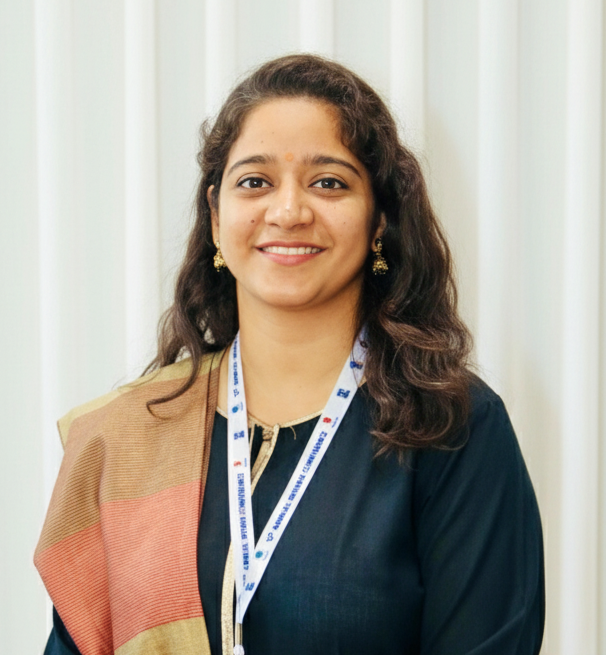
Vaishali Abrol

@nfsu.ac.in

Assistant Professor, School of forensic science
NATIONAL FORENSIC SCIENCES UNIVERSITY

Vaishali Abrol

RESEARCH, TEACHING, or OTHER INTERESTS

Organic Chemistry
7

Scopus Publications

11

Scholar Citations

2

Scholar h-index

Scopus Publications

  • Scope of Machine Learning in Forensic Trace Evidence Examination
    Vaishali, Niha Ansari, Jeet Dasgupta
    Machine Learning in Forensic Evidence Examination A New Era, 2025
    Modern criminal investigations majorly depend on forensic sciences at their foundation; forensics provides great evidential value due to its scientific temperament and techniques. The results are effectively reproducible, replicable and universally accepted and hence create a unique situation of dependency and cross-verification across laws and judicial bodies. Most evidence we acquire during a crime scene investigation is in small amounts or is distorted, and that's where the challenge lies, that brings us to the topic of trace evidence analysis. In the current situation, laboratories use standard classical techniques which leave space for multiple interpretations from different experts and lack the base of concrete data-oriented results, here we can use machine-learning techniques, a modern tool based on various algorithms that creates a unique situation in identifying patterns and classifying objects into categories. As it is based on large datasets that have been previously recorded it also provides a concrete base for interpretation and a universally accepted answer. With the help of machine-learning algorithms, we can automate the steps of identification and classification of trace evidence in a non-destructive method which cuts the analysis time exponentially and the result thus obtained from this method can be defended as it is based on a large amount of data and hence machine learning has massive potential in the field of forensic trace evidence analysis as discussed in this chapter.
  • Application of Machine Learning in the Field of Forensic Medicine
    Niha Ansari, Vaishali, Divyant Kataria, Yasasvikumar Vala
    Machine Learning in Forensic Evidence Examination A New Era, 2025
    Forensic medicine as a field includes the interaction between scientific inquiry and legal judgment and plays a crucial role in the criminal justice system. This chapter covers the history of forensic medicine by including the important contributions of Rudolf Virchow and Sir Bernard Spilsbury from the beginning to the present research in this field. This chapter highlights the importance of forensic medicine in the process of identifying people and determining the cause of death in different situations, including legal and medical circumstances. Modern advancements in machine learning and artificial intelligence show great potential for improving the area of forensic medicine. In the process of identification of a particular individual or during the analysis of evidence, these developments or advancements can enhance the reliability and accuracy of the process. Using machine-learning algorithms in forensic medicine for the analysis of big data sets can decrease the subjectivity and complexity of the methods used in forensic science. Forensic pathologists can make use of artificial intelligence technologies in forensic pathology for the identification of diseases and injuries with the aid of systematic analysis of images of autopsies and histopathological images. In the present context, the usage of artificial intelligence and machine-learning algorithms in forensic medicine is accompanied by several constraints including ethical issues and the possibility of having prejudicial algorithms that may influence the result of the analysis. The connection between AI and forensic medicine is enormous for the development of research in the field of forensic science and for collaboration with other fields.
  • CORRELATION OF DERMATOGLYPHICS TO PSYCHOLOGICAL ABNORMALITIES WITH MORPHOLOGICAL CHARACTERISTICS
    Astha, Vaishali, G. Rajesh Babu
    International Journal of Medical Toxicology and Legal Medicine, 2023
    Fingerprint being a vital evidence plays an important role in identifying a criminal, because of its unique, permanence and inevitable nature. We acquire a variety of chance print on crime scene such as latent, patent and plastic that is 3 dimensional. It is not necessary that we get a whole fingerprint on scene of occurrence. The amount of fingerprint usually present is 5-10 %, and that too it may or may not be clear.2 According to many researchers, along with the ridge characteristics, pores are also unique and individual to a person. If we talk about procedure of sweat secretion in our body, our body in condition like physical heat or psychological stress and anxiety reacts in fight or flight manner, resulting excessive sweating in feet and palmer areas. The main idea of this study is to found out any correlation in the ridge as well as pores dimensions while doing an activity which causes stress or anxiety. Different instruments like digital microscope and Stereo microscope have been used for analysis purpose. In this project a total of 800 fingerprints were studied. After analyzing all the fingerprint it was seen that there is change in the pore and ridge dimension in different psychological condition. It can be concluded that there is significant deviation in both the case that is normal vs. stressed and normal vs. anxiety. Pore and Ridge dimension increases in anxiety and stressed condition as compared to normal state.
  • Comparative Study of Bilateral Symmetry in Dermatoglyphic Patterns with reference to Geographical Parameters
    , Vaishali .., G Rajesh Babu, and
    Indian Journal of Forensic Medicine and Pathology, 2022
    Introduction: The personal identification is reliable tool for both legal and societal motives in forensic discipline. The utmost conventional manner of identification of individuals is based on the fingerprints. The present study has been carried out on 200 subjects, 100 males and 100 females of different age groups belonging to range from 18-55 years of Jammu and Kashmir and Gujarat population to compare the differences in bilateral symmetry in dermatoglyphic patterns along with frequency distribution of patterns with reference to the geographical locations. The research recommends that there are significant differences in bilateral symmetry and fingerprint patterns between males and females within the two populations and significant differences are observed between the two populations. The predominant fingerprint pattern was Ulnar loop, followed by Whorl in both Jammu and Kashmir and Gujarat state. Moreover, it was observed that maximum inhabitants have 80% of Bilateral Symmetry in (40%) of the two populations followed by 100% (26%) of both Jammu and Kashmir and Gujarat populations.
  • Molecular Fingerprinting a new technique for Personal Identification: An Update
    Indian Journal of Forensic Medicine and Pathology, 2021
  • COMPREHENSIVE DERMATOGLYPHICS STUDY ON RIDGE DIMENSIONS, PORE SIZE AND ASSESSMENT OF THE SWEAT COMPOSITION AMONG THE INDUSTRIAL WORKERS
    Heenaba Jadeja, Vaishali, G. Rajesh Babu
    International Journal of Medical Toxicology and Legal Medicine, 2021
    Every individual has unique fingerprints. Ridge morphology and morphometry are anatomical ridge individualization used in identification of victim or criminal in forensic science. The ridges have pores along their entire length that oozes perspiration. The perspiration contains different components dependupon the environment, occupation, food intake and habits. The study of sweat composition can narrow down the search for an individual. This unique approach focuses on analyzing the fingerprints of individuals. This can further help in finding the identity of a person. The study was conducted on 40 samples taken from the people working in the pigment industry and normal population.Two-paired Ttest were used to see the pore size and ridge width differences in the Pigment industry workers and normal population. Microscopic analysis shows a significant increase in the dimensions of pore size and ridge width of the pigment industrial workers was morethan normal individuals due to the muscular activities. In FTIR analysis, molecules like N=O=C, C-N and C-X are present in the sweat samples of the pigment industry workers which are also present in the dye and absent in the sweat samples of the normal individual. Therefore, we can potentially identify individuals based on their occupation.
  • Determining the effect of emotions on handwriting from suicide notes
    Vaishali, Surbhi Mathur
    Journal of Punjab Academy of Forensic Medicine and Toxicology, 2020
    Suicide notes nowadays are more commonly encountered by the document expert, with a challenge to establish its source and authenticity. It is always believed that suicide notes demonstrate high degree of natural variations in comparison to the natural writings of victims due to wide diversity of emotions. The main objective of this study is to measure the effect of emotions on the handwriting samples of victims of suicide cases in comparison to their natural handwritings. In this regard, the suicide notes and their standard samples were studied using different parameters and the class, individual and stylistic features were studied. Statistical evaluation carried out presented a significant result to be stated here. In this study significant differences in the results have been obtained for suicide note handwritings in contrast with their natural writings.

RECENT SCHOLAR PUBLICATIONS

  • A Comparative Study of Artefacts Present in the Fingerprint Records of Gujarat and Mizoram Criminals Convicted for Murder and Theft
    VGRB Arunima Dubey
    Journal of Forensic Sciences & Criminal Investigation 20 (3), 1-4 , 2026
    2026.0
  • Dactylographic Analysis Among Interracial Populations: A Comparative Analysis of African and Indian Demographics
    VA Amadou Jallow, Divyant Ganesh Kataria Jain, , G. Rajesh Babu
    INTERNATIONAL JOURNAL OF LATEST TECHNOLOGY IN ENGINEERING, MANAGEMENT … , 2026
    2026.0
  • Prospective Chemical Profiling of Human Apocrine Sweat
    VA Dipti Ghadge, G. Rajesh Babu
    International Journal of Drug Delivery Technology 16 (17s), 188-192 , 2026
    2026.0
  • Engraved Codes in Chamber for Tracing Firearm - A Forensic Approach
    KY Pratham Kasera, Jatin Saini, Supriya, Vaishali
    Journal of Chemical Health Risks 15 (3), 2664-2669 , 2025
    2025.0
  • Empowering Women: Enhancing Police Preparedness for Women Safety and Security
    DAA Dr. Komal Yadav, Mr. Jatin Saini, Dr Vaishali
    Sciences of conservation and archaeology 37 (1), 179-185 , 2025
    2025.0
    Citations: 1
  • A REVIEW: CASE STUDIES INVOLVING GLASS EVIDENCES
    DAP Dr Komal Yadav,Dr Vaishali, Ms.Reena Yadav, Dr.Aaeen Alchi, Ms Jyoti Sagar
    Utilitas Mathematica 122, 661-667 , 2025
    2025.0
  • Development of Latent Fingerprints on Different Types of Gloves by Using Physical and Chemical Methods
    AV Patel K
    International Journal of Forensic Sciences 9 (2), 1-6 , 2024
    2024.0
  • Forensic science: Revealing the clues
    V Abrol
    Unlocking the Mysteries of Death-New Perspectives for Post-mortem Examination , 2024
    2024.0
    Citations: 6
  • Corelation of dermatoglyphics to psychological abnormalities with morphological characteristics
    DGRB Astha, Vaishali
    International Journal of Medical Toxicology and Legal Medicine 26 (1-2), 214-217 , 2023
    2023.0
  • Comparative study of Bilateral symmetry in dermatoglyphic patterns with respect to geographical parameters
    DGRB Vaishali
    Indian Journal of Forensic Medicine and Pathology 15 (3), 175-179 , 2022
    2022.0
  • Molecular fingerprinting A new technique of personal identification: An Update
    DGRB Vaishali
    Indian Journal of Forensic Medicine and Pathology 14 (Number 1), 59-66 , 2021
    2021.0
  • Comprehensive dermatoglyphics study on ridge dimensions, pore size and assessment of the sweat composition among the industrial workers
    H Jadeja, DG Vaishali
    International Journal of Medical Toxicology & Legal Medicine 24 (1-2) , 2021
    2021.0
    Citations: 1
  • Determining the effect of emotions on handwriting from suicide notes
    MS Vaishali
    J. Punjab Acad. Forensic Med. Toxicol. 20 (2), 49-51 , 2020
    2020.0
    Citations: 3
  • Thanatological Study: Cytomorphometric Analysis of Buccal Cells for the Correlation of Time since Death with Cellular and Nuclear Area
    D Sharma, RBG Vaishali
    International Journal of New Innovations in Engineering and Technology 13 (1 … , 2020
    2020.0
  • Study on Grab mark analysis: - Detection of Fingerprints with the grab impressions on various substrates of synthetic and natural fibre clothes using chemical methods
    RB Vaishali, Hemadri V
    International Journal of New Innovations in Engineering and Technology 13 (1 … , 2020
    2020.0
  • Non-Invasive Methods of Dermatoglyphic analysis-Study of Ridge Morphology and Ridge Morphometry as a prospective marker of Gender Identification.
    MV Abrol

MOST CITED SCHOLAR PUBLICATIONS

  • Forensic science: Revealing the clues
    V Abrol
    Unlocking the Mysteries of Death-New Perspectives for Post-mortem Examination , 2024
    2024.0
    Citations: 6
  • Determining the effect of emotions on handwriting from suicide notes
    MS Vaishali
    J. Punjab Acad. Forensic Med. Toxicol. 20 (2), 49-51 , 2020
    2020.0
    Citations: 3
  • Empowering Women: Enhancing Police Preparedness for Women Safety and Security
    DAA Dr. Komal Yadav, Mr. Jatin Saini, Dr Vaishali
    Sciences of conservation and archaeology 37 (1), 179-185 , 2025
    2025.0
    Citations: 1
  • Comprehensive dermatoglyphics study on ridge dimensions, pore size and assessment of the sweat composition among the industrial workers
    H Jadeja, DG Vaishali
    International Journal of Medical Toxicology & Legal Medicine 24 (1-2) , 2021
    2021.0
    Citations: 1
  • A Comparative Study of Artefacts Present in the Fingerprint Records of Gujarat and Mizoram Criminals Convicted for Murder and Theft
    VGRB Arunima Dubey
    Journal of Forensic Sciences & Criminal Investigation 20 (3), 1-4 , 2026
    2026.0
  • Dactylographic Analysis Among Interracial Populations: A Comparative Analysis of African and Indian Demographics
    VA Amadou Jallow, Divyant Ganesh Kataria Jain, , G. Rajesh Babu
    INTERNATIONAL JOURNAL OF LATEST TECHNOLOGY IN ENGINEERING, MANAGEMENT … , 2026
    2026.0
  • Prospective Chemical Profiling of Human Apocrine Sweat
    VA Dipti Ghadge, G. Rajesh Babu
    International Journal of Drug Delivery Technology 16 (17s), 188-192 , 2026
    2026.0
  • Engraved Codes in Chamber for Tracing Firearm - A Forensic Approach
    KY Pratham Kasera, Jatin Saini, Supriya, Vaishali
    Journal of Chemical Health Risks 15 (3), 2664-2669 , 2025
    2025.0
  • A REVIEW: CASE STUDIES INVOLVING GLASS EVIDENCES
    DAP Dr Komal Yadav,Dr Vaishali, Ms.Reena Yadav, Dr.Aaeen Alchi, Ms Jyoti Sagar
    Utilitas Mathematica 122, 661-667 , 2025
    2025.0
  • Development of Latent Fingerprints on Different Types of Gloves by Using Physical and Chemical Methods
    AV Patel K
    International Journal of Forensic Sciences 9 (2), 1-6 , 2024
    2024.0
  • Corelation of dermatoglyphics to psychological abnormalities with morphological characteristics
    DGRB Astha, Vaishali
    International Journal of Medical Toxicology and Legal Medicine 26 (1-2), 214-217 , 2023
    2023.0
  • Comparative study of Bilateral symmetry in dermatoglyphic patterns with respect to geographical parameters
    DGRB Vaishali
    Indian Journal of Forensic Medicine and Pathology 15 (3), 175-179 , 2022
    2022.0
  • Molecular fingerprinting A new technique of personal identification: An Update
    DGRB Vaishali
    Indian Journal of Forensic Medicine and Pathology 14 (Number 1), 59-66 , 2021
    2021.0
  • Thanatological Study: Cytomorphometric Analysis of Buccal Cells for the Correlation of Time since Death with Cellular and Nuclear Area
    D Sharma, RBG Vaishali
    International Journal of New Innovations in Engineering and Technology 13 (1 … , 2020
    2020.0
  • Study on Grab mark analysis: - Detection of Fingerprints with the grab impressions on various substrates of synthetic and natural fibre clothes using chemical methods
    RB Vaishali, Hemadri V
    International Journal of New Innovations in Engineering and Technology 13 (1 … , 2020
    2020.0
  • Non-Invasive Methods of Dermatoglyphic analysis-Study of Ridge Morphology and Ridge Morphometry as a prospective marker of Gender Identification.
    MV Abrol