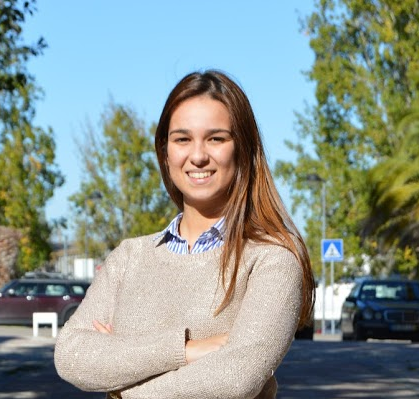
Ines de Abreu Ferreira

Verified @campus.fct.unl.pt

Department of Mechanical and Industrial Engineering, NOVA School of Science and Technology
NOVA School of Science and Technology

14

Scopus Publications

386

Scholar Citations

8

Scholar h-index

8

Scholar i10-index

Scopus Publications

  • A blockchain architecture with smart contracts for an additive symbiotic network - a case study
    Inês A. Ferreira, Guido Palazzo, António Pinto, Pedro Pinto, Pedro Sousa, Radu Godina, Helena Carvalho
    Operations Management Research, 2025
    Adopting innovative technologies such as blockchain and additive manufacturing can help organisations promote the development of additive symbiotic networks, thus pursuing higher sustainable goals and implementing circular economy strategies. These symbiotic networks correspond to industrial symbiosis networks in which wastes and by-products from other industries are incorporated into additive manufacturing processes. The adoption of blockchain technology in such a context is still in a nascent stage. Using the case study method, this research demonstrates the adoption of blockchain technology in an additive symbiotic network of a real-life context. The requirements to use a blockchain network are identified, and an architecture based on smart contracts is proposed as an enabler of the additive symbiotic network under study. The proposed solution uses the Hyperledger Fabric Attribute-Based Access Control as the distributed ledger technology. Even though this solution is still in the proof-of-concept stage, the results show that adopting it would allow the elimination of intermediary entities, keep available tracking records of the resources exchanged, and improve trust among the symbiotic stakeholders (that do not have any trust or cooperation mechanisms established before the symbiotic relationship). This study highlights that the complexity associated with introducing a novel technology and the technology’s immaturity compared to other data storage technologies are some of the main challenges related to using blockchain technology in additive symbiotic networks.
  • Why do open data platforms Fail? – A revised conceptual model with mitigations actions
    Inês A. Ferreira, Paula Miranda, João Marreiros, Ana Mendes, Nelson Carriço
    Computers and Industrial Engineering, 2025
    • Open data platforms face challenges and limitations that may lead to their failure. • Usability challenges and limitations are the most highlighted in the literature. • Technical limitations are the most critical when considering open data platforms. • Open data platforms should support operations effectively. Data is seen as a key driver for digital transformation. In this context, Open Data Platforms (ODP) have the potential to offer opportunities for the public, private, and civic sectors to connect and share information. Despite these platforms’ rapid proliferation, significant limitations and challenges associated with their use and development may jeopardise ODP’s effectiveness. There is a lack of studies exploring these platforms’ challenges and limitations. Moreover, mitigation actions are needed to reduce relieve the potential for failure of ODP. This research aims to understand why ODP fails, by conducting, a careful and comprehensive analysis, which included a systematic literature review, was performed to identify the critical challenges and limitations that may affect the performance of an open data platform. A conceptual model from the literature is updated with a categorization of the different limitations and challenges relating to ODP. This model groups the topics created by the researchers into five main categories of challenges and limitations: Technical, Institutional, End-users, Data quality, and Legislative. Furthermore, several mitigation actions were proposed to deal with each category of the model. By identifying these challenges and limitations and categorizing them, it is possible to understand the potential causes that impact the performance of an open data platform. Furthermore, by proposing different mitigation actions, this research aims to help deal with ODP’s challenges and limitations, contributing to preventing potential failures.
  • Economic framework for green shipping corridors: Evaluating cost-effective transition from fossil fuels towards hydrogen
    Beatriz Jesus, Inês Abreu Ferreira, Augusto Carreira, Stein Ove Erikstad, Radu Godina
    International Journal of Hydrogen Energy, 2024
    Global warming's major cause is the emission of greenhouse-effect gases (GHG), especially carbon dioxide (CO2) whose main source is the combustion of fossil fuels. Fossil fuels serve as the primary energy source in many industries, including shipping, which is the focus of this study. One of the measures proposed to tackle GHG emissions is the development of green shipping corridors - carbon-free shipping routes that require the transition to alternative fuels, which are gaining competitiveness. One of the reasons for that is carbon pricing, which taxes CO2 emissions. However, the lack of consensus on the most cost-advantageous alternative fuel in the long run results in the delay of the implementation of green shipping corridors. To make it more accessible for stakeholders to conduct an economic analysis of the various options, a framework to determine and minimize the costs of transitioning from fossil fuels to any alternative fuel is proposed, over the period of one voyage, considering the lost opportunity cost, the deployment cost of bunkering vessels at the necessary call ports, the cost of converting the vessel, the car-bon emissions tax cost, and the fuel cost. This will allow stakeholders to choose the most economical alternative fuel, accelerating the development of green shipping corridor initiatives. To validate the effectiveness of the framework, it was applied in a case study involving a shipowner seeking to transition from heavy fuel oil (HFO) to Ammonia, Hydrogen, Liquefied Natural Gas (LNG), or Methanol. This study faced limitations due to the unknown costs of installing bunkering vessels for Ammonia and Hydrogen. However, it evaluates the cost-effectiveness of alternative fuels, providing insights into their short-term economic viability. The results showed that Hydrogen is the most cost-advantageous fuel until a deployment cost per bunkering vessel of 1,990,285$ for a sailing speed of 22 knots and 2,190,171$ for a sailing speed of 18 knots is reached, after which LNG becomes the most economical option regardless of variations in the carbon tax. Moreover, a sensitivity analysis was conducted to determine the effects of variations in parameters, such as carbon tax, fuel prices and vessel conversion costs in the total cost of each fuel option. Results highlighted that even though HFO remains the most economical fuel option, even when considering a high increase in carbon tax, the cost gap between HFO and alternative fuels narrows significantly with the increase in carbon tax. Furthermore, the sailing speed impacts the fuels’ competitiveness, as the cost difference between HFO and alternative fuels decreases at higher speeds.
  • Waste to 3D Printing: A Systematic Literature Review
    Inês A. Ferreira, Helena Carvalho
    Lecture Notes in Mechanical Engineering, 2024
  • Implications of the blockchain technology adoption by additive symbiotic networks
    Inês A. Ferreira, Guido Palazzo, Helena Carvalho
    Cleaner Logistics and Supply Chain, 2023
    A vibrant debate has been initiated around the potential adoption of blockchain technology for enhancing the development of industrial symbiosis networks, particularly for promoting the creation of additive symbiotic networks. Despite the potential benefits of trust creation and elimination of intermediary entities, adopting such innovative technologies promises to disrupt the current supply chains of those symbiotic networks. The literature on these topics is still beginning; thus, the present research intends to contribute. A framework for understanding the implications of adopting the blockchain technology in the supply chain structure (specifically, in the dependency dimension) of an additive symbiotic network was developed, considering a network theory lens. The case study method was deemed to be suitable for carrying out this research. A case study related to an additive symbiotic network is described in detail, with the development of two scenarios: scenario I “as-is” for the current state of the network and scenario II “to-be” considering the adoption of the blockchain technology. Results show that adopting blockchain technology impacts the supply chain structure of additive symbiotic networks. More specifically, there are implications for the power distribution among the network’s stakeholders.
  • A Heuristic Approach to Support Route Planning for Delivery and Installation of Furniture: A Case Study
    Inês A. Ferreira, Catarina Bento, Luís Mascarenhas, Carina Pimentel, Helena Carvalho
    Applied Sciences Switzerland, 2023
    The number of variants of the vehicle routing problem (VRP) has grown rapidly in the last decades. Among these, VRPs with time window constraints are among the most studied ones. However, the literature regarding VRPs that concerns the delivery and installation of products is scarce. The main aim of this study was to propose a heuristic approach for the route planning process of a company whose focus is on furniture delivery and assembly and, thus, contributing to the research around the Delivery and Installation Routing Problem. The case study method was used, and two scenarios were compared: the current scenario (showing the routes created by the company worker); and the future scenario (representing the routes created by the heuristic). Results show that the proposed heuristic approach provided a feasible solution to the problem, allowing it to affect customers and teams without compromising the teams’ competencies and respecting all constraints.
  • Assessing the impact of fusion-based additive manufacturing technologies on green supply chain management performance
    Inês A. Ferreira, J.P. Oliveira, Joachim Antonissen, Helena Carvalho
    Journal of Manufacturing Technology Management, 2023
    PurposeThis paper aims to identify the impacts of wire and arc additive manufacturing (WAAM) technology on the green supply chain management (GSCM) performance. Also, it intends to identify the most essential WAAM capabilities.Design/methodology/approachAn exploratory case study related to a metallurgical company using WAAM technology to repair metallic components was developed. A research framework to identify WAAM production capabilities and the different GSCM performance criteria was proposed based on the current state of the art. Primary qualitative data provided evidence for developing seven propositions relating WAAM capabilities to GSCM performance.FindingsThe paper provides empirical evidence relating to how WAAM production capabilities impact the different performance criteria of the GSCM performance. The results show that “relative advantage” and “supply-side benefits” are critical capabilities developed through WAAM. Furthermore, most of the capabilities regarding “relative advantage” and “supply-side benefits” promote a higher GSCM performance.Research limitations/implicationsThis research was carried out using a single case study research design and using qualitative data. Thus, future works are encouraged to test the propositions empirically using quantitative methodologies.Practical implicationsThe case study findings support that most WAAM production capabilities promote a higher GSCM performance. Managers could use this research to understand the capabilities developed by this fusion-based additive manufacturing (AM), become aware of the implications of new technology adoption on the supply chain environmental externalities, and develop new business models based on the WAAM capabilities.Originality/valueThis research contributes to expanding the state-of-the art related to WAAM technology by evidencing the relationship between adopting this fusion-based AM technology and green supply chain practices. Also, it provides a set of seven propositions that could be used to theorise the impacts of WAAM adoption on the GSCM performance.
  • Boosting additive circular economy ecosystems using blockchain: An exploratory case study
    Inês A. Ferreira, Radu Godina, António Pinto, Pedro Pinto, Helena Carvalho
    Computers and Industrial Engineering, 2023
    The role of new technologies such as additive manufacturing and blockchain technology in designing and implementing circular economy ecosystems is not a trivial issue. This study aimed to understand if blockchain technology can be an enabler tool for developing additive symbiotic networks. A real case study was developed regarding a circular economy ecosystem in which a fused granular fabrication 3D printer is used to valorize polycarbonate waste. The industrial symbiosis network comprised four stakeholders: a manufacturing company that produces polycarbonate waste, a municipality service responsible for the city waste management, a start-up holding the 3D printer, and a non-profit store. It was identified a set of six requirements to adopt the blockchain technology in an additive symbiotic network, bearing in mind the need to have a database to keep track of the properties of the input material for the 3D printer during the exchanges, in addition to the inexistence of mechanisms of trust or cooperation between well-established industries and the additive manufacturing industry. The findings suggested a permissioned blockchain to support the implementation of the additive symbiotic network, namely, to enable the physical transactions (quantity and quality of waste material PC sheets) and monitoring and reporting (additive manufacturing technology knowledge and final product's quantity and price). Future research venues include developing blockchain-based systems that enhance the development of additive symbiotic networks.
  • A Smart Contract Architecture to Enhance the Industrial Symbiosis Process Between the Pulp and Paper Companies - A Case Study
    Ricardo Gonçalves, Inês Ferreira, Radu Godina, Pedro Pinto, António Pinto
    Lecture Notes in Networks and Systems, 2022
  • Waste valorization through additive manufacturing in an industrial symbiosis setting
    Inês A. Ferreira, Radu Godina, Helena Carvalho
    Sustainability Switzerland, 2021
    Given the current environmental concerns related to manufacturing, the introduction to the industrial symbiosis concept brought purpose to waste, instead of disposing it in landfills or eliminating it through incineration. The waste generated by industrial processes, or end-of-life products, is redirected to be used as a “new” input in another process by one or more organizations, which is a mutual benefit or a “symbiosis”. Despite its relevancy, the industrial symbiosis concept is marginally explored in the context of additive manufacturing; this emerging technology has disruptive potential regarding the use of different materials as secondary raw materials. This paper presents a systematic literature review regarding industrial symbiosis and additive manufacturing. The main objective is to identify how wastes can be used as input materials to additive manufacturing processes and what exchanges of resources occur in an industrial symbiosis setting. A final sample of 32 documents was reached and analyzed. Five examples of using waste streams in additive manufacturing processes to produce goods were highlighted and explored.
  • The case study of sand removed from fluidized bed boilers in the Portuguese paper industry
    New Trends for Biomass Energy Development from Wood to Circular Economy, 2020
  • Motivations and barriers to industrial symbiosis – the fluidized bed sands case study
    I. Ferreira, H. Carvalho, M. Barreiros, G.M. Silva
    Wastes Solutions Treatments and Opportunities III Selected Papers from the 5th International Conference Wastes Solutions Treatments and Opportunities 2019, 2020
  • The industrial symbiosis network of the biomass fluidized bed boiler sand—Mapping its value network
    Inês A. Ferreira, Marta S. Barreiros, Helena Carvalho
    Resources Conservation and Recycling, 2019
  • A proposed index of the implementation and maturity of circular economy practices-the case of the pulp and paper industries of Portugal and Spain
    Inês Ferreira, Manuel de Castro Fraga, Radu Godina, Marta Souto Barreiros, Helena Carvalho
    Sustainability Switzerland, 2019

RECENT SCHOLAR PUBLICATIONS

  • Projeto e Desenvolvimento de um Mini Frigorífico e uma App de registo da sua temperatura com recurso a Microcontrolador Arduino
    B Resende, J Magalhães, AP Pinto, C Costa, I Ferreira, J Aroso, C Sá
    Instituto Superior de Engenharia do Porto (ISEP)–P. Porto , 2025
    2025
  • A blockchain architecture with smart contracts for an additive symbiotic network-a case study
    IA Ferreira, G Palazzo, A Pinto, P Pinto, P Sousa, R Godina, H Carvalho
    Operations Management Research 18 (2), 537-553 , 2025
    2025
    Citations: 7
  • Why do open data platforms Fail?–A revised conceptual model with mitigations actions
    IA Ferreira, P Miranda, J Marreiros, A Mendes, N Carriço
    Computers & Industrial Engineering 203, 111042 , 2025
    2025
    Citations: 1
  • Why do open data platforms Fail?
    IA Ferreira, P Miranda, J Marreiros, A Mendes, N Carriço
    2025
  • Economic framework for green shipping corridors: Evaluating cost-effective transition from fossil fuels towards hydrogen
    B Jesus, IA Ferreira, A Carreira, SO Erikstad, R Godina
    International Journal of Hydrogen Energy 83, 1429-1447 , 2024
    2024
    Citations: 49
  • A blockchain architecture with smart contracts for an additive symbiotic network
    IA Ferreira, G Palazzo, A Pinto, P Pinto, P Sousa, R Godina, H Carvalho
    2024
  • DIGITAL TRANSFORMATION IN BERTH PLANNING OPERATIONS–A BIBLIOMETRIC ANALISYS
    IA Ferreira, A Mendes, N Carriço
    Event 1st International Conference on Resilience and Sustainable Regions , 2023
    2023
  • The development of additive symbiotic networks through the adoption of blockchain technology
    IA Ferreira, H Carvalho
    6th European International Conference on Industrial Engineering and … , 2023
    2023
  • Waste to 3D Printing: A Systematic Literature Review
    IA Ferreira, H Carvalho
    International Conference on Flexible Automation and Intelligent … , 2023
    2023
    Citations: 1
  • A Heuristic Approach to Support Route Planning for Delivery and Installation of Furniture
    IA Ferreira, C Bento, L Mascarenhas, C Pimentel, H Carvalho
    2023
  • A heuristic approach to support route planning for delivery and installation of furniture: A case study
    IA Ferreira, C Bento, L Mascarenhas, C Pimentel, H Carvalho
    Applied Sciences 13 (5), 3285 , 2023
    2023
    Citations: 2
  • Implications of the blockchain technology adoption by additive symbiotic networks
    IA Ferreira, G Palazzo, H Carvalho
    Cleaner Logistics and Supply Chain 6, 100095 , 2023
    2023
    Citations: 14
  • Assessing the impact of fusion-based additive manufacturing technologies on green supply chain management performance
    IA Ferreira, JP Oliveira, J Antonissen, H Carvalho
    Journal of Manufacturing Technology Management 34 (1), 187-211 , 2023
    2023
    Citations: 69
  • Boosting additive circular economy ecosystems using blockchain
    IA Ferreira, R Godina, AA Pinto, P Pinto, H Carvalho
    2023
  • Boosting additive circular economy ecosystems using blockchain: An exploratory case study
    IA Ferreira, R Godina, A Pinto, P Pinto, H Carvalho
    Computers & Industrial Engineering 175, 108916 , 2023
    2023
    Citations: 70
  • Promoting the Development of Additive Symbiotic Networks With the Adoption of Blockchain Technology
    IA Ferreira, H Carvalho
    5th European International Conference on Industrial Engineering and … , 2022
    2022
  • Waste to 3D Printing: the development of additive symbiotic networks
    IA Ferreira
    2022
  • A smart contract architecture to enhance the industrial symbiosis process between the pulp and paper companies-a case study
    R Gonçalves, I Ferreira, R Godina, P Pinto, A Pinto
    International congress on blockchain and applications, 252-260 , 2021
    2021
    Citations: 18
  • Waste valorization through additive manufacturing in an industrial symbiosis setting
    IA Ferreira, R Godina, H Carvalho
    Sustainability 13 (1), 234 , 2020
    2020
    Citations: 50
  • Gut-derived exosomes in prediabetes: proteomics insight
    IA Ferreira, R Machado de Oliveira, A Teshima, R Matthiesen, ...
    DIABETOLOGIA 63 (SUPPL 1), S156-S157 , 2020
    2020

MOST CITED SCHOLAR PUBLICATIONS

  • Boosting additive circular economy ecosystems using blockchain: An exploratory case study
    IA Ferreira, R Godina, A Pinto, P Pinto, H Carvalho
    Computers & Industrial Engineering 175, 108916 , 2023
    2023
    Citations: 70
  • Assessing the impact of fusion-based additive manufacturing technologies on green supply chain management performance
    IA Ferreira, JP Oliveira, J Antonissen, H Carvalho
    Journal of Manufacturing Technology Management 34 (1), 187-211 , 2023
    2023
    Citations: 69
  • A proposed index of the implementation and maturity of circular economy practices—the case of the pulp and paper industries of Portugal and Spain
    IA Ferreira, M de Castro Fraga, R Godina, M Souto Barreiros, H Carvalho
    Sustainability 11 (6), 1722 , 2019
    2019
    Citations: 57
  • Waste valorization through additive manufacturing in an industrial symbiosis setting
    IA Ferreira, R Godina, H Carvalho
    Sustainability 13 (1), 234 , 2020
    2020
    Citations: 50
  • Economic framework for green shipping corridors: Evaluating cost-effective transition from fossil fuels towards hydrogen
    B Jesus, IA Ferreira, A Carreira, SO Erikstad, R Godina
    International Journal of Hydrogen Energy 83, 1429-1447 , 2024
    2024
    Citations: 49
  • The industrial symbiosis network of the biomass fluidized bed boiler sand—Mapping its value network
    IA Ferreira, MS Barreiros, H Carvalho
    Resources, Conservation and Recycling 149, 595-604 , 2019
    2019
    Citations: 35
  • A smart contract architecture to enhance the industrial symbiosis process between the pulp and paper companies-a case study
    R Gonçalves, I Ferreira, R Godina, P Pinto, A Pinto
    International congress on blockchain and applications, 252-260 , 2021
    2021
    Citations: 18
  • Implications of the blockchain technology adoption by additive symbiotic networks
    IA Ferreira, G Palazzo, H Carvalho
    Cleaner Logistics and Supply Chain 6, 100095 , 2023
    2023
    Citations: 14
  • A blockchain architecture with smart contracts for an additive symbiotic network-a case study
    IA Ferreira, G Palazzo, A Pinto, P Pinto, P Sousa, R Godina, H Carvalho
    Operations Management Research 18 (2), 537-553 , 2025
    2025
    Citations: 7
  • Knowledge management and additive manufacturing technology: A literature review
    R Godina, IA Ferreira, I Brás, P Espadinha-Cruz, F Matos
    20th European Conference on Knowledge Management, ECKM 2019 1, 398-404 , 2019
    2019
    Citations: 7
  • Divergencia genética entre cultivos locais e cultivares melhoradas de feijol
    L Silva, I Ferreira, M Grandi, J Baptista
    Pesquisa Agropecuaria Brasileira 37 (9), 1275-1281 , 2002
    2002
    Citations: 5
  • A heuristic approach to support route planning for delivery and installation of furniture: A case study
    IA Ferreira, C Bento, L Mascarenhas, C Pimentel, H Carvalho
    Applied Sciences 13 (5), 3285 , 2023
    2023
    Citations: 2
  • Why do open data platforms Fail?–A revised conceptual model with mitigations actions
    IA Ferreira, P Miranda, J Marreiros, A Mendes, N Carriço
    Computers & Industrial Engineering 203, 111042 , 2025
    2025
    Citations: 1
  • Waste to 3D Printing: A Systematic Literature Review
    IA Ferreira, H Carvalho
    International Conference on Flexible Automation and Intelligent … , 2023
    2023
    Citations: 1
  • Motivations and barriers to industrial symbiosis–the fluidized bed sands case study
    I Ferreira, H Carvalho, M Barreiros, GM Silva
    Wastes: Solutions, Treatments and Opportunities III, 125-130 , 2019
    2019
    Citations: 1
  • Projeto e Desenvolvimento de um Mini Frigorífico e uma App de registo da sua temperatura com recurso a Microcontrolador Arduino
    B Resende, J Magalhães, AP Pinto, C Costa, I Ferreira, J Aroso, C Sá
    Instituto Superior de Engenharia do Porto (ISEP)–P. Porto , 2025
    2025
  • Why do open data platforms Fail?
    IA Ferreira, P Miranda, J Marreiros, A Mendes, N Carriço
    2025
  • A blockchain architecture with smart contracts for an additive symbiotic network
    IA Ferreira, G Palazzo, A Pinto, P Pinto, P Sousa, R Godina, H Carvalho
    2024
  • DIGITAL TRANSFORMATION IN BERTH PLANNING OPERATIONS–A BIBLIOMETRIC ANALISYS
    IA Ferreira, A Mendes, N Carriço
    Event 1st International Conference on Resilience and Sustainable Regions , 2023
    2023
  • The development of additive symbiotic networks through the adoption of blockchain technology
    IA Ferreira, H Carvalho
    6th European International Conference on Industrial Engineering and … , 2023
    2023