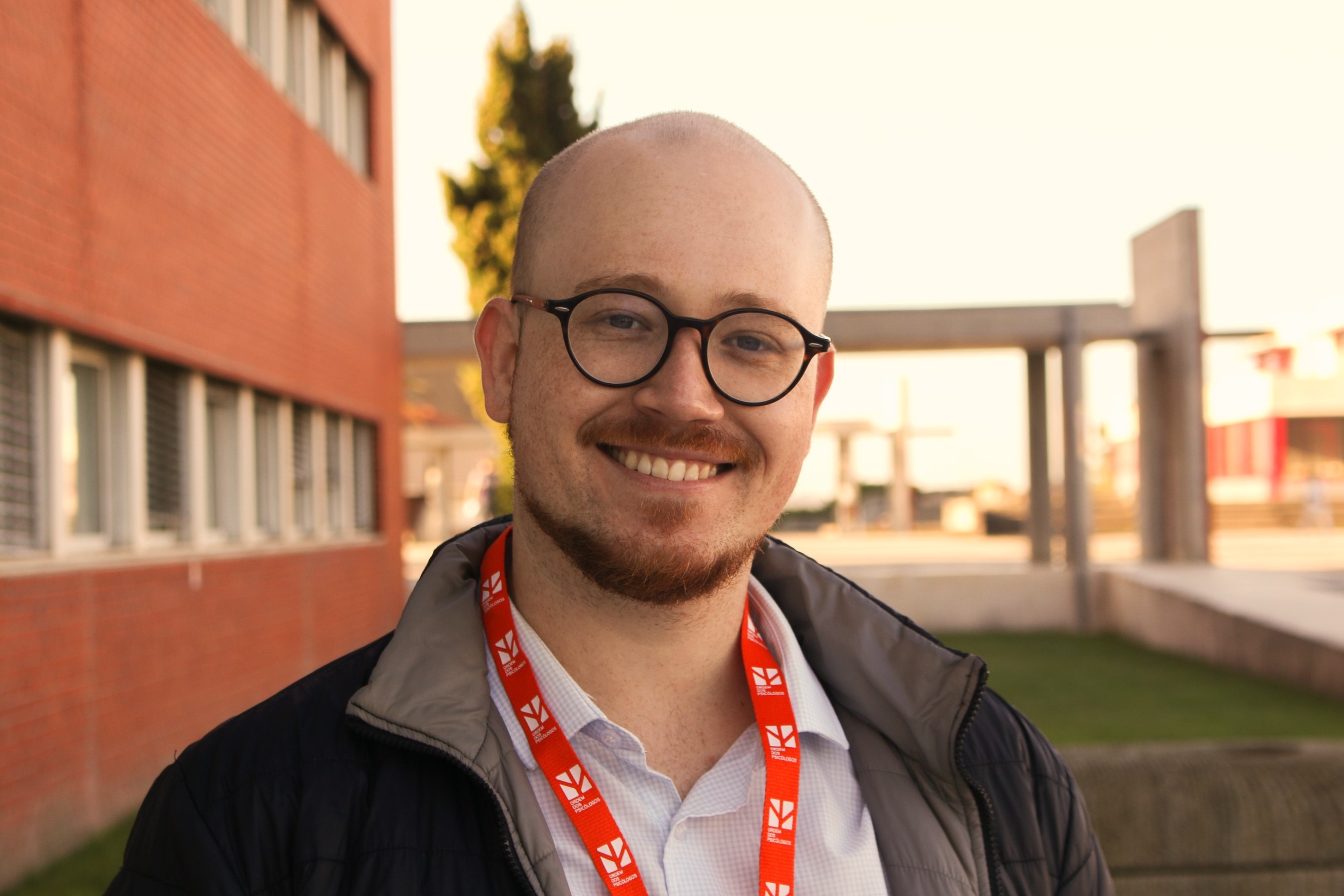
Diâner Felipe Langue Queiroz

@ua.pt

Faculty of Psychology and Education Sciences of University of Coimbra

Diâner Felipe Langue Queiroz

RESEARCH, TEACHING, or OTHER INTERESTS

Psychology, Neuropsychology and Physiological Psychology, Cognitive Neuroscience
4

Scopus Publications

30

Scholar Citations

3

Scholar h-index

2

Scholar i10-index

Scopus Publications

  • The Interplay between Chronotype and Emotion Regulation in the Recognition of Facial Expressions of Emotion
    Isabel M. Santos, Pedro Bem-Haja, André Silva, Catarina Rosa, Diâner F. Queiroz, et al.
    Behavioral Sciences, 2023
    Emotion regulation strategies affect the experience and processing of emotions and emotional stimuli. Chronotype has also been shown to influence the processing of emotional stimuli, with late chronotypes showing a bias towards better processing of negative stimuli. Additionally, greater eveningness has been associated with increased difficulties in emotion regulation and preferential use of expressive suppression strategies. Therefore, the present study aimed to understand the interplay between chronotype and emotion regulation on the recognition of dynamic facial expressions of emotion. To that end, 287 participants answered self-report measures and performed an online facial emotion recognition task from short video clips where a neutral face gradually morphed into a full-emotion expression (one of the six basic emotions). Participants should press the spacebar to stop each video as soon as they could recognize the emotional expression, and then identify it from six provided labels/emotions. Greater eveningness was associated with shorter response times (RT) in the identification of sadness, disgust and happiness. Higher scores of expressive suppression were associated with longer RT in identifying sadness, disgust, anger and surprise. Expressive suppression significantly moderated the relationship between chronotype and the recognition of sadness and anger, with chronotype being a significant predictor of emotion recognition times only at higher levels of expressive suppression. No significant effects were observed for cognitive reappraisal. These results are consistent with a negative bias in emotion processing in late chronotypes and increased difficulty in anger and sadness recognition for expressive suppressor morning-types.
  • Chronotype and Time of Day Effects on a Famous Face Recognition Task with Dynamic Stimuli
    Isabel Santos, Pedro Bem-Haja, André Silva, Catarina Rosa, Diâner F. Queiroz, et al.
    International Journal of Psychological Research, 2023
    Chronotype and Time of Day (ToD) can modulate several aspects of cognitive performance. However, there is limited evidence about the effect of these variables on face recognition performance, so the aim of the present study is to investigate this influence. For this, 274 participants (82.5% females; age 18-49 years old, mean = 27.2, SD =1.82) were shown 20 short videoclips, each gradually morphing from a general identity unfamiliar face to a famous face. Participants should press the spacebar to stop each video as soon as they could identify the famous face, and then provide the name or an unequivocal description ofthe person. Analysis of response times (RT) showed that evening-types recognised the faces faster than morning-types. Considering different ToD windows, the effect of chronotype was only significant in the 13h-17h andin the 21h-6h time-windows. Altogether, results suggest an advantage of evening-types on famous face recognition using dynamic stimuli with morning-types, being particularly slower during their non-optimal period.
  • CanCOG®: Cultural Adaptation of the Evidence-Based UCLA Cognitive Rehabilitation Intervention Program for Cancer Survivors in Portugal
    Ana F. Oliveira, Milaydis Sosa-Napolskij, Ana Torres, Diâner Felipe Queiroz, Ana Bártolo, et al.
    Healthcare Switzerland, 2023
    Cognitive difficulties are highly prevalent and negatively impact cancer survivors’ quality of life. The UCLA Cognitive Rehabilitation Intervention Program (in short, UCLA program) is an evidence-based intervention developed and tested in the US to address the cognitive complaints of cancer survivors. Since there are no cognitive rehabilitation programs available for Portuguese cancer-related settings, this study aimed to culturally adapt the UCLA program to Portugal. Nine steps were implemented for this cultural adaptation: needs assessment, initial contacts, translation, cultural adaptation, independent review by a panel of experts (n = 6), focus group discussions with cancer survivors (n = 11), systematization of inputs and improvement of the final materials, fidelity check, and preliminary acceptability assessment. The findings suggested that changes to the original materials were needed. A Portuguese name, “CanCOG®—Reabilitação Cognitiva no Cancro” (in English “CanCOG®—Cognitive Rehabilitation in Cancer”), and a logo were created to make it more memorable and appealing for the Portuguese population. The language was adjusted to ensure content accessibility and semantic and conceptual equivalence. Finally, references to several cultural aspects, such as habits, customs, and traditions, were adapted to fit the new cultural context. The UCLA program may be a promising tool to help alleviate the cognitive difficulties reported by cancer survivors in different cultural contexts. Future research is needed to confirm the feasibility, acceptability, and preliminary efficacy of its Portuguese version, “CanCOG®—Reabilitação Cognitiva no Cancro”.
  • The Impact of Sleep on Face Recognition Memory: A Scoping Review
    Isabel M. Santos, André Silva, Pedro Bem-Haja, Catarina Rosa, Luíza Cerri, et al.
    Brain Sciences, 2022
    Sleep has a major impact on a variety of human biological and cognitive functions. In particular, its impact on memory has attracted extensive research and has been amply demonstrated. However, it is still unclear whether sleep, or lack thereof, affects the ability to recognize faces. To clarify this, we conducted a scoping review on studies that included a face recognition memory task and any kind of sleep manipulation in adults without any sleep pathology. A systematic search and synthesis of peer-reviewed journal articles identified through the electronic databases Scopus, Web of Science, EBSCO, and PubMed was performed. A final sample of 18 articles, corresponding to 19 studies, met the eligibility criteria. The results of 13 articles suggested that sleep benefited face recognition ability, whereas two articles indicated a detrimental effect of sleep on performance, and four articles found no significant effects. This review highlights the high methodological variability between studies, in terms of sleep manipulation, retention interval, tasks used to probe face recognition, and other variables. In sum, although around one third of the studies show a beneficial effect of sleep on memory for faces, we suggest that future research should invest in replicating these findings with a stricter control of potentially confounding variables to allow stronger conclusions to be drawn.

RECENT SCHOLAR PUBLICATIONS

  • Efectos del cronotipo y la hora del día en una tarea de reconocimiento de rostros famosos con estímulos dinámicos
    IM Santos, CF Silva, MF Alves, L Cerri, T Barroso, DF Queiroz, C Rosa, ...
    International Journal of Psychological Research, 51-61 , 2023
    2023
  • Chronotype and Time of Day Effects on a Famous Face Recognition Task with Dynamic Stimuli
    P Bem-Haja, A Silva, C Rosa, DF Queiroz, T Barroso, L Cerri, MF Alves, ...
    International Journal of Psychological Research 16 (2), 51-61 , 2023
    2023
    Citations: 2
  • The impact of chronobiological variables on face processing and their interplay with individual differences
    IM Santos, P Bem-Haja, A Silva, DF Queiroz, C Rosa, CF Silva
    research@ ua 13, 68-68 , 2023
    2023
  • CanCOG®: Cultural Adaptation of the Evidence-Based UCLA Cognitive Rehabilitation Intervention Program for Cancer Survivors in Portugal
    AF Oliveira, M Sosa-Napolskij, A Torres, DF Queiroz, A Bártolo, H Sousa, ...
    Healthcare 11 (1), 141 , 2023
    2023
    Citations: 5
  • The Interplay between Chronotype and Emotion Regulation in the Recognition of Facial Expressions of Emotion
    IM Santos, P Bem-Haja, A Silva, C Rosa, DF Queiroz, MF Alves, T Barroso, ...
    Behavioral Sciences 13 (1), 38 , 2022
    2022
    Citations: 12
  • The Impact of Sleep on Face Recognition Memory: A Scoping Review
    IM Santos, A Silva, P Bem-Haja, C Rosa, L Cerri, DF Queiroz, T Barroso, ...
    Brain Sciences 12 (10), 1385 , 2022
    2022
    Citations: 11

MOST CITED SCHOLAR PUBLICATIONS

  • The Interplay between Chronotype and Emotion Regulation in the Recognition of Facial Expressions of Emotion
    IM Santos, P Bem-Haja, A Silva, C Rosa, DF Queiroz, MF Alves, T Barroso, ...
    Behavioral Sciences 13 (1), 38 , 2022
    2022
    Citations: 12
  • The Impact of Sleep on Face Recognition Memory: A Scoping Review
    IM Santos, A Silva, P Bem-Haja, C Rosa, L Cerri, DF Queiroz, T Barroso, ...
    Brain Sciences 12 (10), 1385 , 2022
    2022
    Citations: 11
  • CanCOG®: Cultural Adaptation of the Evidence-Based UCLA Cognitive Rehabilitation Intervention Program for Cancer Survivors in Portugal
    AF Oliveira, M Sosa-Napolskij, A Torres, DF Queiroz, A Bártolo, H Sousa, ...
    Healthcare 11 (1), 141 , 2023
    2023
    Citations: 5
  • Chronotype and Time of Day Effects on a Famous Face Recognition Task with Dynamic Stimuli
    P Bem-Haja, A Silva, C Rosa, DF Queiroz, T Barroso, L Cerri, MF Alves, ...
    International Journal of Psychological Research 16 (2), 51-61 , 2023
    2023
    Citations: 2
  • Efectos del cronotipo y la hora del día en una tarea de reconocimiento de rostros famosos con estímulos dinámicos
    IM Santos, CF Silva, MF Alves, L Cerri, T Barroso, DF Queiroz, C Rosa, ...
    International Journal of Psychological Research, 51-61 , 2023
    2023
  • The impact of chronobiological variables on face processing and their interplay with individual differences
    IM Santos, P Bem-Haja, A Silva, DF Queiroz, C Rosa, CF Silva
    research@ ua 13, 68-68 , 2023
    2023