Pedro Gomes Peixoto

@fcav.unesp.br

Department of phytosanitary / São Paulo State University "Julio de Mesquita Filho" (UNESP)
PhD student in Agronomy (Agricultural Entomology)

Pedro Gomes Peixoto

EDUCATION

Graduated in Biological Sciences (UFTM), specialist in Agroecology in the Cerrado (UEMG), Master in Environmental Sciences (UEMG). Currently a PhD student in Agronomy: Agricultural Entomology.

RESEARCH, TEACHING, or OTHER INTERESTS

Agricultural and Biological Sciences, Agronomy and Crop Science, Ecology, Evolution, Behavior and Systematics, Insect Science
10

Scopus Publications

118

Scholar Citations

4

Scholar h-index

3

Scholar i10-index

Scopus Publications

  • Spectral Characterization of the Life Stages and Physiological Responses of Diatraea saccharalis Fabricius (Lepidoptera: Crambidae) Larvae Parasitized by Cotesia flavipes Cameron (Hymenoptera: Braconidae)
    Souradji I. Bachirou, David L. Rosalen, Sergio A. De Bortoli, Pedro G. Peixoto
    Entomologia Experimentalis Et Applicata, 2026
    Hyperspectral Remote Sensing allows accurate analysis of the developmental stages of insects and their interactions with biocontrol agents. This study spectrally characterizes the life stages of Diatraea saccharalis and evaluates the physiological responses of larvae parasitized by Cotesia flavipes . For this, hyperspectral reflectance data were obtained with high‐precision sensors. The experiments took place in the laboratory under controlled conditions to ensure reproducibility. The measurements covered eggs, larvae, pupae and adults, with emphasis on parasitized larvae. Principal Component Analysis (PCA) was applied to identify relevant significant hyperspectral variations and distinguish biological groups. The results showed significant differences in hyperspectral reflectance between developmental stages and the physiological state of the parasitized larvae. Newly laid eggs and newly formed pupae showed higher reflectance than pre‐hatch eggs and old pupae. The larvae of the first stage were significantly distinguished from the other larval stages by their high reflectance. In adults, the dorsal surfaces of males and females were similar, but the ventral surface of females exhibited a distinct pattern. Larvae parasitized by C. flavipes showed differentiated hyperspectral signatures, especially in the near‐infrared (NIR) bands, reflecting biochemical and physiological changes caused by parasitism. Between 8 and 10 days after parasitism, the reflectance of the larvae became like that of dead larvae and different from those of live or newly parasitized larvae. PCA confirmed the efficacy of hyperspectral reflectance in discriminating against the stages of D. saccharalis . The data generated in this study can integrate a hyperspectral bank for future applications in entomology and biological control, with this technology being able to integrate precision agriculture systems, optimizing for characterization, pest management and reinforcing the sustainable use of agricultural resources.
  • Spectral Signatures of the Developmental Stages of Sphenophorus levis (Vaurie, 1978) (Coleoptera: Curculionidae) on a Natural Diet
    Pedro Gomes Peixoto, Gabriela Maria Martins Ferreira, David Luciano Rosalen, Souradji Idrissou Bachirou, Sergio Antonio De Bortoli
    Insects, 2026
    This study investigated the spectral profiles of different developmental stages of Sphenophorus levis, possibly the most important sugarcane pest in the Southeast, Midwest, and South regions of Brazil, given its economic relevance, distribution, and management challenges in sugarcane plantations. Hyperspectral remote sensing (HRS) techniques were employed. Spectral signatures were obtained for eggs, larvae, pupae, and adults using a Pika-L sensor (range, 400–1000 nm). This made it possible to identify distinct spectral patterns for each developmental stage, allowing for the differentiation between eggs, larvae, pupae, and adults. The results indicate the presence of such distinct spectral patterns, which may suggest the potential of hyperspectral imaging for the non-destructive identification of each stage of S. levis, although further investigations are needed to validate this approach. The eggs showed high variability in reflectance, possibly related to compositional changes during embryonic development. The larval instars exhibited a decrease in reflectance with age, likely due to cuticular changes. The evaluated pupae presented spectral differences that coincidentally enabled early sex determination, while adult males and females can also be distinguished based on their reflectance profiles, with females typically showing higher overall reflectance. This spectral library provides a foundation for the determination and sexing of instars, as well as the assessment of quality patterns in this important sugarcane pest. This study highlights the integration of advanced hyperspectral imaging technologies with insect biology to enhance integrated pest management strategies and sheds light on the biological and ecological aspects of the species.
  • Anthropoentomophagy in some states of Brazil: an up-to-date review
    Eraldo Medeiros Costa Neto, Ariel de Andrade Molina, Elmo Borges de Azevedo Koch, José Adalid Cruz-Dubón, Caı́que Dantas Vasconcelos, Pedro Gomes Peixoto
    Journal of Insects as Food and Feed, 2026
    While there are well-documented records of anthropoentomophagy practices among numerous Indigenous Peoples and Local Communities in Brazil, it is likely that its prevalence remains significantly underestimated. This review examines a total of 116 edible insect species in Brazil, identified at the species level, categorized into eight orders: Blattodea, Coleoptera, Diptera, Hymenoptera, Hemiptera, Lepidoptera, Orthoptera, and Psocodea. Hymenoptera was the most represented order, comprising 79 species (68%). Depending on the species, these insects are consumed in both their immature and adult stages, either raw or cooked, ingested whole, in parts, or as by-products. Given Brazil’s vast sociobiodiversity, edible insects exhibit substantial potential due to their nutritional richness and abundance, playing a crucial role in Traditional Food Systems while also offering promising prospects as sustainable ingredients for both household cuisine and the food industry.
  • Spectral response of guava leaves under infestation by Costalimaita ferruginea (coleoptera: Chrysomelidae)
    Souradji I. Bachirou, Pedro G. Peixoto, David L. Rosalen
    Agricultural and Forest Entomology, 2026
    Guava ( Psidium guajava ) is one of the most important fruit crops in Brazil, being popular due to its availability in all seasons and rich nutritional and medicinal value. However, Costalimaita ferruginea is one of the main pests in guava production and directly interferes with its productivity. Symptoms of attack are often determined by visual observation, which may lead to inadequate characterization of the damage caused by this pest. Areas of guava plants (blocks) and plants with four groups of five leaves per plant (replicates) were considered. This study spectrally characterized the spectral response of guava leaves under infestation by Costalimaita ferruginea (Coleoptera: Chrysomelidae). The spectral signature of the leaves was determined using a spectroradiometer. The spectral signatures showed the guava leaves uninfested, moderately infested (level 1) and severely infested (level 2) by C. ferruginea . The uninfested guava leaves showed lower reflectance in the 500–600‐nm spectral range and higher reflectance in the 750–1000‐nm range. The level 1 infested leaves exhibited moderate reflectance between 500 and 600 nm and lower reflectance between 750 and 1000 nm. In contrast, the level 2 infested leaves had a higher reflectance between 500 and 600 nm and a lower reflectance between 750 and 1000 nm. The uninfested leaves showed lower reflectance in the visible spectrum and higher reflectance in the near‐infrared (NIR) spectrum than level 1 and level 2 infested leaves. It is also noted that as the infestation becomes more severe, the reflectance in the visible increases and the NIR decreases, denoting the typical behaviour of plants under biotic stress. Principal Component Analysis (PCA) and linear regression confirmed the efficacy of hyperspectral reflectance in discriminating the damage levels of C. ferruginea . The data generated in this study can be integrated into a hyperspectral bank for future applications in entomology, damage and pest monitoring.
  • The Response of Dung Beetle Communities to Land Use Change in the Brazilian Cerrado
    Pedro Gomes Peixoto, Gabriela de Sousa Barbosa, Heytor Lemos Martins, Ana Luíza Franco, Jhansley Ferreira da Mata, Vanesca Korasaki
    Land, 2025
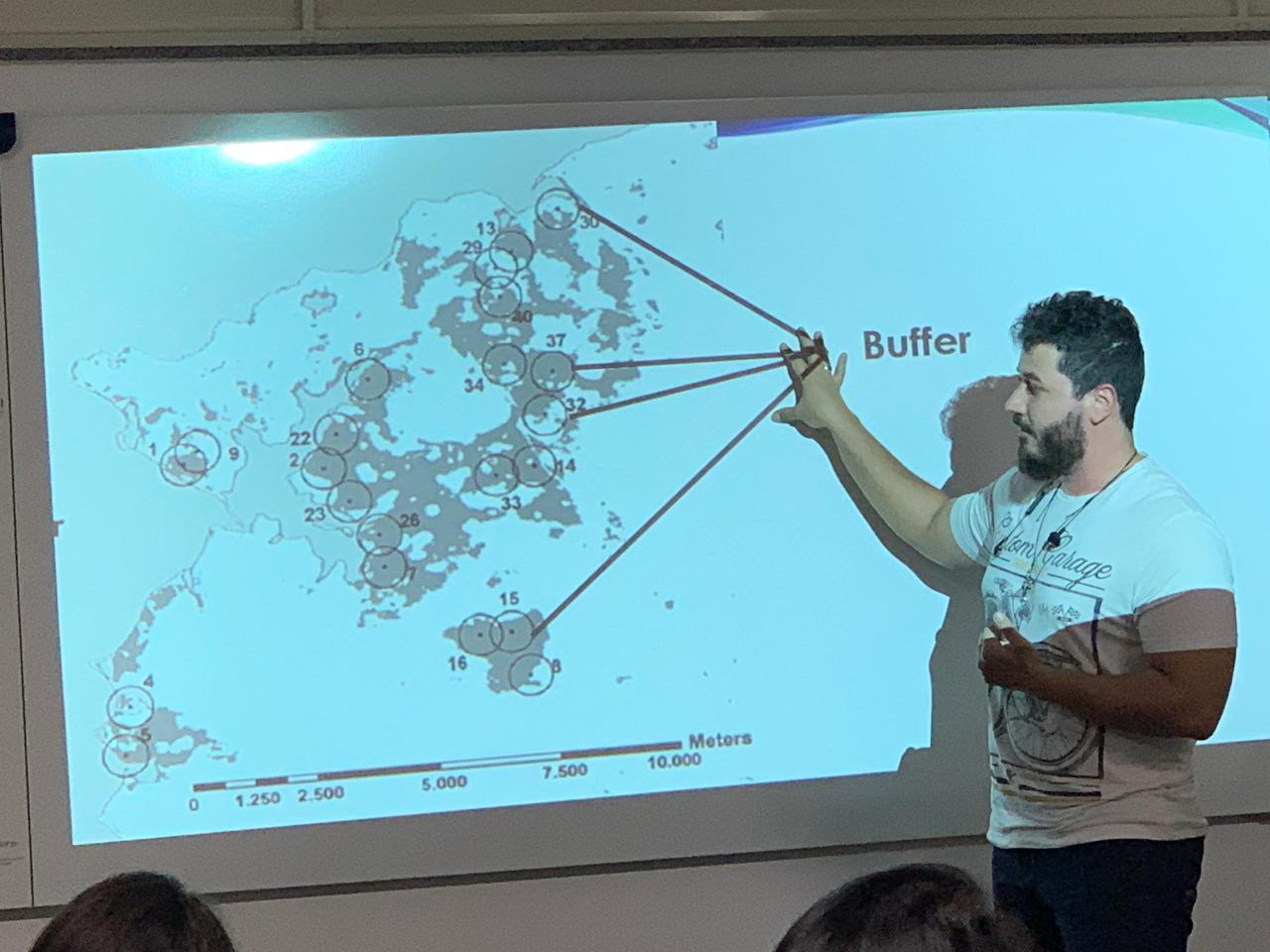
    The transformation of the Cerrado biome into areas with different levels of activity and anthropic pressure negatively impacts biodiversity. This study evaluated the response of the dung beetle community to changes in land use systems: forests, rubber trees, pastures, and soybeans. Five areas were sampled in each system with a minimum distance of 2 km between them. Dung beetles were collected using pitfall traps, and both local (vegetation density, basal area of wooded vegetation, fractal dimension, litter height, electrical conductance (mV), water content in the soil (%), and soil resistance (kPa)) and landscape-related environmental variables (land use and overall composition and configuration of the landscape surrounding the sampling areas) were measured. In total, 2294 specimens were collected and distributed among 34 species and 18 genera. There was no significant difference in abundance between the systems, but differences in the number of species and biomass were observed between forest and soybean systems, as well as a separation of communities between the tree-covered (forest and rubber tree) and open (pasture and soybean) systems. Density and arboreal basal area were the main predictive variables for the diversity of the dung beetle community, reinforcing the importance of vegetation cover for maintaining diversity, whereas local and landscape-related variables influenced community composition.
  • No-tillage effects in bean cultivation and the application of fomesafen on soil dynamics
    Heytor Lemos Martins, Vanesca Korasaki, Pedro Gomes Peixoto, Eduardo da Silva Martins, Vitor Adriano Benedito, et al.
    Australian Journal of Crop Science, 2025
    Soil quality is defined as the measure of its capacity to perform vital ecological functions for agricultural development. With the expansion of cultivated areas and even their exposure to long periods without plant presence, issues such as erosion and soil nutrient depletion can arise. Therefore, practices like crop rotation or the incorporation of green manures have gained traction in soil preparation for large-scale cultivation. The common bean plant, being a member of the legume family, possesses such capabilities, being a potential nitrogen fixer and contributing to soil maintenance. Thus, this study aimed to assess the effects of cultivating common beans in fallow areas with sugarcane straw and fomesafen application. The experiment was conducted in an area with Eutrophic-Dystrophic Red Latosol. The experimental design was a randomized block design in a 4x2 factorial system, with four replicates, considering leaves straw presence (0, 1, 5, and 10 t ha-1) and two types of herbicide application (with and without application), totaling 8 experimental treatments and 32 plots. Soil chemistry, soil enzymatic activity, leaf area, plant dry matter, and productivity were evaluated. Higher straw quantities in the system improved soil enzymatic activity dynamics and soil chemistry. Plant development was correlated with higher soil enzymatic activity. Thus, it is concluded that in fallow areas: 1) the straw enhances soil quality and common bean productivity; 2) The herbicide (fomesafen) application has no impact on soil dynamics; 3) chemical, physical, and biological soil variables show worse conditions in treatments without straw, regardless of herbicide application; 4) enzymatic activity (β-glucosidase) is higher in the interaction between straw and plants, responding better to soil dynamics compared to physical and chemical variables, resulting in higher common bean productivity. It is recommended to maintain or increase straw coverage to improve soil quality and common bean productivity, with the safe use of the herbicide fomesafen, as it does not negatively affect soil dynamics.
  • Attractiveness of Pitfall Traps with Baits for Harvestmen in a Sugarcane Agroecosystem
    Pedro Gomes Peixoto, Vinícius Ferraz Nascimento, Letícia Barbosa de Lacerda, Frederico Luiz Siansi, Gilson Fabiano de Matos, Joice Mendonça de Souza, Dagmara Gomes Ramalho, Sergio Antonio De Bortoli
    Sugar Tech, 2024
  • Alcoholic fermentation: Proposal to teach biochemical pathways through fractional distillation
    Mariana Rezende Pires, Pedro Gomes Peixoto, Renato Ventresqui Oliveira
    Ecletica Quimica, 2015
    Teaching of biology and chemistry in the schools has been widely discussed. The use of demonstration classes to content assimilation explained in lectures has been rarely used; hampering a better understanding of the students explained the content in the classroom. This article presents a proposal in science education combining theory and practice to facilitate the capture knowledge by students. The use of a simple distillation system for the explanation of metabolic pathways is a methodology that may present improvements in learning.
  • Klebsiella pneumoniae as a main cause of infection in nishikigoi Cyprinus carpio (carp) by inadequate handling
    Brazilian Journal of Veterinary Pathology, 2014
  • Abnormality in the tail of the collated lizard Tropidurus gr. torquatus (Iguania, Tropiduridae) from Uberaba city, Minas Gerais State, Brazil
    Herpetology Notes, 2013

RECENT SCHOLAR PUBLICATIONS

  • Spectral Signatures of the Developmental Stages of Sphenophorus levis (Vaurie, 1978)(Coleoptera: Curculionidae) on a Natural Diet
    PG Peixoto, GMM Ferreira, DL Rosalen, SI Bachirou, SA De Bortoli
    Insects , 2026
    2026
  • Spectral Characterization of the Life Stages and Physiological Responses of Diatraea saccharalis Fabricius (Lepidoptera: Crambidae) Larvae Parasitized by Cotesia flavipes …
    SI Bachirou, DL Rosalen, SA De Bortoli, PG Peixoto
    Entomologia Experimentalis et Applicata 174 (5), 436-452 , 2026
    2026
  • Spectral response of guava leaves under infestation by Costalimaita ferruginea (coleoptera: Chrysomelidae)
    SI Bachirou, PG Peixoto, DL Rosalen
    Agricultural and Forest Entomology , 2026
    2026
  • Anthropoentomophagy in some states of Brazil: an Up-to-date review.
    EM Costa Neto, AA Molina, EBA Koch, JA Cruz-Dubón, CD Vasconcelos, ...
    2026
  • Anthropoentomophagy in some states of Brazil: an up-to-date review
    EMC Neto, A de Andrade Molina, EB de Azevedo Koch, JA Cruz-Dubón, ...
    Journal of Insects as Food and Feed 1 (aop), 1-36 , 2025
    2025
  • Spectral Characterization of the Life Stages and Physiological Responsesof Diatraea Sac-Charalis Fabricius Larvae (Lepidoptera: Crambidae) Parasitized by Cotesia flavipes …
    DL Rosalen, SAD Bortoli, PG Peixoto
    2025
  • Roots of drought stress: 40 year of research in a Scientometrics analysis
    ACR Cardoso, PG Peixoto, HL Martins, DL Rosalen
    Discover Agriculture 3 (1), 51 , 2025
    2025
    Citations: 2
  • Spectral Characterization of the Life Stages and Physiological Responsesof Diatraea Sac-Charalis Fabricius Larvae (Lepidoptera: Crambidae) Parasitized by Cotesia flavipes …
    SI Bachirou, DL Rosalen, SA De Bortoli, PG Peixoto
    Preprints , 2025
    2025
  • The Response of Dung Beetle Communities to Land Use Change in the Brazilian Cerrado
    PG Peixoto, GS Barbosa, HL Martins, AL Franco, JF Mata, V Korasaki
    Land 14 (4), 781 , 2025
    2025
    Citations: 1
  • No-tillage effects in bean cultivation and the application of fomesafen on soil dynamics
    HL Martins, V Korasaki, PG Peixoto, E da Silva Martins, VA Benedito, ...
    Australian Journal of Crop Science 19 (3), 246-257 , 2025
    2025
    Citations: 1
  • Article Not peer-reviewed version
    SI Bachirou, DL Rosalen, SA De Bortoli, PG Peixoto
    2025
  • SUSTENTABILIDADE AMBIENTAL DE INSTITUIÇÕES DE ENSINO SUPERIOR FEDERAIS E ESTADUAIS DO ESTADO DE MINAS GERAIS, BRASIL
    AD Carrillo, MA Mendonça, HL Martins, PG Peixoto, RS Rodrigues, ...
    ARACÊ 6 (3), 10581-10591 , 2024
    2024
  • Confirmation of Elaphria agrotina (Guenée, 1852)(Lepidoptera: Noctuidae) feeding on sugarcane
    VF Nascimento, LB de Lacerda, PG Peixoto, DG Ramalho, JM de Souza, ...
    Entomological Communications 6, ec06017-ec06017 , 2024
    2024
  • How can taxonomists’ work be valued? A ORCID based strategy
    PG Peixoto
    ARPHA Preprints 5, e128954 , 2024
    2024
  • Attractiveness of Pitfall Traps with Baits for Harvestmen in a Sugarcane Agroecosystem
    PG Peixoto, VF Nascimento, LB de Lacerda, FL Siansi, GF de Matos, ...
    Sugar Tech 26 (3), 731-740 , 2024
    2024
    Citations: 2
  • Análise e visualização de pesquisas sobre insetos comestíveis através do software VOSviewer®
    PG Peixoto, JV Leite, BL de Laurentiz, DML Vieira, JLV Leite, H Borba, ...
    Insect Farming Technologies 3 (1), 1-13 , 2024
    2024
  • AVALIAÇÃO INTEGRADA COMO FERRAMENTA DIAGNÓSTICA AMBIENTAL: CASO DE ESTUDO DE UMA ÁREA SITUADA NA BACIA HIDROGRÁFICA RIBEIRÃO SÃO BENTO DA RESSACA
    P Peixoto, HL Martins, P Quaresma, A Fujita, C Castro
    AMBCIÊNCIAS-Revista Brasileira de Tecnologia, Educação e Ciências Ambientais … , 2022
    2022
  • The significance of pollination for global food production and the guarantee of nutritional security: a literature review
    PG Peixoto, HL Martins, BC Pinto, AL Franco, LS Amaral, CV Castro
    Environmental Sciences Proceedings 15 (1), 7 , 2022
    2022
    Citations: 21
  • Divulgação científica ambiental através de mídias sociais para disseminação de informações sobre o meio ambiente
    GHG Costa, YSL Maia, PG Peixoto, TA Corrêa, GU Alcântara
    Open Science Research II, 1103-1110 , 2022
    2022
    Citations: 1
  • A EVENTUAL EFICÁCIA DA Crotalaria NO COMBATE AO MOSQUITO Aedes (Meigen, 1818)
    PG Peixoto, AT Fujita, ACR Cardoso
    Acta Biologica Brasiliensia 1 (1), 66-75 , 2018
    2018

MOST CITED SCHOLAR PUBLICATIONS

  • Klebsiella pneumoniae as a main cause of infection in Nishikigoi Cyprinus carpio (carp) by inadequate handling
    RV Oliveira, PG Peixoto, D de Castro Ribeiro, MC Araujo, CTB do Santos, ...
    Brazilian Journal of Veterinary Pathology 7 (2), 86-88 , 2014
    2014
    Citations: 39
  • Abnormality in the tail of the collated lizard Tropidurus gr. torquatus (Iguania, Tropiduridae) from Uberaba city, Minas Gerais State, Brazil
    RL Martins, PG Peixoto, PHM Fonseca, AG Martinelli, WR Silva, A Pelli
    Herpetology Notes 6, 369-371 , 2013
    2013
    Citations: 30
  • The significance of pollination for global food production and the guarantee of nutritional security: a literature review
    PG Peixoto, HL Martins, BC Pinto, AL Franco, LS Amaral, CV Castro
    Environmental Sciences Proceedings 15 (1), 7 , 2022
    2022
    Citations: 21
  • Avaliação proteica e parâmetros populacionais de Cynaeus angustus Le Conte (Coleoptera: Tenebrionidae)
    PG Peixoto, RV Oliveira, VS Miranda, T de Paiva Paulino, RM de Andrade, ...
    EntomoBrasilis 9 (2), 108-113 , 2016
    2016
    Citations: 4
  • Isolamento de Pseudomonas aeruginosa e Enterobacter cloacae isolados em curimba Prochilodus lineatus em sistema fechado
    PG Peixoto, RV Oliveira, BB Silva, CT Barbosa, A Pelli
    Iniciação Científica Cesumar 15 (2) , 2013
    2013
    Citations: 4
  • Construção de fonte e cuba de eletroforese horizontal e sua aplicação em aulas práticas de bioquímica
    RV Oliveira, JP Takatsuka, VL Bonfin, A de Paula Rogério, A Pelli, ...
    Revista de Ensino de Bioquímica 10 (1), 23-27 , 2012
    2012
    Citations: 4
  • Qualidade hídrica para uso em cultivo agroecológico de olerícolas
    ACR Cardoso, PG Peixoto, RN Millan
    Revista verde de agroecologia e desenvolvimento sustentável 13 (3), 348-355 , 2018
    2018
    Citations: 3
  • PRESENÇA DE COLIFORMES TOTAIS NA REDE HIDRÁULICA DE UM HOSPITAL PUBLICO DE ENSINO NO ESTADO DE MINAS GERAIS, BRASIL.
    B BARROS, RV OLIVEIRA, PG PEIXOTO, CTB DOS SANTOS, ...
    UNINGÁ Review 21 (3) , 2015
    2015
    Citations: 3
  • Roots of drought stress: 40 year of research in a Scientometrics analysis
    ACR Cardoso, PG Peixoto, HL Martins, DL Rosalen
    Discover Agriculture 3 (1), 51 , 2025
    2025
    Citations: 2
  • Attractiveness of Pitfall Traps with Baits for Harvestmen in a Sugarcane Agroecosystem
    PG Peixoto, VF Nascimento, LB de Lacerda, FL Siansi, GF de Matos, ...
    Sugar Tech 26 (3), 731-740 , 2024
    2024
    Citations: 2
  • Sodium chloride as reducing agent of stress induced in guppy Poecillia reticulata Peters, 1859
    PG Peixoto, RV Oliveira, IM Lima, A Pelli
    J. Health Sci. Inst 32, 12-16 , 2014
    2014
    Citations: 2
  • The Response of Dung Beetle Communities to Land Use Change in the Brazilian Cerrado
    PG Peixoto, GS Barbosa, HL Martins, AL Franco, JF Mata, V Korasaki
    Land 14 (4), 781 , 2025
    2025
    Citations: 1
  • No-tillage effects in bean cultivation and the application of fomesafen on soil dynamics
    HL Martins, V Korasaki, PG Peixoto, E da Silva Martins, VA Benedito, ...
    Australian Journal of Crop Science 19 (3), 246-257 , 2025
    2025
    Citations: 1
  • Divulgação científica ambiental através de mídias sociais para disseminação de informações sobre o meio ambiente
    GHG Costa, YSL Maia, PG Peixoto, TA Corrêa, GU Alcântara
    Open Science Research II, 1103-1110 , 2022
    2022
    Citations: 1
  • Fermentação alcoólica: proposta do ensino das vias bioquímicas através da destilação fracionada
    MR Pires, PG Peixoto, RV Oliveira
    Eclética Química 40 (1), 166-172 , 2015
    2015
    Citations: 1
  • Spectral Signatures of the Developmental Stages of Sphenophorus levis (Vaurie, 1978)(Coleoptera: Curculionidae) on a Natural Diet
    PG Peixoto, GMM Ferreira, DL Rosalen, SI Bachirou, SA De Bortoli
    Insects , 2026
    2026
  • Spectral Characterization of the Life Stages and Physiological Responses of Diatraea saccharalis Fabricius (Lepidoptera: Crambidae) Larvae Parasitized by Cotesia flavipes …
    SI Bachirou, DL Rosalen, SA De Bortoli, PG Peixoto
    Entomologia Experimentalis et Applicata 174 (5), 436-452 , 2026
    2026
  • Spectral response of guava leaves under infestation by Costalimaita ferruginea (coleoptera: Chrysomelidae)
    SI Bachirou, PG Peixoto, DL Rosalen
    Agricultural and Forest Entomology , 2026
    2026
  • Anthropoentomophagy in some states of Brazil: an Up-to-date review.
    EM Costa Neto, AA Molina, EBA Koch, JA Cruz-Dubón, CD Vasconcelos, ...
    2026
  • Anthropoentomophagy in some states of Brazil: an up-to-date review
    EMC Neto, A de Andrade Molina, EB de Azevedo Koch, JA Cruz-Dubón, ...
    Journal of Insects as Food and Feed 1 (aop), 1-36 , 2025
    2025