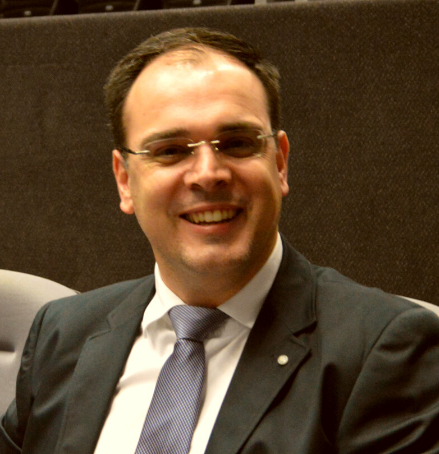
Marco Antonio Colaco Branco

@ipsantarem.pt

Escola Superior de Desporto de Rio Maior
Instituto Politécnico de Santarém

RESEARCH INTERESTS

Biomechanics
Motor Behaviour
Exercise and Health
Sports Performance
46

Scopus Publications

986

Scholar Citations

18

Scholar h-index

25

Scholar i10-index

Scopus Publications

  • Biomechanical Effects of the MIND&GAIT Exercise Program on Sit-to-Stand and Marching in Place Motor Coordination in Institutionalized Older Adults: Implications for Functional Stability
    Cristiana Mercê, Susana Alfaiate, Fátima Ramalho, David Catela, Marco Branco
    Healthcare Switzerland, 2026
    Background: Motor decline associated with ageing compromises mobility, postural control and the ability, thereby increasing risk among older adults. Biomechanical characterization of movement, particularly using non-linear methods, offers a process-oriented approach capable of detecting subtle changes in motor coordination. The MIND&GAIT programme has previously demonstrated benefits in physical function in frail older individuals; however, its potential to improve motor coordination parameters that underpin fall risk remains insufficiently explored. Objectives: To analyse the impact of the MIND&GAIT program on motor coordination during sit-to-stand (STS) and walking tasks, two daily activities strongly associated with fall risk, using advanced non-linear and biomechanical metrics in institutionalized older adults. Methods: Fourteen institutionalized older adults (82.21 ± 7.14 years) participated. Three-dimensional acceleration and angular velocity were recorded using inertial sensors. Motor variability and predictability were quantified using the multivariate Lyapunov exponent (LyEM) and multivariate incremental entropy (MIE). STS (30 s) and walking-in-place (2 min) tasks were assessed pre- and post-intervention following a three-month, thrice-weekly programme. Results: Although no statistically significant differences emerged (ps > 0.05), trends were observed suggesting increases in LyEM during STS and in both MIE and LyEM during walking were found post-intervention. These exploratory findings may indicate enhanced motor complexity, stability and adaptability, features associated with reduced fall vulnerability. Conclusions: Despite the absence of statistical significance, the biomechanical trends observed suggest improvements in motor coordination patterns relevant to fall risk reduction in institutionalized older adults following the MIND&GAIT programme. These findings highlight the potential of structured exercise-based interventions for promoting safer movement behaviors in frail populations.
  • Effects of Martial Arts Intervention in Children and Young People with Developmental Coordination Disorder (DCD): A Systematic Review
    Beatriz Olhos, Marco Branco, Beatriz Rosa, David Catela, Cristiana Mercê
    Children, 2026
    Background: Developmental Coordination Disorder (DCD) is a neurodevelopmental motor disorder characterised by marked difficulties in the acquisition and execution of motor skills, substantially affecting daily activities and quality of life. Martial arts (MAs), due to their multi-skilled nature, have been studied as possible intervention strategies to improve motor competence and functionality in children with DCD. Objectives: The present systematic review aimed to explore the effects of MA practice in children and adolescents with DCD, identifying the benefits, methodological characteristics and practical implications of existing interventions. Methods: The search was conducted in the PubMed, Web of Science, and EBSCO databases, following the PRISMA 2021 guidelines, using the keywords (developmental coordination disorder OR DCD OR dyspraxia) AND (karate OR judo OR taekwondo OR aikido OR martial art) AND (child OR preschool). Experimental and quasi-experimental studies that applied MA programmes to children and adolescents (≤18 years) with a confirmed diagnosis of DCD were included. Results: Of the 1834 identified records, five studies met the inclusion criteria. The MA modalities examined were karate, tai chi, and taekwondo. Across studies (n per study = 16–145), MA-based programmes consistently yielded significant pre- to post-intervention improvements in overall motor competence (MC), balance, muscle strength, and coordination; one study reported maintenance of coordination gains at 3-month follow-up. Methodological quality assessed with the Downs and Black checklist ranged from fair to good (scores = 18–22). No adverse events were reported. Conclusions: Based on the included studies, MA interventions demonstrate potential as an effective motor intervention approach for children and adolescents with DCD. Findings consistently indicated significant improvements in motor competence, balance, muscle strength, and coordination, with additional benefits observed in cognitive and psychosocial domains and no reported adverse effects.
  • Precision of an Inertial System to Evaluate the Finger Tapping Test in Women with Fibromyalgia
    Nancy Brígida, David Catela, Cristiana Mercê, Marco Branco
    Sports, 2025
    Background: This study investigates the precision of an inertial measurement unit (IMU) in evaluating the Finger Tapping Test (FTT) to differentiate motor control competencies in women with fibromyalgia, a clinical population characterized by motor impairments. Methods: The sample consisted of 240 FTT trials collected from 20 women, half of whom were diagnosed with fibromyalgia (F = 46.4 ± 12.714; C = 45.9 ± 12.950). Procedures consisted of participants completing FTT while data were collected from a high-speed camera and an IMU for linear acceleration and angular velocity, respectively. Analyses employed the Bland–Altman technique with both parametric and bootstrap-derived limits of agreement and intraclass correlation coefficients to assess levels of agreement between traditional and IMU-derived methods. Results: The results showed a strong agreement at subject×hand aggregation for the number of taps (RPC = 4.3 and ICC = 0.94) and for the inter-tap interval (RPC = 0.02 and ICC = 0.89), indicating minimal differences between measurements and demonstrating the potential for highly sensitive motor function assessment using an IMU. Conclusions: These findings suggest that IMU technology can effectively detect subtle aspects of motor control, supporting its use in exercise, rehabilitation, and clinical physiotherapy settings, including functional training, adapted rehabilitation exercises, and home-based monitoring for fibromyalgia. This approach offers detailed insights into subtle motor impairments, emphasizing its value for both clinical and exercise applications.
  • A Quasi-Experimental Hip-Hop-Based Program to Improve Motor Competence and Physical Activity in Preschoolers in Portugal: The “Grow+” Program
    Cristiana Mercê, Sofia Bernardino, Neuza Saramago, Marco Branco, David Catela
    Healthcare Switzerland, 2025
    Background/Objectives: Dance, particularly hip-hop, offers a dynamic means of fostering physical activity (PA) and encouraging movement in health-related initiatives among children and youth in educational environments. Hip-hop offers benefits across motor, physical, social, and mental domains. Given the importance of PA in early development, and the preschool period as a sensitive phase for acquiring motor skills, this study aimed to examine the effects of the “Grow+” hip-hop program on motor competence (MC), perceived motor coordination (PMCoor), and PA levels in preschoolers. Methods: A quasi-experimental within-subjects design was used, including 37 children aged 3 to 4 (M = 4.29 ± 0.58). The intervention included two 4-week hip-hop periods, separated by a 4-week break. Four assessments were conducted using the MCA battery (MC), PA’s pictorial scales, and questionnaires completed by caregivers and educators (PMCoor). Data were analyzed using repeated measures ANOVA and Spearman correlations. Results: MC and PA levels showed a nonsignificant but positive trend across the study. Significant improvements in MC were observed during intervention periods, while no significant changes occurred during the break. Educators’ perceptions of PMCoor remained unchanged, despite improvements in MC. Conclusions: The findings suggest that the “Grow+” hip-hop program contributed meaningfully to improvements in MC and PA levels among children in early childhood. These findings accentuate the potential efficacy of structured rhythmic movement interventions in promoting motor development throughout early childhood, thereby supporting their integration into early childhood education curricula.
  • How learning to cycle influences lifestyle: An eight country pooled analysis and person-centered approach
    Isaac Estevan, An De Meester, Sanne L.C. Veldman, Cristiana Mercê, Marco Branco, et al.
    Journal of Transport and Health, 2025
  • Impact of in-person versus online supervised multicentre multicomponent prenatal exercise programme on maternal physical activity, fitness and healthy lifestyle: The Active Pregnancy trial SPIRIT 2025-based protocol
    Rita Santos-Rocha, Marco Branco, Joana Prior de Freitas, Bárbara Castro, Adelaide Teixeira Pinto, et al.
    BMJ Open Sport and Exercise Medicine, 2025
    Many studies have supported the positive effects of an active lifestyle on the prevention and treatment of pregnancy-related complications, as well as maintaining fitness and functionality. The COVID-19 pandemic has underscored the need for virtual approaches to health interventions; however, few studies have examined the effectiveness of these interventions. The Standard Protocol Items: Recommendations for Interventional Trials 2025 guidelines were followed to describe the protocol of the ACTIVE PREGNANCY trial, an intervention study that delivers a physical exercise programme in-person (IN) and online (ON) to improve maternal physical activity (PA), fitness and healthy lifestyle parameters in pregnant women. Pregnant women will be invited to participate in a multisite, multicomponent exercise programme delivered either IN or ON by qualified exercise physiologists. Both groups will receive an exercise intervention delivered in different real-life environments. Participants will undergo basic fitness field tests and complete questionnaires assessing PA, fitness and lifestyle parameters before starting the exercise programme and after completing 12 weeks of the intervention. Researchers will test whether the intervention is beneficial in maintaining or improving maternal parameters after 12 weeks and will compare the effectiveness of different exercise modes. Subgroups of maternal age and weekly volume of PA will also be analysed. Primary outcomes: PA volume and health-related and functional fitness. Secondary outcomes: healthy lifestyle parameters. Additional outcomes: satisfaction with the exercise interventions and resources. This study was approved by the Ethics Committee of Santarém Polytechnic University and registered on ClinicalTrials.gov (NCT06954454). Findings will be disseminated via publications, conferences and training programmes.
  • Move4Future: implementation and effects of a pilot physical exercise programme for children and youth at risk from multiproblem families
    Cristiana Mercê, Vera Simões, Liliana Ramos, Miguel Silva, Nancy Brígida, et al.
    Retos, 2025
    Introduction and Objective: Multi-problem families include several risk factors (e.g., mental health and weight issues). Physical exercise could be a strategy to prevent, treat and overcome numerous disorders. Thus, this study aimed to analyze the effects of implementing the Move4Future pilot program, in children and adolescents, on the following variables: i) anxiety levels, ii) body composition, iii) physical fitness, and iv) physical activity levels. Methodology: Ten participants (10.61±2.40 years) completed a 12-week physical exercise program with a weekly frequency of one session and were assessed at baseline and post-intervention. The Revised Manifest Anxiety Scale for Children, body mass, height, triceps skinfold, calf skinfold, relaxed arm circumference, waist circumference, calf circumference, and the FITescola® battery tests (push-ups, horizontal jump, agility, shoulder flexibility and lower limb flexibility) were applied. Results and Conclusions: The main results showed a lower anxiety trait, although this change was not statistically significant (z=-1.832, p=0.067), a significant increase in stature (z=-2.197, p=0.028), a significant decrease in body mass index (z=-2.366, p=0.018), and in waist circumference (z=-2.201, p=0.028). The Move4Future pilot program shows improvement in average values of anxiety levels, body composition and upper strength in physical fitness. However, a multi-component intervention, including families and more sessions per week, may be important for better results.
  • Improving Motor Competence of Children: The “Super Quinas” Intervention Program in Portuguese Primary Schools
    Luis P. Rodrigues, Rita Cordovil, Júlio A. Costa, André Seabra, José Guilherme, et al.
    Journal of Physical Activity and Health, 2025
    Objectives: The objective of this study was to describe the effects of an extra hour of a structured motor program on the motor competence (MC) of children 6–10 years old.. Design: The need for movement interventions to enhance MC among school-aged children has gained vital importance in the last years, given the negative secular trends reported. Hence, the Portuguese Football Federation organized an intervention program on MC to be implemented on the extracurricular time of the Portuguese primary schools: the Super Quinas program. Methods: Thirty-nine schools from all of Portugal were assigned to intervention and control condition, with a total of 1034 children (6–10 y old) completing all the program (77.7%). The Super Quinas intervention comprised of 1 hour of activity per week, led by a physical educator teacher during extracurricular activities for 12 wees. MC was assessed using the Motor Competence Assessment (MCA) before and at the end of the program (January and April 2023). Normative results of the MCA were used to compare changes between pre and posttest according to experimental or control condition. Results: Results showed a general improvement (P ≤ .001) for all subscales (Locomotor, Manipulative, Stability) and total MCA. More importantly, the experimental group showed significant and positive differences, when compared with the control group, in the Stability (P = .007), Manipulative (P = .015), and total MCA results (P = .018) after controlling for gender, age, and baseline effect. Conclusions: The Super Quinas intervention program proved that adding 1 hour of structured movement program to the regular primary school schedule can lead to greater development of MC in school-age children.
  • Learning to Cycle: Body Composition and Balance Challenges in Balance Bikes Versus Training Wheels
    Cristiana Mercê, David Catela, Rita Cordovil, Mafalda Bernardino, Marco Branco
    Journal of Functional Morphology and Kinesiology, 2025
    Background/Objectives: Empowering our children and youth to cycle empowers them to pursue a healthier, fuller, and more responsible life. The present study implemented the Learning to Cycle program with the following aims: (i) to promote learning to cycle; (ii) to investigate and compare the use of different learning bicycles, i.e., balance bicycle (BB) and bicycle with training wheels (BTW); (iii) to investigate the influence of body composition during this learning process. Methods: The program was implemented through a quasi-experimental study involving two intervention groups, with pre- and post-test evaluations. The program was applied to 50 children (M = 5.82 ± 0.94 years, 23 girls) who did not know how to cycle previously. One group explored the BB and the other the BTW for six sessions, followed by four more sessions with the conventional bicycle (CB) for both groups. The assessment of independent cycling was considered as the ability to perform, sequentially and unaided, and the various cycling milestones: self-launch, ride, and brake. The children’s body composition was accessed by the BMI’s percentile and classification according to their age and sex. Results: The program had a success rate of 88.24% for acquiring independent cycling, with 100% success in the BB group and 76.92% in the BTW group. The BB children learned significantly faster to self-launch, ride, brake, and cycle independently. Children with higher BMI percentiles faced greater challenges in achieving balance milestones. Conclusions: BB are recommended, especially for overweight and obese children, as they help develop balance from the onset, and showed to be more efficient in learning to cycle than the BTW.
  • Learning to cycle: a constraint-led intervention programme using different cycling task constraints
    Cristiana Mercê, Keith Davids, David Catela, Marco Branco, Vanda Correia, et al.
    Physical Education and Sport Pedagogy, 2025
  • Assessment of Muscle Activity During a Deadlift Performed by Construction Workers
    Renato Alexandre da Costa-Machado, Ana Conceição, Fernando Rocha, Marco Branco
    Muscles, 2024
  • Learning to Cycle: Why Is the Balance Bike More Efficient than the Bicycle with Training Wheels? The Lyapunov’s Answer
    Cristiana Mercê, Keith Davids, Rita Cordovil, David Catela, Marco Branco
    Journal of Functional Morphology and Kinesiology, 2024
  • Understanding and Involving the Perspective of Pregnant Women as Users When Designing the Framework of e-Health and Exercise Interventions during Pregnancy: Preliminary Study
    Rita Santos-Rocha, Mariana Ferreira, Nuno Pimenta, Marco Branco, Miguel Oviedo-Caro, et al.
    Healthcare Switzerland, 2024
  • Changes in Foot Biomechanics during Pregnancy and Postpartum: Scoping Review
    Maria Otília Brites Zangão, Ana Filipa Poeira, Marco Branco, Rita Santos-Rocha
    International Journal of Environmental Research and Public Health, 2024
  • Predictability and Complexity of Fine and Gross Motor Skills in Fibromyalgia Patients: A Pilot Study
    Nancy Brígida, David Catela, Cristiana Mercê, Marco Branco
    Sports, 2024
  • Variability of gross and fine motor control in different tasks in fibromyalgia patients
    Nancy Brígida, David Catela, Cristiana Mercê, Marco Branco
    Retos, 2024
  • Development and validation of a hip hop intervention programme for pre-school children: Crianças+ (Children+)
    Sofia Bernardino, Neuza Saramago, David Catela, Marco Branco, Cristiana Mercê
    Retos, 2024
  • Accuracy and Interpretation of the Acceleration from an Inertial Measurement Unit When Applied to the Sprint Performance of Track and Field Athletes
    Paulo Miranda-Oliveira, Marco Branco, Orlando Fernandes
    Sensors, 2023
  • Deficits in Physical Activity Behaviour in Children with Developmental Coordination Disorder: Systematic Review
    Cristiana Mercê, Jéssica Cordeiro, Catarina Romão, Marco Branco, David Catela
    Retos, 2023
  • Training programmes to learn how to ride a bicycle independently for children and youths: a systematic review
    Cristiana Mercê, Joana Vilar Pereira, Marco Branco, David Catela, Rita Cordovil
    Physical Education and Sport Pedagogy, 2023
  • Levels of Physical Activity in Portuguese Children: the Impact of the Covid-19 Pandemic
    Cristiana Mercê, Jéssica Cordeiro, Catarina Romão, Marco Branco, David Catela
    Retos, 2023
  • Reaction forces and bone maturation in taekwondo: comparison of practice with and without tatami
    Fernando Rocha, Ana Conceição, Carlos Mata, Janine Narciso, Aldo M. Costa, et al.
    Human Movement, 2023
  • Learning to Cycle: Is Velocity a Control Parameter for Children’s Cycle Patterns on the Balance Bike?
    Cristiana Mercê, Rita Cordovil, David Catela, Flávia Galdino, Mafalda Bernardino, et al.
    Children, 2022
  • Accuracy of Inertial Measurement Units When Applied to the Countermovement Jump of Track and Field Athletes
    Paulo Miranda-Oliveira, Marco Branco, Orlando Fernandes
    Sensors, 2022
  • Learning to Cycle: A Cross-Cultural and Cross-Generational Comparison
    Rita Cordovil, Cristiana Mercê, Marco Branco, Frederico Lopes, David Catela, et al.
    Frontiers in Public Health, 2022

RECENT SCHOLAR PUBLICATIONS

  • Biomechanical Effects of the MIND&GAIT Exercise Program on Sit-to-Stand and Marching in Place Motor Coordination in Institutionalized Older Adults: Implications for Functional …
    C Mercê, S Alfaiate, F Ramalho, D Catela, M Branco
    Healthcare 14 (6), 770 , 2026
    2026
  • Effects of Martial Arts Intervention in Children and Young People with Developmental Coordination Disorder (DCD): A Systematic Review
    B Olhos, M Branco, B Rosa, D Catela, C Mercê
    Children 13 (2), 282 , 2026
    2026
  • Sites of skin inflammation recurrence in patients with SLE: an analysis of clinical trial data
    E Peterknecht, M Branco, JA Reynolds
    Lupus science & medicine 13 (1), e001916 , 2026
    2026
  • Sites of skin inflammation recurrence in patients with systemic lupus erythematosus (SLE): an analysis of clinical trial data
    E Peterneckht, M Branco, J Reynolds
    Lupus science & medicine , 2025
    2025
  • Precision of an Inertial System to Evaluate the Finger Tapping Test in Women with Fibromyalgia
    N Brígida, D Catela, C Mercê, M Branco
    Sports 13 (11), 373 , 2025
    2025
  • A Quasi-Experimental Hip-Hop-Based Program to Improve Motor Competence and Physical Activity in Preschoolers in Portugal: The “Grow+” Program
    C Mercê, S Bernardino, N Saramago, M Branco, D Catela
    Healthcare 13 (19), 2518 , 2025
    2025
    Citations: 4
  • How learning to cycle influences lifestyle: An eight country pooled analysis and person-centered approach
    I Estevan, A De Meester, SLC Veldman, C Mercê, M Branco, F Lopes, ...
    Journal of Transport & Health 44, 102114 , 2025
    2025
  • Impact of in-person versus online supervised multicentre multicomponent prenatal exercise programme on maternal physical activity, fitness and healthy lifestyle: the Active …
    R Santos-Rocha, M Branco, J Prior de Freitas, B Castro, AT Pinto, ...
    BMJ Open Sport & Exercise Medicine 11 (3), e002767 , 2025
    2025
  • Move4Future: implementation and effects of a pilot physical exercise programme for children and youth at risk from multi-problem families
    C Mercê, V Simões, L Ramos, M Silva, N Brígida, A Vitorino, M Branco, ...
    Retos 66, 403-415 , 2025
    2025
  • Learning to Cycle: Body Composition and Balance Challenges in Balance Bikes Versus Training Wheels
    C Mercê, D Catela, R Cordovil, M Bernardino, M Branco
    Journal of Functional Morphology and Kinesiology 10 (1), 53 , 2025
    2025
  • Learning to cycle: a constraint-led intervention programme using different cycling task constraints
    C Mercê, K Davids, D Catela, M Branco, V Correia, R Cordovil
    Physical Education and Sport Pedagogy 30 (1), 78-91 , 2025
    2025
    Citations: 13
  • A Quasi-Experimental Hip-Hop-Based Program to Improve Motor Competence and Physical Activity in Preschoolers in Portugal: The “Grow+” Program
    M Cristiana, B Sofia, S Neuza, M Branco, D Catela
    Healthcare 13 (19), 2518 , 2025
    2025
  • Shaping the future of sports-SPRINT Internacional Congress
    V Loureiro, M Gomes, M Branco, C Mercê, LP Rodrigues, J Petrica, ...
    Polytechnic University of Beja , 2025
    2025
  • Move4Future: aplicación y efectos de un programa piloto de ejercicio físico para niños y jóvenes en situación de riesgo procedentes de familias multiproblemáticas
    C Mercê, V Simões, L Ramos, M Silva, N Brígida, A Vitorino, M Branco, ...
    Retos 66, 403 , 2025
    2025
  • Learning to cycle: Why is the balance bike more efficient than the bicycle with training wheels? The Lyapunov’s answer
    C Mercê, K Davids, R Cordovil, D Catela, M Branco
    Journal of functional morphology and kinesiology 9 (4), 266 , 2024
    2024
    Citations: 4
  • Assessment of Muscle Activity During a Deadlift Performed by Construction Workers
    RA da Costa-Machado, A Conceição, F Rocha, M Branco
    Muscles 3 (4), 339-348 , 2024
    2024
    Citations: 1
  • Análise da coordenação motora da marcha em idoso com artroplastia total do joelho: estudo de caso
    B Tavares, I Leal, C Mercê, M Branco
    Revista da UI_IPSantarém 12 (1), e33420-e33420 , 2024
    2024
  • Understanding and involving the perspective of pregnant women as users when designing the framework of e-health and exercise interventions during pregnancy: preliminary study
    R Santos-Rocha, M Ferreira, N Pimenta, M Branco, M Oviedo-Caro, ...
    Healthcare 12 (11), 1121 , 2024
    2024
    Citations: 5
  • Changes in foot biomechanics during pregnancy and postpartum: Scoping review
    MOB Zangão, AF Poeira, M Branco, R Santos-Rocha
    International journal of environmental research and public health 21 (5), 638 , 2024
    2024
    Citations: 18
  • Variability of gross and fine motor control in different tasks in fibromyalgia patients
    N Brígida, D Catela, C Mercê, M Branco
    Retos 54, 151-158 , 2024
    2024
    Citations: 2

MOST CITED SCHOLAR PUBLICATIONS

  • Kinematic analysis of gait in the second and third trimesters of pregnancy
    M Branco, R Santos-Rocha, L Aguiar, F Vieira, A Veloso
    Journal of Pregnancy 2013, 9 , 2013
    2013
    Citations: 114
  • Proceedings of the 3rd IPLeiria’s international health congress: Leiria, Portugal. 6-7 May 2016
    CC Tomás, E Oliveira, D Sousa, M Uba-Chupel, G Furtado, C Rocha, ...
    BMC Health Services Research 16 (Suppl 3), 200 , 2016
    2016
    Citations: 107
  • Biomechanics of gait during pregnancy
    M Branco, R Santos-Rocha, F Vieira
    The Scientific World Journal 2014 (1), 527940 , 2014
    2014
    Citations: 99
  • Comparison between overweight due to pregnancy and due to added weight to simulate body mass distribution in pregnancy
    L Aguiar, R Santos-Rocha, F Vieira, M Branco, C Andrade, A Veloso
    Gait & Posture 42 (4), 511-517 , 2015
    2015
    Citations: 54
  • Effect of 6-month community-based exercise interventions on gait and functional fitness of an older population: a quasi-experimental study
    F Ramalho, R Santos-Rocha, M Branco, V Moniz-Pereira, HI Andre, ...
    Clinical Interventions in Aging, 595-606 , 2018
    2018
    Citations: 41
  • Training programmes to learn how to ride a bicycle independently for children and youths: a systematic review
    C Merce, JV Pereira, M Branco, D Catela, R Cordovil
    Physical Education and Sport Pedagogy 28 (5), 530-545 , 2023
    2023
    Citations: 39
  • Three-dimensional kinematic adaptations of gait throughout pregnancy and post-partum
    MAC Branco, R Santos-Rocha, F Vieira, R Aguiar, AP Veloso
    Acta of Bioengineering and Biomechanics 18 (2) , 2016
    2016
    Citations: 38
  • Three‐Dimensional Kinetic Adaptations of Gait throughout Pregnancy and Postpartum
    M Branco, R Santos-Rocha, F Vieira, L Aguiar, AP Veloso
    Scientifica 2015 (1), 580374 , 2015
    2015
    Citations: 34
  • Learning to cycle: from training wheels to balance bike
    C Mercê, M Branco, D Catela, F Lopes, R Cordovil
    International journal of environmental research and public health 19 (3), 1814 , 2022
    2022
    Citations: 28
  • Influence of body composition on gait kinetics throughout pregnancy and postpartum period
    M Branco, R Santos-Rocha, F Vieira, MR Silva, L Aguiar, AP Veloso
    Scientifica 2016 (1), 3921536 , 2016
    2016
    Citations: 27
  • Levels of physical activity in Portuguese children: the impact of the COVID-19 pandemic
    C Mercê, J Cordeiro, C Romão, M Branco, D Catela
    Retos 47, 174-180 , 2023
    2023
    Citations: 25
  • in karate experts and non-karate practitioners
    AM VencesBrito, MAC Branco, RMC Fernandes
    Revista de Artes Marciales Asiáticas 9 (1), 20-31 , 2014
    2014
    Citations: 25
  • Learning to cycle: A cross-cultural and cross-generational comparison
    R Cordovil, C Mercê, M Branco, F Lopes, D Catela, E Hasanen, ...
    Frontiers in public health 10, 861390 , 2022
    2022
    Citations: 23
  • Accuracy of inertial measurement units when applied to the countermovement jump of track and field athletes
    P Miranda-Oliveira, M Branco, O Fernandes
    Sensors 22 (19), 7186 , 2022
    2022
    Citations: 21
  • Deficits in physical activity behaviour in children with developmental coordination disorder: Systematic review
    C Mercê, J Cordeiro, C Romão, MAC Branco, D Catela
    Retos: nuevas tendencias en educación física, deporte y recreación, 292-301 , 2023
    2023
    Citations: 20
  • Learning to cycle: Are physical activity and birth order related to the age of learning how to ride a bicycle?
    C Mercê, M Branco, D Catela, F Lopes, LP Rodrigues, R Cordovil
    Children 8 (6), 487 , 2021
    2021
    Citations: 19
  • Biomechanical model for kinetic and kinematic description of gait during second trimester of pregnancy to study the effects of biomechanical load on the musculoskeletal system
    L Aguiar, R Santos-Rocha, M Branco, F Vieira, A Veloso
    Journal of mechanics in medicine and biology 14 (01), 1450004 , 2014
    2014
    Citations: 19
  • Changes in foot biomechanics during pregnancy and postpartum: Scoping review
    MOB Zangão, AF Poeira, M Branco, R Santos-Rocha
    International journal of environmental research and public health 21 (5), 638 , 2024
    2024
    Citations: 18
  • The influence of sport practices on body composition, maturation and maximum oxygen uptake in children and youth
    C Mercê, MAC Branco, MA Rodrigues Ferreira, A VencesBrito, D Catela, ...
    Federación Española de Asociaciones de Docentes de Educación Física (FEADEF) , 2022
    2022
    Citations: 17
  • Learning to cycle: a constraint-led intervention programme using different cycling task constraints
    C Mercê, K Davids, D Catela, M Branco, V Correia, R Cordovil
    Physical Education and Sport Pedagogy 30 (1), 78-91 , 2025
    2025
    Citations: 13