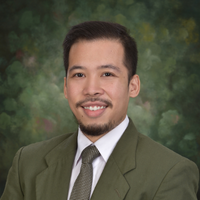
Aron (he/his) is a registered psychometrician, researcher, and currently a PhD Psychology student at the Australian National University. His research passion lies in Critical Health Psychology, Cross-Cultural Psychology, Stigma, HIV/AIDS, LGBTQIA+, and Health Communication.
His dedication aims to reduce health disparities and improve outcomes for marginalized groups. Through his research, Aron seeks to understand the experiences of indigenous students, COVID-19-affected individuals, those with HIV, and LGBTQIA+ community members. By identifying barriers and proposing evidence-based strategies, he works towards equitable healthcare systems and enhanced well-being.
Aron actively collaborates in academia, sharing expertise at conferences and scholarly forums, driven by a commitment to advancing knowledge and advocating for social change.
EDUCATION
Doctor of Philosophy in Psychology, The Australian National University (2023-present)
Master of Arts in Clinical Psychology, University of San Carlos (2021)
Bachelor of Science in Psychology—magna cum laude, University of Southern Philippines Foundation (2016)
RESEARCH INTERESTS
Critical Health Psychology, Cross-Cultural Psychology, Stigma, HIV, Health Communication
11
Scopus Publications
Scopus Publications
The Management of Social Standing: Characterizing the Influence of HIV Stigma on HIV Talk and Testing Behavior in Philippine Key Populations Using a Grounded Theory Approach Gideon Livingstone P. Bendicion, Augil Marie Q. Robles, Moniq Muyargas, Timoteo Balensoy, Bea Izabeaux T. Mendoza, et al. Journal of Health and Social Behavior, 2026 We characterize the way human immunodeficiency virus (HIV) stigma hinders HIV conversations and testing. Using grounded theory principles, we analyzed in-depth interviews of the experiences of select Philippine key populations (groups with high HIV burden) and their families: 19 men who have sex with men (KPM), 16 transgender women (KPW), and 16 parents of KPM/W. Results show how KPM/W protect the state of being respected by others (management of social standing), a task they engage in by strategically modulating behavior in different life domains, including when considering HIV conversations and testing. Our results specify the management of social standing as an object being threatened by stigma and as a process making KPM/W behavior susceptible to the influence of HIV stigma, even for KPM/W who may not possess the mark of positive serostatus. This raises questions about the theorizing of stigma, which traditionally has focused on the susceptibility of marked but not unmarked individuals.
“Because of HIV, It Opened My Mind”: Intersectional Stigma Experiences Among Filipino Gay and Bisexual Men Living With HIV Aron Harold G. Pamoso, Brett Scholz, Austin Ferolino Qualitative Health Research, 2025 Previous work has demonstrated that gay, bisexual men, and other men who have sex with men (GBM) living with HIV are likely to experience intersectional stigma. However, mainstream systems often fail to recognize how power and privilege shape this experience. Such a complex psychological phenomenon requires an in-depth reflective inquiry that acknowledges individuals as experts in their own experiences. To explicate this matter, this study aimed to develop an understanding of how intersectional stigma impacts the experiences of GBM living with HIV and to illuminate how contexts (un)fuel inequities. The semi-structured interviews with five Filipino GBM living with HIV were analyzed using interpretative phenomenological analysis (IPA). Exploration of their accounts elucidated how cultural elements fueled power dynamics and privilege, which in turn shaped intersectional stigma and their experiences. Narratives accentuated how Filipino GBM living with HIV situate themselves from victims to agents of change who empower and liberate others in the community. Insights from this study underscore the critical role of collective actions in bridging gaps in inequities and guiding the improvement of policies and interventions that are well-suited to the context and culturally appropriate for people living with HIV and other multiply marginalized populations.
“I don’t understand why we have to favor just one ethnicity”: Stigma and coping experience perspectives from ethnicminority students in Indonesia, Malaysia, and the Philippines Aron Harold G Pamoso, Andrian Liem, Rozel Balmores-Paulino, Syurawasti Muhiddin, May Kyi Zay Hta, et al. Culture and Psychology, 2025 Despite the growing movement towards inclusivity, the voices of ethnic minority students (EMS) in Southeast Asia (SEA) remain underrepresented, resulting in marginalization that hinders their academic pursuits, and well-being. However, past research often overlooked experiences of EMS and the role of sociocultural elements that drive oppression. This study seeks to explore the experience of stigma among EMS in Indonesia, Malaysia, and the Philippines. We conducted in-depth, semi-structured interviews with 37 EMS from university-based student organizations and analyzed them using the KJ method. The results indicate that sociocultural elements significantly influence their experiences, ranging from subtle microaggressions to overt acts of harm and violence. Furthermore, these encounters necessitate a variety of strategies, including coping mechanisms, stigma management, and the management of social standing, which characterize our understanding of how they navigate stigmatization. The findings illuminate the intricate interplay between socio-cultural elements and stigma among EMS in SEA, underscoring the urgency for more inclusive policies in higher education, facilitated by community-led initiatives, allyship, and activism.
The whole is greater than the sum of its parts: Integrating syndemics and intersectionality in tackling the HIV and mental health epidemics among Filipino gay and bisexual men Aron Harold G. Pamoso, Mary Lou Rasmussen, I. Nyoman Sutarsa, Brett Scholz Plos Mental Health, 2025 Insufficient attention has been given to the social aspects of HIV and mental health in the Philippines despite their profound impact on Filipinos, particularly gay and bisexual men and other men who have sex with men. Past evidence shows that these health conditions are intertwined, amplified by the combined impact of power and oppression. Yet, scholarly works, programs, and interventions focusing on understanding the social, structural, and political aspects of HIV and mental health are still in the early stages in the Philippines, calling for urgency in tackling the ongoing epidemics these men face. Therefore, we have developed this essay with the following objectives: 1) to provide context for the overlapping of the two health epidemics faced by Filipino gay and bisexual men and men who have sex with men; 2) to illustrate how critical perspectives such as syndemics and intersectionality can deepen our understanding of these conditions; 3) to showcase strategies for integrating syndemics and intersectionality into research and practice. Our aim is to foster the discussion on the use of critical perspectives in addressing health conditions in the Philippines and to advocate for comprehensive, inclusive, and culturally informed research, programs, and interventions for these men in the broader Filipino community.
The Relationship between Stigma and Social Support to Quality of Life in Indonesia and the Philippines during the COVID-19 Pandemic Rozel S. Balmores-Paulino, Angela Oktavia Suryani, May Kyi Zay Hta, Aron Harold G. Pamoso, Andrian Liem, et al. International Perspectives in Psychology Research Practice Consultation, 2023 The importance of quality of life (QoL) was magnified as countries faced the COVID-19 pandemic. This study aimed to determine the relationship between COVID-19-related stigma and preferred social support to QoL in two Southeast Asian countries. This paper examined (1) the differences in the physical and psychological dimensions of QoL (QoL-PSY, QoL-PHL), COVID-19 perceived stigma (PcS) and public stigma (PS), and preferred social support (PSS) between Indonesia (IDN) and the Philippines (PHP); (2) the associations between PS and PcS with QoL; (3) the associations between PSS and QoL; and (4) the role of the country as a moderator between the relationship of PcS and PSS to QoL. Data were collected from 992 participants (PHP = 564; IDN = 428) through an online survey (April–June 2022) and analyzed through multivariate analysis of covariance (MANCOVA), hierarchical multiple regression, and multiple-group path analysis. After controlling for potential covariates, we found significant country differences in QOL and PSS, where Indonesia's estimated means for these two measures were significantly higher than the Philippines. Both domains of PSS had significant positive associations with both QOL domains in the merged sample; similarly, PcS had significant negative associations with both domains of QOL. Path analysis also showed similar significant predictors (PSS and PcS) associated with QoL for both countries with minor coefficient variations, except PS and PSS-ST. The findings show a similar relationship pattern between perceived stigma and social support (strong ties) to the QoL in Indonesia and the Philippines. Cultural interventions to mitigate perceived stigma were suggested in healthcare settings.
A Multinational Study of Patient Preferences for How Decisions Are Made in Their Care Rachyl Pines, Nicola Sheeran, Liz Jones, Annika Pearson, Aron H. Pamoso, et al. Medical Care Research and Review, 2023 Inadequate consideration has been given to patient preferences for patient-centered care (PCC) across countries or cultures in our increasingly global society. We examined what 1,698 participants from the United States, Hong Kong, Philippines, and Australia described as important when making health care decisions. Analysis of frequencies following directed content coding of open-ended questions revealed differences in patients’ preferences for doctor behaviors and decision-making considerations across countries. Being well informed by their doctor emerged as most important in decision-making, especially in Hong Kong. Participants in Australia and the United States wanted their doctor to meet their emotional needs. The safety and efficacy of treatments were the most common consideration, especially for Hong Kong. Findings suggest that doctors should focus on information exchange and identifying patient concerns about efficacy, lifestyle impact, cost, and recovery speed. Rather than assuming patients prefer shared decision-making, doctors must assess patient’s decision control preferences.