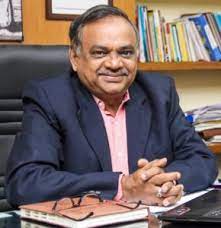
Gopalakrishna K holds a Master’s in mechanical engineering, having specialized in production engineering from the University of Mysore, and a Ph.D. in polymer tribology from NAL-VTU. He has an experience of more than 30 years in academics and research. In addition to tribology, his research and teaching interests include pneumatics and hydraulics, thermal engineering and engineering drawing. He is certified by industry major FESTO in the domain of mechatronics and has executed projects that have resulted in five patent filings. With significant research publications in reputed Scopus / Thomson Reuter indexed journals and a monograph to his credit, he has been active in developing autonomous systems for surveillance funded by Naval Research Board-DRDO, coating systems for RP Components by ISRO-DOS, and others.
Exploration and optimization of different charge transport layers for Cs4CuSb2Cl12 based perovskite solar cells Kazi Md Sadat, M. Khalid Hossain, M. Shihab Uddin, P. Prabhu, Ankita Aggarwal, et al. Scientific Reports, 2025 Recently, lead-free Cs4CuSb2Cl12 has garnered attention as an excellent material to be used as an absorber of perovskite solar cells (PSCs). In this work, Cs4CuSb2Cl12 absorber-based PSCs were studied and the conditions to get high performance for PSCs were investigated. Here, six different materials for electron transport layers (ETLs) and 10 different materials for hole transport layers (HTLs) were studied. A numerical approach was followed by using SCAPS-1D simulator. During the work, various device parameters of PSC were investigated such as thickness variation of the absorber and ETL layers, acceptor density variation of the absorber and HTL layers, variation of the donor density of the ETL layer, and effect of total defect density of absorber. Also, other parameters such as the impact of resistance, temperature, J-V graph, Q-E graph, and carrier generation rate at different positions of the PSCs were assessed. Among the studied 10 HTL materials, MWCNTs outperformed other studied materials, hence it was selected for further investigations. Then the structures were optimized based on the device parameters outcome, and the structure having MZO and STO ETLs both showed the maximum power conversion efficiency (PCE) of 28.23%. (Al/FTO/MZO/Cs4CuSb2Cl12/MWCNTs/Au) the structure showed an open-circuit voltage (Voc) of 1.249 V, short-circuit current density (Jsc) of 25.11 mA/cm2 and a fill factor (FF) of 90.1%. The performance was also evaluated with respect to key electrical parameters. Optimum performance was achieved at a series resistance of 1 Ω·cm² and a shunt resistance of 1000 Ω·cm², beyond which performance gains saturated. The other best-performing STO ETL-based (Al/FTO/STO/Cs4CuSb2Cl12/MWCNTs/Au) structure had Voc of 1.25 V, Jsc of 25.11 mA/cm2, and FF of 90.01% Under the optimized condition other structure with CdS, PC61BM, SnS2 and ZnSe ETLs showed PCE of 27.68%, 27.8%, 25.67% and 28.22%. This work gives good insights into several Cs4CuSb2Cl12 based PSC structures and shows in the future they have great potential to be developed practically for highly efficient performances.
Evaluating Energy-Efficient AUV Path Planning and Data Collection: Insights from a Novel Benchmark Study in UWSNs Chiranth Ramesh, K. Gopalakrishna Engineering Technology and Applied Science Research, 2025 Underwater Wireless Sensor Networks (UWSNs) play a significant role in marine applications, including environmental monitoring, ocean floor mapping, and disaster response. However, the energy constraints of sensor nodes and Autonomous Underwater Vehicles (AUVs), as well as the high cost of underwater acoustic communication, present major design challenges. This paper introduces Energy-Conscious Optimization of AUVs (ECO-AUV), a new framework that uses energy-aware K-Means clustering and the A* heuristic search algorithm to improve underwater data collection. ECO-AUV is specially designed to minimize total energy expenditure by improving intra-cluster communication procedures and AUV navigation paths. The framework provides reliable data collection and transfer through dynamic route planning that accounts for environmental conditions such as ocean currents and seafloor anomalies. Extensive simulations were carried out to compare ECO-AUV with two recent hybrid methods: Particle Swarm Optimization (PSO) with Genetic Algorithms (GAs), and Artificial Bee Colony (ABC) with Ant Colony Optimization (ACO). Results demonstrate that ECO-AUV is significantly more energy-efficient, creates more optimized traversal patterns, offering a high Packet Delivery Ratio (PDR) of 98.5%. Additionally, the framework exhibits low computational complexity, enabling its application in real-time applications. These results establish ECO-AUV as a scalable, energy-efficient solution for strong underwater sensing and communication.
A Comparative Analysis of Advanced Deep Learning Techniques for Accurate Cardiac Arrhythmia Classification Anniah Pratima, K. Gopalakrishna, Sarappadi Narasimha Prasad Engineering Technology and Applied Science Research, 2025 The precise identification of cardiac arrhythmias facilitates accurate diagnosis and proper treatment, but the characterization process remains complex due to disturbances in ECG data signals along with skewed class frequencies and individual patient-specific variations. This study developed a deep learning framework, known as Penalty Regression Function-enhanced Deep Convolutional Neural Network (PRF-DCNN), as a comprehensive solution to cope with signal noise along with class imbalance and variations in patient data. The system starts by applying Correlation Factor-Based Extended Kalman Filtering (CF-EKF) for ECG signal denoising before allowing Ensemble Empirical Mode Decomposition (EEMD) to extract nonstationary features. The feature selection process along with the reduction of redundant characteristics uses the Frechet Fitness Rank Distribution-Anas Platyrhynchos Optimization (FFRD-APO method. The dataset is balanced by a Balanced Zero Noise GAN (BZNGAN) before Age-Weighted Average-Based Farthest First Clustering (AWA-FFC) refines the clustering process. The St. Petersburg INCART 12-lead ECG dataset was used to test the model, which obtained 99.53% accuracy, 99.10% sensitivity, and 99.67% specificity. The proposed system outperforms current models, showing its capacity for dependable time-critical arrhythmia detection in medical environments.
Carbon Sphere-Infused PET CS/PET: Enhancing Energy Storage Efficiency of Vanadium Flow Batteries and Supercapacitors Gireeshkumar Basavaraj Chavati, Sharath Kumar Basavaraju, Arthoba Nayaka Yanjerappa, Malashri Boraiah Sannaobaiah, Handanahally Basavarajaiah Muralidhara, et al. Energy Storage, 2025 The recycling of widely available polyethylene terephthalate (PET) into activated carbon–carbon sphere composites represents a sustainable approach for developing advanced energy storage materials. In this study, a novel carbon sphere@polyethylene terephthalate (CS/PET) active material was synthesized using a cost‐effective hydrothermal process, integrating dextrose‐derived oxygen‐rich carbon spheres and PET‐derived activated carbon. This eco‐friendly composite was utilized to modify 132 cm2 graphite felt electrodes for vanadium redox flow batteries (VRFBs) and served as an active material in supercapacitors. As a positive electrode electrocatalyst in VRFBs, the CS/PET‐modified electrode achieved a coulombic efficiency (CE) of 88.43%, a voltage efficiency (VE) of 59.79%, and an energy efficiency (EE) of 51.92%, with excellent stability over 100 cycles. For supercapacitor applications, the CS/PET composite exhibited an impressive specific capacitance of 193 F/g at 2 A/g, delivering 100% coulombic efficiency and 92% retention over 2500 cycles. These results highlight the potential of CS/PET composites as cost‐effective, clean, and high‐performance materials for sustainable energy storage systems, demonstrating significant promise for meeting future energy demands while addressing global environmental challenges.
Detecting and Preventing Brute Force Attacks on Mobile Devices Using Advanced Encryption Techniques Ramya G Franklin, Savinder Kaur, Binita Kumari, Mohit Gupta, Gopalakrishna K, et al. 2025 International Conference on Automation and Computation Autocom 2025, 2025 Brute pressure attacks are a not unusual approach utilized by malicious actors to gain unauthorized rights of entry to touchy records on mobile devices. Those assaults involve trying out multiple combinations of usernames and passwords until the precise one is located. This poses a huge risk to mobile security, as those devices often incorporate a tremendous quantity of personal and private information. The proposed solution is to detect and save brute force attacks on cellular gadgets by enforcing superior encryption techniques. Those techniques contain complex algorithms and methods to protect touchy records from being accessed by way of unauthorized events. This may make it easier for attackers to decipher the encrypted documents, even though they're capable of getting entry to them. The device will constantly display the get entry to attempts and locate any unusual styles or suspicious pastimes. If a brute pressure assault is detected, the device will robotically block further entry attempts and cause an alert to the consumer. It'll additionally encrypt the information in the tool to save it from being compromised. This answer will appreciably increase the security of cell gadgets because it will make it almost impossible for hackers to benefit from unauthorized admission to sensitive data. It's going to supply user's peace of thoughts, understanding that their statistics are covered, and offer an extra layer of security to cell gadgets.
Carbon Sphere‐Infused PET CS/PET: Enhancing Energy Storage Efficiency of Vanadium Flow Batteries and Supercapacitors GB Chavati, SK Basavaraju, AN Yanjerappa, MB Sannaobaiah, ... Energy Storage 7 (5), e70217 , 2025 2025 Citations: 5
Hydrothermal synthesis of the AC@ In 3 S 4 composite and investigation of its enhanced electrocatalytic properties for improving the energy-storage efficiency in vanadium redox … GB Chavati, SK Basavaraju, AN Yanjerappa, MB Sannaobaiah, ... New Journal of Chemistry 49 (21), 8877-8887 , 2025 2025 Citations: 3
Engineering graphene oxide-incorporated iron vanadate nanocomposites as electrode material for high-performance redox flow battery and supercapacitor performances S Kumar Basavaraju, G Basavaraj Chavati, M Boraiah Sannaobaiah, ... ACS Applied Electronic Materials 6 (12), 8912-8928 , 2024 2024 Citations: 8
Synergetic functionalization of the zns@ ascs biocomposite: for enhanced electrochemical performance of redox flow batteries and supercapacitors G Basavaraj Chavati, S Kumar Basavaraju, A Nayaka Yanjerappa, ... ACS Applied Electronic Materials 6 (8), 6072-6084 , 2024 2024 Citations: 9
Radial basis Neural Network Model to Prediction of Thermal Resistance and Heat Transfer Coefficient of Oscillating Heat Pipe Using Graphene and Acetone-Based Nanofluids. PA Kutakanakeri, KR Narasimha, K Gopalakrishna, LKG Bhatta Jordan Journal of Mechanical & Industrial Engineering 18 (2) , 2024 2024 Citations: 7
Synthesis, characterization and preparation of scattered nano sphered alumina: acetone-based nanofluid with enhanced stability and thermal properties TN Nithin, MN Kumar, D Nolakha, K Gopalakrishna, K Venkatesh Applied Nanoscience 14 (4), 687-698 , 2024 2024
Performance evaluation of cryogenic treated and untreated carbide inserts during machining of AISI 304 steel N Patil, K Gopalakrishna, B Sangmesh International Journal of Automotive and Mechanical Engineering 17 (1), 7709-7718 , 2020 2020 Citations: 5
Tribological behaviour of carbon fibre polymer composites reinforced with nano-fillers SK Siddalingappa, B Pal, MR Haseebuddin, K Gopalakrishna Advances in Applied Mechanical Engineering: Select Proceedings of ICAMER … , 2020 2020 Citations: 14
Comparing Thermodynamic and Surface Energy models to evaluate and reassess Copper-Nickel bulk and Nano Phase Diagrams HR Aniruddha. Ram, K Venkatesh, K Gopalakrishna, KT Kashyap, ... IOP Conference Series: Materials Science and Engineering 577 (1), 012125 , 2019 2019
Merging of Solidus and Liquidus Curves in Copper–Nickel Nanophase Diagram due to Segregation HRA Ram, K Venkatesh, K Gopalakrishna, KT Kashyap, KS Sridhar Journal of The Institution of Engineers (India): Series D 100 (2), 243-253 , 2019 2019 Citations: 3
Experimental and theoretical prediction of Copper-Nickel nano-phase diagram HRA Ram, KT Kashyap, KS Sridhar, K Venkatesh, K Gopalakrishna, ... Materials Research Express 6 (9), 0950a5 , 2019 2019 Citations: 5
Effect of Cryogenic treatment on Tool Wear, Chip Thickness of Uncoated Carbide Insert during Machining with AISI304 Stainless Steel SB Nagraj Patil, Gopalakrishna K International Journal of Innovative Technology and Exploring Engineering … , 2019 2019
MOEMS based Accelerometer Sensor Using Photonic Crystal for Vibration Monitoring in Automotive Systems NT gopalakrishna K Sundar S International Journal of Computer Aided Engineering and Technology , 2019 2019
Heat Transfer Enhancement in a High Power LED Using Heat Sink with Liquid Pockets B Sangmesh, K Gopalakrishna, SH Manjunath, MN Kumar, GV Kumar Journal of Scientific & Industrial Research 77, 600-603 , 2018 2018
Performance Studies on cryogenic treated carbidecutting tool for AISI304 steel GCV Nagraj Patil, Gopalakrishna K, Sangmesh , K Sudhakar Journal of Mechanical Engineering and Sciences 12 (3), 3927-3941 , 2018 2018 Citations: 9
Heat transfer enhancement in a high power LED using heat sink with liquid pockets VG Sangmesh B Gopalakrishna K , Manjunath S H , M Narendra Kumar JOURNAL OF SCIENTIFIC AND INDUSTRIALRESEARCH 4, 4 , 2018 2018
International Journal of Computer Aided Engineering and Technology NT gopalakrishna K Sundar S International Journal of Mechanical Engineering and Technology 9, 1303-1313 , 2018 2018
Experimental Investigation on HSFP using MWCNT based nanofluid for high power LED applications GCV sangmesh, gopalakrishna K, Manjunath SH, Kadirgama, kathyayini, M Samykano Journal of Mechanical Engineering and Sciences 12 (3), 3852-3865 , 2018 2018 Citations: 7
Thermal performance of heat sink with fluid pockets for high power light emitting diode International Journal of Automotive and Mechanical Engineering 14 (4), 15 , 2017 2017
Thermal performance of heat sink with fluid pockets with high power light emitting diode KMS Sangmesh, K. Gopalakrishna, Manjunath S H, Krishna Venkatesh International Journal of Automotive and Mechanical Engineering 14 (4), 4846-62 , 2017 2017 Citations: 5
MOST CITED SCHOLAR PUBLICATIONS
Applications of natural fibers and its composites: an overview MR Sanjay, GR Arpitha, LL Naik, K Gopalakrishna, B Yogesha Natural resources 7 (3), 108-114 , 2016 2016 Citations: 832
Potential applications of cellulose and chitosan nanoparticles/composites in wastewater treatment: a review S Olivera, HB Muralidhara, K Venkatesh, VK Guna, K Gopalakrishna, ... Carbohydrate polymers 153, 600-618 , 2016 2016 Citations: 511
Plating on acrylonitrile–butadiene–styrene (ABS) plastic: a review S Olivera, HB Muralidhara, K Venkatesh, K Gopalakrishna, CS Vivek Journal of materials science 51 (8), 3657-3674 , 2016 2016 Citations: 422
Studies on Mechanical Properties of Banana/E-Glass Fabrics Reinforced Polyester Hybrid Composites Y Sanjay, Arpitha, Laxmana Naik, Gopalakrishna J. Mater. Environ. Sci. 7 (9), 3179-3192 , 2016 2016 Citations: 63
Design and development of an advanced linear reciprocating tribometer TNN C.B. Mohana,∗, C. Divakarb,1, K. Venkatesha, K. Gopalakrishnaa, K.S ... wear 267, 1111-1116 , 2009 2009 Citations: 28
Tensile and flexural properties of Polypropylene Composites reinforced with raw bagasse NR Manikandan Elangovan, Vijayakumar Guna, Gopalakrishna Keshavanarayana Sugar Tech 20 (4), 454-463 , 2017 2017 Citations: 21
Tribological studies of polymer based ceramic–metal composites processed at ambient temperature KSML K. Gopala Krishnaa, C. Divakarb,∗, K. Venkatesha, C.B. Mohana wear 266, 878–883 , 2009 2009 Citations: 21
A review on mechanical and tribological behaviors of nickel matrix composites BKA Kumar¹, MG Ananthaprasad, K GopalaKrishna Indian Journal of Science and Technology 9, 2 , 2016 2016 Citations: 20
Performance Evaluation of an IC Engine using Oxyhydrogen as a fuel Supplement AR gopalakrishna K Journal of Scientific & Industrial Research, 74, 176-179 , 2015 2015 Citations: 19
Experimental investigation on mechanical properties of hemp/E-glass fabric reinforced polyester hybrid composites MR Sanjay, GR Arpitha, LL Naik, K Gopalakrishna, B Yogesha Journal of Materials and Engineering Structures «JMES» 3 (3), 117-128 , 2016 2016 Citations: 18
Evaluation of surface integrity and strength characteristics of electroplated ABS plastics developed using FDM process S Olivera, HB Muralidhara, K Venkatesh, K Gopalakrishna The 17th Asian Pacific Corrosion Control Conference, 27-30 , 2016 2016 Citations: 15
Tribological behaviour of carbon fibre polymer composites reinforced with nano-fillers SK Siddalingappa, B Pal, MR Haseebuddin, K Gopalakrishna Advances in Applied Mechanical Engineering: Select Proceedings of ICAMER … , 2020 2020 Citations: 14
Action of cryogenic chill on mechanical properties of nickel alloy metal matrix composites BK Anil Kumar, MG Ananthaprasad, K Gopalakrishna IOP Conference Series: Materials Science and Engineering 149 (1), 012116 , 2016 2016 Citations: 13
Synergetic functionalization of the zns@ ascs biocomposite: for enhanced electrochemical performance of redox flow batteries and supercapacitors G Basavaraj Chavati, S Kumar Basavaraju, A Nayaka Yanjerappa, ... ACS Applied Electronic Materials 6 (8), 6072-6084 , 2024 2024 Citations: 9
Performance Studies on cryogenic treated carbidecutting tool for AISI304 steel GCV Nagraj Patil, Gopalakrishna K, Sangmesh , K Sudhakar Journal of Mechanical Engineering and Sciences 12 (3), 3927-3941 , 2018 2018 Citations: 9
Review on Mechanical Properties of Sisal and Banana Reinforced Composites BY Laxmana Naik, K Gopalakrishna International Journal of Engineering Research and General Science 3 (5), 176-79 , 2015 2015 Citations: 9
Engineering graphene oxide-incorporated iron vanadate nanocomposites as electrode material for high-performance redox flow battery and supercapacitor performances S Kumar Basavaraju, G Basavaraj Chavati, M Boraiah Sannaobaiah, ... ACS Applied Electronic Materials 6 (12), 8912-8928 , 2024 2024 Citations: 8
Radial basis Neural Network Model to Prediction of Thermal Resistance and Heat Transfer Coefficient of Oscillating Heat Pipe Using Graphene and Acetone-Based Nanofluids. PA Kutakanakeri, KR Narasimha, K Gopalakrishna, LKG Bhatta Jordan Journal of Mechanical & Industrial Engineering 18 (2) , 2024 2024 Citations: 7
Experimental Investigation on HSFP using MWCNT based nanofluid for high power LED applications GCV sangmesh, gopalakrishna K, Manjunath SH, Kadirgama, kathyayini, M Samykano Journal of Mechanical Engineering and Sciences 12 (3), 3852-3865 , 2018 2018 Citations: 7
Carbon Sphere‐Infused PET CS/PET: Enhancing Energy Storage Efficiency of Vanadium Flow Batteries and Supercapacitors GB Chavati, SK Basavaraju, AN Yanjerappa, MB Sannaobaiah, ... Energy Storage 7 (5), e70217 , 2025 2025 Citations: 5