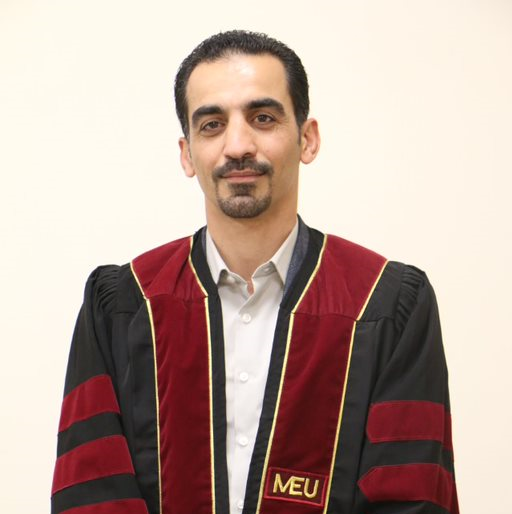
Mohammed Nofal is Assistant Professor of linguistics at the Arab Open University, Kuwait. He received his training in sociolinguistics at Te Herenga Waka Victoria University of Wellington in New Zealand. His research interests include heritage languages, language and identity, language and religion, and corpus linguistics.
Shades of gender and dialectology in family language policy Mohammed Nofal International Journal of the Sociology of Language, 2025 This study touches upon a widely ignored topic in family language policy (FLP) research, gendered language ideologies. It also contributes to expanding the narrow literature of FLP in both formally, though mistakenly, viewed monolingual settings, and in the even rarer literature of dialectology in FLP. The aim of this study is to explore the family language policy of one Arabic speaking family in Jordan, with a special focus on the interplay between language (language varieties to be precise) and gender among family members. Ethnographic data collected from observations and recorded naturally-occurring interactions are described and analysed through the lens of Interactional Sociolinguistics. This study argues that family language policy can capture how gender roles and stereotypes are internalised through interaction in the home. The analyses reveal that the existence of contradicting language ideologies within the family is ascribed indexically to gender rather than language. This study suggests that, in the case of gendered languages like Arabic, gender stereotypes have their genesis at the linguistic level and in the home.
Finding the third space in digital diaspora in the narration of Leila Aboulela’s Bird Summons (2019): A postcolonial corpus-assisted analysis Nasaybah Awajan, Mohammed Nofal Journal of Arab and Muslim Media Research, 2025 The aim of this study is to show how Leila Aboulela incorporates digital diaspora in her narration of Bird Summons (2019). Largely focusing on the main character, Salma, the study also explores how Aboulela depicts Arabs, who in the West try to cope with their new life through technology and social media. Aboulela shows how Salma reaches to what Homi Bhabha calls ‘The Third Space’ with the assistance of digital devices and social media. The novel is analysed through the lens of postcolonialism with the use of corpus linguistics. The importance of digital environments is well-established in migrant groups in diaspora is highlighted in the novel. There is shortage of studies that tackle digital environments and diaspora in general. The contribution of the study lies in the fact that Bird Summons (2019) as a novel has been tackled by a few scholars. Added to that, corpus linguistics is not widely used in literary studies. Thus, the study fills in an important gap in the literature due to these important contributions. The study concludes with the fact that Aboulela includes digital dispersions in her storytelling of Bird Summons (2019). Furthermore, Aboulela portrays her primary protagonists, who are individuals of Arab descent residing in the western hemisphere, as capable of adapting to their unfamiliar surroundings through the utilization of technology and social networking platforms, with particular emphasis placed on the character Salma.
A Corpus-Assisted Analysis: The East/West Binary Oppositions in Isabella Hammad's The Parisian Nasaybah Awajan, Mohammed Nofal Journal of Educational and Social Research, 2023 Drawing upon the theory of postcolonialism in tandem with Edward Said’s views on Orientalism, this study explores the East/West binary oppositions in Isabella Hammad’s The Parisian. In this study, we treat the novel as a corpus consisting of 196,000 words and adopt a corpus linguistics (CL) approach to literature by using the corpus software Antconc. The analysis reveals a group of postcolonial binary oppositions related to three categories, namely, characteristics, geography, and characters. The contribution of the current study is twofold. First, the application of CL extends the current line of research of an under researched area by bringing together CL and literary studies. Second, it highlights the East/West binary oppositions in diaspora literature.
 
 Received: 17 April 2023 / Accepted: 20 June 2023 / Published: 5 July 2023
“I’m Praising God in the Language that He Loves”: Language Use in Religious Discourse Mohammed Y. Nofal International Journal of Arabic English Studies, 2023 Religion has been a key factor in the linguistic inquiry. Due to its significance in social life, it came to be in an intertwined relationship with language. Much of linguistic research has focused on this relationship in institutionalized settings such as schools, mosques and churches. Yet, the study of the interaction between language use and religion in less or non-institutional settings has not attracted much attention. This study responds to this need by exploring the use of Arabic within an English-language Friday sermon to address a multilingual religious community at an on-campus Muslim prayer site in New Zealand. Drawing upon data from semi-structured interviews with 10 volunteer sermon presenters, the study identifies various motivations and functions of using Arabic in the Friday sermons from the sermon presenters’ perspectives. The overall conclusion is that Arabic language use in the Friday sermons goes beyond the communicative aspect of language.
Language Use and Attitudes among the Kurds of Baghdad Tiba A. Al-Obaidi, Mohammed Nofal, Al-Itabi, Mahmoud Al-Khatib, Mohammed Al-Ali, et al. Jordan Journal of Modern Languages and Literatures, 2022 Several studies have dealt with the Kurdish minorities in different regions far and wide, but few studies have focused on the Kurds of Baghdad, Iraq, especially after the 2005 Constitution which supported the Kurdish language. This study aims at investigating the contexts wherein the Kurdish language is used by the Kurds of Baghdad and their attitudes towards their ethnic language (Kurdish) to see if the official status that has been accorded to it is mirrored in society. To do so, a sample of 100 respondents selected from the Kurdish community living in Baghdad took part in a questionnaire and pilot interviews. The study shows that home and family are the most common contexts within which the Kurds use the Kurdish language. Results also show that Arabic and Kurdish are used side by side within the neighborhood, workplace, and education institutions contexts. As for attitudes towards Kurdish, the participants have displayed positive attitudes towards their ethnic language and felt proud of it as a unifying symbol of the Kurdish nation. This study concludes that the new official status that has been given to Kurdish for over fifteen years has not been in force yet and suggests directions for future research on language policy in Iraq. Keywords: Language Use, Language Attitudes, Kurds, Kurdish, Iraq.
Family Language Practices of a New Zealand Adoptive Family Diversifying Family Language Policy, 2021
An ethnic language and culture without a safe enclave: A sociocultural perspective B. Dweik, Mohammed Nofal, M. Al-Obaidi International Journal of Arabic English Studies, 2019 The Sabean Mandaeans are the only minority group in Iraq ‘without a safe enclave’. They are a religious ethnic group deeply rooted in the history of Mesopotamia whose existence dates back to around 2000 years. This study investigates the status of Mandaic among the Sabean Mandaeans of Baghdad and explores the cultural aspects they preserve. The researchers hypothesise that (1) Mandaic has been abandoned a long time ago, but (2) they have managed to keep alive some elements of their cultural and religious identity. A sample of 115 participants responded to a questionnaire which was preceded by a focus group interviews. Interviews were also undertaken with four participants to verify and enrich the data obtained from the questionnaire. Results show that the Sabean Mandaeans of Baghdad lack proficiency in their heritage language and that Mandaic retains ritual use while Arabic is their first language. However, Mandaeans have preserved many cultural elements, such as religious rituals, social, ethnic and religious festivals and celebrations, and family relations.
RECENT SCHOLAR PUBLICATIONS
The silent witness: How linguistic evidence is overlooked in the Jordanian legal system M Alkhalayleh, M Nofal, W Al Ahamd CALR Linguistics Journal 2025 (1), 1-14 , 2025 2025
Lexical Interference Problems that EFL Undergraduate Students in Jordan Encounter when Translating General Texts from Arabic into English A Hudaib, M Nofal International Journal of Translation and Interpretation Studies 5 (3), 49-62 , 2025 2025
Shades of gender and dialectology in family language policy M Nofal International Journal of the Sociology of Language 2025 (293), 153-171 , 2025 2025
Finding the third space in digital diaspora in the narration of Leila Aboulela’s Bird Summons (2019): A postcolonial corpus-assisted analysis N Awajan, M Nofal Journal of Arab & Muslim Media Research , 2025 2025
Language and the Law: Investigating Linguistic Evidence in Jordanian Courts. M Alkhalayleh, M Nofal, W Al Ahmad International Journal of Linguistics, Literature & Translation 8 (3) , 2025 2025 Citations: 1
When Yesterday’s Enemy Becomes Today’s Friend: A corpus-assisted critical discourse analysis of the representation of Arabs in the Israeli ‘Jerusalem Post’ M Baker, M Nofal International Journal of Linguistics, Literature and Translation 7 (10), 38-53 , 2024 2024 Citations: 1
Gender Representation in English Textbooks: The Case of High School Textbooks in Jordan MBM al, M Nofal TESOL Kuwait Journal 1 (3), 72-96 , 2023 2023 Citations: 3
A Corpus-Assisted Analysis: The East/West Binary Oppositions in Isabella Hammad’s The Parisian N Awajan, M Nofal Journal of Educational and Social Research 13 (4), 153-165 , 2023 2023 Citations: 9
“I’m Praising God in the Language that He Loves”: Language use in religious discourse M Nofal International Journal of Arabic-English Studies 23 (2), 19-36 , 2023 2023 Citations: 9
A corpus-driven exploration of language use in religious discourse M Nofal Journal of Research in Applied Linguistics 14 (1), 41-60 , 2023 2023 Citations: 14
A Corpus-assisted Critical Discourse Analysis of the Representation of Arabs in the Israeli ‘Jerusalem Post’ in the Periods before and after Normalization MA Dar Baker, M Nofal The Eighth International Conference on Languages, Linguistics, Translation … , 2023 2023
Language use and attitudes among the Kurds of Baghdad TA Al-Obaidi, M Nofal Jordan Journal of Modern Languages & Literatures 14 (4), 931-949 , 2022 2022 Citations: 2
Family Language Practices of a New Zealand Adoptive Family M NOFAL, CA SEALS Diversifying Family Language Policy, 33 , 2022 2022 Citations: 8
Linguistic Reflection Drawings as an Imaginative Space for Expressing Belonging M Nofal, C Seals Multilingual Children and their Imaginative Worlds , 2021 2021
Multilingual practices and identity negotiation among multilingual heritage language learners in New Zealand M Nofal Victoria University of Wellington , 2020 2020 Citations: 10
An Ethnic Language and Culture without a Safe Enclave: A Sociocultural Perspective B Dweik International Journal of Arabic-English Studies 19 (1), 103-122 , 2019 2019 Citations: 8
Identity Negotiation and Development among Heritage Language Learners M Nofal Language Data Analysis Summer School , 2019 2019
Meaning making in multicultural New Zealand: The case of Indian Kiwi children M Nofal Interaction and Meaning Conference (iMean6) , 2019 2019
The Wellington Hindi School as a Constellation of Communities of Practice M Nofal Sociolinguistics symposium (SS22) , 2018 2018
Gender representation in English language textbooks: Action pack 10 MY Nofal, HA Qawar American Journal of Educational Science 1 (2), 14-18 , 2015 2015 Citations: 59
MOST CITED SCHOLAR PUBLICATIONS
Gender representation in English language textbooks: Action pack 10 MY Nofal, HA Qawar American Journal of Educational Science 1 (2), 14-18 , 2015 2015 Citations: 59
Language use and language attitudes among the Muslim Arabs of Vancouver/Canada: A sociolinguistic study BS Dweik, MY Nofal, RS Qawasmeh International Journal of Linguistics and Communication 2 (2), 75-99 , 2014 2014 Citations: 44
The language situation among the Indians of Yemen: A sociolinguistic study MY Nofal, BS Dweik Middle East University , 2011 2011 Citations: 26
The language of shop signs in Amman: A sociolinguistic study RF Hussein, MY Nofal, AJ Mansour International Journal of Educational Research and Reviews 3 (2), 155-164 , 2015 2015 Citations: 24
A corpus-driven exploration of language use in religious discourse M Nofal Journal of Research in Applied Linguistics 14 (1), 41-60 , 2023 2023 Citations: 14
Language Maintenance among the Indians of Yemen: A Sociolinguistic Study BS Dweik International Journal of Arabic-English Studies 14 (1), 89-112 , 2013 2013 Citations: 13
Multilingual practices and identity negotiation among multilingual heritage language learners in New Zealand M Nofal Victoria University of Wellington , 2020 2020 Citations: 10
A Corpus-Assisted Analysis: The East/West Binary Oppositions in Isabella Hammad’s The Parisian N Awajan, M Nofal Journal of Educational and Social Research 13 (4), 153-165 , 2023 2023 Citations: 9
“I’m Praising God in the Language that He Loves”: Language use in religious discourse M Nofal International Journal of Arabic-English Studies 23 (2), 19-36 , 2023 2023 Citations: 9
Family Language Practices of a New Zealand Adoptive Family M NOFAL, CA SEALS Diversifying Family Language Policy, 33 , 2022 2022 Citations: 8
An Ethnic Language and Culture without a Safe Enclave: A Sociocultural Perspective B Dweik International Journal of Arabic-English Studies 19 (1), 103-122 , 2019 2019 Citations: 8
The linguistic landscape in Jordan: Opinions and attitudes M Nofal, A Mansour Global Journal of Interdisciplinary Social Studies 3 (3), 27-37 , 2014 2014 Citations: 6
Linguistic Choices and Perceptions in Multilingual Spheres: The Case of the Indo-Yemenis B Dweik, M Nofal Journal of Social Sciences and Humanities 1 (3), 235-244 , 2015 2015 Citations: 4
Gender Representation in English Textbooks: The Case of High School Textbooks in Jordan MBM al, M Nofal TESOL Kuwait Journal 1 (3), 72-96 , 2023 2023 Citations: 3
Language use and attitudes among the Kurds of Baghdad TA Al-Obaidi, M Nofal Jordan Journal of Modern Languages & Literatures 14 (4), 931-949 , 2022 2022 Citations: 2
Language and the Law: Investigating Linguistic Evidence in Jordanian Courts. M Alkhalayleh, M Nofal, W Al Ahmad International Journal of Linguistics, Literature & Translation 8 (3) , 2025 2025 Citations: 1
When Yesterday’s Enemy Becomes Today’s Friend: A corpus-assisted critical discourse analysis of the representation of Arabs in the Israeli ‘Jerusalem Post’ M Baker, M Nofal International Journal of Linguistics, Literature and Translation 7 (10), 38-53 , 2024 2024 Citations: 1
The silent witness: How linguistic evidence is overlooked in the Jordanian legal system M Alkhalayleh, M Nofal, W Al Ahamd CALR Linguistics Journal 2025 (1), 1-14 , 2025 2025
Lexical Interference Problems that EFL Undergraduate Students in Jordan Encounter when Translating General Texts from Arabic into English A Hudaib, M Nofal International Journal of Translation and Interpretation Studies 5 (3), 49-62 , 2025 2025
Shades of gender and dialectology in family language policy M Nofal International Journal of the Sociology of Language 2025 (293), 153-171 , 2025 2025