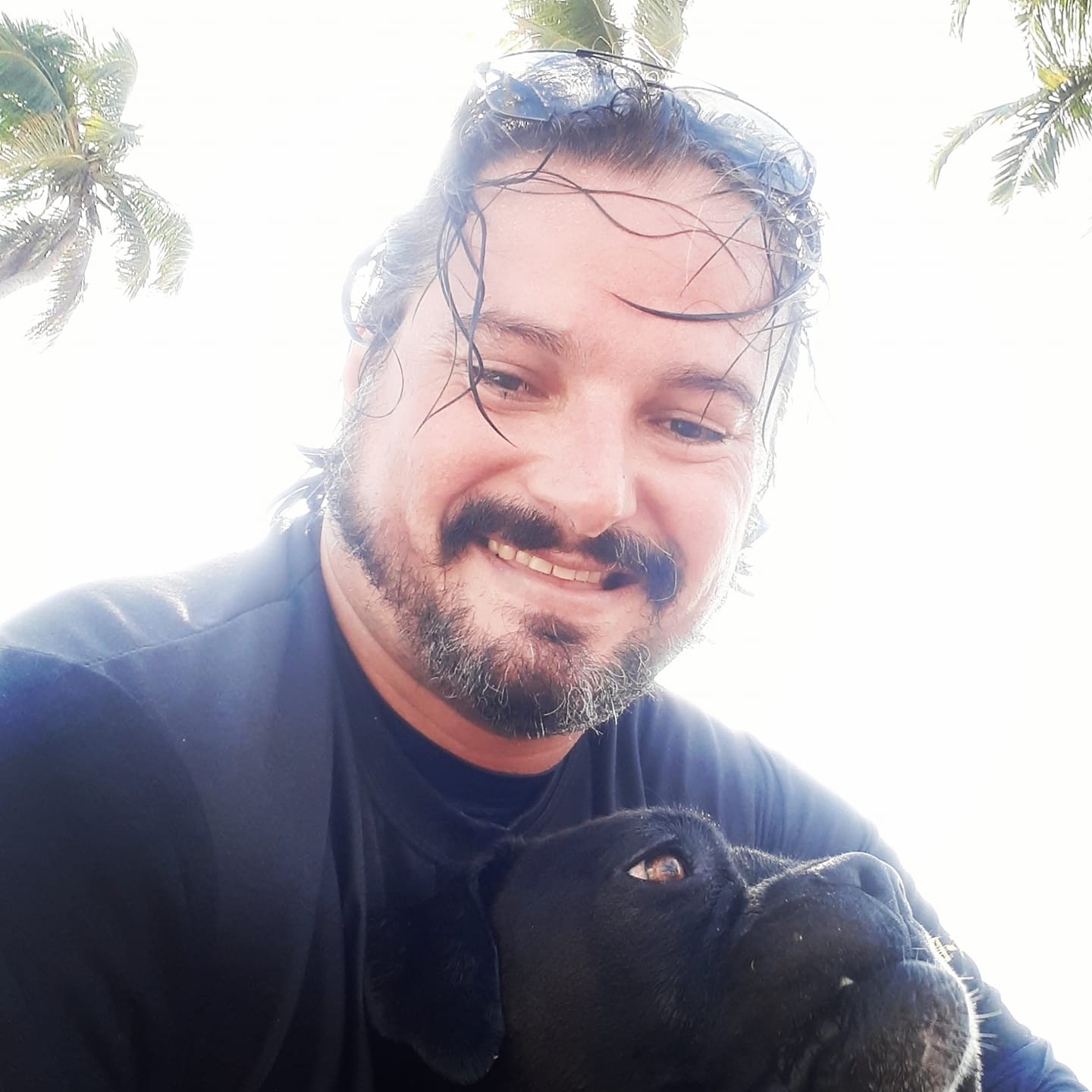
Holds a degree in Biological Sciences, Specialization in Biology of Coastal Ecosystems, Masters in Biodiversity and Conservation in the Tropics by Federal University of Alagoas (UFAL) and Doctor of Science at the University of Sydney – Australia. Currently postdoctoral fellow at Federal University of Alagoas (UFAL), Ad-Hoc Evaluator of Acta Ictiologica et Piscatoria since 2017 and recently invited as Ad-Hoc Evaluator for the Graduate Program in Biodiversity and Health-Fiocruz. Researcher mainly on the following topics: Ecological Modeling, Fisheries, Elasmobranch Biology, Environmental Factors, Ecological Education, Biodiversity and Conservation. Metadata analyst, geographic information systems (ArcGIS) and experimental design applied to ecology.
EDUCATION
Post-Doc - Federal University of Alagoas, Alagoas, Brazil
PhD - The University of Sydney, Sydney, Australia
Master’s Degree - Federal University of Alagoas, Alagoas, Brazil
Specialization - Federal University of Alagoas, Alagoas, Brazil
Undergraduation - Federal University of Alagoas, Alagoas, Brazil
RESEARCH, TEACHING, or OTHER INTERESTS
Ecological Modeling, Ecology, Education
FUTURE PROJECTS
“Eco-Gamification: Gamification as a Tool for Environmental Awareness and Formation of Ecological Concepts”
Applications Invited Colaborators, students
"Sharks and what you know - A gamification approach to break the myths."
Assessing the Relative Vulnerability of Chondrichthyan Species as Bycatch Using Spatially Reported Catch Data Series Marcelo Reis, Will F. Figueira Diversity, 2023 Fishery impacts pose threats not only to target species, but also to bycatch species. Nevertheless, choosing priorities for conservation or research in fisheries is often driven by economic value and most retained bycatch species such as sharks and rays have been historically of low profit. Traditional stock assessments usually require large quantities of data, financial support, and feasible study conditions. The multi-species nature of Chondrichthyan catch along with their relatively lower value and sparsity of fishery-independent data creates significant challenges to developing accurate impact predictions. This study introduces a novel technique to quantify the relative vulnerability of Chondrichthyan species taken as bycatch. The approach is based on spatial interactions between species and fishing activity (termed here the fishery interaction index, or FII) and is correlated to metrics of productivity. A database of 15 years of fisheries logbooks was used to apply the method to 20 bycatch sharks and target species in one of the largest fishing sectors of Australia’s EEZ. Overall vulnerability based on the FII-productivity combinations obtained was found to agree considerably with the IUCN status of the assessed species, with only a few exceptions that reflected the local status differing from the general global assessments.
Two billion registered students affected by stereotyped educational environments: an analysis of gender-based color bias Jário Santos, Ig Bittencourt, Marcelo Reis, Geiser Chalco, Seiji Isotani Humanities and Social Sciences Communications, 2022 According to the literature, educational technologies present several learning benefits to promote online education. However, there are several associated challenges, and some studies illustrate the limitations in elaborating educational technologies, called Design limitations. This aspect is responsible for unleashing various issues in the learning process, such as gender inequality, creating adverse effects on cognitive, motivational, and behavioral mediators, which opposes the fifth UN’s Sustainable Development Goal. Therefore, many studies notice the harmful effects of stereotypes in educational technologies. These effects can be included in the design, like colors or other stereotyped elements, or how the activity is conducted. Based on this, the present study aimed to verify the predominance of color bias in educational technologies available on the WEB. This study developed a computational solution to calculate male and female color bias in the available educational technology web pages. The results suggest the prevalence of the development of educational technologies with a male color bias, with an imbalance among genders, without adequate customization for age groups. Furthermore, some environments, such as Computer Science, present a higher color bias for men when compared to women. Despite both scales being independent, results indicated interesting evidence of a substantial prevalence of colors associated with the male scale. According to the literature, this may be associated with dropout and lack of interest in female students, especially in sciences, technology, engineering, and mathematics domains.
Mapping the seasonality of marine debris waste in a tropical touristic hotspot MRS Berto, M Reis, TAS Lima, CN Soares, IMS Silva, AS Cavalcanti, ... Journal of Coastal Conservation 29 (3), 25 , 2025 2025 Citations: 3
Exploring the impact of gender stereotypes on motivation, flow state, and learning performance in a gamified tutoring system K Silva, J Santos, G Chalco, M Reis, L Marques, A Silva, Á Sobrinho, ... International Conference on Artificial Intelligence in Education, 88-96 , 2024 2024 Citations: 1
Unhappiness and Demotivation Among Students in Gamified Tutoring Systems: Toward Understanding the Gender Gap K Benevides, J Santos, G Chalco, M Reis, Á Sobrinho, L Marques, ... International Conference on Artificial Intelligence in Education, 259-266 , 2024 2024 Citations: 1
Disengaging the engaged ones: gender-stereotyped tutoring systems are undermining self-efficacy and flow state of girls FR do Nascimento Martins, IIBS Pinto, GC Challco, S Isotani, ... Congresso Brasileiro de Informática na Educação (CBIE), 38-49 , 2023 2023
Gamificação e a Experiência de Fluxo no Aprendizado de Programação Básica no Ensino Superior PF de Abreu Braz, G Chalco, J Santos, M Reis, S Isotani, II Bittencourt Simpósio Brasileiro de Informática na Educação (SBIE), 900-911 , 2023 2023 Citations: 1
Do gamified tutoring systems hinder sexual diversity? An experimental study with cis-heteronormative stereotype BF de Sousa, GC Challco, M Reis, IIB Santana, JFS Barbosa, ... Congresso Brasileiro de Informática na Educação (CBIE), 75-83 , 2023 2023
Even Boosting Stereotypes Increase the Gender Gap in Gamified Tutoring Systems: An Analysis of Self-efficacy, Flow and Learning M Takeshita, GC Challco, M Reis, J Santos, S Isotani, II Bittencourt International Conference on Artificial Intelligence in Education, 741-746 , 2023 2023
The Good and Bad of Stereotype Threats: Understanding Its Effects on Negative Thinking and Learning Performance in Gamified Tutoring J Fernanda Silva Barbosa, G Chalco Challco, ... International Conference on Artificial Intelligence in Education, 328-333 , 2023 2023
Gamiflow: Towards a flow theory-based gamification framework for learning scenarios G Chalco Challco, II Bittencourt, M Reis, J Santos, S Isotani International Conference on Artificial Intelligence in Education, 415-421 , 2023 2023 Citations: 18
Assessing the Relative Vulnerability of Chondrichthyan Species as Bycatch Using Spatially Reported Catch Data Series M Reis, WF Figueira Diversity 15 (6), 752 , 2023 2023 Citations: 2
Gamificação e a experiência de fluxo no aprendizado de programação básica no ensino superior PFA Braz, GC Challco, J Santos, M Reis, S Isotani, IIBS Pinto Anais , 2023 2023
Investigating how gamified syllabic literacy impacts learning, flow and inappropriate behaviors: a single-subject study design DA Jogo, GC Challco, II Bittencourt, M Reis, LR Silva, S Isotani International Journal of Child-Computer Interaction 33, 100458 , 2022 2022 Citations: 21
Two billion registered students affected by stereotyped educational environments: an analysis of gender-based color bias J Santos, I Bittencourt, M Reis, G Chalco, S Isotani Humanities and Social Sciences Communications 9 (1), 249 , 2022 2022 Citations: 22
What to do and what to avoid on the use of gamified intelligent tutor system for low-income students S Joaquim, II Bittencourt, R de Amorim Silva, PL Espinheira, M Reis Education and Information Technologies 27 (2), 2677-2694 , 2022 2022 Citations: 26
Use of the sea urchin Diadema antillarum (Echinodermata, Echinoidea) as a shelter for non-cryptobenthic juvenile reef fishes H Grande, M Reis, NF Carvalho Marine Biodiversity 50 (4), 53 , 2020 2020 Citations: 7
Diet and feeding habits of two endemic demersal bycatch elasmobranchs: Trygonorrhina fasciata & Dentiraja australis M Reis, WF Figueira Ichthyological Research 67 (2), 320-329 , 2020 2020 Citations: 5
Age, growth and reproductive biology of two endemic demersal bycatch elasmobranchs: Trygonorrhina fasciata and Dentiraja australis (Chondrichthyes … M Reis, WF Figueira Zoologia (Curitiba) 37, e49318 , 2020 2020 Citations: 6
Albinism in the smooth butterfly ray Gymnura micrura (Elasmobranchii, Gymnuridae): first record and morphometric comparisons M Reis, H Grande, MM Macedo, V da Silva BATiSTA Cybium 37 (3), 217-219 , 2013 2013 Citations: 12
Small-scale experimental contamination with diesel oil does not affect the recolonization of Sargassum (Fucales) fronds by vagile macrofauna H Grande, M Reis, GB Jacobucci Zoologia (Curitiba) 29, 135-143 , 2012 2012 Citations: 8
MOST CITED SCHOLAR PUBLICATIONS
What to do and what to avoid on the use of gamified intelligent tutor system for low-income students S Joaquim, II Bittencourt, R de Amorim Silva, PL Espinheira, M Reis Education and Information Technologies 27 (2), 2677-2694 , 2022 2022 Citations: 26
Two billion registered students affected by stereotyped educational environments: an analysis of gender-based color bias J Santos, I Bittencourt, M Reis, G Chalco, S Isotani Humanities and Social Sciences Communications 9 (1), 249 , 2022 2022 Citations: 22
Investigating how gamified syllabic literacy impacts learning, flow and inappropriate behaviors: a single-subject study design DA Jogo, GC Challco, II Bittencourt, M Reis, LR Silva, S Isotani International Journal of Child-Computer Interaction 33, 100458 , 2022 2022 Citations: 21
Gamiflow: Towards a flow theory-based gamification framework for learning scenarios G Chalco Challco, II Bittencourt, M Reis, J Santos, S Isotani International Conference on Artificial Intelligence in Education, 415-421 , 2023 2023 Citations: 18
Albinism in the smooth butterfly ray Gymnura micrura (Elasmobranchii, Gymnuridae): first record and morphometric comparisons M Reis, H Grande, MM Macedo, V da Silva BATiSTA Cybium 37 (3), 217-219 , 2013 2013 Citations: 12
Small-scale experimental contamination with diesel oil does not affect the recolonization of Sargassum (Fucales) fronds by vagile macrofauna H Grande, M Reis, GB Jacobucci Zoologia (Curitiba) 29, 135-143 , 2012 2012 Citations: 8
Use of the sea urchin Diadema antillarum (Echinodermata, Echinoidea) as a shelter for non-cryptobenthic juvenile reef fishes H Grande, M Reis, NF Carvalho Marine Biodiversity 50 (4), 53 , 2020 2020 Citations: 7
Age, growth and reproductive biology of two endemic demersal bycatch elasmobranchs: Trygonorrhina fasciata and Dentiraja australis (Chondrichthyes … M Reis, WF Figueira Zoologia (Curitiba) 37, e49318 , 2020 2020 Citations: 6
Diet and feeding habits of two endemic demersal bycatch elasmobranchs: Trygonorrhina fasciata & Dentiraja australis M Reis, WF Figueira Ichthyological Research 67 (2), 320-329 , 2020 2020 Citations: 5
Mapping the seasonality of marine debris waste in a tropical touristic hotspot MRS Berto, M Reis, TAS Lima, CN Soares, IMS Silva, AS Cavalcanti, ... Journal of Coastal Conservation 29 (3), 25 , 2025 2025 Citations: 3
Assessing the Relative Vulnerability of Chondrichthyan Species as Bycatch Using Spatially Reported Catch Data Series M Reis, WF Figueira Diversity 15 (6), 752 , 2023 2023 Citations: 2
Exploring the impact of gender stereotypes on motivation, flow state, and learning performance in a gamified tutoring system K Silva, J Santos, G Chalco, M Reis, L Marques, A Silva, Á Sobrinho, ... International Conference on Artificial Intelligence in Education, 88-96 , 2024 2024 Citations: 1
Unhappiness and Demotivation Among Students in Gamified Tutoring Systems: Toward Understanding the Gender Gap K Benevides, J Santos, G Chalco, M Reis, Á Sobrinho, L Marques, ... International Conference on Artificial Intelligence in Education, 259-266 , 2024 2024 Citations: 1
Gamificação e a Experiência de Fluxo no Aprendizado de Programação Básica no Ensino Superior PF de Abreu Braz, G Chalco, J Santos, M Reis, S Isotani, II Bittencourt Simpósio Brasileiro de Informática na Educação (SBIE), 900-911 , 2023 2023 Citations: 1
Disengaging the engaged ones: gender-stereotyped tutoring systems are undermining self-efficacy and flow state of girls FR do Nascimento Martins, IIBS Pinto, GC Challco, S Isotani, ... Congresso Brasileiro de Informática na Educação (CBIE), 38-49 , 2023 2023
Do gamified tutoring systems hinder sexual diversity? An experimental study with cis-heteronormative stereotype BF de Sousa, GC Challco, M Reis, IIB Santana, JFS Barbosa, ... Congresso Brasileiro de Informática na Educação (CBIE), 75-83 , 2023 2023
Even Boosting Stereotypes Increase the Gender Gap in Gamified Tutoring Systems: An Analysis of Self-efficacy, Flow and Learning M Takeshita, GC Challco, M Reis, J Santos, S Isotani, II Bittencourt International Conference on Artificial Intelligence in Education, 741-746 , 2023 2023
The Good and Bad of Stereotype Threats: Understanding Its Effects on Negative Thinking and Learning Performance in Gamified Tutoring J Fernanda Silva Barbosa, G Chalco Challco, ... International Conference on Artificial Intelligence in Education, 328-333 , 2023 2023
Gamificação e a experiência de fluxo no aprendizado de programação básica no ensino superior PFA Braz, GC Challco, J Santos, M Reis, S Isotani, IIBS Pinto Anais , 2023 2023