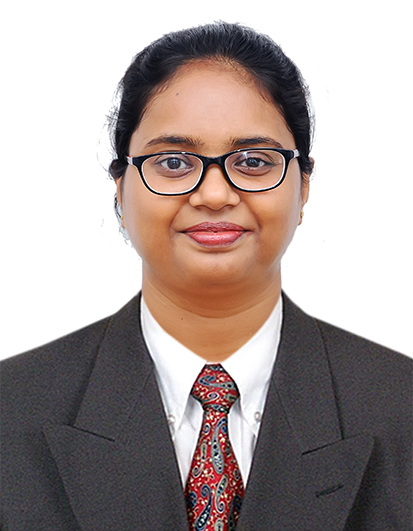
Mou Pramanik is a Ph.D. Research Scholar at SRM Institute of Science and Technology in Kattankulathur, Tamil Nadu, India. Awarded the M.Sc. Degree University Gold Medal in 2018-2020, Mou specializes in yoga research for health disorders. She has presented at national and international conferences and published six research papers in SCOPUS + UGC Care Indexed Journals worldwide. A recognized Yoga Professional, Mou is dedicated to advancing scientific understanding and applications of yoga for holistic health.
EDUCATION
Ph.D (Yoga)
RESEARCH, TEACHING, or OTHER INTERESTS
Health Professions, Issues, ethics and legal aspects, Physical Therapy, Sports Therapy and Rehabilitation, Health Professions
14
Scopus Publications
47
Scholar Citations
4
Scholar h-index
Scopus Publications
Effects of a Combined Iyengar Yoga and Yoga Nidra Intervention on Pain, Physiological, and Psychological Outcomes in Older Men with Chronic Low Back Pain: A Randomized Controlled Trial Ajendra Narayan Samal, Shankar Kanagasabapathy, Josyula Tejaswi, Satheeshkumar Palanivel, Jagadeeswari Suresh, Ibnu Noufal Kambitta Valappil, Mou Pramanik, Karuppasamy Govindasamy, Carmen Magdalena Camenidis, Vlad Adrian Geantă Sport Mont, 2026 Chronic low back pain (CLBP) is a leading cause of disability worldwide, particularly affecting older adults. Mind-body interventions show promise for pain management, but evidence for comprehensive yoga programs specifically targeting older men remains limited. The aim of the study was to assess the effects of a 3-month combined Iyengar yoga and Yoga Nidra (IY+YN) intervention on pain and associated outcomes in older men with chronic low back pain (CLBP). In this randomised controlled study (RCT) conducted in Dhenkanal, Odisha, India, we enrolled 60 men aged 55–65 years with CLBP lasting ≥3 months and pain intensity ≥4 on a 10-point Visual Analog Scale (VAS). Between Jan–Mar 2024, 55 participants were randomized (intervention n=28; control n=27) to either a 3-month IY+YN intervention (three 60- min yoga sessions plus 20–30 min YN weekly) or standard care (prescribed pain management and physical therapy). Primary outcome was change in pain intensity (VAS) at 3 months. Secondary outcomes included lumbar ROM, systolic BP, attention (Stroop test), anxiety (Beck Anxiety Inventory), and QoL (SF-36). Assessments were conducted at baseline, 6 weeks, and 3 months by blinded assessors. At 3 months, the intervention group showed significantly greater pain reduction compared with controls (mean diff. -2.6, 95% CI -3.3 to -1.9; p<0.001). Improvements were also seen in lumbar flexion (mean diff. 8.3°, p<0.001), systolic BP (mean diff. -7.5 mmHg, p<0.001), Stroop score (mean diff. -8.3 sec, p<0.001), anxiety (mean diff. -8.7, p<0.001), and SF-36 physical and mental scores. Five minor adverse events were reported, resolving within 48 hours. In conclusion, a 3-month combined IY+YN significantly reduced pain and improved physical, psychological, and quality-of-life outcomes in older men with chronic low back pain. The program was safe and well tolerated, supporting its use as an effective adjunct to standard care.
Effects of a 12-Week Yoga and Mindfulness Meditation Program on Psychological Stress, Inflammatory Markers, and Sleep Quality in Middle-Aged Obese Women: A Randomized Controlled Trial , Manjula Rathinam, Eswari Varadharajan, , Robert Citozi, , Jagadeeswari Suresh, , Mou Pramanik, , Ibnu Noufal Kambitta Valappil, , Karuppasamy Govindasamy, , Farjana Akter Boby, , Vlad Adrian Geantă, and Sport Mont, 2025 Obesity in middle-aged women is commonly linked with chronic inflammation, psychological stress, and poor sleep quality. Holistic, non-pharmacological approaches such as yoga and mindfulness may offer multidimen- sional benefits. This randomized controlled trial investigated the impact of a 12-week yoga and mindfulness meditation program on psychological stress, inflammatory markers, and sleep quality in obese women. Sixty participants (BMI≥30 kg/m²; age 40–55) were randomly assigned to an intervention group (n=30) or a con- trol group (n=30). The intervention group underwent thrice-weekly sessions (60 minutes each) combining yoga postures, breathing exercises, and mindfulness meditation. The control group maintained usual routines. Outcomes assessed at baseline and post-intervention included perceived stress (PSS-10), depression symp- toms (BDI-II), sleep quality (PSQI), erythrocyte sedimentation rate (ESR), and high-sensitivity C-reactive protein (hs-CRP). After 12 weeks, the intervention group showed significant reductions in perceived stress (−38.7%, p<0.001), depression symptoms (−42.3%, p<0.001), and sleep disturbances (−36.9%, p=0.002) compared to controls. Inflammatory markers also improved significantly: ESR decreased by 26.7% (p=0.007) and hs-CRP by 31.5% (p=0.003). No significant changes were observed in the control group. A structured yoga and mindful- ness meditation program significantly improved psychological and physiological outcomes in middle-aged obese women. These findings support incorporating mind-body interventions in obesity management to ad- dress both mental and physical health.
Therapeutic Effects of Yoga on Physiological and Psychological Parameters in Women with Early Adulthood Hypothyroidism: A Randomized Controlled Trial Mohanapriya Pandiyan, Desigamani Kanniyappan, Karuppasamy Govindasamy, Kumaran Badri, Mou Pramanik, et al. Sport Mont, 2025 Hypothyroidism is a common endocrine disorder impacting metabolic, cardiovascular, and psychological health in women. While conventional management emphasizes pharmacological treatments, yoga offers potential as a complementary intervention for addressing multisystemic complications. To evaluate the efficacy of a 16-week yoga intervention on thyroid function, body composition, cardiovascular parameters, and psychological well-being among women with early adulthood hypothyroidism. This prospective, randomized, controlled, single-blind parallel-group trial included 60 women aged 20–39 with hypothyroidism. Participants were randomized into yoga (n=30) and control (n=30) groups. The yoga group underwent five weekly 90-minute sessions incorporating asanas, pranayama, meditation, and mindfulness techniques for 16 weeks. Outcome measures included thyroid function markers (TSH, T3, T4), anthropometric measurements (BMI), cardiovascular parameters (systolic and diastolic blood pressure), and psychological assessments (Depression, Anxiety, and Stress Scale [DASS], self-esteem scores). The yoga group showed significant (p<0.05) improvements: TSH decreased by 1.1 mIU/L, T3 increased by 0.2 nmol/L, BMI reduced by 1.7 kg/m², systolic and diastolic blood pressure dropped by 8 mmHg and 6 mmHg, respectively (both), DASS scores declined by 9.4 points, and self-esteem scores increased by 5.3 points. In conclusion, yoga demonstrated moderate-to-large effect sizes (d=0.54–1.12) across endocrine, cardiovascular, and psychological outcomes, underscoring its value as a holistic, non-pharmacological approach for managing hypothyroidism. Additionally, the sustained benefits observed across multiple health domains highlight yoga's potential to improve long-term quality of life and reduce the risk of associated comorbidities in women with early adulthood hypothyroidism.
OM Chanting Reduces Psychological Distress Level in Office Workers During Covid 19 Pandemic Jagadeesan Thanalakshmi, , Kuppusamy Maheshkumar, Kavia Shree, Mou Pramanik, Karuppasamy Govindasamy, , , , and Fizicna Reabilitacia Ta Rekreacijno Ozdorovci Tehnologii, 2024 Purpose: psychological stress caused due to the current COVID 19 pandemic lock down may have an adverse impact on the quality of life (QoL) in office shift workers. The purpose of the present study was to investigate the effect of OM chanting on the levels of perceived psychological stress, quality of life and sleep among office workers who are confined at home and work during the global COVID-19 pandemic. Material & Methods: an online OM chanting session was conducted for 20 workers who stayed at home and worked during the pandemic lockdown. Prior to and at the end of the training all the participants finished a battery of self-reported online inventories, including the Depression, Anxiety and Stress Scale with 21 items (DASS-21) and quality of life (WHOQOL-BREF). Results: after ten days of OM chanting, all the participants stated a significant enhancement in all domains of quality of life and a reduction of psychological distress (P<0.05). Conclusions: OM chanting is feasible, safe and has a positive effect on psychological quality of life of participants. Still further studies have to be done to warrant the findings with suitable study design.
Effect of yoga practice on heart rate variability in healthy young adults with intellectual disability Sangeeta Karlekar, Sigamani Jayasingh Albert Chandrasekar, Mou Pramanik, Masilamani Elayaraja, Sambhu Prasad, Tarak Nath Pramanik, Kavita Marwah, Vikas Mehta, Hemantajit Gogoi, Karuppasamy Govindasamy Fizjoterapia Polska, 2024 Individuals with intellectual disabilities (ID) often encounter challenges related to both physical and mental well-being. Recognising the widely acknowledged benefits of yoga in promoting overall health, this study aimed to assess the impact of a 12-week yoga program on heart rate variability (HRV), an indicator of autonomic nervous system function, in healthy young female adults with ID. A total of 56 healthy young female adults with ID participated in the study, engaging in a tailored 12-week yoga program. Regular yoga sessions, adapted to their abilities and needs, were provided. HRV was measured using electrocardiography (ECG) at baseline and post-intervention. Age-matched peers with ID, who did not partake in the yoga program constituted the control group. Following the 12-week yoga intervention, a significant (P < 0.05) reduction was observed in systolic blood pressure (SBP), diastolic blood pressure (DBP), mean arterial pressure (MAP), and pulse pressure (PP) within the yoga group compared to the control group. Short-term HRV analysis revealed a significant (P < 0.05) increase in time domain parameters among the yoga group participants. In the frequency domain, high frequency (HF n.u) exhibited a significant (P < 0.05) increase, whereas low frequency (LF n.u) and LF/HF ratio displayed a significant decrease after yoga practice. This study suggests that yoga practice positively influences heart rate variability in young female adults with ID, potentially enhancing autonomic nervous system function and overall well-being. Implementing yoga programs tailored to the specific needs of individuals with ID may represent a valuable strategy for improving their physical and mental health. Further research is essential to validate these findings and explore the broader implications of integrating yoga into the care and support of individuals with ID.
Life style changes during lock down period of COVID19 outbreaks in Tamil Nadu, India: A web based survey Jagadeesan Thanalakshmi, Masilamani Elayaraja, Kaviya Lakshmi, Kuppusamy Maheshkumar, Naima Umar, Mou Pramanik, Rajesh Kumar, Aakash Dhiman, Rakesh Bharati, Dilpreet Kaur, Hemantajit Gogoi, Karuppasamy Govindasamy Fizjoterapia Polska, 2024 India has been affected by novel coronavirus disease (COVID 19) since January 2020. It was declared as a pandemic outbreak and a nationwide lockdown was implemented to reduce the transmission of infection. As a lack of effective treatment method or vaccine development against the disease, social distancing and home confinement was considered to be the only solution. The COVID 19 has a dangerous effect on the quality of life of the public. The aim of the present study was to assess the lifestyle changes among the public in Tamil Nadu during the outbreak. This web-based survey was initiated to assess and compare the lifestyle changes during the lockdown period of COVID 19 outbreak in Tamil Nadu. By July 10, 2020, a total of 236 participants submitted the responses and the collected data were included for the analysis. The study contained a planned questionnaire that finds out demographic, dietary habits information, screen exposure, sleep time, and lifestyle habits information through an online survey. The present study findings suggest that significant influences of COVID 19 pandemic lockdown on the majority of employed individuals with a history of no comorbidity by decreasing physical activity (60.16%), increase in screen time (52.9%) and sleep per day (43.2%), decrease consumption of vegetables (36.4%) and variation in fruits and meat consumption. This study elicits the importance of various factors to be considered before the commencement and policy about the lockdown and its durations. These findings need to be further confirmed with studies of larger population size to gain higher insight towards healthy lockdown against COVID 19 pandemic.
Effectiveness of yoga intervention on depression, stress, and sleep quality in IT professionals with chronic low back pain: A randomized controlled trial Chinnasamy Vignesh, Navaraj Chelliah Jesus Rajkumar, Mou Pramanik, Basavaraj Kumasi, Masilamani Elayaraja, Deepak Bangari, Bindiya Rawat, Deepika Sethi, Yogender Bhoria, Edi Setiawan, Hemantajit Gogoi, Karuppasamy Govindasamy Fizjoterapia Polska, 2024 Chronic low back pain (CLBP) is prevalent among IT professionals and often accompanied by psychological symptoms such as depression, stress, and sleep disturbances. While conventional treatments primarily target pain management, holistic approaches like yoga show promising results in addressing both physical and psychosomatic factors. This randomized controlled trial (RCT) aims to assess the impact of a yoga intervention on depression, stress, and sleep quality in IT professionals with CLBP. A total of 83 IT professionals with CLBP were randomly allocated to either a yoga (n = 40) intervention group or a control group (n = 40) receiving standard care. The intervention group underwent a structured yoga program tailored for CLBP, while the control group followed a standard care protocol. Outcome measures, including pain intensity, depression levels, perceived stress, and sleep quality, were assessed using validated standard questionnaires. Preliminary analysis reveals significant enhancements in the yoga intervention group compared to the control group. Specifically, participants in the yoga group reported a statistically significant reduction in pain intensity (p < 0.05), along with notable decreases in depression scores (p < 0.05), anxiety score (p < 0.05), and stress levels (p < 0.05). Additionally, the yoga intervention group demonstrated enhanced sleep quality (p < 0.05) compared to the control group. This RCT provides compelling evidence for the efficacy of yoga as an adjunctive therapy for CLBP management in IT professionals. The findings emphasize the potential of yoga in alleviating both physical and psychological symptoms associated with CLBP. Healthcare providers may consider incorporating yoga into treatment programs for CLBP in IT professionals to optimize outcomes and enhance overall well-being. Moreover, these results emphasize the importance of holistic interventions in addressing the complex nature of CLBP in the workplace.
Evaluating the Impact of a 12-Week Yoga Intervention on Cardiac Autonomic Function and Blood Pressure in Young Indian Adults with Primary Hypertension: A Randomized Controlled Study Poli Borah, Masilamani Elayaraja, Jasvir Ram, Mou Pramanik, Tadang Minu, Likha Eichir, Zilpha A Modi, Lakshyajit Gogoi, Karuppasamy Govindasamy Slobozhanskyi Herald of Science and Sport, 2023 Background. Hypertension is a significant health concern in India, particularly among young adults. High blood pressure is associated with an increased risk of cardiovascular diseases, including stroke and heart disease. One potential approach to managing hypertension is through non-pharmacological interventions, such as Yoga. Purpose. This randomised controlled trial aimed to assess the effects of a 12-week yoga intervention on cardiac autonomic function and blood pressure in young Indian adults with hypertension. Methods. A total of sixty-six patients with hypertension (age: 22.4 ± 0.9) were randomly allocated to either the Yoga Program Group (YPG) consisting of (n=33) participants who underwent the 12-week yoga intervention or the Control Group (CG) with (n=33) participants who did not receive any treatment. Assessments were conducted before and after the intervention period, measuring heart rate variability (HRV) and blood pressure. Results. A two-way mixed analysis of variance (ANOVA) revealed significant improvements in the YPG for several HRV parameters, including RR interval (p ≤ 0.001), RMSSD (p ≤ 0.001), NN50% (p ≤ 0.001), pNN50% (p ≤ 0.001), and HF (p ≤ 0.001). Additionally, LF (p ≤ 0.001) and LF/HF ratio (p ≤ 0.001) significantly decreased in the intervention group. Blood pressure parameters also demonstrated significant reductions (p ≤ 0.001) in the intervention group when compared to the control group. Conclusion. The findings of this study suggest that a 12-week yoga program positively impacts cardiac autonomic function and blood pressure in young Indian adults with primary hypertension. These results underscore the potential of Yoga as a non-pharmacological intervention for managing hypertension in this demographic.
Exploring the Effects of Yogic Practice and Diet Intervention on Body Composition in Obese Female Adolescents Mou Pramanik, Navaraj Chelliah Rajkumar, Masilamani Elayaraja, Hemantajit Gogoi, Karuppasamy Govindasamy Universal Journal of Public Health, 2023 Background: Worldwide, obesity has become a significant health problem among adolescents; the prevalence of obesity has been steadily increasing among these age groups. It has been shown that lifestyle interventions can help manage obesity and improve body composition, such as yoga practice and dietary modifications. However, little research has compared the effect of both the interventions on obese female adolescents. Therefore, the present study aimed to examine how yoga and diet intervention affect body composition in obese female adolescents. Methods: Sixty female obese adolescents (age: 19.4 ± 7.2 years; height: 162.3 ± 8.4 cm; weight: 72.25 ± 9.1 kg) were randomly assigned to three equal groups (n = 20): a yoga practice group (YG), a diet group (DG) and a control group (CG). Experimental groups: yoga practice and diet interventions were followed up for 12 weeks. All measurements were taken 24 hours before and after the first and the last interventions. Results: As a result of the study, both experimental groups showed significant improvements in various body composition parameters when compared to the control group (p˂0.05). Both the yoga practice group and the diet group (p˂0.05) experienced significant changes in weight, body mass (BFM), and body fat percentage (BFP) during the pre-to-post interaction period. SMM (skeletal muscle mass) did not change significantly in any of the groups. Conclusion: The study demonstrates that yogic practice and diet intervention both are effective in improving body composition, notably reducing weight, BMI, body fat mass, and percentage, thereby enhancing overall health in obese female adolescents.
Effects of a 12-Week Yoga Training Intervention on Blood Pressure and Body Composition in Obese Female Adolescents: A Randomized Controlled Pilot Study Mou Pramanik, , Navaraj Chelliah Rajkumar, Masilamani Elayaraja, Hemantajit Gogoi, Karuppasamy Govindasamy, , , , and Fizicna Reabilitacia Ta Rekreacijno Ozdorovci Tehnologii, 2023 This study delves into the pressing issue of obesity, a condition characterized by abnormal fat accumulation and a significant contributor to non-communicable diseases like diabetes, cardiovascular ailments, hypertension, and hyperlipidemia. With over 1 billion individuals globally classified as obese, addressing this epidemic is paramount. Purpose: this research aimed to evaluate the impact of a 12-week yoga training intervention on blood pressure and body composition among obese adolescents. Material & Methods: twenty four female adolescents 4 participants discared, aged 18-20 years, female adolescents were randomly assigned to two groups. One group performed yoga training interevention (YPG, n=10, age 19.2±0.4) for 12 weeks with two sessions (morning & evening) for three days a week. A second group acted as an control group (CG, 18.9±0.9). All participants completed the following tests before and after intervention; body weight, body mass index, free fat mass, body fat, systolic blood pressure, diastolic blood pressure, mean arterial pressure, pulse pressure. The results yielded promising outcomes, with all participants successfully completing the study, showcasing a 100% adherence rate without any training or test-related injuries. Results: the intervention led to significant improvements in several key parameters. In present study, body weight (p<0.001), a notable reduction in (BMI), BF% (p<0.001), SBP (p<0.001), MAP (p<0.001), and PP (p<0.001) were changed significantly. Conclusion: in conclusion, the 12-week yoga training program emerged as an effective strategy for reducing body composition indicators such as body weight, BMI, and BF%, while also positively impacting blood pressure parameters (MAP and PP) in obese female adolescents. These findings underscore the potential of yoga as a holistic approach in combating the obesity crisis and its associated health risks, offering a path toward healthier lifestyles for affected individuals.
Effects of a Combined Iyengar Yoga and Yoga Nidra Intervention on Pain, Physiological, and Psychological Outcomes in Older Men with Chronic Low Back Pain: A Randomized … AN Samal, S Kanagasabapathy, J Tejaswi, S Palanivel, J Suresh, ... Sport Mont 24 (1), 77 , 2026 2026
Effects of a 12-Week Yoga and Mindfulness Meditation Program on Psychological Stress, Inflammatory Markers, and Sleep Quality in Middle-Aged Obese Women: A Randomized … M Rathinam, E Varadharajan, R Citozi, J Suresh, M Pramanik, ... Sport Mont 23 (3), 69-74 , 2025 2025 Citations: 1
Therapeutic Effects of Yoga on Physiological and Psychological Parameters in Women with Early Adulthood Hypothyroidism: A Randomized Controlled Trial. M Pandiyan, D Kanniyappan, K Govindasamy, K Badri, M Pramanik, ... Sport Mont 23 (1) , 2025 2025 Citations: 1
Effectiveness of yoga intervention on depression, stress, and sleep quality in IT professionals with chronic low back pain: A randomized controlled trial. C Vignesh, NCJ Rajkumar, M Pramanik, B Kumasi, M Elayaraja, ... Fizjoterapia Polska , 2024 2024 Citations: 4
Life style changes during lock down period of COVID-19 outbreaks in Tamil Nadu, India: A web based survey. J Thanalakshmi, M Elayaraja, K Lakshmi, K Maheshkumar, N Umar, ... Fizjoterapia Polska , 2024 2024 Citations: 1
Effect of yoga practice on heart rate variability in healthy young adults with intellectual disability. S Karlekar, SJ Albert Chandrasekar, M Pramanik, M Elayaraja, S Prasad, ... Fizjoterapia Polska , 2024 2024 Citations: 3
OM Chanting Reduces Psychological Distress Level in Office Workers During Covid 19 Pandemic J Thanalakshmi, K Maheshkumar, K Shree, M Pramanik, K Govindasamy Physical rehabilitation and recreational health technologies 9 (1), 20-24 , 2024 2024 Citations: 6
Evaluating the Impact of a 12-Week Yoga Intervention on Cardiac Autonomic Function and Blood Pressure in Young Indian Adults with Primary Hypertension: A Randomized Controlled … P Borah, M Elayaraja, J Ram, M Pramanik, T Minu, L Eichir, ZA Modi, ... Slobozhanskyi Herald of Science and Sport 27 (4), 193-205 , 2023 2023 Citations: 3
Effects of a 12-week yoga training intervention on blood pressure and body composition in obese female adolescents: a randomized controlled pilot study M Pramanik, NC Rajkumar, M Elayaraja, H Gogoi, K Govindasamy Physical rehabilitation and recreational health technologies 8 (3), 162-171 , 2023 2023 Citations: 6
Differential effects of a 12-week aerobic exercise program on health-related physical fitness, physiological and biochemical markers among obese adults: A randomized controlled … K Govindasamy, C Suresh, D Kaur, M Pramanik, JB Anitha Health, sport, rehabilitation 9 (2), 6-21 , 2023 2023 Citations: 4
Exploring the Effects of Yogic Practice and Diet Intervention on Body Composition in Obese Female Adolescents M Pramanik, NC Rajkumar, M Elayaraja, H Gogoi, K Govindasamy Universal Journal of Public Health 11 (5), 627-635 , 2023 2023 Citations: 4
Analysis of platelet count among female athletes of volleyball, judo, and football: a comparative study D Kaur, A Malik, K Govindasamy, A Meethal, TD Shukla, S Kumar, ... Health, sport, rehabilitation 8 (4), 47-57 , 2022 2022 Citations: 5
Effectiveness of 12 weeks yoga practices on body composition parameters among healthy male college students NCJR P. Yoga Lakshmi, K. Vaithianathan, Mou Pramanik International Journal of Health Sciences 6 (S4) , 2022 2022
Effect of 12 Weeks of Yogic Practices and a Yogic Diet on Selected Physiological Parameters in Obese Female Adults DJA Mou Pramanik, Dr.N.C.Jesus Rajkumar International Conference on Emerging Challanges In Phsical Education, 221-227 , 2022 2022
Comparative Analysis of Mean Platelet Volume Among female Volleyball, Rugby Players and Yoga Practitioners D Kaur, A Malik, K Govindasamy, S KS, M Anand, C Suresh, JB Anitha, ... Health, sport, rehabilitation 8 (3), 51-63 , 2022 2022 Citations: 2
Immunity benefits of yoga and physical exercises in the era of COVID-19 Pandemic K Govindasamy, C Suresh, M Anand, S KS, M Pramanik, D Kaur, I Achouri, ... Health, sport, rehabilitation 8 (3), 99-110 , 2022 2022 Citations: 2
Yoga as a complementary therapy for obesity prevention in childhood and adolescent obesity: A systematic review M Pramanik, NCJ Rajkumar 2022 Citations: 5
Effect of Yogic Practices on Selected Physiological and Psychological Variables Among Patients of Coronary Artery Disorder G K, M Pramanik, V A JOURNAL OF INFORMATION AND COMPUTATIONAL SCIENCE 10 (2), 76-82 , 2020 2020
MOST CITED SCHOLAR PUBLICATIONS
OM Chanting Reduces Psychological Distress Level in Office Workers During Covid 19 Pandemic J Thanalakshmi, K Maheshkumar, K Shree, M Pramanik, K Govindasamy Physical rehabilitation and recreational health technologies 9 (1), 20-24 , 2024 2024 Citations: 6
Effects of a 12-week yoga training intervention on blood pressure and body composition in obese female adolescents: a randomized controlled pilot study M Pramanik, NC Rajkumar, M Elayaraja, H Gogoi, K Govindasamy Physical rehabilitation and recreational health technologies 8 (3), 162-171 , 2023 2023 Citations: 6
Analysis of platelet count among female athletes of volleyball, judo, and football: a comparative study D Kaur, A Malik, K Govindasamy, A Meethal, TD Shukla, S Kumar, ... Health, sport, rehabilitation 8 (4), 47-57 , 2022 2022 Citations: 5
Yoga as a complementary therapy for obesity prevention in childhood and adolescent obesity: A systematic review M Pramanik, NCJ Rajkumar 2022 Citations: 5
Effectiveness of yoga intervention on depression, stress, and sleep quality in IT professionals with chronic low back pain: A randomized controlled trial. C Vignesh, NCJ Rajkumar, M Pramanik, B Kumasi, M Elayaraja, ... Fizjoterapia Polska , 2024 2024 Citations: 4
Differential effects of a 12-week aerobic exercise program on health-related physical fitness, physiological and biochemical markers among obese adults: A randomized controlled … K Govindasamy, C Suresh, D Kaur, M Pramanik, JB Anitha Health, sport, rehabilitation 9 (2), 6-21 , 2023 2023 Citations: 4
Exploring the Effects of Yogic Practice and Diet Intervention on Body Composition in Obese Female Adolescents M Pramanik, NC Rajkumar, M Elayaraja, H Gogoi, K Govindasamy Universal Journal of Public Health 11 (5), 627-635 , 2023 2023 Citations: 4
Effect of yoga practice on heart rate variability in healthy young adults with intellectual disability. S Karlekar, SJ Albert Chandrasekar, M Pramanik, M Elayaraja, S Prasad, ... Fizjoterapia Polska , 2024 2024 Citations: 3
Evaluating the Impact of a 12-Week Yoga Intervention on Cardiac Autonomic Function and Blood Pressure in Young Indian Adults with Primary Hypertension: A Randomized Controlled … P Borah, M Elayaraja, J Ram, M Pramanik, T Minu, L Eichir, ZA Modi, ... Slobozhanskyi Herald of Science and Sport 27 (4), 193-205 , 2023 2023 Citations: 3
Comparative Analysis of Mean Platelet Volume Among female Volleyball, Rugby Players and Yoga Practitioners D Kaur, A Malik, K Govindasamy, S KS, M Anand, C Suresh, JB Anitha, ... Health, sport, rehabilitation 8 (3), 51-63 , 2022 2022 Citations: 2
Immunity benefits of yoga and physical exercises in the era of COVID-19 Pandemic K Govindasamy, C Suresh, M Anand, S KS, M Pramanik, D Kaur, I Achouri, ... Health, sport, rehabilitation 8 (3), 99-110 , 2022 2022 Citations: 2
Effects of a 12-Week Yoga and Mindfulness Meditation Program on Psychological Stress, Inflammatory Markers, and Sleep Quality in Middle-Aged Obese Women: A Randomized … M Rathinam, E Varadharajan, R Citozi, J Suresh, M Pramanik, ... Sport Mont 23 (3), 69-74 , 2025 2025 Citations: 1
Therapeutic Effects of Yoga on Physiological and Psychological Parameters in Women with Early Adulthood Hypothyroidism: A Randomized Controlled Trial. M Pandiyan, D Kanniyappan, K Govindasamy, K Badri, M Pramanik, ... Sport Mont 23 (1) , 2025 2025 Citations: 1
Life style changes during lock down period of COVID-19 outbreaks in Tamil Nadu, India: A web based survey. J Thanalakshmi, M Elayaraja, K Lakshmi, K Maheshkumar, N Umar, ... Fizjoterapia Polska , 2024 2024 Citations: 1
Effects of a Combined Iyengar Yoga and Yoga Nidra Intervention on Pain, Physiological, and Psychological Outcomes in Older Men with Chronic Low Back Pain: A Randomized … AN Samal, S Kanagasabapathy, J Tejaswi, S Palanivel, J Suresh, ... Sport Mont 24 (1), 77 , 2026 2026
Effectiveness of 12 weeks yoga practices on body composition parameters among healthy male college students NCJR P. Yoga Lakshmi, K. Vaithianathan, Mou Pramanik International Journal of Health Sciences 6 (S4) , 2022 2022
Effect of 12 Weeks of Yogic Practices and a Yogic Diet on Selected Physiological Parameters in Obese Female Adults DJA Mou Pramanik, Dr.N.C.Jesus Rajkumar International Conference on Emerging Challanges In Phsical Education, 221-227 , 2022 2022
Effect of Yogic Practices on Selected Physiological and Psychological Variables Among Patients of Coronary Artery Disorder G K, M Pramanik, V A JOURNAL OF INFORMATION AND COMPUTATIONAL SCIENCE 10 (2), 76-82 , 2020 2020