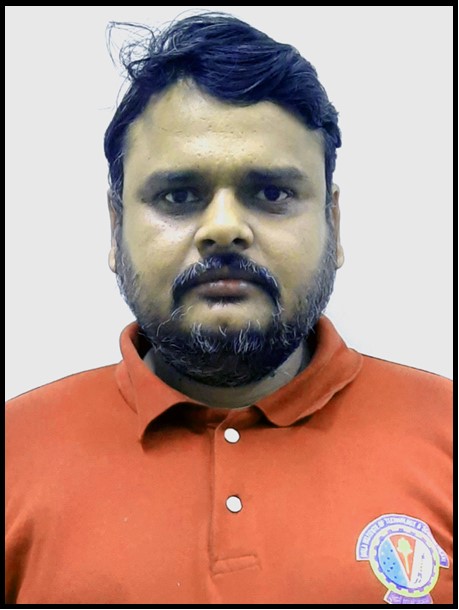
Upendra Singh

@jaipur.manipal.edu

Assistant Professor, Department of Artificial Intelligence and Machine Learning
Manipal University Jaipur

Upendra Singh

RESEARCH, TEACHING, or OTHER INTERESTS

Computer Networks and Communications, Information Systems
10

Scopus Publications

Scopus Publications

  • Advancing Artificial Immune System-Based Anomaly Detection
    Vedic Varma, Srivatsa Palepu, Upendra Singh, Praneet Saurabh
    Lecture Notes in Networks and Systems, 2026
  • Optimizing Intrusion Detection in Software-Defined Networks Through Automated Machine Learning and Intelligent Feature Engineering
    Dhananjay Bisen, Anshul Ghanghoria, Praneet Saurabh, Dasari Rohith, Upendra Singh
    IEEE Access, 2025
  • Genetic Algorithm-Based Search Space Exploration to Generate Best Convolutional Neural Network
    Dhananjay Bisen, Praneet Saurabh, Mayank Thakur, Gyanendra Chaubey, Upendra Singh, et al.
    IEEE Access, 2025
  • Amalgamating Vehicular Networks With Vehicular Clouds, AI, and Big Data for Next-Generation ITS Services
    Nitin Singh Rajput, Upendra Singh, Amit Dua, Neeraj Kumar, Joel J. P. C. Rodrigues, et al.
    IEEE Transactions on Intelligent Transportation Systems, 2024
  • Scalable priority-based resource allocation scheme for M2M communication in LTE/LTE-A network
    Upendra Singh, Amit Dua, Neeraj Kumar, Sudeep Tanwar, Rabat Iqbal, et al.
    Computers and Electrical Engineering, 2022
  • QoS Aware Uplink Scheduling for M2M Communication in LTE/LTE-A Network: A Game Theoretic Approach
    Upendra Singh, Amit Dua, Neeraj Kumar, Mohsen Guizani
    IEEE Transactions on Vehicular Technology, 2022
    M2M communication in the LTE network is gaining attention with a growing number of connected devices and adaptation of new emerging technologies. Usually, the traffic generated by M2M devices is heterogeneous in terms of packet size, intensity, strict delay, and throughput requirements. The M2M traffic generally flows in the uplink direction. It imposes several challenges in designing scheduling for uplink in the LTE network. The research community proposed various solutions regarding the QoS handling in M2M communications. Allocating the resources based on the QoS of machine type communications (MTCs) has a challenge in deciding on devices’ priority. This work applies game theory to control devices’ strategic behavior claiming a false priority. In this paper, a Quality-of-Service aware uplink packet scheduling scheme is proposed using a combinatorial game. The packet scheduling problem is modeled as an Auction game that handles the scheduling in both Time-Domain and Frequency-Domain. The packet scheduler uses the QoS requirement as an allocation metric, and a power control mechanism is applied to control the devices’ strategic behavior. Simulation is performed in MATLAB R2019b. The performance of the proposed schemes is evaluated in terms of the total system utility in QoS satisfaction against standard schedulers like Round Robin and Proportional Fair schedulers and some other schedulers proposed in the literature.
  • Coalition Games for Performance Evaluation in 5G and beyond Networks: A Survey
    Upendra Singh, Aditya Ramaswamy, Amit Dua, Neeraj Kumar, Sudeep Tanwar, et al.
    IEEE Access, 2022
    The 5G network is an emerging field of the research community. 5G is a multi-disciplinary network that aims to support a wide range of services. 5G network has an objective to support a massive number of connected devices. Game theory has an extensive role in wireless network management. Game theory is an approach to analyzing and modeling the system where multiple actors have a role in decision-making with independent objectives and actions. The game theory is an exciting methodology to control the strategic behavior of players and generate an efficient outcome. Coalition game theory can play a crucial role in ensuring cooperation among a massive number of devices. This article provides insight into the current research trends in 5G using coalition games. The work presented in the survey is divided into three categories, namely resource management, interference management, and miscellaneous. This article also provides the foundation about 5G and coalition games highlight the scope of future research.
  • A Survey on LTE/LTE-A Radio Resource Allocation Techniques for Machine-to-Machine Communication for B5G Networks
    Upendra Singh, Amit Dua, Sudeep Tanwar, Neeraj Kumar, Mamoun Alazab
    IEEE Access, 2021
    Machine-to-Machine (M2M) communication refers to autonomous communication among devices that aims for a massive number of connected devices. M2M communication can support ubiquitous communication and full mechanical automation, and it will change everything from industry to ourselves. Recent developments in communication technology make Long Term Evolution (LTE)/Long Term Evolution-Advance (LTE-A) a promising technology for supporting M2M communication. LTE can support the diverse characteristic of M2M communication due to its IP connectivity, coverage area, and scalability. Therefore, the LTE schedulers should satisfy the need for M2M communication. Motivated by these facts, in this paper, we present a survey on the classification of LTE / LTE-A scheduling methodologies from the perspective of M2M communication. We classify the schedulers based on their objectives, such as energy efficiency, spectrum efficiency, group-based, and Quality-of-Service (QoS) support for Machine Type Communication Devices (MTCDs). We also highlight the scope of future research direction for the scheduling work.
  • SDN Based Dynamic Resource Scheduling for Large Scale Data Centers
    Upendra Singh, Amit Dua, Neeraj Kumar
    International Symposium on Advanced Networks and Telecommunication Systems Ants, 2019
    With the emergence of cloud computing, data centers become the core component of the underlying infrastructure. Operations of the data centers rely on resource availability, bandwidth, and efficient resource scheduling and allocation. SDN based traffic flow management approach can be used for efficient resource scheduling in the data centers by analyzing flow properties. In the past, queuing systems are being used for the assessment of the client/server model for distributed processing. In this paper, a queuing model-based algorithm is proposed for the dynamic resource scheduling for the optimization of resource requirement in data centers. The proposed algorithm takes advantage of SDN traffic flow management technique and finds the optimal number of servers for a data center to reduce the operational cost of the system. The proposed model reduces the required number of servers in the system to achieve a service throughput and is able to cater to various type of requests. In this work a single $M\\vert M\\vert c$ system model is divide into multiple $M\\vert M\\vert c$ sub-systems to optimize the required number of servers. And incoming traffic is divided into different service classes. This model is tested for SDN and the simulation results validate the efficacy of the proposed model.
  • Fuzzy Rough Set based Social IoT Recommender System
    Amit Dua, Prateek Sharma, Kunal Kumar, Neeraj Kumar, Upendra Singh
    International Symposium on Advanced Networks and Telecommunication Systems Ants, 2019
    Internet of Things (IoT) has brought a revolution in the lives of citizens by providing safety and comfort. Users are more concerned with the Quality of Experience (QoE) while using an application. One such application that enriches the users' experience is the assistance in the form of a recommender system. Recommending IoT services which are beneficial to the users based on their preferences is challenging task keeping in view of the diversity of the information required. The existing solutions incorporate the limited knowledge of the user and the context. However, to the best of the authors' knowledge, there is no efficient solution that recommends the users while taking into account the overall social IoT system. In order to address this problem, the recommender proposed in this paper uses a fuzzy rough set theory which is based on a strong mathematical foundation. The solution proposes an algorithm based upon the collaborative filtering which enables the user to discover new content dissimilar to the items viewed by them in the past. The simulation results prove that superiority of the solution against the standard parameters like Mean Reciprocal Rank (MRR), Mean Average Precision (MAP), Normalized Discounted Cumulative Gain (NDCG) and the state-of-art solutions.