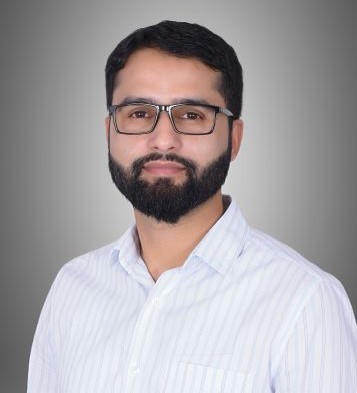
Mohd Tahir Ganie

@ssispune.edu.in

Assistant Professor, Symbiosis School of International Studies
Symbiosis International (Deemed University)

EDUCATION

PhD in Politics and International Relations

RESEARCH, TEACHING, or OTHER INTERESTS

Social Sciences, Political Science and International Relations
7

Scopus Publications

Scopus Publications

  • Authoritarian Conflict Management and Post-370 Kashmir: The Logic of Comprehensive Coercive Integration
    Mohd Tahir Ganie
    Peace Review, 2026
  • Implications of Ethnic Conflict in Manipur for India’s National Security
    K. Thangjalen Kipgen, Mohd Tahir Ganie
    South Asia Research, 2025
    This article analyses the 2023 ethnic violence in the Indian border state of Manipur, examining the factors which contributed to the conflict. Looking at the proliferation of arms, the emergence of radicalised youth organisations, and the exploitation of the situation by armed and secessionist groups, the article highlights the implications of the Manipur conflict for India’s national security. The article argues that delayed and inadequate government response exacerbated the conflict, forcing the two warring communities—the Meiteis and Kuki—to bolster their security measures through a parallel security system. These developments pose a challenge to Indian national security in the sensitive border region and therefore require urgent government intervention. While recovering stolen arms and bolstering border security along the India–Myanmar border remains crucial for long-term peace, the article suggests consociationalism for Manipur, a governance model that has shown—albeit with certain limitations—efficacy in addressing ethnic violence in deeply divided societies.
  • Locating Jammu and Kashmir
    Mohd Tahir Ganie, Suhail R. Lone
    Palgrave Handbook of New Directions in Kashmir Studies, 2023
  • Conflict and Narratives of Hope: A Study of Youth Discourses in Kashmir
    Mohd Tahir Ganie
    Irish Studies in International Affairs, 2022
  • CLAIMING THE STREETS: Political Resistance Among Kashmiri Youth
    Mohd Tahir Ganie
    Routledge Handbook of Critical Kashmir Studies, 2022
  • ‘All I got is stones in my hand’: youth-led stone pelting protests in Indian-administered Kashmir
    Mohd Tahir Ganie
    Social Movement Studies, 2021
    Since 2008, three anti-India mass uprisings occurred in Indian-administered Kashmir, resulting in a marked resurgence of the Kashmiri self-determination movement, known popularly as the Tehreek. In the resurgent Tehreek, stone-throwing – called kanni-jang in the local parlance, and stone pelting in the English language media – has emerged as a new and widely used act in the repertoire of Kashmiri resistance. The latest example of its use appeared after the Indian state’s lockdown of Kashmir on 5 August 2019, when approximately 1193 stone-throwing protests were reported across Kashmir. For India, this protest tactic presents huge security challenges, yet for the Tehreek activists, stone pelting is an effective mode of protest that carries symbolic importance. In fact, the stone-throwing youth have become a signifier of the anti-India rebellion in post-2008 Kashmir. This article highlights the main factors that underlie the stone-throwing phenomenon in the Himalayan territory.
  • Metaphors in the political narratives of Kashmiri Youth
    Mohd Tahir Ganie
    South Asia Journal of South Asia Studies, 2019
    This paper explores the role of metaphor in political discourses in Kashmir. Through a micro-study of one year—2016, which saw the eruption of a mass uprising—of what may be described as resistance literature, I demonstrate that the ‘paradise lost’ and ‘wound’ metaphors permeate Kashmiri political discourse. While the ‘paradise lost’ metaphor broadly entails a consensual interpretation, the ‘wound’ metaphor expresses Kashmiri political subjectivity in a distinctly emotional way, as this metaphor is embedded in affective cultural practices. The paper seeks to deepen the understanding of Kashmiri political narratives by examining to what effect metaphorical language operates within them, and how it allows Kashmiri youth a creative space for dissent in terms of evocatively expressing political grievances, countering statist narratives and affirming a sense of political community.