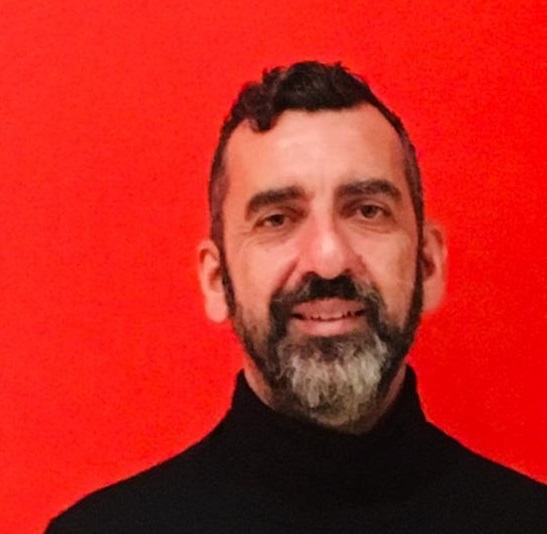
BSc in Architecture by Lisbon Technical University, MSc Human Geography and Local and Regional Planning by the University of Lisbon and PhD in Environmental Applied Sciences by the University of Aveiro
RESEARCH, TEACHING, or OTHER INTERESTS
Geography, Planning and Development, Arts and Humanities, Urban Studies, Architecture
The border spaces of the European Community in audiovisual fiction: The case of Iberian television series Sergio Reyes Corredera, Paulo Silva, Agustín Gámir Orueta Culture and History Digital Journal, 2025 Greater collaboration between the Spanish and Portuguese audiovisual industries in the form of co-productions for television channels has been seen in recent years. This is evidence of a shared audience and the public's interest in this type of content. This paper seeks to analyse the representations of the territories filmed in these co-productions. This analysis is based on an exhaustive review of eleven television series and 1,762 clips shot on location. The geographical methodological approach provides a more complete vision of Iberian co-productions, as well as the depiction of the geographical areas in question. This methodology can be applied to other geographical contexts and contribute to the understanding of cross-border dynamics in the audiovisual field. The primary findings demonstrate that these co-productions effectively expand their audience, showcasing the tangible impact of European policies that promote and facilitate cross-border collaboration. Furthermore, an in-depth analysis of the clips has revealed that the majority of the co-productions reflect a combination of contemporary narratives with historical urban contexts, thus enabling the city patterns to be defined according to their characteristics. Finally, the geographical distribution of the scenes shows that border regions are still underrepresented, with the exception of the Galicia-North Portugal corridor, one of the largest conurbations on the Iberian Peninsula. We therefore advocate for greater inclusion of depopulated and rural areas to foster a more comprehensive cultural and geographical narrative.
Not so much about informality: Emergent challenges for urban planning and design education Paulo Silva Sustainability Switzerland, 2020 This paper addresses the challenges faced by planning and design education programmes when focusing on more sustainable ways of dealing with global changes. While the dominant discourse addresses the fact that planning programmes discuss the Global South through the lens of planning theory and practice from the Global North, the proposal is to shift the debate and recognise that, from a complexity perspective, planning problems are not so different from region to region. The argument is that, although the theory has moved on, when discussing conceptual aspects of planning, spatial planning practice is still focused on objects rather than the relationship between them (be they buildings, streets, neighbourhoods or even cities). Assuming that urban territories are not objects and do not develop in a linear way, but rather evolve, the proposal is to reflect on how planning and design education addresses urban evolution. This paper suggests a revision of planning and design approaches to informality, given the participation in recent years of a joint studio in Bandung, Indonesia. The alternative perspective offered here involves a re-examination of concepts and deconstruction of dichotomies. The main findings rely on the interpretation of formalisation processes (in the Global North) through the lens of complexity theory, which has facilitated understanding of today’s informal settlements (in the Global South). It suggests the deconstruction of dichotomies, such as informal versus formal, thus, positing the need for a major shift on planning and design rules that focus less on objects and more on the relationship between them.
PPP Development and Governance in Latin America: Analysis of Brazilian State PPP Units Dimas de Castro e Silva Neto, Carlos Oliveira Cruz, Fernanda Rodrigues, Paulo Silva Journal of Infrastructure Systems, 2020 Governments have used public–private partnership (PPP) units to ensure that PPP programs and projects are successfully delivered. These units frequently are understaffed and vulnerable to p...
Adaptation of the urban codes – A story of placemaking in Jerusalem Yaara Rosner-Manor, Sayfan G Borghini, Beitske Boonstra, Paulo Silva Environment and Planning B Urban Analytics and City Science, 2020 The tension between stability and adaptability, and the pursuit for mechanisms that allow cities to face internal and external pressures, is a fundamental question for contemporary urban planners. To understand this tension and to develop a complexity-based perspective for planning action that deals with this tension, we describe the city as a complex assemblage employing adaptive mechanisms in front of rapid change. We argue how processes of coding, decoding and recoding continuously take place in the urban setting and are part of such adaptive mechanisms, in particular where community’s informal codes diverge from formal practices. In this context, we examine ‘placemaking’ as an urban mechanism whose function is not only to allow different local voices to express themselves, but also to assist in updating and adapting the ‘urban DNA’ to the city constituents and their diversity. The placemaking project that took place in Jerusalem over the period 2016–2018 is analysed in this framework. We show how Jerusalem municipality is experimenting with new ways of working with very diverse populations via wide-scale community-led methodologies viewed as part of the city capacity to learn and adapt within a changing environment. We turn to epigenetics, a biological field researching micro- and macro-evolutionary mechanisms, to provide us with a theoretical descriptive model that can help represent the impact of such a wide project in both short-term and long-term recoding at the level of urban rules and regulations. This allows us to identify relevant operational mechanisms yielding novelty in approach to the co-existence between formal urban codes and local communities’ strong sub-codes.
Designing urban rules from emergent patterns: Co-evolving paths of informal and formal urban systems - The case of Portugal Paulo Silva Iop Conference Series Earth and Environmental Science, 2018 In many societies, informality has been a relevant part of the construction of the urban fabric. This is valid along a city’s history and in recent urbanization processes. In the past, informality was in the origin of many of urban planning. Very soon urban planning adopted, as one of their main missions malfunctions in cities. Therefore, the need of formalization became one of the main reasons on the emergence, the control of informal processes. As an answer to informal individual solutions, urban planning responded with standardized rules and the urge of creating spaces fitting into pre-established rules instead of rules fitting into spaces. Urban planning as a discipline has gradually changed its path. The contrast between urbanization promoted under formal urban planning and informal urbanization is only one sign of the mismatch between urban planning actions and informal urbanization dynamics. Considering this tension between formal and informal dynamics, in some cases, planning rules and planning processes continue ignoring informal dynamics; in other cases, planning rules are designed to integrate informality “without losing its face” through “planning games” [1]; and a third and less explored way in which planning systems interact with informality and from that interaction learn how to improve (we consider it a process of enrichment) planning rules while they promote an upgrade of informal interventions [2]. This latter win-win situation in which both informal and formal systems benefit from their interaction is still rare: most of the time either only one side benefits or none benefit from the interaction. Nevertheless, there are signs that from this interaction co-dependent adaptation might occur with positive outcomes for the urban system – in which co-evolutionary dynamics can be traced. We propose to look at the way building rules have been designed in Europe in a context considered successful in the sense of dealing of informality – the one of Portugal. The country experienced a wave of informality associated with illegal urbanization since the 1960’s in the main urban areas. The process of interaction between informal and formal urban systems proved to be a success in statistic terms. Slum clearance reduced the existence of informal occupations to almost zero. Informal settlements involving land tenure have been dealt with in the last two decades with considerable positive impact in the urban fabric. Based on this, with this paper we will evaluate how informal and formal systems are impacting each other and changing along the time the shape of building and of planning rules. For this we will look at the planning tools created to formalize informal settlements in the Lisbon Metropolitan Area from the last forty years to see how urban and building rules were adapted to respond to the specific needs of informal settlements; how this adaptation moved from temporary and exceptional to permanent rules; finally, how were these new rules able to “contaminate” the general planning and building codes. We aim that these findings would help us to contribute to a “healthier” relation between formal and informal urban systems, not ignoring each other, not controlling each other but instead learning with each other. By achieving this, planning systems become more responsive; on the other hand, informal occupations can be upgraded without being destroyed with the contribution of the planning systems.