@newhorizonindia.edu
Senior Assistant Professor
NEW HORIZON COLLEGE OF ENGINEERING
Dr. Shiva Prakash S. is a Senior Assistant Professor in the Department of Mechanical Engineering at New Horizon College of Engineering, Bengaluru, with over 23 years of professional experience encompassing 20 years in teaching and nearly 3 years in industry. Ph.D. from the University of Visvesvaraya College of Engineering (UVCE), Bengaluru, with research focused on metal matrix composites, Al8011-based hybrid composites reinforced with B₄C and MWCNTs, mechanical, tribological and corrosion behavior.
He holds an M.Tech. in Tool Engineering from the Government Tool Room and Training Centre (GTTC), Bengaluru, and a B.E. in Mechanical Engineering from Sir Siddhartha Institute of Technology, Tumkur, both with First Class. His academic contributions include curriculum design, course coordination, and active roles as a member of the Board of Studies (BOS) and Board of Examination (BOE). He is deeply involved in student mentoring, academi
Mechanical Engineering, Multidisciplinary, Agricultural and Biological Sciences, Engineering
Scopus Publications
Scholar Citations
Scholar h-index
Scholar i10-index
M Arunadevi, Manjula H.M., Kousik S, K. Balakrishnan, G. N. Kumaraswamy, Santosh Pawan K, ShivaPrakash S, Kumara Thanaiah, Srinivasan, Saravana Bavan,et al.
Springer Science and Business Media LLC
, ShivaPrakash S, Santosh Kumar, , Naveen Kumar B K, , Madeva Nagaral, , Narasimha Marakal, ,et al.
MIM Research Group
The current study involved the production of hybrid composites employing a liquid metallurgical technique, combining Al2219 alloy with Al2O3 and graphite. The Al2219 alloy was employed to fabricate hybrid composites consisting of Al2O3 particles, ranging from 3 to 6 weight percent, and a constant 2 weight percent of graphite particles. The generated composites underwent microstructural investigation using scanning electron microscopy (SEM) and energy-dispersive X-ray spectroscopy (EDS). The density, hardness, ultimate strength, yield strength, and elongation were determined according to ASTM standards. The SEM revealed that both graphite and Al2O3 particles were uniformly distributed within the Al2219 alloy. The EDS revealed the presence of hybrid particles in the Al2219 alloy. The incorporation of dual particles into the matrix resulted in a decrease in the density of aluminium alloy composites. The incorporation of dual particles enhanced the hardness of Al2219 alloy by 22%, ultimate strength by 36.7%, and yield strength 38.5%. The EDS results indicated that the Al2219 alloy contains hybrid particles. The incorporation of dual particles into the matrix resulted in a decrease in the density of aluminium alloy composites. The unique fracture characteristics of the Al2219 alloy and its composites were further demonstrated through the use of tensile force micrographs.
Shiva Prakash Sriramaiah, Nanna Sri Ramya, Shashi Prakash Dwivedi, Amandeep Nagpal, Kanan Divetia, and Shilpa Pahwa
AIP Publishing
B. Supriya, Aswatha, Manjunath Bangalore Thimmaiah, S. ShivaPrakash, Avinash Lakshmikanthan, and T. Jagadeesha
Springer Science and Business Media LLC
Shiva Prakash S, Seema Garg, Sorabh Lakhanpal, Smitha K, Taqi Al-Rubaye, and J Adilakshmi
IEEE
Shanthala Kollur, ShivaPrakash S, Jasti Surendra, G.S. Pradeep Kumar, R. Suresh Kumar, C. Durga Prasad, Pavan Kumar B K, Sandeep Kore, and Nusrathulla M
Elsevier BV
S. Shiva Prakash, M. K. Srinath, S. Praveen, M. Yukesh Narayanan, R. Bharath Raju, and Tauseef Ahmed
AIP Publishing
S. Shivaprakash, H.K. Shivanand, M.K. Srinath, and Din Bandhu
Inderscience Publishers
Shiva Prakash, Yagateela Pandu Rangaiah, Amandeep Nagpal, Garima Bhardwaj, T Mounika, and Saurabh Sharma
IEEE
Data security is difficult in the ever-changing digital world. Existing techniques may not provide comprehensive security, real-time hazard monitoring, and usercentred access management. Our response must be forceful and adaptable. The study led to the development of a five-part data safety technique. AEA, DTD, SIM, UCAC, and AAP are all part of this organisation. AAP makes identification fast and secure; AEA protects data; DTD detects hazards in real time; SIM tests security on a broad scale; and UCAC regulates access. Ablation can reveal systemic roles. New methods outperformed previous ones in some key aspects. Visual tools emphasise privacy, freedom, user experience, and connection to aid decisionmaking. In ever-changing digital situations, one may employ a powerful and adaptable data security solution.
Manjunath Bangalore Thimmaiah, S. G. Sujith Kumar, S. Shiva Prakash, T. Jagadeesha, Prasad U. Raikar, H. K. Madhusudhana, V. Balaraj, and Amithkumar Gajakosh
Springer Science and Business Media LLC
M. Arunadevi, R. Shivashankar, C. Durga Prasad, Rajesh Baitha, R. Suresh Kumar, Ranjeet Kumar Choudhary, Shanthala Kollur, Kaustubh R. Kapadani, and S. ShivaPrakash
Springer Science and Business Media LLC
S. Shiva Prakash, B. Santhosh Kumar, Manoj Kumar Vishkarma, Savita Bhati, Rahman S. Zabibah, and Manish Gupta
EDP Sciences
In the realm of advanced materials, Intermetallic Matrix Composites (IMCs) have garnered significant attention due to their potential for high-temperature applications. This study systematically investigates the influence of various processing parameters on the microstructure and mechanical properties of IMCs. Utilizing a combination of powder metallurgy and subsequent heat treatments, samples were prepared under varied conditions. The microstructural evolution was meticulously examined using Scanning Electron Microscopy (SEM) and Transmission Electron Microscopy (TEM), revealing distinct morphological changes as a function of processing parameters. Quantitative analysis demonstrated a direct correlation between processing conditions and the distribution, size, and morphology of the reinforcing phases. Mechanical testing, including tensile, compression, and hardness tests, was conducted to evaluate the resultant properties. The findings indicate that specific processing conditions can be optimized to achieve a desirable balance between ductility and strength. Notably, a unique set of parameters was identified that yielded an unprecedented combination of high strength and ductility, challenging the conventional trade-off paradigm in composite materials. This research underscores the critical role of processing in tailoring the microstructure and, consequently, the mechanical performance of IMCs, paving the way for their application in demanding environments.
H.K. Shivanand, M. Sadashiva, Paraveej Shirahatti, and S. ShivaPrakash
Elsevier BV
Jayasheel I. Harti, T. B. Prasad, Madeva Nagaral, Pankaj Jadhav, V. Auradi, and S. Shiva Prakash
Springer Science and Business Media LLC
C.P. Palaksha, S. Shivaprakash, and H.P. Jagadish
IOP Publishing
The fluids which do not follow linear relationship between rate of strain and shear stress are termed as non-Newtonian fluid. The non-Newtonian fluids are usually categorized as those in which shear stress depends on the rates of shear only, fluids for which relation between shear stress and rate of shear depends on time and the visco inelastic fluids which possess both elastic and viscous properties. It is quite difficult to provide a single constitutive relation that can be used to define a non-Newtonian fluid due to a great diversity found in its physical structure. Non-Newtonian fluids can present a complex rheological behaviour involving shear-thinning, viscoelastic or thixotropic effects. The rheological characterization of complex fluids is an important issue in many areas. The paper analyses the damping and stiffness characteristics of non-Newtonian fluids (waxy crude oil) used in squeeze film dampers using the available literature for viscosity characterization. Damping and stiffness characteristic will be evaluated as a function of shear strain rate, temperature and percentage wax concentration etc.
In addition to the publications listed above, Dr. Shiva Prakash S. has contributed to several peer-reviewed journals and international conference proceedings, many of which are indexed in Scopus and reflected in Google Scholar. His research broadly spans metal matrix composites, corrosion and surface engineering, advanced manufacturing, renewable energy systems, and applied mechanical design. Notable additional and recent contributions include:
Studies on microstructure, mechanical behavior, and corrosion performance of aluminum- and copper-based hybrid metal matrix composites reinforced with ceramic particulates and nanomaterials.
Research on coatings and surface modification techniques for improving wear and corrosion resistance of aluminum alloys in aggressive environments.
Experimental and analytical investigations on composite materials, including polymer and natural fiber–reinforced composites, focusing on mechanical characterization and application-oriented design.
Contributions to manufacturing process optimization, including casting, friction stir welding, and tool/design analysis.
Interdisciplinary works addressing energy systems, automation, and sustainable engineering solutions, published in reputed international conference proceedings and journals.
All Scopus-indexed publications are updated through Scopus Author ID: 57220963874, and recent publications are reflected via Google Scholar, ensuring continuous visibility of his ongoing research co
Grant Details
Title of the Project: Developing a System to Prevent Accidents from Sleep Driving
Funding Agency: Karnataka State Council for Science and Technology (KSCST), Indian Institute of Science (IISc), Bengaluru
Duration: 2022 – 2023
Type: Research Grant
Role: Principal Investigator / Faculty Research Contributor
Project Summary:
The project focused on the design and development of an intelligent safety system aimed at reducing road accidents caused by driver drowsiness. The work involved integrating sensing, monitoring, and alert mechanisms to detect fatigue-related driving behavior and provide timely warnings. The outcomes of the project contribute to road safety, intelligent transportation systems, and socially relevant engineering solutions.
Patents
A Wood Stove Design for Water Heating System
Indian Patent Publication No. 94739, 2023
An energy-efficient and cost-effective design aimed at domestic water heating using solid fuel, with improved thermal utilization and sustainability.
Multi-Purpose Agricultural Robot
Indian Patent Application No. 201741018087 A, 2018
A robotic system designed to perform multiple agricultural operations, enhancing productivity, reducing manual labor, and supporting precision farming.
Combined Solar and Wind Energy Water Pumping System
Indian Patent Application No. 201741018082 A
A hybrid renewable energy–based water pumping solution intended for rural and off-grid applications, ensuring reliable water supply with minimal environmental impact.
Products / Prototypes
Industry Collaboration
Professional association with Paramount Scientific Instruments Pvt. Ltd., Bengaluru, facilitating practical exposure to testing instruments, calibration procedures, and industry-standard practices that enrich teaching and laboratory activities.
Interaction with industries through technical support, demonstrations, and problem-solving, contributing to industry-aligned academic projects and student skill development.
Guidance for industry-oriented student projects, particularly in materials engineering, composites, automation, and renewable energy systems.
Institute / Academic Collaboration
Active collaboration within New Horizon College of Engineering, Bengaluru, contributing to curriculum development, outcome-based education, and interdisciplinary research activities.
Engagement with University of Visvesvaraya College of Engineering (UVCE), Bengaluru, in connection with doctoral research and academic interactions.
Research and academic association with institutions through joint publications, conferences, and faculty development programs.
Organisation and Professional Body Collaboration
Funded research collaboration with Karnataka State Council for Science and Technology (KSCST), IISc Bengaluru, under a sponsored project addressing road safety and driver fatigue.
Active membership and participation in professional bodies such as ISTE, Institution of Engineers (India), and International Association of Engineers (IAENG)
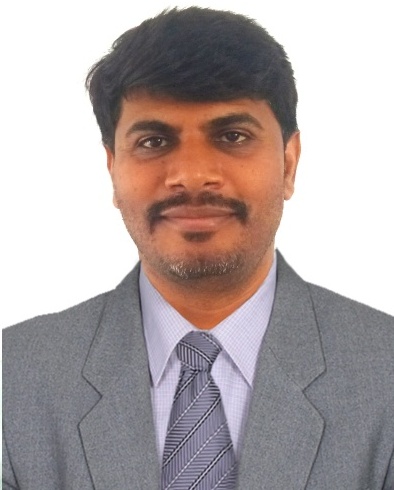
Dr. Shiva Prakash S. has nearly three years of industrial experience in the field of scientific and testing instrumentation, with strong exposure to customer-centric technical services and team leadership.
Service Manager
Paramount Scientific Instruments Pvt. Ltd.
(January 2004 – August 2005 | 1 year 8 months)
Responsible for leading a team of service engineers, coordinating installation, demonstration, calibration, and servicing of scientific testing instruments. Actively involved in customer interaction, troubleshooting, and delivering technical solutions to meet organizational and client objectives.
Service Engineer
Paramount Scientific Instruments Pvt. Ltd.
(January 2003 – January 2004 | 1 year)
Gained hands-on experience in installation, calibration, servicing, and user training of testing instruments. Developed strong practical skills in diagnostics, maintenance procedures, and technical support, along with effective interaction with clients across diverse industries.
Social Benefits
Development of driver drowsiness prevention systems contributes directly to road safety, helping reduce accidents and potential loss of life.
Innovations such as renewable energy–based water pumping systems and energy-efficient wood stove designs support rural and semi-urban communities by promoting sustainability and access to basic utilities.
Research on corrosion-resistant and wear-resistant materials enhances the safety and reliability of components used in infrastructure, transportation, and industrial applications.
Student mentoring and outreach activities cultivate socially responsible engineers with strong ethical and technical foundations.
Economic Benefits
Research on metal matrix composites and advanced materials supports the development of lightweight, durable, and cost-effective components for automotive, aerospace, marine, and manufacturing sectors.
Patented technologies and functional prototypes have the potential to reduce production and maintenance costs, improve energy efficiency, and extend service life of engineering systems.
Industry-relevant teaching and applied research help bridge the academia–industry gap, producing graduates who are job-ready and industry-oriented, thereby supporting economic growth.
Academic Benefits
High-quality publications in Scopus-indexed journals and international conferences contribute to the global body of knowledge in mechanical and materials engineering.