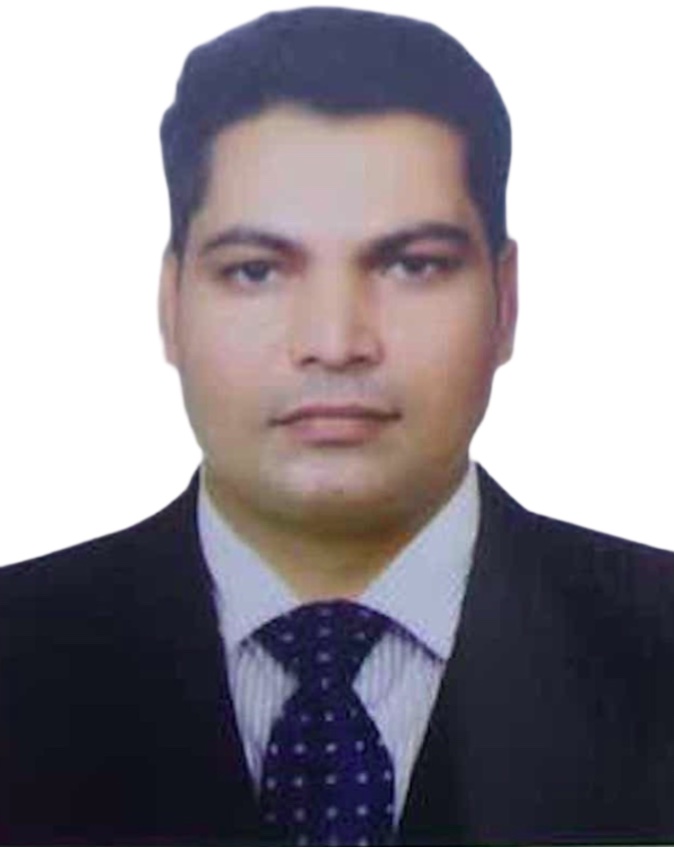
Mohammad Niyaz Ahmad

@swamivivekanandauniversity.ac.in

Assistant Professor at School of Management
Swami Vivekananda University

Mohammad Niyaz Ahmad
A dedicated academic professional with a strong background in research and management, specializing in HR and marketing. My work has been published in prestigious journals including Sage, Routledge, and Wiley, showcasing my proficiency in academic writing. Notably, I've achieved publication in a B-category journal listed in the ABDC Journal Quality List, underscoring the quality of my research. Driven by a passion for academic excellence, I'm eager to leverage my expertise to make significant contributions in management studies, particularly in HR and marketing, within esteemed academic institutions.
Work Experience
Assistant Professor
1st Feb 2024 to present, Currently serving as an assistant professor at the School of Management, Swami Vivekanand University, Barrackpore, Kolkata. I do teach HR and Marketing papers along with Research Methods.

RESEARCH, TEACHING, or OTHER INTERESTS

Organizational Behavior and Human Resource Management, Marketing, Industrial relations, Strategy and Management
3

Scopus Publications

12

Scholar Citations

2

Scholar h-index

Scopus Publications

  • Can Dalit laugh? Humour as resistance and politics of Dalit-comedy in India
    Ajeet Kumar Pankaj, Mohammad Niyaz Ahmad
    Comedy Studies, 2026
    Dalits in India are an ex-untouchable caste group who have been placed at the bottom of the Indian hierarchical social structure, whereby they often experience exclusion, discrimination, humiliation, and inequality. However, despite the enduring of caste-based inequality, undignified treatment, and humiliation, Dalits find their ways to negotiate, assert, and resist the prevailing form of caste practice. Recently, through digital platforms, Dalits have begun using humour and comedy to enact everyday resistance against discrimination and exclusion on the basis of caste. Humour has been known as a significant part of social life, and often, marginalised communities have used it to challenge and mock power and influential people. Despite its significance to challenging power, caste and Dalit studies have undervalued the analytical value of humour and largely overlooked its ability to depict suffering and tragedy. Drawing upon the stand-up comedy on digital platforms and various other mediums of Dalit ‘humour’, this article explores the politics of Dalit comedy and the way it uses humour to challenge the power and resist caste-based exclusion. Further, the article examines the issues and challenges that Dalits face when using comedy and laughter to challenge the dominant narrative of social structure to claim their freedom and liberation in a caste society.
  • Dr Ambedkar’s idea of human rights and its scope of teaching in social work education: from text to context
    Ajeet Kumar Pankaj, Mohammad Niyaz Ahmad, Iftekhar Alam
    Social Work Education, 2024
    Dr Bhimrao Ramji Ambedkar (Ambedkar henceforth) is not merely known as the chief architect of the Indian constitution, social activist, philosopher, and social reformer but also as a great human rights defender in India. His idea and vision of human rights have been referencing points for creating an egalitarian society and formulating social policies. Despite his strong vision, teaching, and philosophy about an equal and just society, the pedagogy of social work is underutilized in social work education. His ideas of human rights were enshrined in the Indian constitution which even prevented marginalized social groups such as Dalit (Dalits are ex-untouchable caste group who live at the bottom in Indian social structure), tribal, and women from exploitation and protect their human rights. We argue that Ambedkar’s strong vision for a just and egalitarian society, and his rights and policy-based framework are key human rights features to introduce in the curriculum of social work education within India and outside India. This will not merely equip social work professionals to be better human rights defenders but also equip them significantly to contribute to creating a just and equal society.
  • The economic status of Sri Lankan and Tibetan refugees in India
    Mohammad Niyaz Ahmad
    Routledge Handbook of Refugees in India, 2022
    Refugees living in India are free to safeguard their cultural identities and linguistic differentials. They are also being provided shelter, education, and livelihood opportunities. They are being trained by various NGOs to generate income. However, there is no uniformity in terms of securing their rights. For instance, Tibetan have been given rights and legally entitled to live in India whereas several refugee communities are not entitled to live in India. However, still many refugee communities are living in India on the mercy of government with different social, economic, and political support of state. The refugees are engaged in various economic and livelihood activities across the country, but some of them have better access and support from government and other state agents whereas some experience trouble. Taking the example of Tibetan and Sri Lankan-Tamil refugees, one can see both has given legal status to live in the country but both the communities lack the uniformity of law because Indian government do not have uniform law to deal with refugee crisis. However, both refugee communities – Tibetan and Sri Lankan – have been engaged in different economic activities to survive in India. This chapter aims to elaborate the comparative evaluation of ‘Uniformity of law and Economic Opportunity’ accorded to Tibetan and Sri Lankan Refugees living in India and its practical application and genuineness at field with the help of available secondary literature.

RECENT SCHOLAR PUBLICATIONS

  • Can Dalit laugh? Humour as resistance and politics of Dalit-comedy in India
    MN Pankaj, A. K., & Ahmad
    Comedy Studies, 1-14 , 2026
    2026.0
  • Dr Ambedkar’s idea of human rights and its scope of teaching in social work education: from text to context
    AK Pankaj, MN Ahmad, I Alam
    Social Work Education, 1-13 , 2024
    2024.0
    Citations: 2
  • Muslim Migrants’ Children and Their Educational Outcome: Aspirations and Challenges
    MN Ahmad
    Indian Journal of Social Work 85 (2), 223–239 , 2024
    2024.0
  • COVID-19 and youth volunteering: Trajectory and structure of India’s National Service Scheme
    S Lalitha, A Mohammad Niyaz, P Ajeet Kumar
    Global Health Economics and Sustainability 10 (10), 1-10 , 2024
    2024.0
  • Navigating The Maze: Assessing CSR Compliance And Regional Disparities In India's Business Landscape
    PH Asraful Islam, Mohammad Niyaz Ahmad
    Educational Administration: Theory and Practice 30 (5), 5146-5154 , 2024
    2024.0
    Citations: 3
  • Structural Exploitation of Migrant Labourers in Gulf countries: A Case Study of Migrants from Eastern Uttar Pradesh
    MN Ahmad
    Journal of Humanities, Arts and Social Science 7 (2), 309-316 , 2023
    2023.0
    Citations: 1
  • Life of Labour Migrant’s Children amid COVID-19
    MN Ahmad
    The Perspective International Journal of Social Science and Humanities 8 (7 … , 2022
    2022.0
  • श्रमिकों का विदेश प्रवास एवं उनके अनुभवों का समाजशास्त्रीय अध्ययन
    MNA Shamsher Alam
    भारतीय समाजशास्त्र समीक्षा 9 (1), 35-49 , 2022
    2022.0
  • The Economic Status of Sri Lankan and Tibetan Refugees in India
    MN Ahmad
    The Routledge Handbook of Refugees in India, 780-789 , 2022
    2022.0
  • What it Means to Be a Muslim Living in India: Insights from Experience and from Bollywood Movies
    MN Ahmad
    American Journal of Economics and Sociology 80 (3), 949-963 , 2021
    2021.0
    Citations: 6
  • Is Independent Muslim Students’ Politics Possible In Higher Educational Institutions?
    SAMN Ahmad
    Countercurrents , 2020
    2020.0
  • TOTAL VIEWS: 6237
    MN Ahmad

MOST CITED SCHOLAR PUBLICATIONS

  • What it Means to Be a Muslim Living in India: Insights from Experience and from Bollywood Movies
    MN Ahmad
    American Journal of Economics and Sociology 80 (3), 949-963 , 2021
    2021.0
    Citations: 6
  • Navigating The Maze: Assessing CSR Compliance And Regional Disparities In India's Business Landscape
    PH Asraful Islam, Mohammad Niyaz Ahmad
    Educational Administration: Theory and Practice 30 (5), 5146-5154 , 2024
    2024.0
    Citations: 3
  • Dr Ambedkar’s idea of human rights and its scope of teaching in social work education: from text to context
    AK Pankaj, MN Ahmad, I Alam
    Social Work Education, 1-13 , 2024
    2024.0
    Citations: 2
  • Structural Exploitation of Migrant Labourers in Gulf countries: A Case Study of Migrants from Eastern Uttar Pradesh
    MN Ahmad
    Journal of Humanities, Arts and Social Science 7 (2), 309-316 , 2023
    2023.0
    Citations: 1
  • Can Dalit laugh? Humour as resistance and politics of Dalit-comedy in India
    MN Pankaj, A. K., & Ahmad
    Comedy Studies, 1-14 , 2026
    2026.0
  • Muslim Migrants’ Children and Their Educational Outcome: Aspirations and Challenges
    MN Ahmad
    Indian Journal of Social Work 85 (2), 223–239 , 2024
    2024.0
  • COVID-19 and youth volunteering: Trajectory and structure of India’s National Service Scheme
    S Lalitha, A Mohammad Niyaz, P Ajeet Kumar
    Global Health Economics and Sustainability 10 (10), 1-10 , 2024
    2024.0
  • Life of Labour Migrant’s Children amid COVID-19
    MN Ahmad
    The Perspective International Journal of Social Science and Humanities 8 (7 … , 2022
    2022.0
  • श्रमिकों का विदेश प्रवास एवं उनके अनुभवों का समाजशास्त्रीय अध्ययन
    MNA Shamsher Alam
    भारतीय समाजशास्त्र समीक्षा 9 (1), 35-49 , 2022
    2022.0
  • The Economic Status of Sri Lankan and Tibetan Refugees in India
    MN Ahmad
    The Routledge Handbook of Refugees in India, 780-789 , 2022
    2022.0
  • Is Independent Muslim Students’ Politics Possible In Higher Educational Institutions?
    SAMN Ahmad
    Countercurrents , 2020
    2020.0
  • TOTAL VIEWS: 6237
    MN Ahmad