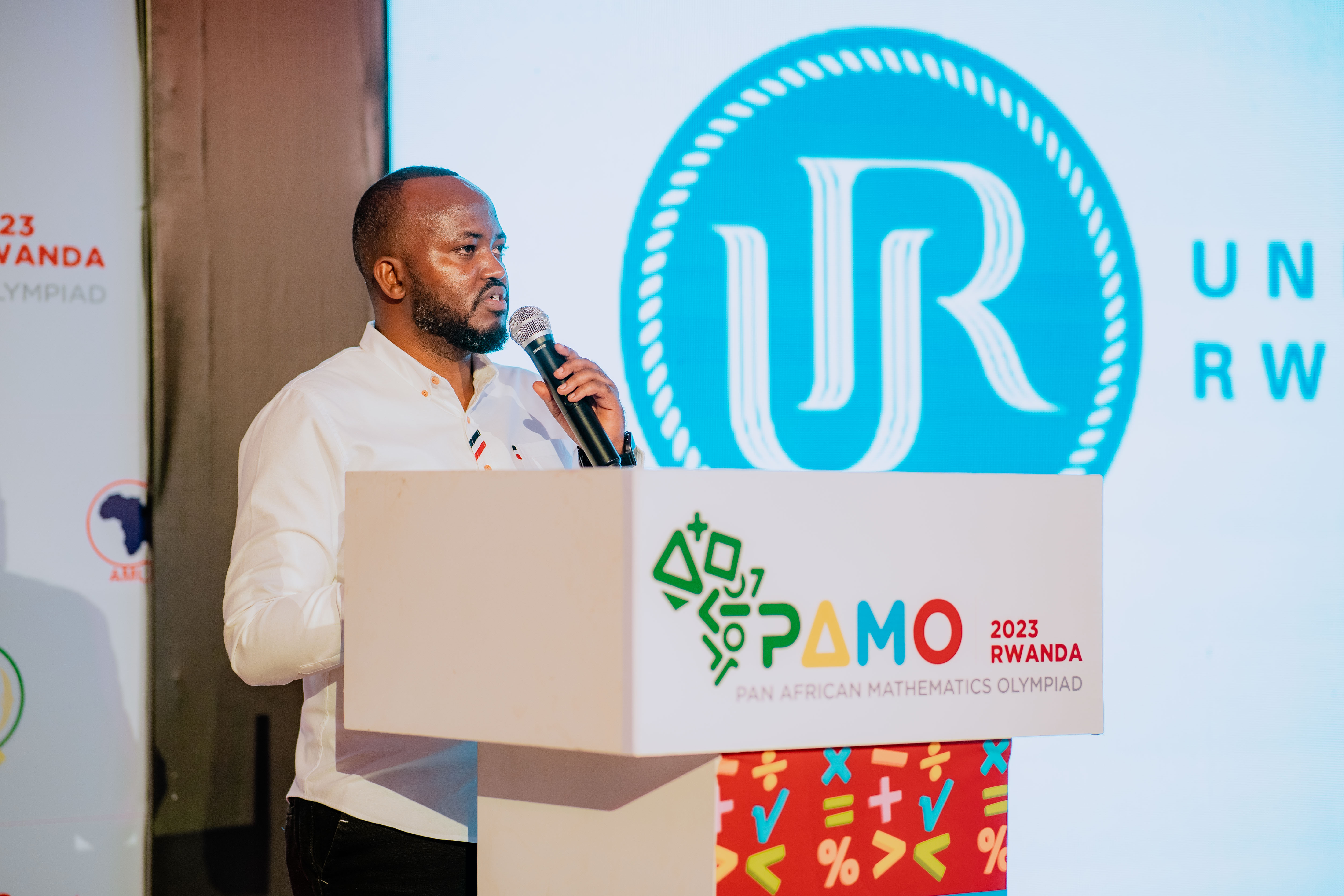
PhD in Computational Mathematics from the University of Science and Technology of China, Master of Science in Applied Mathematics from Nanjing University of Aeronautics and Astronautics and Bachelor of Science in Applied Mathematics from Kigali Institute of Science and Technology
RESEARCH, TEACHING, or OTHER INTERESTS
Computational Mathematics, Applied Mathematics, Modeling and Simulation, Control and Optimization
A micro-scale simulation of red blood cell passage through symmetric and asymmetric bifurcated vessels Tong Wang, Uwitije Rongin, Zhongwen Xing Scientific Reports, 2016 Blood exhibits a heterogeneous nature of hematocrit, velocity and effective viscosity in microcapillaries. Microvascular bifurcations have a significant influence on the distribution of the blood cells and blood flow behavior. This paper presents a simulation study performed on the two-dimensional motions and deformation of multiple red blood cells in microvessels with diverging and converging bifurcations. Fluid dynamics and membrane mechanics were incorporated. Effects of cell shape, hematocrit and deformability of the cell membrane on rheological behavior of the red blood cells and the hemodynamics have been investigated. It was shown that the blood entering the daughter branch with a higher flow rate tended to receive disproportionally more cells. The results also demonstrate that red blood cells in microvessels experienced lateral migration in the parent channel and blunted velocity profiles in both straight section and daughter branches and this effect was influenced by the shape and the initial position of the cells, the hematocrit and the membrane deformability. In addition, a cell free region around the tip of the confluence was observed. The simulation results are qualitatively consistent with existing experimental findings. This study may provide fundamental knowledge for a better understanding of hemodynamic behavior of micro-scale blood flow.
A Two-Dimensional Numerical Investigation of Transport of Malaria-Infected Red Blood Cells in Stenotic Microchannels Tong Wang, Yong Tao, Uwitije Rongin, Zhongwen Xing Biomed Research International, 2016 The malaria-infected red blood cells experience a significant decrease in cell deformability and increase in cell membrane adhesion. Blood hemodynamics in microvessels is significantly affected by the alteration of the mechanical property as well as the aggregation of parasitized red blood cells. In this study, we aim to numerically study the connection between cell-level mechanobiological properties of human red blood cells and related malaria disease state by investigating the transport of multiple red blood cell aggregates passing through microchannels with symmetric stenosis. Effects of stenosis magnitude, aggregation strength, and cell deformability on cell rheology and flow characteristics were studied by a two-dimensional model using the fictitious domain-immersed boundary method. The results indicated that the motion and dissociation of red blood cell aggregates were influenced by these factors and the flow resistance increases with the increase of aggregating strength and cell stiffness. Further, the roughness of the velocity profile was enhanced by cell aggregation, which considerably affected the blood flow characteristics. The study may assist us in understanding cellular-level mechanisms in disease development.
RECENT SCHOLAR PUBLICATIONS
PhyFold: Environment Aware Physics Informed Neural Network for Protein Folding Dynamics JU Rahman, I Noureen, A Mannan, R Uwitije 2025 Citations: 1
p-GIN: a graph isomorphism network based on p-laplacian operator to enhance molecular property prediction RU Jamshaid Ul Rahamn, Malik Ahsin Iqbal, Areen Rasool Discover Applied Sciences 7 , 2025 2025 Citations: 1
Enhancing Molecular Property Prediction With Quantized GNN Models RU Areen Rasool, Jamshaid Ul Rahman Journal of Cheminformatics , 2025 2025 Citations: 10
Dynamic analysis of ebola virus disease with non-linear incidence rate using morlet wavelet neural networks and hybrid optimization techniques A Mannan, N Shoket, J Ul Rahman, R Uwitije Modeling Earth Systems and Environment 11 (2), 79 , 2025 2025 Citations: 22
Nonlinear Weighted Subdivision Schemes R Uwitije, X Wang, J Deng Communications in Mathematics and Statistics, 1-14 , 2024 2024
Nonlinear weighted average and blossoming R Uwitije, X Wang, A Qarariyah, J Deng Communications in Mathematics and Statistics 8 (3), 361-378 , 2020 2020 Citations: 2
A micro-scale simulation of red blood cell passage through symmetric and asymmetric bifurcated vessels T Wang, U Rongin, Z Xing Scientific reports 6 (1), 20262 , 2016 2016 Citations: 65
A Two‐Dimensional Numerical Investigation of Transport of Malaria‐Infected Red Blood Cells in Stenotic Microchannels T Wang, Y Tao, U Rongin, Z Xing BioMed Research International 2016 (1), 1801403 , 2016 2016 Citations: 8
MOST CITED SCHOLAR PUBLICATIONS
A micro-scale simulation of red blood cell passage through symmetric and asymmetric bifurcated vessels T Wang, U Rongin, Z Xing Scientific reports 6 (1), 20262 , 2016 2016 Citations: 65
Dynamic analysis of ebola virus disease with non-linear incidence rate using morlet wavelet neural networks and hybrid optimization techniques A Mannan, N Shoket, J Ul Rahman, R Uwitije Modeling Earth Systems and Environment 11 (2), 79 , 2025 2025 Citations: 22
Enhancing Molecular Property Prediction With Quantized GNN Models RU Areen Rasool, Jamshaid Ul Rahman Journal of Cheminformatics , 2025 2025 Citations: 10
A Two‐Dimensional Numerical Investigation of Transport of Malaria‐Infected Red Blood Cells in Stenotic Microchannels T Wang, Y Tao, U Rongin, Z Xing BioMed Research International 2016 (1), 1801403 , 2016 2016 Citations: 8
Nonlinear weighted average and blossoming R Uwitije, X Wang, A Qarariyah, J Deng Communications in Mathematics and Statistics 8 (3), 361-378 , 2020 2020 Citations: 2
PhyFold: Environment Aware Physics Informed Neural Network for Protein Folding Dynamics JU Rahman, I Noureen, A Mannan, R Uwitije 2025 Citations: 1
p-GIN: a graph isomorphism network based on p-laplacian operator to enhance molecular property prediction RU Jamshaid Ul Rahamn, Malik Ahsin Iqbal, Areen Rasool Discover Applied Sciences 7 , 2025 2025 Citations: 1
Nonlinear Weighted Subdivision Schemes R Uwitije, X Wang, J Deng Communications in Mathematics and Statistics, 1-14 , 2024 2024
Publications
1. Wang T, Rongin U, Xing Z. A micro-scale simulation of red blood cell passage through symmetric and asymmetric bifurcated vessels. Scientific reports. 2016 Feb 2;6(1):20262.
2. Wang T, Tao Y, Rongin U, Xing Z. A Two‐Dimensional Numerical Investigation of Transport of Malaria‐Infected Red Blood Cells in Stenotic Microchannels. BioMed Research International. 2016;2016(1):1801403.
3. Uwitije R, Wang X, Qarariyah A, Deng J. Nonlinear weighted average and blossoming. Communications in Mathematics and Statistics. 2020 Sep;8:361-78.
4. Uwitije R, Wang X, Deng J. Nonlinear Weighted Subdivision Schemes. Communications in Mathematics and Statistics. 2024 May 25:1-4.
5. Abdul Mannan, Nimra Shoket, Jamshaid Ul Rahman, Rongin Uwitije. Dynamic analysis of ebola virus disease with non‑linear incidence rate using morlet wavelet neural networks and hybrid optimization techniques. Modeling Earth Systems and Environment. 2025.