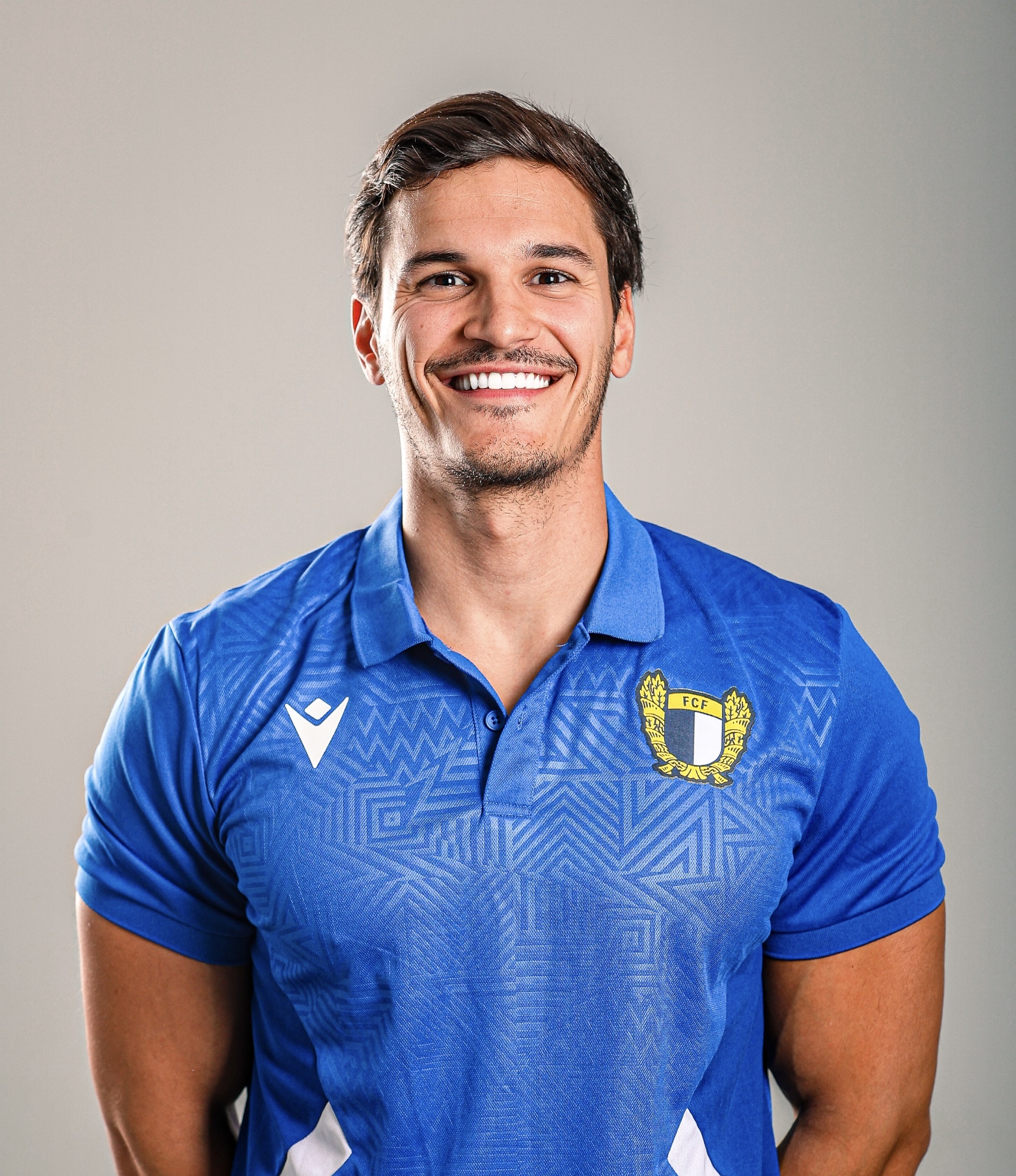
Ricardo Jorge Lemos Pimenta

@ipmaia.pt

Professor, Biomechanics
Research Center of the Polytechnic Institute of Maia (N2i), Maia Polytechnic Institute (IPMAIA), Castêlo da Maia, 4475-690 Maia, Portugal

Ricardo Jorge Lemos Pimenta
Ricardo Pimenta is a passionate sports scientist and researcher who tries to solve practical problems supported by theory using the scientific method.

Furthermore, he is Head of Sport Science and Performance at Futebol Clube Famalicão SAD, an invited professor at Instituto Politécnico da Maia and a research fellow at CIPER (Faculty of Human Kinetics) and LABIOMEP (Faculty of Sports of Porto). His fields of specialisation are strength and conditioning training, sports performance, injuries rehabilitation, sports software, electromyography, musculoskeletal ultrasonography, shear wave elastography, hamstring muscles and muscle-tendon unit.

Overall, Ricardo is a critical thinker who wants positively impact the field of sports science.

EDUCATION

- Master degree in High Performance Training from the Faculty of Human Kinetics at the University of Lisbon, specialising in musculoskeletal ultrasonography in the hamstring muscles
- Ph.D. in Biomechanics from the Faculty of Human Kinetics at the University of Lisbon, specialising in muscle injuries and football performance.

RESEARCH, TEACHING, or OTHER INTERESTS

Biophysics, Physiology, Radiological and Ultrasound Technology, Biomaterials
24

Scopus Publications

166

Scholar Citations

7

Scholar h-index

4

Scholar i10-index

Scopus Publications

  • Should GPS data be normalized for performance and fatigue monitoring in soccer? A theoretical–practical discussion on sprinting
    Ricardo Pimenta, Hugo Antunes, João Ribeiro, Fábio Yuzo Nakamura
    German Journal of Exercise and Sport Research, 2026
    In the past decade global positioning systems (GPS) have become widely used by soccer teams, providing crucial data for performance and fatigue monitoring throughout the season. However, some of these data appear to lack practical significance, particularly concerning sprint definitions. In this context, we examine the advantages and challenges of using absolute and normalized speed thresholds for performance and fatigue monitoring. Currently, speed thresholds are primarily defined based on absolute values set by GPS device manufacturers, with sprinting typically classified at speeds exceeding 25.2 km/h. However, a literature review of various physiological and mechanical aspects related to sprint running and GPS technology suggests that the currently used thresholds may not accurately represent the actual sprint effort experienced by professional soccer players. Based on current scientific and practical evidence, the present discussion aims to analyze the key aspects of sprint thresholds and provide practical and relevant information for sports scientists and coaches in soccer.
  • Correlation Between Passive and Active Shear Moduli After a Fatigue Task
    Ricardo Pimenta, Hugo Antunes, Nuno Pimenta, José Pedro Correia, António Veloso
    Biomechanics Switzerland, 2026
    Objectives: The purpose of this study was to determine whether hamstrings’ passive and active shear moduli measured before and after a fatigue task are correlated. Studying the correlation between passive and active shear moduli is important because, if correlated, passive SWE could provide a quicker assessment without requiring fatigue-inducing voluntary contractions. Methods: Forty-seven football players with no history of hamstring strain injury participated. Muscle shear modulus was assessed only in the dominant lower-limb (dominance defined as the preferred kicking limb) using ultrasound-based shear wave elastography at rest and during isometric contractions at 20% of maximal voluntary isometric effort before and immediately after a 10 × 30 m repeated sprint protocol. Results: Regarding sprint performance, a significant decrease of 8.3% was seen between the first and the last sprints (first: 7.14 ± 0.27 m/s; last: 6.60 ± 0.31 m/s; p < 0.001; dz = 1.88 [1.40–2.35]). In relation to the peak torque normalized to bodyweight, a significant decrease of 9.2% was seen between pre and post (pre: 1.98 ± 0.30 Nm/kg; post: 1.83 ± 0.31 Nm/kg; p < 0.001; dz = 0.89 [0.78–0.95]). Regarding the correlation analysis, none of the passive and active shear moduli measures was significantly correlated in any condition (Bonferroni correction for multiple comparisons, significance threshold set at p < 0.004). Conclusions: The results suggest that the hamstrings’ passive and active shear moduli are not correlated after a fatigue task.
  • Impact of Perceived Dorsiflexion and Plantarflexion in the Squat and Countermovement Jumps
    Flávio Ventura, Filipe Maia, Ricardo Maia Ferreira, Nuno Pimenta, Ricardo Pimenta
    Muscles, 2026
    Muscular strength plays a crucial role in sports performance and is often evaluated using vertical jump tests such as the Squat Jump (SJ) and Countermovement Jump (CMJ). Measurements based on flight time (FT) assume that takeoff and landing postures are identical, yet differences in ankle position can introduce systematic errors. This study examined whether dorsiflexion (DF) or plantarflexion (PF) of the ankle during the flight phase affects jump height. Forty-three active university students completed four repetitions each of SJ and CMJ under DF and PF across two sessions. Jump heights were recorded using a Chronojump-Boscosystem platform. No significant difference was observed in SJ between DF and PF, while CMJ heights were consistently higher under DF (DF: 28.29 cm ± 7.7 cm vs. PF: 27.08 cm ± 7.03 cm, p = 0.001; d = 0.16). Notably, the effect of DF appeared more pronounced in CMJ, suggesting that higher jumps are more sensitive to postural variations. These findings could suggest that DF can artificially increase jump heights as measured on a jump platform, without reflecting true improvements in force production. Coaches and practitioners should interpret FT-derived data with caution, particularly for higher jumps. Future research combining precise motion capture with force platforms could directly track center-of-mass changes and validate this mechanism.
  • The Need for GPS Data to be Normalized for Performance and Fatigue Monitoring in Soccer: Considerations for Accelerations and Decelerations
    Ricardo Pimenta, Hugo Antunes, Hugo Silva, João Ribeiro, Fábio Yuzo Nakamura
    Strength and Conditioning Journal, 2026
    Load monitoring is an essential process for optimizing player performance, requiring accurate quantification of external training load. In soccer, locomotor-related external load is typically analyzed considering high-intensity actions such as sprints, high-speed running, and accelerations (ACC) and decelerations (DEC). Indeed, ACC and DEC represent a significant portion of the total external load produced by a soccer player during a game and vary considerably depending on factors such as playing position, competitive level, age category, and game-to-game variability. Furthermore, given the associated metabolic cost and increased eccentric component, these actions contribute to the development of high fatigue levels, as evidenced by increased biochemical and neuromuscular fatigue markers. However, several studies report ACC and DEC outputs using arbitrary absolute thresholds (AATs) to characterize ACC and DEC efforts, thereby neglecting the relative capacities of each soccer player. Consequently, quantifying ACC and DEC volumes using AATs may under- or overestimate individual soccer player performance by failing to consider their maximum ACC and DEC. Because inaccurate load monitoring may lead to underperformance and increased likelihood of injury occurrence, this review explores the plausible benefits of implementing normalization-based approaches to quantify ACC and DEC outputs, as opposed to relying on AATs.
  • Acceleration and Deceleration Profiles: Comparison Between the 5-0-5 Test and Seasonal Peak Player Performance
    Ricardo Pimenta, Hugo Antunes, Fábio Yuzo Nakamura
    Sports, 2026
    Change-of-direction (COD) capacity is a key performance metric in football due to the high volume of COD actions occurring during match play. This study aimed to (i) evaluate the repeatability of the 5-0-5 test and (ii) examine the relationship between acceleration and deceleration profiles of the 5-0-5 test and in-season peak performance. Nineteen national-level Portuguese football players competing in the under-23 Portuguese National Championship were analysed. Repeatability analysis was conducted using intraclass correlation coefficients (ICC). Paired-samples t-tests and Pearson correlations (r) were employed to assess within-subject differences and associations between 5-0-5 measures (highest accelerations from a standing start [ACC_S], deceleration prior to the change in direction (DEC_COD), acceleration after decelerating and changing direction [ACC_COD]) and seasonal peak performances (ACCmax). The in-season peak values were determined from the average of the three maximal values that occurred either in training sessions or in matches. Normalized (relative to seasonal performance) parameters showed good repeatability (ICC = 0.76–0.85). The best ACC_COD and DEC_COD were not significantly different from ACCmax [ACC_COD] vs. ACCmax: (5.04 ± 0.39 m/s2 vs. 5.36 ± 0.54 m/s2; p > 0.05) and DECmax [DEC_COD] vs. DECmax: (−6.47 ± 0.26 m/s2 vs. −6.35 ± 0.61 m/s2; p > 0.05), respectively. The average and best 5-0-5 ACC_S performances showed significant, moderate correlations (r = 0.48; p = 0.040 and r = 0.50; p = 0.028, respectively) with the players’ peak in-season acceleration performance. Therefore, the best ACC_S and ACC_COD attempts can reflect values above 90% of ACCmax, while DEC_COD reflects values above 100% of DECmax and may assist in monitoring and tailoring training for this capacity on an individual basis.
  • A Short Maximal Effort Induces Greater Low-Frequency Fatigue than Prolonged Cycling in Highly-Trained Road Cyclists
    Filipe Maia, Fábio Yuzo Nakamura, Sandro Tito, Ricardo Pimenta, João Ribeiro
    International Journal of Exercise Science, 2026
  • The speed dynamics of different sprint and acceleration exercises applied during football training
    Ricardo Pimenta, Filipe Maia, Hugo Silva, Fábio Yuzo Nakamura
    Scientific Reports, 2025
  • πForce—Repeatability and Reliability of Peak Force and Rate of Force Development in a Portable Multi-Exercise Device
    Ricardo Pimenta, Abel Pimenta
    Muscles, 2025
    Isometric strength is widely used to monitor training adaptations, assess neuromuscular fatigue, and play a critical role in the maintenance of muscle health. This study assessed repeatability (intra-session) and reliability (inter-session) of a force production machine in different exercises: Isometric Mid-Thigh Pull (IMTP), Knee Flexion (KF) at 30°, and Seated Calf Raise (SCR). Parameters measured included Peak Force (PF), RFD at 0–50, 0–100, 0–150, 0–200, 50–100, 100–150 and 150–200 ms. Thirty male individuals (IMTP = 30; KF = 11 and SCR = 30) participated (age: 20.6 ± 3.6 years, mass: 75.3 ± 7.5 kg, height: 1.80 ± 0.64 m). Repeatability and reliability were calculated for bilateral PF and RFD for IMTP and SCR, and unilateral for KF. PF demonstrated good to excellent repeatability in all exercises: IMTP (ICC = 0.93), KF (left: ICC = 0.98; right: ICC = 0.97), SCR (ICC = 0.84). RFD displayed poor to good repeatability in IMTP (ICC = 0.45–0.87) and SCR (ICC = 0.40–0.85), moderate to excellent repeatability in KF (left: ICC = 0.53–0.96; right: ICC = 0.61–0.92). PF reliability was excellent in IMTP (ICC = 0.93) and KF (left: ICC = 0.99; right: ICC = 0.97), and moderate in SCR (ICC = 0.64). RFD reliability was moderate to excellent in IMTP (ICC = 0.58–0.94), poor to good in SCR (ICC = 0.13–0.64), and poor to excellent in KF (left: ICC = 0.33–0.96; right: ICC = −0.19–0.95). This study shows that portable dynamometry can measure maximal and explosive strength in different exercises, demonstrating good reliability for most parameters in IMTP and KF.
  • Do Non-Circular Chainrings Enhance Cycling Performance? A Systematic Review of Randomized Crossover Trials
    Filipe Maia, Henrique Sousa, Oscar Garcia-Garcia, Ricardo Pimenta, Paulo Santiago, et al.
    Journal of Functional Morphology and Kinesiology, 2025
    Background: Athletes commonly use innovative strategies that aim to enhance their cycling performance. Among them, the effectiveness of non-circular chainrings has been a frequent topic of discussion. This systematic review aims to analyze the physiological and performance effects of using non-circular chainrings in cyclists. Methods: A literature search was conducted on populations ranging from recreational to elite-level athletes, following the PRISMA guidelines. The electronic databases searched were PubMed, Web of Science, Academic Search Complete, Scopus, and SportDiscus, using the search terms (“oval chainring*” OR “non-circular chainring*” OR “elliptical chainring*” OR “asymmetric chainring*” OR “Q-Ring*” OR “eccentric chainring*” OR “chainring*”) AND (cycl*), on 11 May 2025. The risk of bias was assessed using the Cochrane Risk of Bias tool with an extension for crossover studies, indicating some concerns regarding the included studies. Results: The initial search identified 291 research articles, which, after applying the screening criteria, resulted in the inclusion of 18 manuscripts. The results suggest that non-circular chainrings do not appear to improve cycling performance metrics or physiological variables during prolonged efforts; however, it is possible that they enhance the sprinting capacity. Conclusions: While the research remains inconclusive, future studies should further explore the effects of non-circular chainrings on sprinting performance.
  • Intermittent Pneumatic Compression May Reduce Muscle Soreness but Does Not Improve Neuromuscular Function Following Exercise-Induced Muscle Damage: A Randomized Placebo-Controlled Trial
    Filipe Maia, Fábio Y. Nakamura, Ricardo Pimenta, Sandro Tito, Henrique Sousa, et al.
    International Journal of Sports Physiology and Performance, 2025
    Purpose: This study aimed to investigate the impact of an intermittent pneumatic compression (IPC) protocol on the recovery kinetics following exercise-induced muscle damage caused by an all-out flywheel protocol consisting of 6 sets of 12-repetition squats. Methods: Thirty-three active male university students (age 20.85 [2.8] y, height 178 [5.7] cm, body mass 75.05 [7.54] kg) were randomly assigned to either a 30-minute peristaltic IPC treatment at 200 mm Hg or a 30-minute placebo intervention (ie, simulated microcurrent treatment). Participants performed functional tests, including maximal knee extension and flexion, countermovement jump, and broad jump, and completed a perceptual soreness questionnaire before the fatigue protocol, immediately after the 30-minute recovery intervention and 24 and 48 hours postintervention. To examine the effects of the fatigue protocol and recovery interventions, a 2 × 4 repeated-measures analysis of variance was conducted, and effect sizes were calculated to assess practical relevance. Results: A significant time effect was observed for all measurements (: .216–.697; P < .05), indicating substantial fatigue from the exercise-induced-muscle-damage protocol. However, no statistically significant differences were detected between recovery interventions (: .001–.130; P: .155–.859). Notably, based on the effect-size analysis, a consistent trend toward reduced perceived soreness with IPC was observed, which may hold practical relevance for athletes (d: 0.32–0.75). Conclusions: Overall, a 30-minute IPC application immediately following exercise-induced muscle damage does not appear to improve the recovery kinetics of jumping and maximal voluntary contraction performance; however, the potential reduction in perceived soreness suggests a need for further investigation.
  • Profiling of Physical Qualities of Highly Trained Portuguese Youth Soccer Players
    Miguel Silva, Hugo Duarte Antunes, Ana Sousa, Fábio Yuzo Nakamura, António Rodrigues Sampaio, et al.
    Applied Sciences Switzerland, 2025
  • Impact of post-match fatigue on peak force in elite youth soccer players: Analysis of 48 to 72 hours post-match using the isometric mid-thigh pull exercise
    Ricardo Pimenta, Lúcio Cunha, Fábio Yuzo Nakamura
    Biology of Sport, 2025
  • Should GPS data be normalized for performance and fatigue monitoring in soccer? A theoretical-practical discussion on high-speed running
    Ricardo Pimenta, Hugo Antunes, João Ribeiro, Fábio Yuzo Nakamura
    Frontiers in Sports and Active Living, 2025
  • Agreement between perceived and objective sleep duration in highly trained young male soccer players
    João Barreira, João Brito, Fábio Yuzo Nakamura, Ricardo Pimenta, Pedro Figueiredo
    Science and Medicine in Football, 2025
  • Effects of fatigue on hamstrings and gluteus maximus shear modulus in hip extension and knee flexion submaximal contraction task
    Ricardo Pimenta, Pedro Almeida, José P. Correia, Paula M. Bruno, João R. Vaz
    Sports Biomechanics, 2025
  • Fatigue effects on the knee flexors neuromuscular parameters during repeated sprinting
    Ricardo Pimenta, Tomás Lopes, A. P. Veloso
    BMC Sports Science Medicine and Rehabilitation, 2024
  • Hamstrings passive and active shear modulus: Implications of conventional static stretching and warmup
    Ricardo Pimenta, José P. Correia, João R. Vaz, António P. Veloso, Walter Herzog
    Journal of Science and Medicine in Sport, 2024
  • Influence of transducer pressure and examiner experience on muscle active shear modulus measured by shear wave elastography
    Radiography, 2024
  • Changes in passive and active hamstrings shear modulus are not related after a warmup protocol
    Ricardo Pimenta, José P. Correia, João R. Vaz, António P. Veloso, Walter Herzog
    Journal of Biomechanics, 2024
  • Effects of repeated sprinting on hamstring shear modulus pattern and knee flexor neuromuscular parameters
    Ricardo Pimenta, Tomás Lopes, José Pedro Correia, António Prieto Veloso
    Scientific Reports, 2023
  • Effects of Repeated Sprints on Hamstring Active Shear Modulus Pattern and Neuromuscular Parameters in Football Players with and without Hamstring Strain Injury History—A Retrospective Study
    Ricardo Pimenta, Tomás Lopes, Paula Bruno, António Veloso
    Applied Sciences Switzerland, 2023
  • Hamstrings mechanical properties profiling in football players of different competitive levels and positions after a repeated sprint protocol
    Ricardo Pimenta, Hugo Antunes, Paula Bruno, A. P. Veloso
    Frontiers in Physiology, 2023
  • Do Repeated Sprints Affect the Biceps Femoris Long Head Architecture in Football Players with and without an Injury History?—A Retrospective Study
    Ricardo Pimenta, Hugo Antunes, Tomás Lopes, António Veloso
    Biology, 2023
  • Biceps femoris long-head architecture assessed using different sonographic techniques
    RICARDO PIMENTA, ANTHONY J. BLAZEVICH, SANDRO R. FREITAS
    Medicine and Science in Sports and Exercise, 2018

RECENT SCHOLAR PUBLICATIONS

  • Correlation between Passive and Active Shear Moduli after a Fatigue Task
    R Pimenta, H Antunes, N Pimenta, JP Correia, A Veloso
    Biomechanics 6 (1), 12 , 2026
    2026
  • Impact of Perceived Dorsiflexion and Plantarflexion in the Squat and Countermovement Jumps
    F Ventura, F Maia, RM Ferreira, N Pimenta, R Pimenta
    Muscles 5 (1), 5 , 2026
    2026
  • Acceleration and deceleration profiles: Comparison between the 5-0-5 test and seasonal peak player performance
    R Pimenta, H Antunes, FY Nakamura
    Sports 14 (1), 9 , 2026
    2026
    Citations: 1
  • Sprint and High-Speed Running in Soccer: Should We Use Absolute or Normalized Thresholds?
    R Pimenta, H Antunes, F Maia, J Ribeiro, FY Nakamura
    Journal of Human Kinetics , 2025
    2025
    Citations: 1
  • Agreement between perceived and objective sleep duration in highly trained young male soccer players
    J Barreira, J Brito, F Yuzo Nakamura, R Pimenta, P Figueiredo
    Science and Medicine in Football, 1-9 , 2025
    2025
    Citations: 2
  • Effects of fatigue on hamstrings and gluteus maximus shear modulus in hip extension and knee flexion submaximal contraction task
    R Pimenta, P Almeida, JP Correia, PM Bruno, JR Vaz
    Sports Biomechanics 24 (10), 2999-3012 , 2025
    2025
    Citations: 8
  • πForce—Repeatability and Reliability of Peak Force and Rate of Force Development in a Portable Multi-Exercise Device
    R Pimenta, A Pimenta
    muscles , 2025
    2025
    Citations: 3
  • The speed dynamics of different sprint and acceleration exercises applied during football training
    R Pimenta, F Maia, H Silva, FY Nakamura
    Scientific Reports 15 (1), 29543 , 2025
    2025
    Citations: 3
  • Should GPS data be normalized for performance and fatigue monitoring in soccer? A theoretical-practical discussion on high-speed running
    R Pimenta, H Antunes, J Ribeiro, FY Nakamura
    Frontiers in Sports and Active Living 7, 1603767 , 2025
    2025
    Citations: 10
  • Intermittent Pneumatic Compression May Reduce Muscle Soreness but Does Not Improve Neuromuscular Function Following Exercise-Induced Muscle Damage: A Randomized Placebo …
    F Maia, FY Nakamura, R Pimenta, S Tito, H Sousa, J Ribeiro
    International Journal of Sports Physiology and Performance 20 (8), 1103-1109 , 2025
    2025
    Citations: 6
  • Do Non-Circular Chainrings Enhance Cycling Performance? A Systematic Review of Randomized Crossover Trials
    F Maia, H Sousa, O Garcia-Garcia, R Pimenta, P Santiago, PC Vigário, ...
    Journal of Functional Morphology and Kinesiology 10 (3), 233 , 2025
    2025
  • Should GPS data be normalized for performance and fatigue monitoring in soccer? A theoretical–practical discussion on sprinting
    R Pimenta, H Antunes, J Ribeiro, F Yuzo Nakamura
    German Journal of Exercise and Sport Research, 1-7 , 2025
    2025
    Citations: 4
  • Profiling of physical qualities of highly trained portuguese youth soccer players
    M Silva, HD Antunes, A Sousa, FY Nakamura, AR Sampaio, R Pimenta
    Applied Sciences 15 (10), 5414 , 2025
    2025
    Citations: 3
  • Impact of post-match fatigue on peak force in elite youth soccer players: Analysis of 48 to 72 hours post-match using the isometric mid-thigh pull exercise
    R Pimenta, L Cunha, FY Nakamura
    Biology of Sport 42 (4), 145-152 , 2025
    2025
    Citations: 4
  • Hamstrings passive and active shear modulus: Implications of conventional static stretching and warmup
    R Pimenta, JP Correia, JR Vaz, AP Veloso, W Herzog
    Journal of Science and Medicine in Sport 27 (6), 415-421 , 2024
    2024
    Citations: 7
  • Hamstrings mechanical properties profiling in football players of different competitive levels and positions after a repeated sprint protocol
    R Pimenta, H Antunes, P Bruno, AP Veloso
    Frontiers in Physiology 14, 1315564 , 2024
    2024
    Citations: 2
  • Fatigue effects on the knee flexors neuromuscular parameters during repeated sprinting
    R Pimenta, T Lopes, AP Veloso
    BMC Sports Science, Medicine and Rehabilitation 16 (1), 3 , 2024
    2024
    Citations: 6
  • Changes in passive and active hamstrings shear modulus are not related after a warmup protocol
    R Pimenta, JP Correia, JR Vaz, AP Veloso, W Herzog
    Journal of Biomechanics 163, 111957 , 2024
    2024
    Citations: 4
  • Influence of transducer pressure and examiner experience on muscle active shear modulus measured by shear wave elastography
    R Pimenta, F Coelho, JP Correia, JR Vaz
    Radiography 30 (1), 185-192 , 2024
    2024
    Citations: 12
  • Effects of repeated sprinting on hamstring shear modulus pattern and knee flexor neuromuscular parameters
    R Pimenta, T Lopes, JP Correia, A Veloso
    Scientific Reports 13, 12624 , 2023
    2023
    Citations: 8

MOST CITED SCHOLAR PUBLICATIONS

  • Biceps femoris long-head architecture assessed using different sonographic techniques
    R Pimenta, AJ Blazevich, SR Freitas
    Medicine & Science in Sports & Exercise 50 (12), 2584-2594 , 2018
    2018
    Citations: 62
  • Influence of transducer pressure and examiner experience on muscle active shear modulus measured by shear wave elastography
    R Pimenta, F Coelho, JP Correia, JR Vaz
    Radiography 30 (1), 185-192 , 2024
    2024
    Citations: 12
  • Effects of repeated sprints on hamstring active shear modulus pattern and neuromuscular parameters in football players with and without hamstring strain injury history—a …
    R Pimenta, T Lopes, P Bruno, A Veloso
    Applied Sciences 13 (5), 3099 , 2023
    2023
    Citations: 11
  • Should GPS data be normalized for performance and fatigue monitoring in soccer? A theoretical-practical discussion on high-speed running
    R Pimenta, H Antunes, J Ribeiro, FY Nakamura
    Frontiers in Sports and Active Living 7, 1603767 , 2025
    2025
    Citations: 10
  • Effects of fatigue on hamstrings and gluteus maximus shear modulus in hip extension and knee flexion submaximal contraction task
    R Pimenta, P Almeida, JP Correia, PM Bruno, JR Vaz
    Sports Biomechanics 24 (10), 2999-3012 , 2025
    2025
    Citations: 8
  • Effects of repeated sprinting on hamstring shear modulus pattern and knee flexor neuromuscular parameters
    R Pimenta, T Lopes, JP Correia, A Veloso
    Scientific Reports 13, 12624 , 2023
    2023
    Citations: 8
  • Do Repeated Sprints Affect the Biceps Femoris Long Head Architecture in Football Players with and without an Injury History?—A Retrospective Study
    R Pimenta, H Antunes, T Lopes, A Veloso
    Biology 12 (1), 96 , 2023
    2023
    Citations: 8
  • Hamstrings passive and active shear modulus: Implications of conventional static stretching and warmup
    R Pimenta, JP Correia, JR Vaz, AP Veloso, W Herzog
    Journal of Science and Medicine in Sport 27 (6), 415-421 , 2024
    2024
    Citations: 7
  • Intermittent Pneumatic Compression May Reduce Muscle Soreness but Does Not Improve Neuromuscular Function Following Exercise-Induced Muscle Damage: A Randomized Placebo …
    F Maia, FY Nakamura, R Pimenta, S Tito, H Sousa, J Ribeiro
    International Journal of Sports Physiology and Performance 20 (8), 1103-1109 , 2025
    2025
    Citations: 6
  • Fatigue effects on the knee flexors neuromuscular parameters during repeated sprinting
    R Pimenta, T Lopes, AP Veloso
    BMC Sports Science, Medicine and Rehabilitation 16 (1), 3 , 2024
    2024
    Citations: 6
  • Should GPS data be normalized for performance and fatigue monitoring in soccer? A theoretical–practical discussion on sprinting
    R Pimenta, H Antunes, J Ribeiro, F Yuzo Nakamura
    German Journal of Exercise and Sport Research, 1-7 , 2025
    2025
    Citations: 4
  • Impact of post-match fatigue on peak force in elite youth soccer players: Analysis of 48 to 72 hours post-match using the isometric mid-thigh pull exercise
    R Pimenta, L Cunha, FY Nakamura
    Biology of Sport 42 (4), 145-152 , 2025
    2025
    Citations: 4
  • Changes in passive and active hamstrings shear modulus are not related after a warmup protocol
    R Pimenta, JP Correia, JR Vaz, AP Veloso, W Herzog
    Journal of Biomechanics 163, 111957 , 2024
    2024
    Citations: 4
  • πForce—Repeatability and Reliability of Peak Force and Rate of Force Development in a Portable Multi-Exercise Device
    R Pimenta, A Pimenta
    muscles , 2025
    2025
    Citations: 3
  • The speed dynamics of different sprint and acceleration exercises applied during football training
    R Pimenta, F Maia, H Silva, FY Nakamura
    Scientific Reports 15 (1), 29543 , 2025
    2025
    Citations: 3
  • Profiling of physical qualities of highly trained portuguese youth soccer players
    M Silva, HD Antunes, A Sousa, FY Nakamura, AR Sampaio, R Pimenta
    Applied Sciences 15 (10), 5414 , 2025
    2025
    Citations: 3
  • Agreement between perceived and objective sleep duration in highly trained young male soccer players
    J Barreira, J Brito, F Yuzo Nakamura, R Pimenta, P Figueiredo
    Science and Medicine in Football, 1-9 , 2025
    2025
    Citations: 2
  • Hamstrings mechanical properties profiling in football players of different competitive levels and positions after a repeated sprint protocol
    R Pimenta, H Antunes, P Bruno, AP Veloso
    Frontiers in Physiology 14, 1315564 , 2024
    2024
    Citations: 2
  • Acceleration and deceleration profiles: Comparison between the 5-0-5 test and seasonal peak player performance
    R Pimenta, H Antunes, FY Nakamura
    Sports 14 (1), 9 , 2026
    2026
    Citations: 1
  • Sprint and High-Speed Running in Soccer: Should We Use Absolute or Normalized Thresholds?
    R Pimenta, H Antunes, F Maia, J Ribeiro, FY Nakamura
    Journal of Human Kinetics , 2025
    2025
    Citations: 1