HAYAR Salem
@ul.edu.lb
Faculty of Agricultural Engineering and Veterinary Medicine
Lebanese university
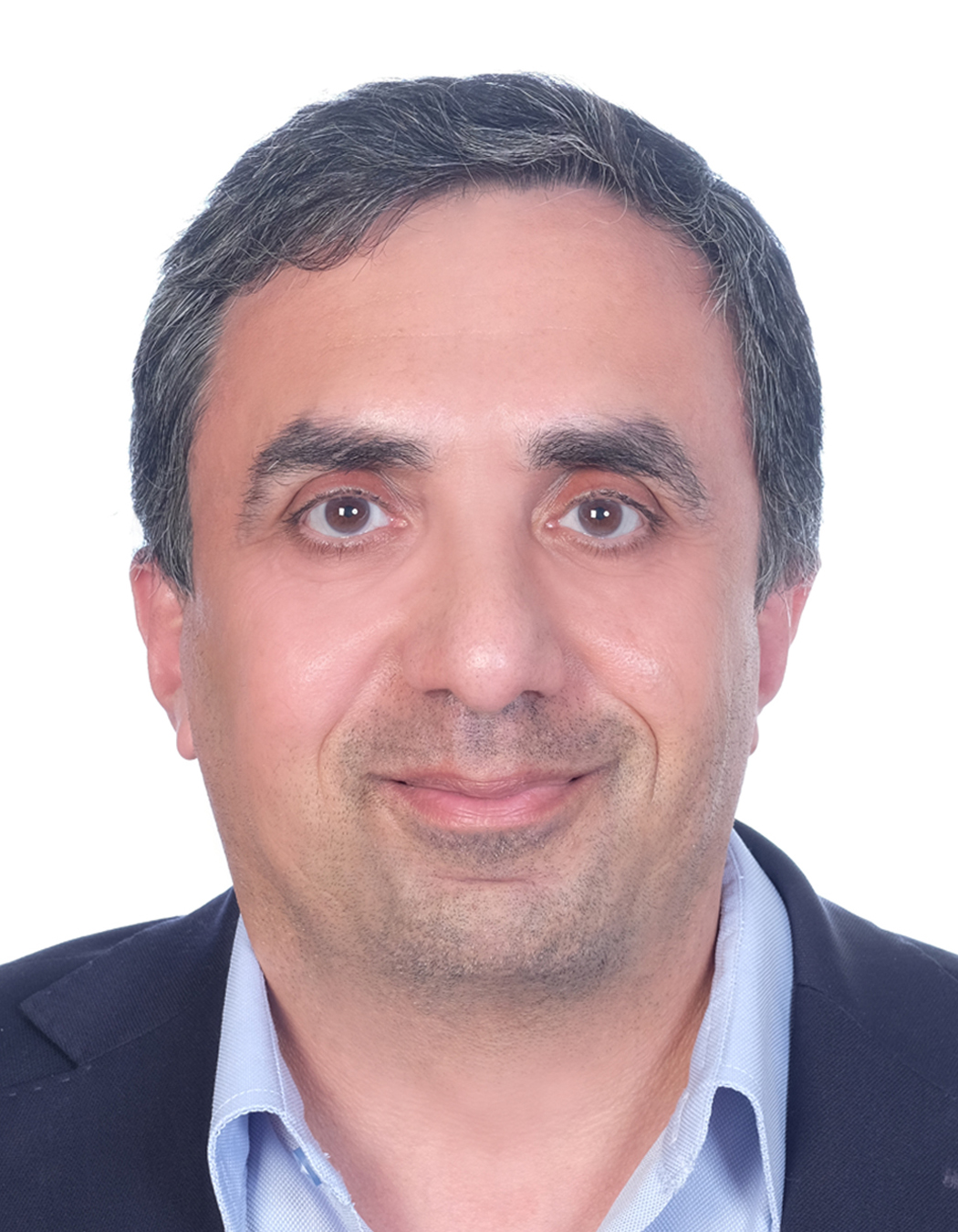

Salem HAYAR, PhD
Founder of Reference Laboratory at Ministry of Agriculture, for the Control of Pesticide Formulations and Residues,
National Expert in Quality Control of Pesticide Formulations and Residues,
Researcher at the Doctoral School of Science and Technology,
Research Platform for Environmental Sciences (EDST-PRASE),
Lebanese University, Rafic Hariri Campus, Hadath-Mount Lebanon, Lebanon
Professor at the Department of Plant Protection,
Faculty of Agricultural Engineering and Veterinary Medicine,
Lebanese University, Dekwaneh-Beirut, Lebanon
ORCID: 0000-0003-3167-9370
Mobile: +961 3 416364
EDUCATION
1999: Methods of Research in Health and Environmental Sciences,
University Joseph Fourier, Faculty of Pharmacy, Grenoble I,
École Nationale Supérieure d'Agronomie et des Industries Alimentaires, ENSAIA-INPL, Nancy,
1993 - 94: DEA/Master Degree in Geosciences major Pedology,
École Nationale Supérieure d'Agronomie, Rennes,
Centre de Pédologie Biologique (CPB), CNRS, UPR 6831, University of Nancy I.
1987 - 93: Agriculture Engineering,
Holy Spirit University of Kaslik, Faculty of Agricultural Sciences (USEK), Jounieh, Lebanon.
RESEARCH INTERESTS
Providing training in analytical chemistry, Food analysis contaminants, sampling planning and analysis of pesticide residues, elaboration of technical guidance documents and SOP’s for Accreditation, Familiar with CODEX regulations and FAO and EU regulations for pesticide and veterinary drugs
Scopus Publications
Scopus Publications
Liliane Majed, Salem Hayar, Sylvie Dousset, Britt Marianna Maestroni, and Khaled El Omari
Elsevier BV
Liliane Majed, Salem Hayar, Rawan Zeitoun, Britt Marianna Maestroni, and Sylvie Dousset
MDPI AG
In this study, imidacloprid, a systemic insecticide, currently having a specified European Commission MRL value for vine leaves (2 mg kg−1), was applied on a Lebanese vineyard under different commercial formulations: as a soluble liquid (SL) and water dispersible granules (WDG). In Lebanon, many commercial formulations of imidacloprid are subject to the same critical good agricultural practice (cGAP). It was, therefore, important to verify the variability in dissipation patterns according to matrix nature and formulation type. Random samplings of grapes and vine leaves were performed starting at 2 days until 18 days after treatment. Residue extractions were performed according to the QuEChERS method and the analytical determination using liquid chromatography coupled to tandem mass spectrometry (LC-MS-MS). The SL formulation yielded significantly higher initial deposit than the WDG formulation on grapes and vine leaves. The formulation type did not significantly affect the dissipation rates; the estimated half-lives in grapes and vine leaves were 0.5 days for all imidacloprid formulations. No pre-harvest intervals were necessary on grapes. PHIs of 3.7 days for the SL formulation and 2.8 days for the WDG formulation were estimated on vine leaves. The results showed that the type of formulation and the morphological and physiological characteristics of the matrix had an effect on the initial deposits, and thus residue levels, but not on the dissipation patterns.
Fatima El Dana, Salem Hayar, and Marie-Charlotte Colosio
MDPI AG
Wine production depends on the fermentation process performed by yeasts, especially (but not solely) strains of the species Saccharomyces cerevisiae, which is a technique that has been practiced from the Middle Ages till modern days. Selecting indigenous starters offers a beneficial technique to manage alcoholic grape juice fermentation, conserving the particular sensory qualities of wine produced from specific regions. This paper investigated yeast biodiversity of four grape varieties (Carignan, Syrah, Grenache, and Aswad Karesh) grown in the pedoclimatic western semi-desert Bekaa Valley. Further research identified, characterized, and selected strains with the most industrial wine interest and economic value to Lebanon. By using molecular methods and by the ITS PCR analysis, the isolates belonging to the Saccharomyces and non-Saccharomyces genus were identified. These isolates taken from four varieties were further characterized by amplification with Interdelta and δ12/δ21 primer pairs, permitting the identification of 96 S. cerevisiae strains. Forty-five genomically homogenous groups were classified through the comparison between their mtDNA RFLP patterns. Based on physiological characterization analysis (H2S and SO2 production, killer phenotype, sugar consumption, malic and acetic acid, etc.), three strains (NL28629, NL28649, and NL28652) showed interesting features, where they were also vigorously fermented in a synthetic medium. These strains can be used as a convenient starter for typical wine production. In particular, Carignan and Syrah had the highest percentage of strains with the most desirable physiological parameters.
Christina Fahed and Salem Hayar
Springer Science and Business Media LLC
This study aims to assess the risk of 49 pesticides and biopesticides recommended to be used on cucumbers in a field guide proposed by the Lebanese Ministry of Agriculture (MoA), on the consumer health and the environment. Three physico-chemical properties and 12 toxicological and ecotoxicological parameters found in PPDB and BPDB from the University of Hertfordshire-UK were analyzed. Our results showed that: (1) concerning the human health issues, 81.25% were possible teratogens and 31.25% were possible carcinogens and endocrine disruptors, (2) the insecticides chlorpyrifos and the pyrethroids such as deltamethrin, esfenvalerate and Lambda-cyhalothrin were found to bioaccumulate in tissues and were very persistent in soil and toxic to fishes and algae. In contrast, the bioinsecticides do not bioaccumulate, but they are toxic to fishes especially abamectin, milbemectin, azadirachtin A and sulfur, (3) concerning the beneficial arthropods, all the synthetic insecticides, as well as the avermectin chemical group and spinosad, were highly toxic to honeybees. All acaricides bioaccumulate but without a detectable toxicity to honeybees. Overall, biopesticides were not found to be less hazardous to human health and the environment than synthetic pesticides.
Salem Hayar, Rawan Zeitoun, and Britt Marianna Maestroni
MDPI AG
The QuEChERS method was applied to the determination of pesticide residues in vine (Vitis vinifera) leaves by LC-MSMS. The method was validated in-house for 33 pesticides representing 17 different chemical groups, that are most commonly used in grape production. Recoveries for the pesticides tested ranged from 75 to 104%, and repeatability and reproducibility relative standard deviations (RSDr% and RSDRw%) were less than 20%. The method was applied to the analysis of pesticide residues in 17 market brands of vine leaves processed according to three different preservation methods and sampled from the Lebanese market. Dried vine leaves were more contaminated with pesticide residues than those preserved in brine or stuffed vine leaves. The systemic fungicides were the most frequently detected among all the phytosanitary compounds usually applied to grape production. Brine-preserved and stuffed vine leaves contained lower concentrations of the residues but still contained a cocktail of different pesticides.
Rawan Zeitoun, Salem Hayar, Liliane Majed, Khaled El-Omari, and Sylvie Dousset
Springer Science and Business Media LLC
Environmental conditions and availability of new cultivated areas of prickly pear cactus in Lebanon appeared lately to be favourable for the survival and development of D. opuntiae which has become highly noxious. To thwart use of random chemicals and broad spectrum pesticides by local farmers, efficacy of sulfoxaflor (Closer™ 240 SC, rate 0.179 kg a.i/ha) and diflubenzuron (Dimilin® 25 W, rate 0.329 kg a.i/ha) was compared. Individual insecticidal solutions of each applied alone or in mixing with mineral oil (spray oil 7E, rate 1.010 kg a.i/ha) on potted cladodes in laboratory conditions (T = 23 ± 4 °C, RH = 58–63%) showed a sharp decrease in the number of individuals within colonies 48 h after treatment especially among first- and second-instar larvae. Similarly, the same insecticidal solutions applied on separate plots in field conditions (T = 20–35 °C, RH = 55–75%) according to the Good Agricultural Practices showed efficacious control of the pest development. D. opuntiae mortality mean percentage reached 80% and 72%, respectively, for sulfoxaflor and diflubenzuron 96 h after treatment. The added mineral oil acted as a synergist and enhanced efficacy of both insecticides. Mortality mean percentages increased to 92% and 88%, respectively. Insecticides residues content over time in fruits and cladodes were afterwards monitored. Samples were harvested at 3 days interval and residues extracted by the QuEChERS method and quantified by LC–MS. Dissipation rates after 30 days of treatment attained 70.8% and 80.6% in fruits and 98.5% and 74.0% in cladodes, respectively, for sulfoxaflor and diflubenzuron. Half-life time varied accordingly and was higher for fruits treated with sulfoxaflor (14.20 days) than for those treated with diflubenzuron (11.18 days). On contrary, for cladodes, half-life time of the former (4.18 days) was lower than that of the latter (15.47 days). The addition of mineral oil into the spray solution of the insecticides increased their persistency in the crop. Consequently, half-life times increased and dissipation rates decreased. Findings of this study should enlarge the spectrum of chemical means for D. opuntiae management and promote resilience of the crop. Analytical method applied for residues analysis should be useful for registration of the insecticides on the crop and MRLs setting.
Hiba Noureddine, Rouba Hage-Sleiman, Batoul Wehbi, Hussein Fayyad-Kazan, Salem Hayar, Mohamad Traboulssi, Osama A. Alyamani, Wissam H. Faour, and Yolla ElMakhour
Elsevier BV
Chemical composition, anti-proliferative and proapoptotic activity as well as the effect of various fractions of Lebanese propolis on the cell cycle distribution were evaluated on Jurkat leukemic T-cells, glioblastoma U251 cells, and breast adenocarcinoma MDA-MB-231 cells using cytotoxic assays, flow cytometry as well as western blot analysis. Liquid chromatography-tandem mass spectrometry (LC-MS/MS) analysis revealed that ferulic acid, chrysin, pinocembrin, galangin are major constituents of the ethanolic crude extract of the Lebanese propolis, while the hexane fraction mostly contains chrysin, pinocembrin, galangin but at similar levels. Furthermore chemical analysis was performed using gas chromatography-mass spectrometry (GC-MS) to identify major compounds in the hexane fraction. Reduction of cell viability was observed in Jurkat cells exposed to the ethanolic crude extract and the hexane fraction, while viability of U251 and MDA-MB-231 cells was only affected upon exposure to the hexane fraction; the other fractions (aqueous phase, methylene chloride, and ethyl acetate) were without effect. Maximum toxic effect was obtained when Jurkat cells were cultivated with 90μg/ml of both the crude extract and hexane faction. Toxicity started early after 24h of incubation and remained till 72h. Interestingly, the decrease in cell viability was accompanied by a significant increase in p53 protein expression levels and PARP cleavage. Cell cycle distribution showed an increase in the SubG0 fraction in Jurkat, U251 and MDA-MB-231 cells after 24h incubation with the hexane fraction. This increase in SubG0 was further investigated in Jurkat cells by annexinV/PI and showed an increase in the percentage of cells in early and late apoptosis as well as necrosis. In conclusion, Lebanese propolis exhibited significant cytotoxicity and anti-proliferative activity promising enough that warrant further investigations on the molecular targets and mechanisms of action of Lebanese propolis.