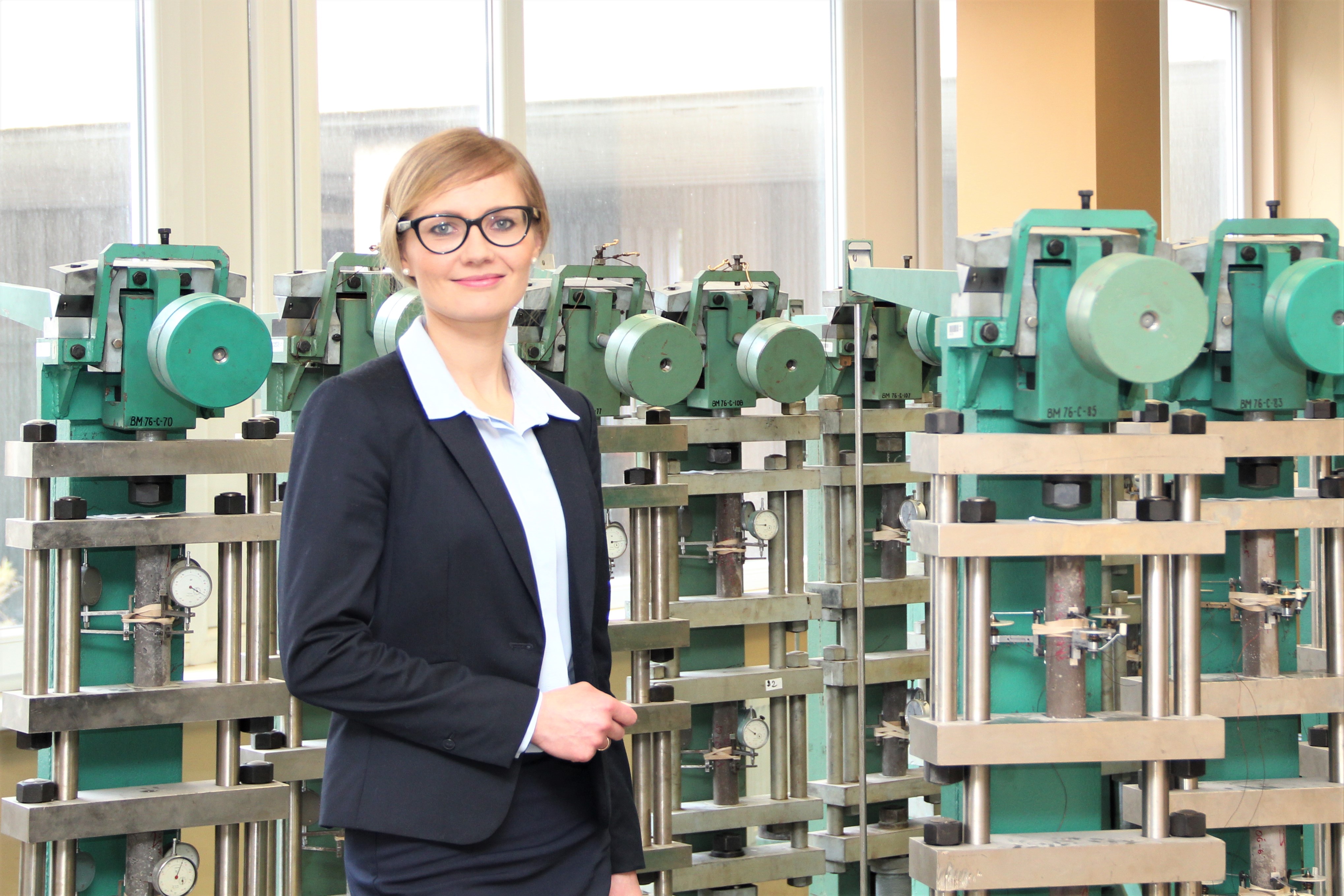
Andina Sprince

@rtu.lv

Faculty of Civil and Mechanical Engineering
Institute of Civil Engineering, Riga Technical university

Andina Sprince
2020 – 2023 European Regional Development Fund (ERDF) project within Activity 1.1.1.2 “Post-doctoral Research Aid” of the Specific Aid Objective 1.1.1 “To increase the research and innovative capacity of scientific institutions of Latvia and the ability to attract external financing, investing in human resources and infrastructure” of the Operational Programme “Growth and Employment” ( senior researcher

2018 – 2020 Latvian Council of Science Fund (LZP-2018/2-0249) „Long-term properties of innovative cement composites in various stress-strain conditions”; senior researcher, chief executor

2017 – 2019 ERANET-LAC (ELAC2015/T02-0721) “Development of ecofriendly composite materials based on geopolymer matrix and reinforced with waste fibres”; researcher

2012 – 2013 IZM-RTU (ZP-2012/39) „Long-term Behaviour of Fibre Reinforced Cement Composites (FRCC)”; researcher
2010 – 2015 European Social Fund within the scope of the project “Support for the Implementatio

EDUCATION

2010 – 2015 PhD in Construction Materials and Technology, Structural Engineering, Faculty of Civil Engineering, Riga Technical University, Latvia
2006 – 2009 Civil engineer's qualification and Professional Master's degree in Civil Engineering, Riga Technical University, Latvia
2003 – 2006 Bachelor of Science degree in Civil Engineering, Riga Technical University, Latvia

RESEARCH, TEACHING, or OTHER INTERESTS

Civil and Structural Engineering, Building and Construction, Materials Science
37

Scopus Publications

500

Scholar Citations

13

Scholar h-index

22

Scholar i10-index

Scopus Publications

  • Characterization of Printable Cementless Foam Materials Manufactured by Polymers
    Wei-Ting Lin, Wei-Qian Chen, An Cheng, Andīna Sprince
    Lecture Notes in Civil Engineering, 2026
  • Prospective LCA for 3D-Printed Foamed Geopolymer Composites Using Construction Waste as Additives
    Karina Balina, Rihards Gailitis, Maris Sinka, Pauls Pavils Argalis, Liga Radina, Andina Sprince
    Sustainability Switzerland, 2025
    Additive manufacturing has recently become popular and more cost-effective for building construction. This study presents a prospective life cycle assessment (LCA) of 3D-printed foamed geopolymer composites (3D-FOAM materials) incorporating construction and demolition waste. The materials were developed using fly ash, slag, sand, and a foaming agent, with recycled clay brick waste (CBW) and autoclaved aerated concrete waste (AACW) added as alternative raw materials. The material formulations were evaluated for their compressive strength and thermal conductivity to define two functional units that reflect structural and thermal performance. A prospective life cycle assessment (LCA) was conducted under laboratory-scale conditions using the ReCiPe 2016 method. Results show that adding CBW and AACW reduces environmental impacts across several categories, including global warming potential and ecotoxicity, without compromising material performance. Compared to conventional wall systems, the 3D-FOAM materials offer a viable low-impact alternative when assessed on a functional basis. These findings highlight the potential of integrating recycled materials into additive manufacturing to support circular economy goals in the construction sector.
  • Mechanical and Early Long-Term Property Assessment of Foamed 3D-Printable Geopolymer Composite
    Rihards Gailitis, Liga Radina, Leonids Pakrastins, Andina Sprince
    Materials, 2025
    Additive manufacturing has been of considerable interest for the last 10 years. Cementitious composites have been developed to ensure fast and effective structure printing. To address sustainability and reduce the environmental impact of Portland cement-based composites, geopolymer composites have been developed that can be printed. This brings us to this study’s aim, which is to allow the printing of recycled lightweight structures with not only the ability to act as a structural material but also insulation capabilities. This study focuses on mix design development and the mechanical strength, creep, and shrinkage properties of these composites. The results show that foamed 3D-printed fly ash-based geopolymer composites may have reduced compressive strength, but still have sufficient strength to be used as a structural material. Furthermore, their creep and shrinkage strain are lower than those of the composite without foaming agent introduction.
  • Feasibility of 3D Printing on Environmentally Friendly Cementless Materials with Low Thermal Conductivity
    Wei-Ting Lin, Dariusz Mierzwiński, Marek Hebda, Andina Sprince, Gábor Mucsi
    International Journal of Engineering and Technology Innovation, 2025
    This study investigates ultra-fine fly ash (UFA) and co-fired fly ash (CFA) to produce binary cementless binders without alkali activators and determines the effects of molding temperatures (17 ℃, 50 ℃, 60 ℃, 70 ℃, 80 ℃, and 90 ℃) on thermal conductivity and microstructures. The pastes are subjected to flow and expansion tests to verify the mixing state of the two industrial by-products for a fixed water-to-binder ratio of 0.4. Compressive strength, water absorption, density, thermal conductivity, and scanning electron microscope analyses determine material properties and the optimal molding temperature. Results reveal that higher hardening temperatures lead to higher water absorption and lower density. The 50 ℃ specimen exhibits the lowest thermal conductivity of 0.1796 W/m·K at 56 days. The printed specimens with UFA and CFA at a 1:1 ratio achieve a 28-day compressive strength of 9 MPa and a thermal conductivity of 0.2064 W/m·K.
  • Impact on Fly Ash-Based Geopolymer Composite Long-Term Properties in Compression and Three-Point Bending by Increased Amount of PVA and Steel Fiber Reinforcement
    Rihards Gailitis, Liga Radina, Leonids Pakrastins, Wei-Ting Lin, Andina Sprince
    Lecture Notes in Civil Engineering, 2025
  • Feasibility Study of Precoated Binder-Type Electric Arc Furnace Oxidizing Slags as Aggregates for Cement Mortar
    Wei-Ting Lin, Andīna Sprince, Marek Hebda, Gábor Mucsi, An Cheng, Huang-Hsing Pan
    Lecture Notes in Civil Engineering, 2025
    The study used electric arc furnace oxidizing slag (EAFOS) to substitute natural fine aggregates. However, EAFOS replacement may cause volumetric instability. Therefore, a cement, fly ash, or slag layer was coated with EAFOS as a precoated technique. Then, the effect of EAFOS on engineering properties was investigated, and the optimum amount of EAFOS was identified. The amount of coated binders was set at 20%, 25%, 30%, 35%, and 40% of the weight of EAFOS, and the water-to-binder ratio (w/b) of the coated binders was fixed at 0.50 to 0.20. The proportion of EAFOS replacing fine aggregates was 10%, 20%, 30%, 40%, and 50%, and the w/b of the mortar was fixed at 0.55. The results showed that the proportion of precoated binder was 30% of the EAFOS and the w/b was 0.30. Curing time was up to 28 days, and slag was the appropriate precoated binder. Maximum compressive strengths of mortars made with precoated EAFOS were 42.94 and 56.96 MPa at 7 and 28 days (40% replacement for fine aggregates). The maximum compressive strengths of specimens without coated EAFOS were 36.67 and 47.55 MPa at 7 and 28 days (the identical replacement). The drying shrinkage of 40% precoated slag specimens was 0.054% at 7 days and 0.074% at 28 days. The appearance of the specimens did not reveal any abnormality after 28 days of immersion in water at 70 °C. The precoated technique adopted in this study can be used as a stabilization procedure for replacing natural fine aggregates with EAFOS.
  • Study on the cementation and engineering properties of ternary eco-binder mortar containing pulverized coal fly ash mixed with circulating fluidized bed co-fired fly ash
    Kae-Long Lin, Wei-Ting Lin, Sung-Ching Chen, Andina Sprince
    Journal of Co2 Utilization, 2024
    This study aimed to verify the role and feasibility of co-fired fly ash (CFA) as an alternative construction material. It also demonstrated the engineering properties of CFA mortar and compared them with those of pulverized coal fly ash (PCFA) mortar. Further, CFA-PCFA-cement mortar specimens were mixed to produce ternary eco-binder mortars and find the optimal application proportion. The results pointed out that the pozzolanic strength activity index of CFA was 76 %, with only a slight pozzolanic reaction. The sum of the chemical composition (SiO 2 +Al 2 O 3 +Fe 2 O 3 ) of CFA was insufficient to meet ASTM C618 requirements, and it was deduced that a small amount of CFA should be used as the substitute for cement or fine aggregates. Specimens with CFA replacing fine aggregates contributed to lower water absorption, improved sulfate resistance, and increased compressive strength; Specimens with CFA replacing cement reduced shrinkage and improved sulfate resistance but decreased compressive strength and increased absorption. Blended CFA-cement mortars consisting of 5 % CFA as a replacement material for cement and fine aggregates had excellent engineering properties. Ternary blended CFA-PCFA-cement mortar exhibits superior engineering properties. The optimum proportion is an economy-friendly binder composed of 10 % CFA (5 % as cement and 5 % as fine aggregates) and 10% PCFA (as a replacement for cement). • Development and application of ternary economic binders in this study. • Ternary eco-binder consists of co-fired fly ash (CFA), pulverized coal fly ash (PCFA) and cement. • CFA is classified as a low pozzolanic reactive material. • Eco-binder consists of 5 % CFA as cement, 5 % CFA as fine aggregates and 10 % PCFA as cement.
  • Cyclic Load Impact Assessment of Long-Term Properties in Compression to Steel and Polyvinyl Alcohol Fibre-Reinforced Geopolymer Composites
    Rihards Gailitis, Andina Sprince, Michał Łach, Pavels Gavrilovs, Leonids Pakrastins
    Materials, 2023
    This study investigates the cyclic load application impact on fly-ash-based geopolymer composites that are reinforced with a low amount of fibre reinforcement. For reinforcement purposes, polyvinyl alcohol and steel fibres are used. For testing purposes, four geopolymer composite mixes were made, three of which had fibre reinforcement. Simultaneously, specimens were tested for shrinkage, static-load-induced creep, and cyclic-load-induced creep. For static and cyclic creep testing, specimens were loaded with 20% of their strength. For cyclic creep testing, load application and release cycles were seven days long. When each cycle was introduced, the load was applied in steps. Necessary load application or unloading lasted for 5 min and consisted of four steps, each 25% of the necessary load. From the long-term static and cyclic creep tests, it was seen that only the plain specimens showed that static creep strains are within cyclic creep strains. For all the other specimens, the static load was higher than the cyclic-load-induced creep amplitude. Also, 1% polyvinyl alcohol fibre-reinforced specimens showed the most elastic characteristics under cyclic load, and 1% steel fibre-reinforced specimens appeared to be the most resistant to the cyclic load introduction.
  • Foamed geopolymers: a review of recent studies
    L Radina, A Sprince, L Pakrastins, R Gailitis, G Sakale
    Journal of Physics Conference Series, 2023
    Undoubtedly, current environmental trends force scientists to search for a way to reduce carbon dioxide emissions in the production process of building materials. Geopolymers have been called as a potential alternative to traditional concrete for decades, allowing us to obtain more sustainable and durable materials with good thermal and reasonable mechanical properties and solve the problems related to waste materials utilization. Despite the great interest of scientists and the many advantages both in the production process of geopolymers and in terms of material properties, this idea looks unattainable in the near future, so it is worth investigating alternative ways of geopolymer applications. Thereby this review paper summarizes the recent progress in the field of foamed geopolymer concrete, focusing on the different preparation methods, material base, as well as information about the obstacles and challenges that hinder the transition of foamed geopolymers from research laboratories to real application in the civil engineering. This report also describes the density, compressive strength, thermal conductivity, pore size and distribution. A random sampling method and descriptive analysis were used in the preparation of a review, taking into account the year of publication, used materials, availability and the number of citations.
  • Impact of Polypropylene, Steel, and PVA Fibre Reinforcement on Geopolymer Composite Creep and Shrinkage Deformations
    Rihards Gailitis, Andina Sprince, Tomass Kozlovksis, Leonids Pakrastins, Viktorija Volkova
    Journal of Physics Conference Series, 2023
    For the last 40 years, there has been increased interest in geopolymer composite development and its mechanical properties. In the last decades, there have been cases when geopolymer composites have been used for civil engineering purposes, such as buildings and infrastructure projects. The main benefit of geopolymer binder usage is that it has a smaller impact on the environment than the Portland cement binder. Emissions caused by geopolymer manufacturing are at least two times less than emissions caused by Portland cement manufacturing. As geopolymer polymerization requires elevated temperature, it also has a significant moisture evaporation effect that further increases shrinkage. It can lead to increased cracking and reduced service life of the structures. Due to this concern, for long-term strain reduction, such as plastic and drying shrinkage and creep, fibre reinforcement is added to constrain the development of stresses in the material. This research aims to determine how different fibre reinforcements would impact geopolymer composites creep and shrinkage strains. Specimens for long-term property testing purposes were prepared with 1% of steel fibres, 1% polypropylene fibres (PP), 0.5% steel and 0.5% polyvinyl alcohol fibres, 5% PP fibres, and without fibres (plain geopolymer). The lowest creep strains are 5% PP fibre specimens, followed by 1% PP fibre, plain, 0.5% steel fibre and 0.5% PVA fibre, and 1% steel fibre specimens. The lowest specific creep is to 5% PP fibre reinforced specimens closely followed by 1% PP fibre followed by 0.5% steel and 0.5% PVA fibre, plain and 1% steel fibre reinforced composites. Specimens with 0.5% steel and 0.5 PVA fibre showed the highest compressive strength, followed by 1% PP fibre specimens, plain specimens, 1% steel fibre, and 5% PP fibre reinforced specimens. Only specimens with 1% PP fibre and 0.5% steel, and a 0.5% PVA fibre inclusion showed improved mechanical properties. Geopolymer concrete mix with 1% PP fibre inclusion and 0.5% steel and 0.5% PVA fibre inclusion have a 4.7% and 11.3% higher compressive strength. All the other fibre inclusion into mixes showed significant decreases in mechanical properties.
  • Different Fiber Reinforcement Effects on Fly Ash-Based Geopolymer Long-Term Deflection in Three-Point Bending and Microstructure
    Rihards Gailitis, Leonids Pakrastins, Andina Sprince, Liga Radina, Gita Sakale, Krzysztof Miernik
    Materials, 2022
  • Properties of 3D Printed Concrete–Geopolymer Hybrids Reinforced with Aramid Roving
    Joanna Marczyk, Celina Ziejewska, Kinga Korniejenko, Michał Łach, Witold Marzec, Mateusz Góra, Paweł Dziura, Andina Sprince, Magdalena Szechyńska-Hebda, Marek Hebda
    Materials, 2022
  • Creep and shrinkage behaviour of disintegrated and non-disintegrated cement mortar
    Rihards Gailitis, Beata Figiela, Kalvis Abelkalns, Andina Sprince, Genadijs Sahmenko, Marta Choinska, Martin Duarte Guigou
    Materials, 2021
  • Tensile creep of cement and concrete composites: Monitoring by means of 2D-digital image correlation
    Andina Sprince, Tomass Kozlovskis, Rihards Gailitis, Juozas Valivonis, Kinga Korniejenko, Arnaud Castel
    Applied Sciences Switzerland, 2021
  • Long-term properties of different fiber reinforcement effect on fly ash-based geopolymer composite
    Rihards Gailītis, Andīna Sprince, Tomass Kozlovskis, Līga Radiņa, Leonīds Pakrastiņš, et al.
    Crystals, 2021
  • Long-term properties of cement mortar under compression, tension, and 3-point bending
    N. Vatin, A. Sprince, R. Gailitis, L. Pakrastins, T. Kozlovskis
    Magazine of Civil Engineering, 2021
  • Plain and PVA fibre-reinforced geopolymer compact tension specimen critical area surface composition assessment
    Rihards Gailītis, Andina Sprince, Leonids Pakrastins, Patrycja Bazan, Kinga Koniejenko
    Vide Tehnologija Resursi Environment Technology Resources, 2021
  • Plain Geopolymer Concrete Cross-Section Surface Analysis After Creep and Shrinkage Tests in Compression and Tension
    Rihards Gailitis, Andina Sprince, Leonids Pakrastins, Kinga Korniejenko, Tomass Kozlovskis
    Rilem Bookseries, 2021
  • Comparison of the long-term properties of foamed concrete and geopolymer concrete in compression
    Rihards Gailitis, Kinga Korniejenko, Andina Sprince, Leonids Pakrastins
    Aip Conference Proceedings, 2020
  • Long-Term Deformation Properties of a Carbon-Fiber-Reinforced Alkali-Activated Cement Composite
    R. Gailitis, J. Sliseris, K. Korniejenko, J. Mikuła, M. Łach, L. Pakrastins, A. Sprince
    Mechanics of Composite Materials, 2020
  • Long-Term Parameters of New Cement Composites
    Andina Sprince, Leonids Pakrastins, Rihards Gailitis
    Rilem Bookseries, 2020
  • Cost Effectiveness of the Smart Home System in Civil Engineering
    Olga Gamayunova, Andīna Sprince, Daria Morozova
    Lecture Notes in Civil Engineering, 2020
  • Drying Shrinkage Deformation Comparison between Foam Concrete, Geopolymer Concrete, Disintegrated, and Non-disintegrated Cement Mortar
    R Gailitis, A Sprince, L Pakrastins, G Sahmenko, T Kozlovskis
    Iop Conference Series Materials Science and Engineering, 2019
  • Comparison of the long-term properties in compression of different size foamed concrete
    Rihards Gailītis, Andina Sprince, Leonids Pakrastins, Genadijs Shakhmenko, Tomass Kozlovskis
    Vide Tehnologija Resursi Environment Technology Resources, 2019
  • Long-term properties of foamed concrete
    Rihards Gailitis, Andina Sprince, Leonids Pakrastins, Genadijs Shakhmenko, Tomass Kozlovskis, Liga Radina
    Selected Papers of the 13th International Conference Modern Building Materials Structures and Techniques Mbmst 2019, 2019
  • Analytical determination of thermal expansion of rocks and concrete aggregates
    Denisov, Aleksandr, Sprince, Andina
    Magazine of Civil Engineering, 2018
  • Bearing capacity of facade systems fixing to sandwich panels
    Galyamichev, Alexander, Kirikova, Victoria, Gerasimova, Ekaterina, Sprince, Andina
    Magazine of Civil Engineering, 2018
  • Efficiency of activation of mineral binders in vortex-layer devices
    Руслан Ибрагимов, Evgeniy Korolev, R. A. Kayumov, Т. Р. Дебердеев, В. Н. Лексин, et al.
    Magazine of Civil Engineering, 2018
  • Crack Formation in Cement-Based Composites
    A Sprince, L Pakrastinsh, N Vatin
    Iop Conference Series Materials Science and Engineering, 2016
  • Crack development research in extra fine aggregate cement composites
    Andina Sprince, Leonids Pakrastinsh, Bruno Baskers, Liga Gaile
    Vide Tehnologija Resursi Environment Technology Resources, 2015
  • Crack propagation in concrete with silica particles
    Andina Sprince, Gregor Fischer, Leonids Pakrastinsh, Aleksandr Korjakins
    Advanced Materials Research, 2014
  • Time-dependent behavior of high performance fiber-reinforced concrete
    Andina Sprince, Aleksandrs Korjakins, Leonids Pakrastinsh
    Advanced Materials Research, 2013
  • Case study on early age shrinkage of cement-based composites
    Andina Sprince, Leonids Pakrastinsh
    Vide Tehnologija Resursi Environment Technology Resources, 2013
  • Specific challenges of adopting Eurocodes in Latvia
    Liga Gaile, Andina Sprince, Leonids Pakrastinsh
    Procedia Engineering, 2013
  • Experimental study on creep of new concrete mixtures
    Civil Engineering 11 3rd International Scientific Conference Proceedings, 2011
  • Creep behaviour of concrete with glass waste microfiller
    Andina Sprince, Aleksandrs Korjakins, Leonids Pakrastinsh
    Vide Tehnologija Resursi Environment Technology Resources, 2011
  • Helical pile behaviour and load transfer mechanism in different soils
    10th International Conference Modern Building Materials Structures and Techniques, 2010

RECENT SCHOLAR PUBLICATIONS

  • Impact on Fly Ash-Based Geopolymer Composite Long-Term Properties
    R Gailitis¹, L Radina, L Pakrastins, WT Lin, A Sprince
    Proceedings of the 4th International Conference of Steel and Composite for … , 2025
    2025
  • Prospective LCA for 3D-Printed Foamed Geopolymer Composites Using Construction Waste as Additives
    K Balina, R Gailitis, M Sinka, PP Argalis, L Radina, A Sprince
    Sustainability 17 (14), 6459 , 2025
    2025
    Citations: 2
  • Impact on Fly Ash-Based Geopolymer Composite Long-Term Properties in Compression and Three-Point Bending by Increased Amount of PVA and Steel Fiber Reinforcement
    R Gailitis, L Radina, L Pakrastins, WT Lin, A Sprince
    International Conference of Steel and Composite for Engineering Structures … , 2025
    2025
  • Mechanical and Early Long-Term Property Assessment of Foamed 3D-Printable Geopolymer Composite
    R Gailitis, L Radina, L Pakrastins, A Sprince
    Materials 18 (12), 2837 , 2025
    2025
    Citations: 2
  • Feasibility of 3D Printing on Environmentally Friendly Cementless Materials with Low Thermal Conductivity.
    WT Lin, D Mierzwiński, M Hebda, A Sprince, G Mucsi
    International Journal of Engineering & Technology Innovation 15 (2), 182 , 2025
    2025
    Citations: 2
  • Study on the cementation and engineering properties of ternary eco-binder mortar containing pulverized coal fly ash mixed with circulating fluidized bed co-fired fly ash
    KL Lin, WT Lin, SC Chen, A Sprince
    Journal of CO2 Utilization 83, 102787 , 2024
    2024
    Citations: 14
  • Cyclic Load Impact Assessment of Long-Term Properties in Compression to Steel and Polyvinyl Alcohol Fibre-Reinforced Geopolymer Composites
    R Gailitis, A Sprince, M Łach, P Gavrilovs, L Pakrastins
    Materials 16 (18), 6128 , 2023
    2023
    Citations: 5
  • Cyclic Load Impact Assessment on Long-Term Properties to Steel and PVA Fibre Reinforced Geopolymer Composites
    R Gailitis, A Sprince, M Łach, P Gavrilovs, L Pakrastins
    Preprints , 2023
    2023
  • Early-age creep and shrinkage properties of printed and cast cement composite
    R Gailitis, P Pudans, K Ziemelis, G Bumanis, A Sprince
    Materials Proceedings 13 (1), 35 , 2023
    2023
    Citations: 4
  • Potential use of construction waste for the production of geopolymers: A review
    L Radina, A Sprince, L Pakrastins, R Gailitis, G Sakale
    Materials Proceedings 13 (1), 2 , 2023
    2023
    Citations: 15
  • Early-Age Creep and Shrinkage Properties of Printed and Cast Cement Composite. Mater. Proc. 2023, 13, 35
    R Gailitis, P Pudans, K Ziemelis, G Bumanis, A Sprince
    2023
  • Foamed geopolymers: A review of recent studies
    L Radina, A Sprince, L Pakrastins, R Gailitis, G Sakale
    Journal of Physics: Conference Series 2423 (1), 012032 , 2023
    2023
    Citations: 7
  • Impact of polypropylene, steel, and PVA fibre reinforcement on geopolymer composite creep and shrinkage deformations
    R Gailitis, A Sprince, T Kozlovksis, L Pakrastins, V Volkova
    Journal of Physics: Conference Series 2423 (1), 012030 , 2023
    2023
    Citations: 10
  • Different fiber reinforcement effects on fly ash-based geopolymer long-term deflection in three-point bending and microstructure
    R Gailitis, L Pakrastins, A Sprince, L Radina, G Sakale, K Miernik
    Materials 15 (23), 8512 , 2022
    2022
    Citations: 11
  • Properties of 3D printed concrete–geopolymer hybrids reinforced with aramid roving
    J Marczyk, C Ziejewska, K Korniejenko, M Łach, W Marzec, M Góra, ...
    Materials 15 (17), 6132 , 2022
    2022
    Citations: 27
  • Creep and shrinkage behaviour of disintegrated and non-disintegrated cement mortar
    R Gailitis, B Figiela, K Abelkalns, A Sprince, G Sahmenko, M Choinska, ...
    Materials 14 (24), 7510 , 2021
    2021
    Citations: 6
  • Tribo-mechanical behavior of geopolymer composites with wasted flax fibers
    P Bazan, B Kozub, K Korniejenko, R Gailitis, A Sprince
    IOP Conference Series: Materials Science and Engineering 1190 (1), 012030 , 2021
    2021
    Citations: 8
  • Tensile creep of cement and concrete composites: Monitoring by means of 2D-digital image correlation
    A Sprince, T Kozlovskis, R Gailitis, J Valivonis, K Korniejenko, A Castel
    Applied Sciences 11 (18), 8334 , 2021
    2021
  • Long-term properties of different fiber reinforcement effect on fly ash-based geopolymer composite
    R Gailitis, A Sprince, T Kozlovskis, L Radina, L Pakrastins, N Vatin
    Crystals 11 (7), 760 , 2021
    2021
    Citations: 36
  • Plain and PVA fibre-reinforced geopolymer compact tension specimen critical area surface composition assessment
    R Gailitis, A Sprince, L Pakrastins, P Bazan, K Korniejenko
    ENVIRONMENT. TECHNOLOGY. RESOURCES. Proceedings of the International … , 2021
    2021
    Citations: 5

MOST CITED SCHOLAR PUBLICATIONS

  • Helical pile behaviour and load transfer mechanism in different soils
    A Sprince, L Pakrastinsh
    Modern Building Materials, Structures and Techniques. Proceedings of the … , 2010
    2010
    Citations: 37
  • Long-term properties of different fiber reinforcement effect on fly ash-based geopolymer composite
    R Gailitis, A Sprince, T Kozlovskis, L Radina, L Pakrastins, N Vatin
    Crystals 11 (7), 760 , 2021
    2021
    Citations: 36
  • Crack propagation in concrete with silica particles
    A Sprince, G Fischer, L Pakrastinsh, A Korjakins
    Advanced Materials Research 842, 470-476 , 2014
    2014
    Citations: 34
  • Efficiency of activation of mineral binders in vortex-layer devices
    RA Ibragimov, EV Korolev, RA Kayumov, TR Deberdeev, VV Leksin, ...
    Magazine of Civil Engineering, 191-198 , 2018
    2018
    Citations: 30
  • Properties of 3D printed concrete–geopolymer hybrids reinforced with aramid roving
    J Marczyk, C Ziejewska, K Korniejenko, M Łach, W Marzec, M Góra, ...
    Materials 15 (17), 6132 , 2022
    2022
    Citations: 27
  • Experimental study on creep of new concrete mixtures
    A Sprince
    2011
    Citations: 25
  • Crack formation in cement-based composites
    A Sprince, L Pakrastinsh, N Vatin
    IOP Conf. Series: Materials Science and Engineering 123 (1), 012050 , 2016
    2016
    Citations: 24
  • Comparison of the long-term properties of foamed concrete and geopolymer concrete in compression
    R Gailitis, K Korniejenko, A Sprince, L Pakrastins
    AIP Conference Proceedings 2239 (1), 020012 , 2020
    2020
    Citations: 22
  • Long-term deformation properties of a carbon-fiber-reinforced alkali-activated cement composite
    R Gailitis, J Sliseris, K Korniejenko, J Mikuła, M Łach, L Pakrastins, ...
    Mechanics of Composite Materials 56 (1), 85-92 , 2020
    2020
    Citations: 19
  • Time-dependent behavior of high performance fiber-reinforced concrete
    A Sprince, A Korjakins, L Pakrastinsh
    Advanced materials research 705, 75-80 , 2013
    2013
    Citations: 19
  • Helical pile behaviour analysis in different soils
    A Sprince, L Pakrastinsh
    Leonids Pakrastinsh , 2009
    2009
    Citations: 16
  • Potential use of construction waste for the production of geopolymers: A review
    L Radina, A Sprince, L Pakrastins, R Gailitis, G Sakale
    Materials Proceedings 13 (1), 2 , 2023
    2023
    Citations: 15
  • Study on the cementation and engineering properties of ternary eco-binder mortar containing pulverized coal fly ash mixed with circulating fluidized bed co-fired fly ash
    KL Lin, WT Lin, SC Chen, A Sprince
    Journal of CO2 Utilization 83, 102787 , 2024
    2024
    Citations: 14
  • Specific challenges of adopting Eurocodes in Latvia
    L Gaile, A Sprince, L Pakrastinsh
    Procedia Engineering 57, 294-301 , 2013
    2013
    Citations: 13
  • Creep behaviour of concrete with glass waste microfiller
    A Sprince, A Korjakins, L Pakrastinsh
    ENVIRONMENT. TECHNOLOGY. RESOURCES. Proceedings of the International … , 2011
    2011
    Citations: 13
  • Bearing capacity of facade systems fixing to sandwich panels
    AV Galyamichev, VA Kirikova, EN Gerasimova, A Sprince
    Magazine of Civil Engineering, 30-46 , 2018
    2018
    Citations: 12
  • Different fiber reinforcement effects on fly ash-based geopolymer long-term deflection in three-point bending and microstructure
    R Gailitis, L Pakrastins, A Sprince, L Radina, G Sakale, K Miernik
    Materials 15 (23), 8512 , 2022
    2022
    Citations: 11
  • Long-term parameters of new cement composites
    A Sprince, L Pakrastins, R Gailitis
    International Conference on Application of Superabsorbent Polymers & Other … , 2019
    2019
    Citations: 11
  • Analytical determination of thermal expansion of rocks and concrete aggregates
    AV Denisov, A Sprince
    Magazine of Civil Engineering, 151-170 , 2018
    2018
    Citations: 11
  • Crack development research in extra fine aggregate cement composites
    A Sprince, L Pakrastinsh, B Baskers, L Gaile
    ENVIRONMENT. TECHNOLOGY. RESOURCES. Proceedings of the International … , 2015
    2015
    Citations: 11

Publications

Doctoral Thesis/ Summary of the Doctoral Thesis
1. Sprince A. Methodology for determination of long-term properties and crack development research in extra fine aggregate cement composites. Doctoral Thesis. – Riga: RTU, 2015. – 172 p.
2. Sprince A. Methodology for determination of long-term properties and crack development research in extra fine aggregate cement composites. Summary of the doctoral thesis. – Riga: RTU, 2015. – 108 p. UDK 691.54(043), Sp 920 m

Preparation with reports in methodological conferences:
1. Methodological conference “Cooperation as a goal and method,” organized by Riga Technical University, Riga Latvia, April 16 2019. (Sprince A. “Allowed study aids – filled lecture notes;’ Approach “Student checks student”), Certificate

GRANT DETAILS

2020 – 2023 European Regional Development Fund (ERDF) project within Activity 1.1.1.2 “Post-doctoral Research Aid” of the Specific Aid Objective 1.1.1 “To increase the research and innovative capacity of scientific institutions of Latvia and the ability to attract external financing, investing in human resources and infrastructure” of the Operational Programme “Growth and Employment” ( senior researcher
2018 – 2020 Latvian Council of Science Fund (LZP-2018/2-0249) „Long-term properties of innovative cement composites in various stress-strain conditions” Senior Researcher, Chief Executor
2017 – 2019 ERANET-LAC (ELAC2015/T02-0721) “Development of ecofriendly composite materials based on geopolymer matrix and reinforced with waste fibres” Researcher
2012 – 2013 IZM-RTU (ZP-2012/39) „Long-term Behaviour of Fibre Reinforced Cement Composites (FRCC)”, Researcher
2010 – 2015 European Social Fund within the scope of the project “Support for the Implementation of Doctoral Studies at Riga Technical University” (No: 2009/0144/1DP/1.1.2.1.2/09/IPIA/VIAA/005), Researcher

RESEARCH OUTPUTS (PATENTS, SOFTWARE, PUBLICATIONS, PRODUCTS)

Sprince A., Pakrastins L., Gailitis R., Kozlovskis T., Radina L., Paņēmiens betonu un cementa kompozītu ilglaicīgo īpašību noteikšanai dažādos sprieguma stāvokļos/ Method for Determining the Long-Term Properties of Concrete and Cement Composites in Various Stress-strain Conditions/ Latvian patent application No. LVP2020000096 // P4170 (Submitted)

CONSULTANCY

• Expert of Latvian Council of Science in the field of Civil and Transportation Engineering
• Member of the editorial board of the peer-reviewed scientific journal “Construction of Unique Building and Structures” (ISSN 2304-6295) Peter the Great St. Petersburg Polytechnic University, St. Petersburg, Russian Federation, Since 2012,
• Member of the editorial board of the peer-reviewed scientific journal “Naukovyi Visnyk Natsionalnoho Hirnychoho Universytetu” (ISSN (print) 2071-2227, ISSN (online) 2223-2362) Naukovyi Visnyk Natsionalnoho Hirnychoho Universytetu, Since 1998;

Industry, Institute, or Organisation Collaboration

1.2011.. (6 months) The Technical University of Denmark, Department of Civil Engineering, Denmark, Byg Brovej, Building 118, DK-2800 Kgs. Lyngby. Crack formation and development of cement composite structures. Ctrl. prof. G.Fischers. SEDA durability program "Erasmus" (European Community Action Scheme for the Mobility of University Students).
2.2021.February (1 – month virtual mobility) The Cracow University of Technology, Faculty of Materials Engineering and Physics, Participation in preparing the application of scientific research, multidisciplinary research ( Call 2021). Virtual mobility partner's representative Senior Researcher Korniejenko.
3.2021.april – 2012.may (1 – month virtual mobility) The Vilnius Gediminas Technical University, Learn the program GOM Aramis and/or GOM Correlate and processing of digital image data which are obtained in creep experiments, data analysis and preparation of a joint scientific publication. Virtual mobility partner's representative Prof. Dr. Juozas Valivonis, Head of Department of Reinforced Concrete Construction structures and Geotechnics
4.2021.august (3 weeks mobility) The Cracow University of Technology (CTU), Faculty of Materials Engineering and Physics. Mobilities aim is to learn and gain practice from CTU researchers about geopolymer concrete composite preparation, production and also application of SEM in the research of cement and concrete composites. Mobility partner's representative Senior Re

INDUSTRY EXPERIENCE

2007 – 2008 Project manager and civil engineer, Ltd. „dwg,” Latvia
2006 – 2007 Structural engineer, Ltd. „dwg,” Latvia
2004 – 2006 Structural engineer, the designing company “Ierosme,” Latvia

SOCIAL, ECONOMIC, or ACADEMIC BENEFITS

Popular-science activities:
1. Participation in the Riga Technical University (RTU) social media project (2021) "Get to know RTU scientists!"
2. Participation in the annual career educational event for schools youth, organized by the most extensive educational organization Junior Achievement Latvia “SHADOW DAY 2020,” February 12, 2020 (4 “shadows”)
23 TVnet video cycle project “ #Hand in Hand for Science,” Sprince A. and Bazbauers G. About the opportunities for Latvian scientists, December 12, 2019 (Available at
4. ”New scientists of RTU are testing new cement composite material”. Article about research, made of A.Sprince and G.Bazbauers. Journal “New engineer” and university’s study portal “ORTUS,” December 12, 2019.

Participation in the scientific and academic commissions
1. Secretary of the State Final Defense Examination Committee of the RTU, Faculty of Civil Engineering.
2. Member of the State Final Defense Examination Committee of the RTU, Faculty of Architecture.

Supervised doctoral thesis, master’s and bachelor’s thesis:
Doctoral’s thesis – 1 (~70% completion); Master’s theses – 3; Bachelor’s theses – 6 and 4 new Bachelor theses (~50% completion), the topics of which are related to the long-term properties of the different concrete and cement composite material