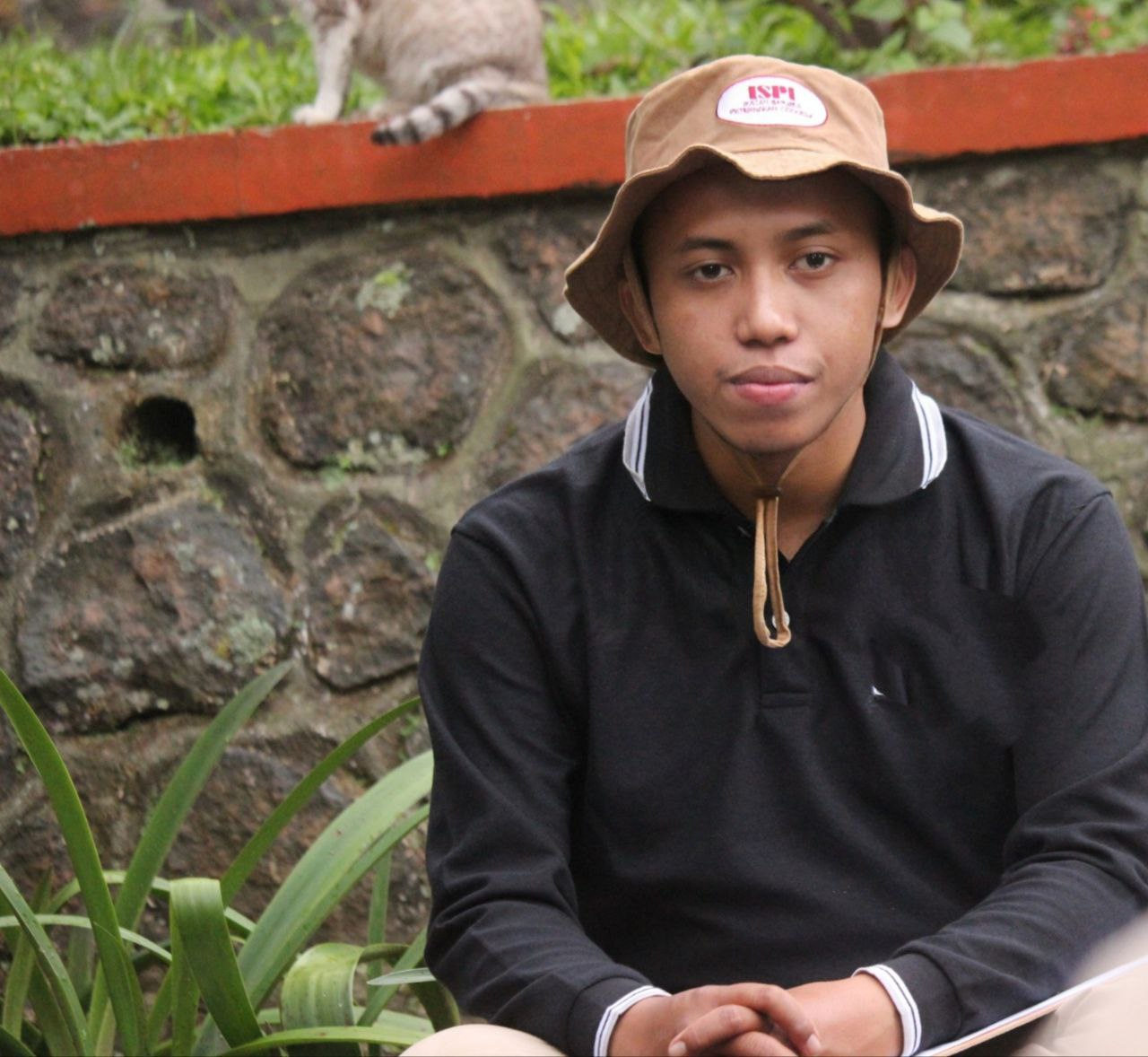
Muchamad Luthfi

@brin.go.id

Research Center for Animal Husbandry, National Research and Innovation Agency (BRIN)
National Research and Innovation Agency

Muchamad Luthfi

EDUCATION

Doctor Animal Science

RESEARCH, TEACHING, or OTHER INTERESTS

Animal Science and Zoology
30

Scopus Publications

351

Scholar Citations

11

Scholar h-index

12

Scholar i10-index

Scopus Publications

  • Preweaning Madura male calves do not need supplementation even in the dry season
    Alif Shabira Putri, Sulistiyoningtiyas Irmawanti, Lukman Affandhy, Muchamad Luthfi, Hartati, Mariyono, Risa Antari
    Iop Conference Series Earth and Environmental Science, 2026
    Smallholder farmers on Madura Island rely significantly on natural feed resources, which fluctuate seasonally and may influence cattle growth. Nutritional supplementation might be the best option to solve the problem. This study aimed to investigate the effect of concentrate supplementation on pre-weaning male Madura calves during the dry season. A randomized complete design was applied with three dietary treatment and twelve replicates: (A) calves suckling their dams freely and receiving native grass ad libitum, (B) treatment A plus 0.5 kg/d of commercial concentrate, and (C): treatment A plus 1.5 kg/d of commercial concentrate. The observed parameters were feed intake, liveweight, liveweight gain, girth, hip height, body length, and body condition score. Concentrate supplementation significantly increased total dry matter intake, while grass intake remained similar across treatments at approximately 0.7 kg DM/d. However, no dietary effects were detected in liveweight (73.59-86.08 kg), liveweight gain (0.48-0.63 kg/d), girth circumference (99.22-103.56 cm), hip height (97.85-100.14 cm), body length (82.50-85.28 cm), and body condition score (2.92-3.11, in 1-5 scale). Under the conditions of this study, no clear growth advantage was associated with additional concentrate supplementation in pre-weaning male Madura calves during the dry season.
  • Phenotypic Profiling and Multiple Correspondence Analysis of Morphological Traits in Indonesian Rambon Cattle
    Alfian Destomo, Peni Wahyu Prihandini, Muchamad Luthfi, Mutasem Abuzahra, Yasmin Syahada Niandini, Dwi Nur Happy Hariyono, Aprilianna Putri Zahara Nafsina Luvita Sari, Sutikno Sutikno, Kuswati Kuswati, Alek Ibrahim
    Journal of Animal Health and Production, 2026
  • The Ethanolic Extract of Moringa oleifera Lam Leaves for Developing Ovarian Follicles in Mus musculus
    International Journal of Veterinary Science, 2025
    This study examined the effects of Moringa oleifera Lam leaf extract, using ethanol solvent at different doses, supplemented with additional minerals and vitamins, on the development of ovarian follicles in female Mus musculus.Thirty-six five-week-old female Mus musculus having reproduction disorder were used in the current experiment.The experimental design was a completely randomized design, with four different levels of M. oleifera Lam leaf extract (T1=4mg/kg Live weight (LW), T2=8mg/kg LW, T3=12mg/kg LW, and T4 or control=0 mg) fed to the animals.The data were analyzed using one-way ANOVA in SPSS and the histopathological analysis was descriptively conducted.The results indicated that treatments T1, T2, and T3 ensured adequate feed and high daily weight gain in Mus musculus.Histopathological examination of the ovaries revealed that a 4mg/kg LW dose of M. oleifera Lam leaf extract was sufficient to promote ovarian development and normalize the reproductive cycle.
  • Association between GH, PRL, LEP, and PIT-1 gene polymorphisms and growth traits in Indonesian Rambon indigenous cattle
    Peni Wahyu Prihandini, Dwi Nur Happy Hariyono, Aprilianna Putri Zahara Nafsina Luv Sari, Yuli Arif Tribudi, Alek Ibrahim, Muchamad Luthfi, Agus Wiyono, Sulistiyoningtiyas Irmawanti, Aryogi Aryogi, Dewi Khosiya Robba, Mochammad Chanafi, Kuswati Kuswati, Henny Leondro
    Tropical Animal Health and Production, 2025
  • Genetic environmental interaction to achieve optimum physiological states of crossbred cattle in tropical climate
    A. Aryogi, L. Affandhy, D. Pamungkas, S. Setiasih, Y.N. Anggraeny, et al.
    Global Journal of Environmental Science and Management, 2024
    BACKGROUND AND OBJECTIVES: Introducing crossbred cattle in both lowland and highland regions is anticipated to enhance the productivity of indigenous breeds. Tropical environments present challenges such as acclimatization problems and decreased productivity. This study aims to test the influence of the interaction between genetic factors (crossbred cattle and local breeds) and environmental factors. This study is unique in its contribution of valuable insights into the potential interplay between tropical climate conditions and the genetic makeup of crossbred cattle. It sheds light on how this interaction influences the physiological and reproductive capabilities of the cattle, as well as the alterations in reproductive hormone secretion within this specific population. The results will serve as the main consideration for the development of crossbred cattle in tropical climates.METHODS: A fully randomized design incorporating three variables was employed in this study: altitude (highland and lowland), cattle breed (crossbred and local), and observation time. The study involved 357 cattle: 116 crossbred in the lowland, 67 crossbred in the highland, 93 local breed in the lowland, and 81 local breed in the highland. The environmental conditions, physiological status, hormone concentration, and reproductive performance were all part of the observations. Data was gathered every other day during each month, except for the hormone data, which was collected based on the oestrus cycle. The enzyme-linked immunosorbent assay method was utilized to analyze hormone concentrations. The data was analyzed using factorial patterns with SPSS 26, with Duncan''s multiple-range test analysis.FINDINGS: The main finding of this study indicates that altitude influences the genetic traits of cattle relevant to the journal''s scope. Variations in altitude and breed significantly affect physiological parameters such as sweating rate, respiration, and pulse frequency, as well as hormone levels including follicle stimulating hormone and luteinizing hormone. Furthermore, reproductive metrics such as days open, service per conception, and calving interval are also impacted. The interaction between altitude, breed, and observation time, significantly affected physiological status, hormone concentration, and reproductive performances. In cattle with high body weight, the peak sweating rate occurs at 08:00 post meridiem – 02:00 ante meridiem (21.83-27.92 second per centimeter square); while the low body weight occurs at 12:00 ante meridiem – 06:00 ante meridiem (16.92-32.68 seconds per square meter). Crossbred cattle in lowland areas and at 02:00 ante meridiem – 02:00 post meridiem have the highest respiratory frequency (59.08-63.29 times per minutes), and during the day have the highest pulse rate (69.43 times per minutes). During peak estrus, crossbred cattle in highland areas demonstrate increased concentrations of follicle stimulating hormone (15.82 ng/mL) and luteinizing hormone (70.91 ng/mL). Crossbred cattle in the lowlands have longer days open (5.75 months), higher service per conception (1.62 times), and longer calving intervals (15.94 months).CONCLUSION: Crossbred cattle reared in lowland settings may encounter a decline in both physiological and reproductive capabilities, while indigenous cattle have the ability to adapt, resulting in superior physiological and reproductive performance compared to crossbred cattle. The physiology and reproduction of cattle are shaped by genetic factors and the tropical environment, including 1) Genetic influence, 2). Adaptation to altitude and climate, 3) Stress zones and breed differences, 4) Body temperature, 5) Reproductive performance,6) Hormone concentrations. It is recommended that the development of crossbred cattle be carried out in the highlands.
  • The Effect of Administration of Combined-GnRH and PGF 2 α and Organic Zinc on Crossbred Cow Fertility
    Lukman Affandhy, Muchamad Luthfi, Frediansyah Firdaus, Risa Antari
    Aip Conference Proceedings, 2024
    The objective of this study was to evaluate the administration of a combination of GnRH, PGF 2 α, and organic zinc on crossbred cow fertility. Twenty-four crossbred cows (LimPO/SimPO) were allotted into four different treatments: A: GnRH, PGF 2 alfa injection and zinc methionine (ZnMeth), B: GnRH injection and ZnMeth, C: PGF 2α injection and ZnMeth, and D: ZnMeth as control. The GnRH was injected at 5 ml/head and PGF 2 α was intramuscularly injected at 2 ml/head, ZnMeth was offered at 3 g/head/day for 63 days. Plasma samples were collected on days 0, 21,42, and 63. The mating system was artificial insemination (AI). The pregnancy was examined two months after AI. The data were analyzed using analysis of variance (ANOVA) using SPSS version 23. The results showed that the body condition score was not different between treatments (p>0.05), A: 7.08±0.15 (32.32%), B: 7.25±0.11 (32.78%), C: 7.08±0.83 (40.38%) and D: 7.33±0.17 (34.59%). The concentration of estrogen (17.52–43.09 ng/mL) and progesterone (5.72–20.88 ng/ml) were not different between treatments (P>0,05). The D group had the lowest libido rate than other groups; the percentage of conception rates were 16.67%, 16.67%, 0%, and 0% respectively; while the pregnancy rates for A, B, C, and D were 66.67%, 50%, 33.33%, and 0% respectively. Thus, the combination of GnRH and PGF 2 α in crossbred cows resulted in a higher pregnancy rate than a group receiving only ZnMeth. It was concluded that a combination of GnRH, PGF 2 α, and ZnMeth treatments improved the reproductive performance of cows and the pregnancy rate reached 66.67%.
  • Stress Detection in Several Beef Cattle Breeds Based on Sweating Rate and Cortisol Hormone Levels
    Muchamad Luthfi, Sulistiyoningtiyas Irmawanti, Dewi Khosiya Robba, Peni Wahyu Prihandini
    Aip Conference Proceedings, 2024
    This study aims to evaluate the stress level of several beef cattle breeds kept at the Beef Cattle Research Institute (BCRI) based on the influence of humidity and ambient temperature, sweat levels, and the cortisol hormone. The material used was 186 cows, consisting of 53 Peranakan Ongole (PO), 53 Madura, 35 Jabres, 19 Galekan, 4 Rambon, 4 Bali, 4 PO x Bali cross (POBA), and 14 Belgian Blue (BB) x PO cross. The variables observed were temperature (°C) and humidity in the housing environment, sweating rate, and cortisol hormone concentration. The sweating rate was collected using Cobalt Chloride Disk, blood samples were collected for analyzed the level of hormone cortisol using an Enzyme-linked Immunosorbent Assay (ELISA) with a hormone kit merk Bioassay Technology Laboratory. Therefore, data on the sweating rate and cortisol hormone analyzed using descriptively by calculating the average and standard error. The result showed that in the morning (at 06.00 a.m.) the temperature outside the housing is lower and the humidity is higher than inside the housing; meanwhile, during the afternoon (at 14.00 p.m.) the temperature outside the housing is higher and the humidity is lower than inside the housing. The sweating rate ranged from 82.96±4.63–112.77±12.38 g/cm2/hours, and the cortisol level ranged from 20.07±7.05–34.74±10.23 ng/dL It was concluded that several beef cattle breeds raised in BCRI have normal conditions based on sweating rate and cortisol hormone level, this showed that PO, Madura, Jabres, Galekan, Rambon, Bali, POBA, BB x PO have good adaptability to the BCRS environment.
  • The Influence of Different Cattle Breeds on Ovarium Hypofunction Disorders and Its Recovery Response
    Aryogi, Lukman Affandhy, Muchamad Luthfi, Dyah Tuwi Ramsiati, Wahyuni Indah Wulansari, M. Chanafi
    Aip Conference Proceedings, 2024
    Ovarian hypofunction in beef cattle is one of the reproductive disorders in the effort to develop smallholder farmers' businesses. This study aimed to determine the effect of cattle breeds on the incidence of ovarian hypofunction and their response to treatment using bolus herb mix carried out on smallholder farms in Tambakrejo and Sumberejo sub-districts, Bojonegoro district. This study used 42 Ongole (Bos indicus) crossbreed cows and 25 Simmental or Limousine crosses (Bos taurus) cows, which had been rectal palpated and diagnosed with ovarian hypofunction. Parameters considered body condition score (BCS), ovarian condition, percentage of reproductive organ recovery, and estrus incidence. The results showed that the average BCS at the beginning of the study was 2.5, namely 54% of Ongole Crossbreed and 46% of Crosses. After giving the bolus, it was found that 23 cows (65.67%) of Ongole Crossbreeds and Crosses cows (24.00%) their Crosses were their ovary to be normal. Based on the occurrence of estrus, it seems that the Ongole Crossbreeds were better than the Crosses, namely the occurrence of estrus and anestrus, respectively, by 64.3 and 35.7% of the Ongole Crossbreeds and 52 and 48% of the Crosses. However, based on the time after bolus administration experienced an estrus response, the crossed cows were 46% for the second bolus, and Ongole Crossbreeds were 43% for the fourth bolus. It was concluded that bolus administration resulted in better estrus response and ovarian recovery but took longer recovery to the Ongole crossbred than Crosse's cattle.
  • Driving Factors for Sustainable Livestock Development in Indonesia: Study on Beef Cattle Commodities
    Amam Amam, Muchamad Luthfi, Koko Wisnu Prihatin, Tian Jihadhan Wankar
    Bio Web of Conferences, 2024
    Driving factors for the development of smallholder beef cattle farming include consumption needs and market availability, government policies and institutional, social and cultural support from the community, availability of animal feed sources, availability of upstream and downstream industries, as well as regional carrying capacity and the use of appropriate technology. The aim of the research is to analyze the influence of driving factors on sustainable livestock development in beef cattle commodities. The research variables consist of driving factors (X) and the five dimensions of sustainable livestock development, namely the ecological dimension (Y1), the economical dimension (Y2), the social and cultural dimension (Y3), the institutional dimension (Y4), and the technological dimension (Y5). Research data was obtained by means of Focus Group Discussion (FGDs), filling in questionnaires, and interviews. The research respondents consisted of 60 small-scale beef cattle fattening farmers with ownership of 7-60 heads in Bondowoso District. Data were analyzed partially using simple linear regression with SPSS 26.0. The research results showed that driving factors had a positive and significant influence on sustainable livestock development, especially on the ecological dimension of 0.492, the economical dimension of 0.376, the social and cultural dimension of 0.327, and the institutional dimension of 0.442. The research conclusion shows that the driving factors for sustainable livestock development are worthy of the attention of all stakeholders in beef cattle livestock commodities, for example, in the ecological dimension, farmers are able to manage and process livestock waste to be used as plant fertilizer. In the economical dimension, farmers are able to play a role in increasing livestock business income. In the social and cultural dimensions, it is able to encourage the participation of family members in the livestock farming business. In the institutional dimension, farmers actively participate in livestock coaching and extension programs.
  • The Effect of Synchronizing with the PGF2α hormone on the Estrus Activity of Madura Cows
    Muchamad Luthfi, Lukman Affandhy S, Sri Wahjuningsih, Gatot Ciptadi, Trinil Susilawati
    Bio Web of Conferences, 2024
    This research aims to determine the biological response of administering the PGF2α hormone to the estrous activity of Madurese cows. This research method uses two observation techniques, namely estrus synchronization by administering the PGF2α hormone “Alfaglandin® C (Cloprostenol)” and observing natural estrus. The data were analyzed by using the t test using the Software for Research statistix 10. The results showed that the frequency of estrus at the same time of observation was not significantly different from the two treatments (p>0.05), the highest frequency of estrus occurred at 18.00-20.00 in synchronized cows or not. The results of visualization of estrus showed cervical mucus, swollen vulva, and vaginal pH had the same percentage, while the vaginal temperature and duration of estrus had different percentages. The conclusion of this study is the frequency of estrous events, estrus visualization (cervical mucus discharge, swollen vulva, vaginal pH, and length of estrus), and the appearance of cervical ferning has the same response, while estrus temperature has a variable response.
  • Blood biochemical levels of reproductive disorders cases in Limousine Crossbred cows
    MUCHAMAD LUTHFI, SRI WAHYUNINGSIH, GATOT CIPTADI, TRINIL SUSILAWATI
    Indian Journal of Animal Sciences, 2023
  • Artificial Insemination Success Rate on Limousine Crossbred Lactation Cows
    Muchamad Luthfi, Dicky Pamungkas, Sri Wahyuningsih, Gatot Ciptadi, Trinil Susilawati
    International Journal of Agriculture and Biology, 2023
  • Semen Quality of Ongole Crossbred Bull with Gonadotropin Realizing Hormone (GnRH) Treatment
    Lukman Affandhy, Muchamad Luthfi, Yeni Widyaningrum, Dian Ratnawati, Mutia Primananda
    Advances in Animal and Veterinary Sciences, 2022
  • Physiological responses of several beef cattle breeds based on environmental conditions in Beef Cattle Research Station
    S Irmawanti, M Luthfi, P W Prihandini
    Iop Conference Series Earth and Environmental Science, 2022
  • Genetic polymorphisms of the 5’ untranslated regions of the HSP70 gene in Indonesian cattle populations
    Peni Wahyu Prihandini, Almira Primasari, Aryogi Aryogi, Muchamad Luthfi, Dwi Nur Happy Hariyono
    Veterinary World, 2022
  • Identification of restriction enzyme in the FSHR gene of indonesian local cattle
    P W Prihandini, A Primasari, M Luthfi, D Pamungkas, A P Z N L Sari, T B Dina, D Maharani
    Iop Conference Series Earth and Environmental Science, 2021
  • The growth and mortality of Ongole cross bred and Bali calves given calf milk replacer (CMR) in palm oil plantation-cow integration
    M Luthfi, R Antari, L Affandhy
    Iop Conference Series Earth and Environmental Science, 2021
  • Sperms motility of Ongole Crossbreed (OC) Bull at various age
    D Ratnawati, M Luthfi, F Firdaus, L Affandhy
    Iop Conference Series Earth and Environmental Science, 2021
  • Detection of growth hormone (GH|MspI,GHR|AluI, Pit1|HinfI) genes polymorphism and its association with body weight of Grati-Bali Cattle (Bos sondaicus)
    Hartati, M Luthfi, D Ratnawati, B D P Soewandi
    Iop Conference Series Earth and Environmental Science, 2021
  • Genetic variation in the first intron and exon of the myostatin gene in several Indonesian cattle populations
    Peni Wahyu Prihandini, Almira Primasari, Aryogi Aryogi, Jauhari Efendy, Muchamad Luthfi, Dicky Pamungkas, Dwi Nur Happy Hariyono
    Veterinary World, 2021
  • Improving the Reproductive Performance of Cows Suffering from Ovarian Hypofunction using Herbal Supplement
    Lukman Affandhy, Muchamad Luthfi, Frediansyah Firdaus, Dian Ratnawati, Risa Antari
    Advances in Animal and Veterinary Sciences, 2021
  • The productivity evaluation of madura cattle under beef cattle research station breeding management
    Hartati HARTATI, Muchamad LUTHFI, Noor Hudhia KHRISNA, Pritha Kartika SUKMASARI, Hilmi Panca FITRAYADY, Retno WIDIYAWATI, Dicky Mohammad DIKMAN
    Kafkas Universitesi Veteriner Fakultesi Dergisi, 2021
  • Motility characterization of albumin sexed spermatozoa in two different diluents and additional antioxidant
    D. Ratnawati, M. Luthfi, D. Pamungkas, L. Affandhy
    Journal of the Indonesian Tropical Animal Agriculture, 2020
  • Puberty response of Ongole crossbred bulls raised on different sex groups and stall models
    Indian Journal of Animal Research, 2020
  • Genetic Diversity of Mitochondrial DNA Cytochrome b in Indonesian Native and Local Cattle Populations
    Peni Wahyu Prihandini, A Primasari, M Luthfi, J Efendy, D Pamungkas
    Jurnal Ilmu Ternak Dan Veteriner, 2020
  • Production and characterization of polyclonal antibodies for diagnosis of pregnancy in cattle
    Yeni Widyaningrum, M. Luthfi, Dian Ratnawati, Lukman Affandhy, Aulanni’am Aulanni’am, Agung Pramana Warih Marhendra, Yuli Arif Tribudi
    Advances in Animal and Veterinary Sciences, 2020
  • Mineral-Vitamin Combining Versus Herbal Supplementationto Enhance Performance Ongole Crossbred Bull
    D Pamungkas, F Firdaus, L Affandhy, M Luthfi
    Iop Conference Series Earth and Environmental Science, 2019
  • The motility and ratio of x and y sperm filial ongole cattle using different sexed semen methods
    Enike Dwi Kusumawati, N. Isnaini, A.P.A. Yekti, M. Luthfi, L. Affandhy, D. Pamungkas, Kuswati, A. Ridhowi, H. Sudarwati, Syam Rahadi, S. Rahayu, Trinil Susilawati
    American Journal of Animal and Veterinary Sciences, 2019
  • Effect of live weight on libido, sperm quality, testosterone and luteinizing hormone in replacement stock of Ongole Grade bull
    L. Affandhy, H.P. Fitrayady, M. Luthfi, Y. Widyaningrum
    Journal of the Indonesian Tropical Animal Agriculture, 2018
  • The spermatozoa quality of semen sexing of the Filial Ongole Cattle using percoll density gradient centrifugaron method
    Asian Journal of Microbiology Biotechnology and Environmental Sciences, 2017

RECENT SCHOLAR PUBLICATIONS

  • Preweaning Madura male calves do not need supplementation even in the dry season
    AS Putri, S Irmawanti, L Affandhy, M Luthfi, Hartati, Mariyono, R Antari
    IOP Conference Series: Earth and Environmental Science 1584 (1), 012038 , 2026
    2026
  • Strategi Manajemen Aksesibilitas Digital di Sekolah Inklusi
    A Maesaroh, D Hidayati, S Sukirman, M Luthfi
    International Journal of Community Service Learning 9 (4), 664-673 , 2025
    2025
  • Association between GH , PRL , LEP , and PIT-1 gene polymorphisms and growth traits in Indonesian Rambon indigenous cattle
    PW Prihandini, DNH Hariyono, APZNL Sari, YA Tribudi, A Ibrahim, ...
    Tropical Animal Health and Production 57 (2), 56 , 2025
    2025
    Citations: 5
  • International Journal of Veterinary Science
    L Affandhy, A Aryogi, D Pamungkas, S Setiasih, R Damayanti, ...
    Int J Vet Sci 14 (2), 295-301 , 2025
    2025
  • Genetic environmental interaction to achieve optimum physiological states of cross-bred cattle in tropical climate
    A Aryogi, L Affandhy, D Pamungkas, S Setiasih, YN Anggraeny, ...
    Global Journal of Environmental Science and Management 10 (4), 2083-2098 , 2024
    2024
    Citations: 6
  • Stress detection in several beef cattle breeds based on sweating rate and cortisol hormone levels
    M Luthfi, S Irmawanti, DK Robba, PW Prihandini
    AIP Conference Proceedings 2957 (1), 070038 , 2024
    2024
  • The influence of different cattle breeds on ovarium hypofunction disorders and its recovery response
    Aryogi, L Affandhy, M Luthfi, DT Ramsiati, WI Wulansari, M Chanafi
    AIP Conference Proceedings 2957 (1), 070041 , 2024
    2024
  • The effect of administration of combined-GnRH and PGF 2 α and organic zinc on crossbred cow fertility
    L Affandhy, M Luthfi, F Firdaus, R Antari
    AIP Conference Proceedings 2957 (1), 070034 , 2024
    2024
  • The Effect of Synchronizing with the PGF2α hormone on the Estrus Activity of Madura Cows
    M Luthfi, L Affandhy S, S Wahjuningsih, G Ciptadi, T Susilawati
    BIO Web of Conferences 88, 00029 , 2024
    2024
  • Driving factors for sustainable livestock development in Indonesia: Study on beef cattle commodities
    A Amam, M Luthfi, KW Prihatin, TJ Wankar
    BIO Web of Conferences 88, 00031 , 2024
    2024
    Citations: 13
  • Artificial insemination success rate on limousine crossbred lactation cows.
    M Luthfi, D Pamungkas, S Wahyuningsih, G Ciptadi, T Susilawati
    2023
  • Pengaruh Pemberian Pupuk Multifungsi terhadap Produktivitas Rumput Odot (Pennisetum purpureum cv. mott)
    MF Luthfi, P Siswoyo
    Jurnal Jeumpa 10 (2), 240-248 , 2023
    2023
    Citations: 2
  • ANALISIS PRODUKTIVITAS RUMPUT ODOT (Pennisetum Purpureum cv. Mott) SEBAGAI PAKAN TERNAK KAMBING
    P Siswoyo, MF Luthfi
    STOCK Peternakan 5 (1), 44-50 , 2023
    2023
    Citations: 2
  • Blood biochemical levels of reproductive disorders cases in Limousine Crossbred cows
    M Luthfi, S Wahyuningsih, G Ciptadi, T Susilawati
    Indian Journal of Animal Sciences 93 (2), 158-161 , 2023
    2023
    Citations: 3
  • Physiological responses of several beef cattle breeds based on environmental conditions in Beef Cattle Research Station
    S Irmawanti, M Luthfi, PW Prihandini
    IOP Conference Series: Earth and Environmental Science 1114 (1), 012079 , 2022
    2022
    Citations: 3
  • Genetic polymorphisms of the 5’untranslated regions of the HSP70 gene in Indonesian cattle populations
    PW Prihandini, A Primasari, A Aryogi, M Luthfi, DNH Hariyono
    Veterinary World 15 (1), 168 , 2022
    2022
    Citations: 12
  • Genetic polymorphisms of the 5’untranslated regions of the HSP70 gene in Indonesian cattle populations. Veterinary World, 15 (1), 168–172
    PW Prihandini, A Primasari, A Aryogi, M Luthfi, DNH Hariyono
    Abstract , 2022
    2022
    Citations: 4
  • Study of vulnerability aspects of beef cattle farming business
    A Amam, BH Setyawan, MW Jadmiko, PA Harsita, S Rusdiana, M Luthfi
    Jurnal Ilmu-Ilmu Peternakan 31 (3), 192-200 , 2021
    2021
    Citations: 21
  • Haplotype Block Analysis of FSHR Gene in Sragen and Jabres Cattle
    PW Prihandini, A Primasari, M Luthfi, D Pamungkas, A Sari, TB Dina, ...
    International Seminar on Livestock Production and Veterinary Technology, 16 , 2021
    2021
  • Identification of restriction enzyme in the FSHR gene of indonesian local cattle
    PW Prihandini, A Primasari, M Luthfi, D Pamungkas, A L Sari, TB Dina, ...
    IOP Conference Series: Earth and Environmental Science 888 (1), 012024 , 2021
    2021

MOST CITED SCHOLAR PUBLICATIONS

  • Pengaruh Sumber Daya Manusia terhadap Aksesibilitas Sumber Daya Usaha Ternak Sapi Potong Rakyat
    A Amam, HB Setyawan, MW Jadmiko, PA Harsita, S Rusdiana, M Luthfi
    Jurnal Ilmu dan Teknologi Peternakan Tropis 8 (1), 57-65 , 2021
    2021.0
    Citations: 33
  • Study of vulnerability aspects of beef cattle farming business
    A Amam, BH Setyawan, MW Jadmiko, PA Harsita, S Rusdiana, M Luthfi
    Jurnal Ilmu-Ilmu Peternakan 31 (3), 192-200 , 2021
    2021.0
    Citations: 21
  • Effect of live weight on libido, sperm quality, testosterone and luteinizing hormone in replacement stock of Ongole grade bull.
    L Affandhy, HP Fitrayady, M Luthfi, Y Widyaningrum
    2018.0
    Citations: 21
  • The motility and ratio of X and Y sperm filial ongole cattle using different sexed semen methods
    ED Kusumawati, N Isnaini, APA Yekti, M Luthfi, L Affandhy, D Pamungkas, ...
    American Journal of Animal and Veterinary Sciences 14 (2), 111-114 , 2019
    2019.0
    Citations: 18
  • The quality of sexed semen on filial ongole bull using percoll density gradient centrifugation method
    ED Kusumawati, N Isnaini, APA Yekti, M Luthfi, L Affandhy, D Pamungkas, ...
    Asian J. Microbiol. Biotechol Environ. Sci 19, 189-199 , 2017
    2017.0
    Citations: 18
  • Genetic diversity of mitochondrial DNA cytochrome b in Indonesian native and local cattle populations
    PW Prihandini, A Primasari, M Luthfi, J Efendy, D Pamungkas
    JITV 25, 39-47 , 2020
    2020.0
    Citations: 15
  • Driving factors for sustainable livestock development in Indonesia: Study on beef cattle commodities
    A Amam, M Luthfi, KW Prihatin, TJ Wankar
    BIO Web of Conferences 88, 00031 , 2024
    2024.0
    Citations: 13
  • Genetic polymorphisms of the 5’untranslated regions of the HSP70 gene in Indonesian cattle populations
    PW Prihandini, A Primasari, A Aryogi, M Luthfi, DNH Hariyono
    Veterinary World 15 (1), 168 , 2022
    2022.0
    Citations: 12
  • Anggraeni. 2015. Pengaruh pemberian larutan ekstrak kunyit (Curcuma domestika) dalam air minum terhadap produksi telur burung puyuh (Coturnix-coturnix japonica)
    MI Luthfi, H Nur
    Jurnal peternakan nusantara 1 (2), 81-88 , 0
    Citations: 12
  • Comparative study of sperms motility analysis with CASA by using leja and microscope slide
    D Ratnawati, M Luthfi
    Jurnal Ilmu-Ilmu Peternakan 30 (2), 115-122 , 2020
    2020.0
    Citations: 11
  • Phenotypic Characterization of Jawa Brebes (Jabres) Cattle
    Y Adinata, D Pamungkas, M Luthfi, A Rasyid, NH Krishna
    International Seminar on Livestock Production and Veterinary Technology, 24-29 , 2017
    2017.0
    Citations: 11
  • Effect of traditional herbal supplementation on performance of PO bull
    D Ratnawati, M Luthfi, L Affandhy
    Proc. International Conference on Livestock Production and Veterinary … , 2012
    2012.0
    Citations: 10
  • Genetic variation in the first intron and exon of the myostatin gene in several Indonesian cattle populations
    PW Prihandini, A Primasari, A Aryogi, J Efendy, M Luthfi, D Pamungkas, ...
    Veterinary World 14 (5), 1197 , 2021
    2021.0
    Citations: 9
  • Motility characterization of albumin sexed spermatozoa in two different diluents and additional antioxidant.
    D Ratnawati, M Luthfi, D Pamungkas, L Affandhy
    2020.0
    Citations: 9
  • Mineral-Vitamin Combining Versus Herbal Supplementationto Enhance Performance Ongole Crossbred Bull
    D Pamungkas, F Firdaus, L Affandhy, M Luthfi
    IOP conference series: earth and environmental science 372 (1), 012058 , 2019
    2019.0
    Citations: 9
  • Uji performa calon bibit sapi Peranakan Ongole berdasarkan karakteristik kuantitatif dan kualitatif
    A Rasyid, M Luthfi
    Prosiding Seminar Nasional Teknologi Peternakan dan Veteriner, 70-77 , 2017
    2017.0
    Citations: 8
  • Tingkat kejadian gangguan reproduksi sapi bali dan madura pada sistem pemeliharaan kandang kelompok
    M Luthfi, Y Widyaningrum
    Prosiding Seminar Nasional Teknologi Peternakan dan Veteriner, 101-108 , 2017
    2017.0
    Citations: 7
  • Genetic environmental interaction to achieve optimum physiological states of cross-bred cattle in tropical climate
    A Aryogi, L Affandhy, D Pamungkas, S Setiasih, YN Anggraeny, ...
    Global Journal of Environmental Science and Management 10 (4), 2083-2098 , 2024
    2024.0
    Citations: 6
  • Pertambahan bobot badan harian dan skor kondisi tubuh pedet silangan pra sapih dengan teknologi creep feeding di peternakan rakyat
    M Luthfi, L Affandhy
    Loka Penelitian Sapi Potong. Grati, Pasuruan, Jawa Timur , 2013
    2013.0
    Citations: 6
  • Association between GH , PRL , LEP , and PIT-1 gene polymorphisms and growth traits in Indonesian Rambon indigenous cattle
    PW Prihandini, DNH Hariyono, APZNL Sari, YA Tribudi, A Ibrahim, ...
    Tropical Animal Health and Production 57 (2), 56 , 2025
    2025.0
    Citations: 5