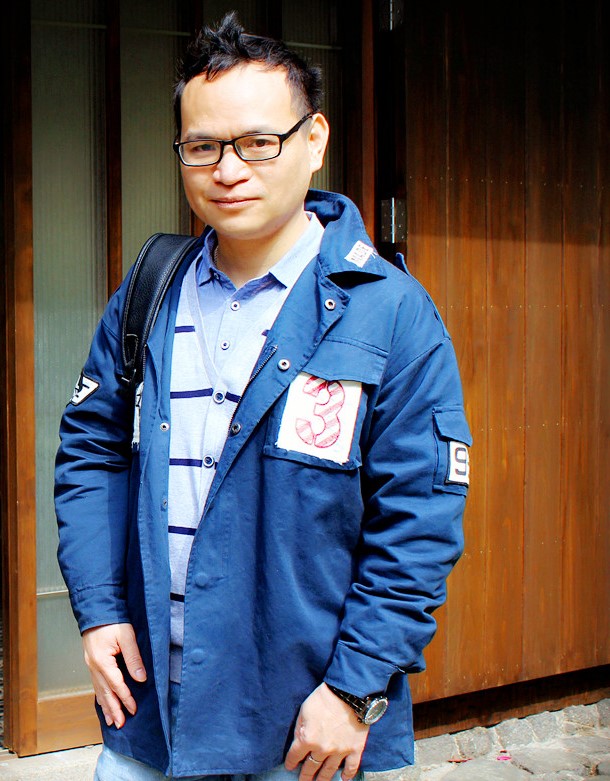
Mark Teng is an active researcher in the TESOL community. He has extensive teaching and teacher education experience in China. His research programme focuses on L2 vocabulary acquisition, and metacognition in L2 writing development. He was the recipient of the 2017 Best Paper Award from the Hong Kong Association for Applied Linguistics (HAAL), as well as the Teaching Excellence Awards by the Education Bureau of mainland China. He has published extensively in international journals. His recent monographs were published by Springer, De Gruyter, Routledge, and Bloomsbury.
EDUCATION
Hong Kong Baptist University PhD in Applied Linguistics
Multimodal Composition as a Catalyst for Technology Self-Efficacy Junjie Gavin Wu, Zi Yang, Sangmin‐Michelle Lee, Mark Feng Teng International Journal of Applied Linguistics United Kingdom, 2026 In technological learning environments, technology self‐efficacy (TSE) is a key to enhancing learners’ learning perceptions and performances. The present paper examines the potential of multimodal composing, a pedagogical approach that allows learners to use different semiotic resources, in enhancing learners’ TSE. This study employed a mixed‐methods design to investigate the impact of multimodal composing on TSE among a group of English for Specific Purposes learners. The statistical analysis of both pre‐ and post‐surveys revealed that the multimodal composing design had a measurable impact on students’ TSE, with the three dimensions of magnitude, strength, and generalizability significantly improved after attending the course. The reflective data revealed more in‐depth reasons for the students’ improved TSE. The findings supported that hands‐on engagement with multiple modes to create meaning in teaching and learning enhanced individuals’ perceived confidence in accomplishing technology‐mediated tasks. The paper concludes with implications for future research.
Assessing self-efficacy, working memory, and proficiency in a multimedia writing environment Mark Feng Teng, Maggie Ma Iral International Review of Applied Linguistics in Language Teaching, 2026 The present study examined self-efficacy, working memory, and English proficiency in a multimedia writing environment. The research design included a survey to assess self-efficacy and a writing assessment within a multimedia environment, while controlling for working memory capacity and levels of English proficiency. Data collection methods comprised a survey on self-efficacy beliefs in multimedia writing, a working memory task, and the standardized College English Test Band 4 in China. The participants were a total of 406 Chinese university students. The results support the reliability of the self-efficacy questionnaire, with five dimensions: linguistic knowledge, planning, monitoring, evaluation, and performance. These five factors were positively correlated with the students’ writing performance in a multimedia environment. The structural equation modeling findings suggest that working memory and English language proficiency moderate learners’ self-efficacy in EFL multimedia writing. Relevant implications based on the findings were discussed.
Exploring the Role of EFL Teachers' Interpersonal Behaviours in Students' Behavioural, Cognitive, and Emotional Engagement With GenAI: A PLS-SEM Approach Weili (Allen) Xing, Mark Feng Teng European Journal of Education, 2026 The present study investigates how EFL teachers' interpersonal behaviours (TIB)—autonomy support, structure (competence support), and involvement (relatedness support)—predict students' behavioural, cognitive, and emotional engagement in generative artificial intelligence (GenAI)‐mediated classrooms through the lens of Self Determination Theory (SDT). Survey data from 385 Chinese undergraduates were analysed using partial least squares structural equation modelling (PLS‐SEM). Results demonstrate that autonomy support and involvement consistently predict behavioural, cognitive, and emotional engagement, while structure primarily predicts behavioural and cognitive domains. With the structural model explaining 45% of the variance in engagement ( R 2 ≈ 0.45), the findings reaffirm that the motivational climate fostered by teachers remains indispensable despite the affordances of GenAI tools. This study extends SDT‐based research by revealing that teacher support mechanisms are recalibrated, not replaced, in GenAI‐enhanced classrooms, and highlights the enduring importance of human relational dynamics alongside technological innovation. The results emphasise the need for professional development that integrates GenAI literacy with interpersonal skills to help teachers sustain engagement and optimise learning in evolving educational environments.
Cross-lagged panel analysis of reciprocal effects of metacognitive knowledge and breadth of vocabulary knowledge in a foreign language context Mark Feng Teng Studies in Second Language Learning and Teaching, 2026 Metacognitive knowledge significantly influences English vocabulary knowledge. However, few longitudinal studies have explored the reciprocal growth trajectories of metacognitive knowledge and English vocabulary knowledge over time. The present study explores how young primary school learners develop their metacognitive knowledge and vocabulary knowledge from Grade 3 to Grade 6.The longitudinal sample included 361 Grade 3 (third-year primary school) students (M = 9.60 years, SD = 0.85). The participants completed tests of metacognitive knowledge and vocabulary knowledge on four occasions. The metacognitive knowledge test focused on students’ cognitive activities, whereas the vocabulary knowledge test focused on learners’ breadth of vocabulary knowledge. Cross-lagged panel analysis was employed to explore the reciprocal effects of metacognitive knowledge and the breadth of vocabulary knowledge. The results supported the role of metacognitive knowledge in developing the breadth of vocabulary knowledge, and vice versa. Implications for young learners’ longitudinal development of metacognitive knowledge and vocabulary knowledge are discussed.
Informal Digital Learning of English (IDLE) as Form-Focused and Meaning-Focused Activities: Refining its Measurement and Examining its Predictive Role in L2 Achievement and Confidence Minlin Zou, Mark Feng Teng, Ali Soyoof, Xueyun He International Journal of Applied Linguistics United Kingdom, 2026 Acknowledging the limitations of existing measurement instruments in adequately capturing the distinct cognitive processes (e.g., form‐focused vs. meaning‐focused) involved in informal digital learning of English (IDLE), this paper asserts a pressing need to develop and validate robust instruments that measure form‐focused and meaning‐focused IDLE (FM‐IDLE). It comprises two interrelated studies investigating the measurement and impact of informal digital English learning practices among Chinese university students. Study 1 aimed to develop and validate a psychometrically sound instrument to assess learners’ participation in form‐focused IDLE Activities (FIA) and meaning‐focused IDLE activities (MIA). Study 2 examined the predictive relationship between FIA, MIA, and two critical language learning outcomes: L2 achievement as indicated by students’ standardized English test scores and L2 confidence. The research engaged 1,202 Chinese undergraduate EFL learners, with the sample randomly divided into two datasets (Sample 1: N = 601; Sample 2: N = 601) for scale validation, while the complete sample ( N = 1202) was utilized to examine the scale's predictive validity. Study 1 yielded a refined 14‐item FM‐IDLE Scale comprising two distinct factors, FIA and MIA, demonstrating robust psychometric properties. Study 2, employing structural equation modeling, revealed differential effects: FIA demonstrated significant and negative associations with L2 achievement and L2 confidence, whereas MIA could positively predict these outcomes. These findings yield important pedagogical implications by highlighting the importance of promoting meaning‐focused IDLE activities through technological affordances while fostering language learning confidence against the backdrop of the global spread of English.
Metacognition in EFL Reading MF Teng Theories and Methodologies of Individual Differences in Reading, 117-136 , 2026 2026
Future Directions for Theories and Methodologies of Individual Differences in Reading MF Teng, J Zhou Theories and Methodologies of Individual Differences in Reading, 233-244 , 2026 2026
Theories and Methodologies of Individual Differences in Reading MF Teng, J Zhou Taylor & Francis , 2026 2026
Multimodal Composition as a Catalyst for Technology Self‐Efficacy JG Wu, Z Yang, SM Lee, MF Teng International Journal of Applied Linguistics 36 (2), 1333-1344 , 2026 2026 Citations: 1
Longitudinal development of cognition and vocabulary knowledge in young second language learners in a bilingual programme MF Teng Journal of Child Language 53 (3), 602-632 , 2026 2026 Citations: 10
Latent profiles of engagement in GenAI-mediated language learning: The role of teacher interpersonal behaviors WA Xing, MF Teng System, 104030 , 2026 2026 Citations: 1
Assessing ChatGPT Feedback for EFL Learners’ Engagement and Writing Performance MF Teng, J Huang International Journal of Applied Linguistics , 2026 2026 Citations: 2
Incidental vocabulary learning from captioned video genres: Proficiency, working memory, and aptitude MF Teng Computer Assisted Language Learning 39 (3), 644-686 , 2026 2026 Citations: 7
Exploring the Role of EFL Teachers' Interpersonal Behaviours in Students' Behavioural, Cognitive, and Emotional Engagement With GenAI: A PLS‐SEM Approach W Xing, MF Teng European Journal of Education 61 (1), e70439 , 2026 2026 Citations: 1
Interpreting metacognitive knowledge and growth mindset in foreign language vocabulary learning: a latent profile analysis approach MF Teng Metacognition and Learning 21 (1), 4 , 2026 2026 Citations: 1
Informal Digital Learning of English (IDLE) as form‐focused and meaning‐focused activities: Refining its measurement and examining its predictive role in L2 achievement and … M Zou, MF Teng, A Soyoof, X He International Journal of Applied Linguistics 36 (1), 393-408 , 2026 2026 Citations: 14
Digital applied linguistics: What is it and where are we in the GenAI era? MF Teng, X Shen Digital Applied Linguistics 4, 103594-103594 , 2026 2026 Citations: 2
The Impact of GenAI Feedback on Chinese EFL Students’ Emotional Engagement: A Mixed Effect Modelling Approach MF Teng The Asia-Pacific Education Researcher, 1-17 , 2026 2026 Citations: 5
Effects of Learners’ Proficiency Pairing on Task Engagement and Text Quality in L2 Digital Collaborative Writing Z Wang, MF Teng, LS Teng International Journal of Applied Linguistics , 2026 2026
Introduction: Theories and Methodologies of Individual Differences in Reading J Zhou, MF Teng Theories and Methodologies of Individual Differences in Reading, 1-16 , 2026 2026
Working memory in foreign language reading comprehension: Examining mediation through morphological awareness MF Teng University of Hawaii National Foreign Language Resource Center , 2026 2026 Citations: 2
Enhancing L2 Listening Through TED-Ed: GAI Mind Mapping Versus Captions S Jiang, JG Wu, W Xie, MF Teng, CT Lam, WL Wong International Journal of Computer-Assisted Language Learning and Teaching … , 2026 2026
Working Memory and Breadth of Vocabulary Knowledge in Foreign Language Young Learners: A Cross-Lagged Panel Design Approach MF Teng Journal of Child Language, 1-23 , 2026 2026
Cross-lagged panel analysis of reciprocal effects of metacognitive knowledge and breadth of vocabulary knowledge in a foreign language context MF Teng Studies in Second Language Learning and Teaching 16 (1), 133-164 , 2026 2026
Assessing metacognitive writing strategies and the predictive effects on multimedia writing MF Teng, C Qin Asia Pacific Journal of Education 46 (1), 39-62 , 2026 2026 Citations: 29
MOST CITED SCHOLAR PUBLICATIONS
“ChatGPT is the companion, not enemies”: EFL learners’ perceptions and experiences in using ChatGPT for feedback in writing MF Teng Computers and Education: Artificial Intelligence 7, 100270 , 2024 2024 Citations: 307
Autonomy, agency, and identity in teaching and learning English as a foreign language MF Teng Springer , 2019 2019 Citations: 291
Emotional Development and Construction of Teacher Identity: Narrative Interactions about the Pre-service Teachers’ Practicum Experiences. MF Teng Australian Journal of Teacher Education 42 (11), 117-134 , 2017 2017 Citations: 255
Metacognitive writing strategies, critical thinking skills, and academic writing performance: A structural equation modeling approach MF Teng, M Yue Metacognition and Learning 18 (1), 237-260 , 2023 2023 Citations: 233
The role of metacognitive knowledge and regulation in mediating university EFL learners’ writing performance MF Teng Innovation in Language Learning and Teaching. , 2019 2019 Citations: 224
Assessing self-regulatory writing strategies and their predictive effects on young EFL learners’ writing performance MF Teng, C Wang, LJ Zhang Assessing Writing 51, 100573 , 2021 2021 Citations: 208
Validation of metacognitive academic writing strategies and the predictive effects on academic writing performance in a foreign language context MF Teng, C Qin, C Wang Metacognition and learning 17 (1), 167-190 , 2022 2022 Citations: 203
A systematic review of ChatGPT for English as a foreign language writing: Opportunities, challenges, and recommendations. M Feng Teng International Journal of TESOL Studies 6 (3) , 2024 2024 Citations: 193
The benefits of metacognitive reading strategy awareness instruction for young learners of English as a second language F Teng Literacy 54 (1), 29-39 , 2020 2020 Citations: 193
The effectiveness of multimedia input on vocabulary learning and retention MF Teng Innovation in language learning and teaching 17 (3), 738-754 , 2023 2023 Citations: 172
Predictive effects of writing strategies for self-regulated learning on secondary school learners’ EFL writing proficiency MF Teng, J Huang TESOL Quarterly , 2018 2018 Citations: 161
Vocabulary learning through videos: captions, advance-organizer strategy, and their combination F Teng Computer Assisted Language Learning 35 (3), 518-550 , 2022 2022 Citations: 158
Incidental L2 vocabulary learning from viewing captioned videos: Effects of learner-related factors MF Teng System 105, 102736 , 2022 2022 Citations: 147
Incidental vocabulary acquisition from reading-only and reading-while-listening: A multi-dimensional approach F Teng Innovation in Language Learning and Teaching 12 (3), 274-288 , 2018 2018 Citations: 128
Immediate and delayed effects of embedded metacognitive instruction on Chinese EFL students’ English writing and regulation of cognition F Teng Thinking Skills and Creativity 22, 289-302 , 2016 2016 Citations: 127
Testing the viability of ChatGPT as a companion in L2 writing accuracy assessment A Mizumoto, N Shintani, M Sasaki, MF Teng Research Methods in Applied Linguistics 3 (2), 100116 , 2024 2024 Citations: 126
Tertiary-level students’ English writing performance and metacognitive awareness: A group metacognitive support perspective F Teng Scandinavian Journal of Educational Research 64 (4), 551-568 , 2020 2020 Citations: 123
Learner identity and learners’ investment in EFL learning: A multiple case study MF Teng Iranian Journal of Language Teaching Research , 2019 2019 Citations: 121
Metacognitive strategies, language learning motivation, self-efficacy belief, and English achievement during remote learning: A structural equation modelling approach MF Teng, C Wang, JG Wu Relc Journal 54 (3), 648-666 , 2023 2023 Citations: 119
The effects of context and word exposure frequency on incidental vocabulary acquisition and retention through reading F Teng The Language Learning Journal 47 (2), 145-158 , 2019 2019 Citations: 114